







India’s trade diplomacy is gathering pace in a post-pandemic world that is redefining global geopolitics. From the Gulf to Europe and the Indo-Pacific, New Delhi is fast expanding its network of free trade agreements (FTAs) and economic partnerships.
A strategic push after Covid
Once hesitant about broad trade pacts, India now appears more proactive, eyeing deeper economic engagement with key partners.
The government is already in or nearing negotiations with several countries, including the United Kingdom, Oman, and the European Free Trade Association (EFTA), and discussions with the European Union and United States are underway. Commerce Minister Piyush Goyal, as quoted by PTI, highlighted this broader agenda, saying India “does not rush into trade agreements if it is not fair, balanced, equitable; we enter into negotiations with our eyes wide open.”
Recent and ongoing deals
In July 2025, India and the UK signed a comprehensive free trade agreement, opening up markets on both sides and projected to significantly boost bilateral commerce. Industry leaders have welcomed the pact, noting it could raise trade by at least $20 billion and expand job opportunities across sectors.
Closer to home, India remains active in the Gulf Cooperation Council space. It already has a CEPA with the UAE, and in Muscat this December, India and Oman are set to sign a free trade agreement—the first such pact Oman has struck in nearly two decades.
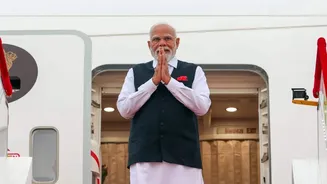
Muscat, Oman: Prime Minister Narendra Modi received a standing ovation and applause as he concluded his address at the Indian community event, 'Maitri Parv,' in Oman pic.twitter.com/sWsaIFmnQ5
— IANS (@ians_india) December 18, 2025
Ahead of the India-Oman signing, Commerce Minister Goyal told business leaders that the agreement “offers immense opportunities” in sectors such as textiles, footwear, auto components and renewable energy, and can strengthen services partnerships in healthcare, tourism and education.
These trade deals go well beyond tariff reductions, focusing on deeper economic and strategic cooperation.
Beyond tariff cuts and market access, the FTAs are increasingly seen as instruments of geostrategic alignment, helping secure supply chains, attract technology investment, and deepen cooperation across sectors from infrastructure to energy.