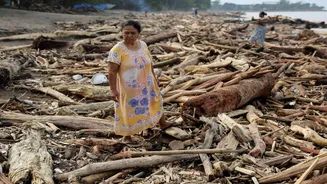




Humanitarian crises are escalating across South and Southeast Asia as tropical storms and relentless monsoon rains have driven the total death toll past 1,500, with flood-ravaged regions in Indonesia now reporting dire shortages of food and essential medical supplies.
Indonesia’s western islands have borne the brunt of the disaster, with officials confirming 961 fatalities across Aceh, North Sumatra, and West Sumatra, and an additional 293 people still missing. The National Disaster Mitigation Agency (BNPB) reported that the catastrophe has displaced more than a million people.
"Everything is lacking, especially medical personnel. We are short on doctors," Muzakir Manaf, the governor of Indonesia's Aceh province, told AFP, highlighting the severity of the crisis on the ground.
Infrastructure, including schools and hospitals, has been devastated, leaving over 5,000 people injured. In the city of Banda Aceh, residents are queuing for scarce drinking water and fuel, while the cost of basic commodities like eggs has skyrocketed.
In an unusual recovery effort, four elephants from a local training centre were deployed in the badly affected Pidie Jaya district in Aceh to help clear large debris and move stuck vehicles. The BNPB estimates the total cost to rebuild could reach 51.82 trillion rupiah (approximately $5.3 billion).
The crisis is equally severe in Sri Lanka, which was devastated by Cyclone Ditwah, described as the island nation's worst this century. The cyclone has killed 635 people and affected over 2 million individuals, nearly 10% of the country’s population.
In response, the military has nearly doubled its initial deployment, mobilising 38,500 security personnel for clean-up and rescue missions, which have successfully saved 31,116 people from distress.
President Anura Dissanayake announced a recovery package, which includes up to 10 million rupees ($57,000) for victims to purchase land in safer areas and assistance for replacing essential household items. However, the government, still reeling from the economic meltdown of 2022, has appealed for international aid, including from the International Monetary Fund, stating it cannot finance the massive reconstruction effort alone.
While seasonal monsoon rains are a natural and often beneficial part of life in the region, authorities and experts are increasingly pointing to climate change as the cause of the phenomena becoming "more erratic, unpredictable and deadly.