







What is the story about?
The Ebola outbreak in the Democratic Republic of Congo (DRC) is expanding at an alarming pace, with a senior United Nations official warning that the epidemic is “growing exponentially” as the death toll crosses 2,500.
The outbreak, which has now become the largest and deadliest Ebola epidemic in the DRC's history, has recorded more than 5,000 confirmed cases. Official figures reported on August 20 showed 5,290 confirmed cases and 2,516 deaths, with hundreds of patients still in isolation and treatment.
UN Ebola coordinator Julien Harneis warned that the virus is spreading across an area larger than France, raising fears that the crisis could become increasingly difficult to control unless international support is rapidly expanded.
The current epidemic began in northeastern DRC and has since spread across six provinces. It is being driven by the Bundibugyo species of Ebola, a relatively rare strain for which there is currently no approved vaccine or specific treatment.
The speed of transmission has set the outbreak apart from previous Ebola emergencies. Health officials say the number of infections has been rising faster than response teams can track and isolate them.
The World Health Organisation reported that 1,060 additional confirmed cases and 597 deaths were recorded between August 1 and its latest update. While stronger surveillance and testing contributed to the increase in reported numbers, the WHO said most of the rise reflected the actual expansion of the outbreak.
The scale of the crisis has already pushed the DRC's current epidemic beyond its previous record. The 2018-2020 Ebola outbreak, previously the country's deadliest, has now been surpassed in both infections and deaths.
The Ebola response is unfolding in an extremely difficult environment. Parts of eastern DRC have been affected by prolonged insecurity, while misinformation and mistrust have made it harder for health teams to gain access to communities and trace people who may have been exposed.
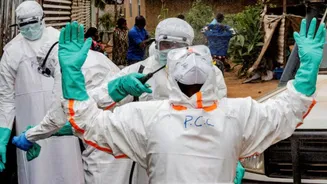
More than 260 attacks on health workers have been reported over the past six months, according to the UN coordinator, further hampering efforts to contain the disease. Health workers themselves have also been badly affected, with 160 infections and 43 deaths reported among them.
The lack of resources is another major concern. UN officials have warned that funding shortages could leave the response without sufficient resources within weeks, even as the number of infections continues to rise.
International agencies are attempting to strengthen surveillance, testing, contact tracing and treatment capacity. The WHO and partners have also announced the allocation of 70,000 doses of the Ervebo Ebola vaccine. However, the vaccine is not licensed specifically for the Bundibugyo strain, and its use is being pursued partly through clinical trials and for protecting frontline workers.
With transmission accelerating and large numbers of new infections occurring outside existing monitoring networks, health authorities face a race against time to prevent the DRC's Ebola crisis from becoming an even wider regional emergency.
With inputs from agencies
The outbreak, which has now become the largest and deadliest Ebola epidemic in the DRC's history, has recorded more than 5,000 confirmed cases. Official figures reported on August 20 showed 5,290 confirmed cases and 2,516 deaths, with hundreds of patients still in isolation and treatment.
UN Ebola coordinator Julien Harneis warned that the virus is spreading across an area larger than France, raising fears that the crisis could become increasingly difficult to control unless international support is rapidly expanded.
Fastest-growing Ebola outbreak puts response under pressure
The current epidemic began in northeastern DRC and has since spread across six provinces. It is being driven by the Bundibugyo species of Ebola, a relatively rare strain for which there is currently no approved vaccine or specific treatment.
The speed of transmission has set the outbreak apart from previous Ebola emergencies. Health officials say the number of infections has been rising faster than response teams can track and isolate them.
The World Health Organisation reported that 1,060 additional confirmed cases and 597 deaths were recorded between August 1 and its latest update. While stronger surveillance and testing contributed to the increase in reported numbers, the WHO said most of the rise reflected the actual expansion of the outbreak.
The scale of the crisis has already pushed the DRC's current epidemic beyond its previous record. The 2018-2020 Ebola outbreak, previously the country's deadliest, has now been surpassed in both infections and deaths.
Conflict, mistrust and attacks complicate containment
The Ebola response is unfolding in an extremely difficult environment. Parts of eastern DRC have been affected by prolonged insecurity, while misinformation and mistrust have made it harder for health teams to gain access to communities and trace people who may have been exposed.
More than 260 attacks on health workers have been reported over the past six months, according to the UN coordinator, further hampering efforts to contain the disease. Health workers themselves have also been badly affected, with 160 infections and 43 deaths reported among them.
The lack of resources is another major concern. UN officials have warned that funding shortages could leave the response without sufficient resources within weeks, even as the number of infections continues to rise.
International agencies are attempting to strengthen surveillance, testing, contact tracing and treatment capacity. The WHO and partners have also announced the allocation of 70,000 doses of the Ervebo Ebola vaccine. However, the vaccine is not licensed specifically for the Bundibugyo strain, and its use is being pursued partly through clinical trials and for protecting frontline workers.
With transmission accelerating and large numbers of new infections occurring outside existing monitoring networks, health authorities face a race against time to prevent the DRC's Ebola crisis from becoming an even wider regional emergency.
With inputs from agencies