










What is the story about?
India is burning up. In the national capital, temperatures hit a high of 45 degrees Celsius on Tuesday. In cities like Ahmedabad and Nagpur, the mercury levels have reached 41 to 43 degrees, and the temperature crossed the 47-degree mark in Uttar Pradesh’s Banda for a second straight day, with similarly brutal conditions as far south as Vidarbha in Maharashtra.
And it seems that Indians will not get any respite from this blistering heat as a potentially historic El Niño event forms in the Pacific Ocean. Scientists warn that this weather phenomenon could be worse than the one in 1877, which contributed to widespread mortality estimated at up to four per cent of the global population at the time.
Across the country, Indians are sweating it out in the heat with the mercury crossing the 40-degree mark in many cities. The city of Delhi hit 43.4 C (110 F) on Wednesday, the hottest May weather in the last two years. The city of Banda in Uttar Pradesh recorded the highest temperature in the country on Tuesday at 48.2 degrees Celsius.
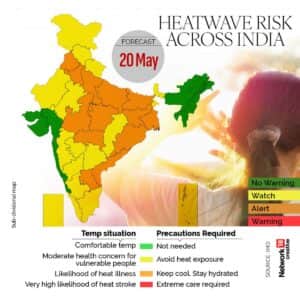
Large swathes of India continue to remain vulnerable to extreme heat, with the India Meteorological Department (IMD) predicting heatwave to severe heatwave conditions across several parts of the country.

Many experts have attributed this extreme heat in India to global and local factors. Locally, weak western disturbances, prolonged dry spells, and reduced cloud cover have intensified conditions significantly. In urban areas, the Urban Heat Island effect, driven by dense infrastructure, vehicles, air-conditioning, and industries, is making cities measurably hotter.
Globally, it is the developing El Niño in the equatorial Pacific that is the leading cause of the heat conditions in India
But what exactly is El Niño, and why is there so much buzz around it?
El Niño is a natural climate phenomenon that occurs when surface waters in the central and eastern Pacific Ocean become unusually warm. The warming weakens or alters global wind patterns, setting off a chain reaction that disrupts weather systems around the world. The phenomenon derives its name from Spanish for “The Little Boy”, a term coined centuries ago by Peruvian fishermen who observed warmer ocean waters around Christmas.
The event typically develops every two to seven years and can last up to a year. While it begins in the Pacific Ocean, its consequences are global.
This year, climate models have predicted that the developing El Niño could surpass the intensity of recent major events and potentially rival or exceed the extreme episodes seen in 1982-83, 1997-98, and 2015-16.
According to the US National Oceanic and Atmospheric Administration (NOAA) Climate Prediction Centre, there is an 82 per cent chance of El Niño forming between May and July 2026, and a 96 per cent chance of the event persisting through December 2026 to February 2027. NOAA also puts the odds of a strong or very strong El Niño at two-in-three.
Scientists and weather experts note that a strong or ‘super El Niño’ is when the three-monthly average of the sea surface temperature compared to the long-term average goes above 1.5°C.
And forecast data predicts that the temperature rise could exceed three degrees Celsius, surpassing the current known peak of 2.7 degrees Celsius recorded in 1877.
The biggest impact of El Niño is boosting global average temperature, typically by 0.2°C. As Liz Stephens, professor of climate risk and resilience at the University of Reading, told the
BBC, the world is “probably looking at record global temperatures next year, especially if this is a very strong El Niño event”.
Scientists note that El Niño could intensify weather extremes globally, including droughts, floods, and extreme heatwaves. In turn, this could result in huge financial losses. For instance, the 1982-83 El Nino contributed to approximately $4.1 trillion in global income losses, while the 1997-98 “El Niño of the Century” caused an estimated $5.7 trillion in economic losses globally.
India is particularly vulnerable to El Niño because of the close relationship between Pacific Ocean temperatures and the southwest monsoon.
For those unaware, the southwest monsoon provides nearly 70 per cent of the country’s annual rainfall. Hence, if El Niño strengthens, it will weaken the monsoon winds, reducing the precipitation and the overall rainfall that the country receives.
India’s weatherman has already predicted that India may only see around 800 mm of rainfall this season. This, in turn, would result in catastrophe for around 60 per cent of farmers in the country reliant on monsoon rainfall for the kharif season.

And the impact from the farms will move to households with lower crop output, pushing up food prices, particularly for staples such as rice, pulses, vegetables, and edible oils.
Previous El Niño events reveal just how devastating this weather phenomenon can be. The 2015-16 Super El Niño caused India’s monsoon rainfall to fall, triggering drought-like conditions across several states. The 2023-2024 El Niño resulted in erratic rainfall and rising temperatures across India. This caused mango and cashew growers heavy losses.
The IMD has also noted that El Niño would result in divergent rain conditions across the country. While India’s northern, western, and central regions will face the highest risk in the form of dry conditions, places like Chennai will receive heavy rainfall that could cause massive floods and destruction.
Rising temperatures owing to El Niño will also place added strain on India’s already burdened power grid.
All in all, it seems India is in for a long, brutal summer.
With inputs from agencies
And it seems that Indians will not get any respite from this blistering heat as a potentially historic El Niño event forms in the Pacific Ocean. Scientists warn that this weather phenomenon could be worse than the one in 1877, which contributed to widespread mortality estimated at up to four per cent of the global population at the time.
India bakes in the heat
Across the country, Indians are sweating it out in the heat with the mercury crossing the 40-degree mark in many cities. The city of Delhi hit 43.4 C (110 F) on Wednesday, the hottest May weather in the last two years. The city of Banda in Uttar Pradesh recorded the highest temperature in the country on Tuesday at 48.2 degrees Celsius.
Large swathes of India continue to remain vulnerable to extreme heat, with the India Meteorological Department (IMD) predicting heatwave to severe heatwave conditions across several parts of the country.
A woman bathes a child to provide relief from the scorching heat during summer season, in Nadia, West Bengal. PTI
Many experts have attributed this extreme heat in India to global and local factors. Locally, weak western disturbances, prolonged dry spells, and reduced cloud cover have intensified conditions significantly. In urban areas, the Urban Heat Island effect, driven by dense infrastructure, vehicles, air-conditioning, and industries, is making cities measurably hotter.
Globally, it is the developing El Niño in the equatorial Pacific that is the leading cause of the heat conditions in India
El Niño, explained
But what exactly is El Niño, and why is there so much buzz around it?
El Niño is a natural climate phenomenon that occurs when surface waters in the central and eastern Pacific Ocean become unusually warm. The warming weakens or alters global wind patterns, setting off a chain reaction that disrupts weather systems around the world. The phenomenon derives its name from Spanish for “The Little Boy”, a term coined centuries ago by Peruvian fishermen who observed warmer ocean waters around Christmas.
The event typically develops every two to seven years and can last up to a year. While it begins in the Pacific Ocean, its consequences are global.
This year, climate models have predicted that the developing El Niño could surpass the intensity of recent major events and potentially rival or exceed the extreme episodes seen in 1982-83, 1997-98, and 2015-16.
According to the US National Oceanic and Atmospheric Administration (NOAA) Climate Prediction Centre, there is an 82 per cent chance of El Niño forming between May and July 2026, and a 96 per cent chance of the event persisting through December 2026 to February 2027. NOAA also puts the odds of a strong or very strong El Niño at two-in-three.
🚨: The 2026 “Super El Niño” is projected to be the strongest in 150 years pic.twitter.com/uifb45kQil
— Curiosity (@CuriosityonX) May 17, 2026
Scientists and weather experts note that a strong or ‘super El Niño’ is when the three-monthly average of the sea surface temperature compared to the long-term average goes above 1.5°C.
And forecast data predicts that the temperature rise could exceed three degrees Celsius, surpassing the current known peak of 2.7 degrees Celsius recorded in 1877.
Consequences of a strong El Niño
The biggest impact of El Niño is boosting global average temperature, typically by 0.2°C. As Liz Stephens, professor of climate risk and resilience at the University of Reading, told the
Scientists note that El Niño could intensify weather extremes globally, including droughts, floods, and extreme heatwaves. In turn, this could result in huge financial losses. For instance, the 1982-83 El Nino contributed to approximately $4.1 trillion in global income losses, while the 1997-98 “El Niño of the Century” caused an estimated $5.7 trillion in economic losses globally.
El Niño’s impact on India
India is particularly vulnerable to El Niño because of the close relationship between Pacific Ocean temperatures and the southwest monsoon.
For those unaware, the southwest monsoon provides nearly 70 per cent of the country’s annual rainfall. Hence, if El Niño strengthens, it will weaken the monsoon winds, reducing the precipitation and the overall rainfall that the country receives.
India’s weatherman has already predicted that India may only see around 800 mm of rainfall this season. This, in turn, would result in catastrophe for around 60 per cent of farmers in the country reliant on monsoon rainfall for the kharif season.
A super El Niño will impact rainfall, causing drought in many parts of the country. Representational image/Reuters
And the impact from the farms will move to households with lower crop output, pushing up food prices, particularly for staples such as rice, pulses, vegetables, and edible oils.
Previous El Niño events reveal just how devastating this weather phenomenon can be. The 2015-16 Super El Niño caused India’s monsoon rainfall to fall, triggering drought-like conditions across several states. The 2023-2024 El Niño resulted in erratic rainfall and rising temperatures across India. This caused mango and cashew growers heavy losses.
The IMD has also noted that El Niño would result in divergent rain conditions across the country. While India’s northern, western, and central regions will face the highest risk in the form of dry conditions, places like Chennai will receive heavy rainfall that could cause massive floods and destruction.
Rising temperatures owing to El Niño will also place added strain on India’s already burdened power grid.
All in all, it seems India is in for a long, brutal summer.
With inputs from agencies