







What is the story about?
The Strait of Hormuz has become one of the world’s most volatile maritime zones amid the escalating confrontation between Iran and the United States and Israel. Over the past several days, a string of incidents involving tankers, cargo vessels and bulk carriers has unfolded across the Persian Gulf and nearby waterways.
Several ships have been struck by projectiles, explosive boats or suspected drones, while others have suffered hull damage or onboard fires.
At least sixteen vessels have reportedly been hit since hostilities began on February 28, according to maritime security sources and port authorities.
One of the most severe recent incidents occurred in Iraqi territorial waters, where two oil tankers carrying fuel cargoes were attacked and set on fire on Wednesday.
According to port officials and maritime security companies, explosive-laden boats believed to be linked to Iranian forces targeted the Marshall Islands-flagged Safesea Vishnu and the Malta-flagged Zefyros during ship-to-ship cargo operations.
The vessels were loading fuel shipments near Iraq’s southern oil export infrastructure when they were struck. Officials said the ships were positioned in a transfer zone within Iraqi waters when the assault took place late at night.
Rescue operations were launched quickly as crew members abandoned the burning ships. “A boat belonging to the Iraqi Ports Company rescued 25 crew members from the two vessels, and the fires are still burning on both ships,” Farhan al-Fartousi, GCPI's director general, told
Reuters.
Emergency teams continued to comb the surrounding waters for missing crew members following the incident. “We recovered the body of a foreign crew member from the water,” one port security official said.
According to Iraq’s State Organisation for Marketing of Oil (SOMO), the Safesea Vishnu had been chartered by an Iraqi company working under contract with the organisation. The Zefyros had loaded condensate products produced by the Basra Gas Company.
As the fires continued to burn on both tankers, Iraqi authorities halted operations at oil export ports as a precautionary measure. However, commercial ports elsewhere in the country remained operational.
Beyond the two tankers set ablaze near Iraq, several other vessels operating in Gulf waters have reported being hit by projectiles.
One of these incidents involved the Japan-flagged container ship ONE Majesty. Maritime security companies said the vessel was struck by an unidentified projectile while anchored approximately 25 nautical miles northwest of Ras Al Khaimah in the United Arab Emirates, on Wednesday.
The ship’s owner, Mitsui OSK Lines, along with Ocean Network Express, which had chartered the vessel, said the impact caused minor structural damage above the waterline.
Despite the strike, the vessel remained operational and seaworthy. All crew members were confirmed safe, and the ship continued to function while authorities examined the damage.
Another incident involved the Marshall Islands-flagged bulk carrier Star Gwyneth. Maritime risk management firm Vanguard said the ship was hit by a projectile roughly 50 nautical miles northwest of Dubai.
The impact damaged the vessel’s hull in the cargo hold section but did not cause injuries among the crew. Star Bulk Carriers, the vessel’s owner, confirmed the ship had been struck while it was anchored. Despite the damage, the ship did not take on water and there were no reports of listing.
Another attack was reported early Thursday when a container ship was struck approximately 35 nautical miles north of Jebel Ali, according to the United Kingdom Maritime Trade Operations (UKMTO).
The projectile triggered a small fire onboard. Authorities said the crew remained safe, although the full damage assessment was complicated by darkness during the initial response.
The UKMTO described the incident as one of several attacks reported within a short period, noting that six vessels had been targeted within a span of two days.
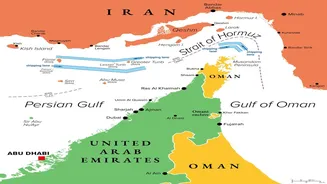
The violence has also reached the narrow maritime corridor of the Strait of Hormuz itself, where vessels must pass between Iranian and Omani waters in order to enter or leave the Gulf.
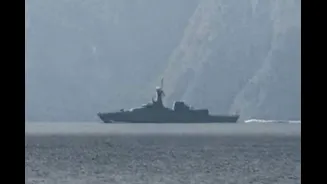
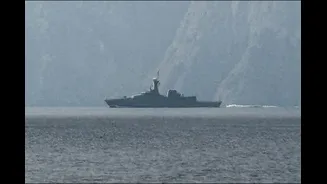
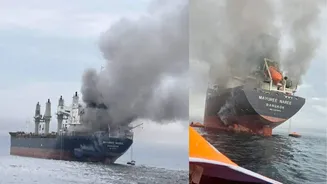
A Thai-flagged bulk carrier named Mayuree Naree was struck by two projectiles while navigating through the strait earlier in the week. The attack damaged the ship’s engine room and started a fire on board.
"Three crew members are reported missing and believed to be trapped in the engine room," Precious Shipping said. "The company is working with the relevant authorities to rescue these three missing crew members," it said, adding that the remaining 20 crew members had been safely evacuated and were ashore in Oman.
Images released by the Thai navy showed smoke rising from the rear section of the ship following the incident.
Iran’s elite military unit, the Islamic Revolutionary Guard Corps, later indicated that Iranian fighters had fired on the vessel. This statement suggested a direct engagement involving Iranian forces rather than unidentified projectiles or drones.
Previously, most reported attacks in the region had involved missiles, drones or explosive boats. Iran’s Revolutionary Guards have repeatedly warned that vessels travelling through the Strait of Hormuz could be targeted amid the ongoing conflict.
With the security situation deteriorating, maritime traffic through the Gulf has slowed dramatically. Many shipping companies are reconsidering routes or delaying voyages until conditions improve.
Some vessels have taken extraordinary precautions to avoid detection while crossing the Strait of Hormuz. One example involved the tanker Shenlong, a Liberian-flagged vessel transporting Saudi crude oil to India.
The ship temporarily turned off its Automatic Identification System (AIS) transponder while navigating the strait before reappearing on maritime tracking systems days later.
The tanker successfully reached Mumbai Port on Wednesday, becoming the first vessel bound for India to safely cross the strait since the conflict escalated, reported the Hindustan Times.
“The ship Shenlong is carrying 1,35,335 metric tonnes of crude of oil. She is berthed at Jawahar Dweep and has started discharging the crude cargo,” Praveen Singh, deputy conservator of Mumbai Port Authority (MbPA) said.
India depends heavily on energy shipments passing through the Strait of Hormuz, with more than half of its crude oil and natural gas imports travelling along the route. The successful arrival of the Shenlong
offered some reassurance for India’s energy supply chain.
“There are 29 Indian, Pakistani and Filipino crew on board, while the ship’s captain is Sukshant Singh Sandhu. The ship will take nearly 36 hours to discharge the cargo,” said Jitendra Jadhav who works for Atlantic Global Shipping, which is handling Shenlong in Mumbai.
Despite this successful transit, many ships remain stranded or diverted due to the conflict. According to India’s Directorate General of Shipping, at least 28 Indian-flagged vessels were located in or near the Strait of Hormuz when the war broke out.
Several have since moved away from the area to safer waters. Seven vessels — Desh Mahima, Desh Abhiman, Swarna Kamal, Vishva Prerna, Jag Viraat, Jag Lokesh and LNGC Aseem — have navigated into the Arabian Sea to avoid the danger zone.
Another ship, Jag Lakshya, changed course and proceeded toward Angola.
Approximately 20 percent of the world’s oil supply passes through the Strait of Hormuz each day. Iranian officials have stated that the strait is under their control and have suggested they could prevent oil shipments destined for the United States, Israel or their allies.
Iran’s Revolutionary Guards have also warned that if attacks on Iran persist, they would not allow "one litre of oil" to be shipped from the West Asia to the US, Israel or their partners.
Reports have indicated that Iran may have deployed naval mines within the waterway as the shipping industry urges the United States Navy to escort merchant vessels through the strait.
However, sources familiar with the discussions told Reuters that the Navy has declined repeated requests for escorts since the conflict began, citing the high level of risk involved.
Meanwhile, the G7 group of nations — including the United States, Canada, Japan, Italy, Britain, Germany and France — has discussed the possibility of providing security escorts for commercial shipping operating in the Gulf.
Oil prices surged earlier in the week to nearly $120 per barrel before easing slightly to around $90. Prices climbed again as the latest attacks raised fears of prolonged supply disruptions.
The conflict has already caused one of the most significant energy shocks since the 1970s oil crises. The spokesperson for Iran's military command warned that the conflict could push oil prices even higher.
"Get ready for oil to be $200 a barrel, because the oil price depends on regional security, which you have destabilised."
The International Energy Agency responded by recommending the release of 400 million barrels from global strategic oil reserves in an attempt to stabilise prices. The measure represents the largest coordinated intervention in oil markets ever undertaken.
With inputs from agencies
Several ships have been struck by projectiles, explosive boats or suspected drones, while others have suffered hull damage or onboard fires.
At least sixteen vessels have reportedly been hit since hostilities began on February 28, according to maritime security sources and port authorities.
How did the latest wave of tanker attacks unfold?
One of the most severe recent incidents occurred in Iraqi territorial waters, where two oil tankers carrying fuel cargoes were attacked and set on fire on Wednesday.
According to port officials and maritime security companies, explosive-laden boats believed to be linked to Iranian forces targeted the Marshall Islands-flagged Safesea Vishnu and the Malta-flagged Zefyros during ship-to-ship cargo operations.
The vessels were loading fuel shipments near Iraq’s southern oil export infrastructure when they were struck. Officials said the ships were positioned in a transfer zone within Iraqi waters when the assault took place late at night.
Rescue operations were launched quickly as crew members abandoned the burning ships. “A boat belonging to the Iraqi Ports Company rescued 25 crew members from the two vessels, and the fires are still burning on both ships,” Farhan al-Fartousi, GCPI's director general, told
Emergency teams continued to comb the surrounding waters for missing crew members following the incident. “We recovered the body of a foreign crew member from the water,” one port security official said.
According to Iraq’s State Organisation for Marketing of Oil (SOMO), the Safesea Vishnu had been chartered by an Iraqi company working under contract with the organisation. The Zefyros had loaded condensate products produced by the Basra Gas Company.
As the fires continued to burn on both tankers, Iraqi authorities halted operations at oil export ports as a precautionary measure. However, commercial ports elsewhere in the country remained operational.
Are commercial ships across the Gulf being targeted?
Beyond the two tankers set ablaze near Iraq, several other vessels operating in Gulf waters have reported being hit by projectiles.
One of these incidents involved the Japan-flagged container ship ONE Majesty. Maritime security companies said the vessel was struck by an unidentified projectile while anchored approximately 25 nautical miles northwest of Ras Al Khaimah in the United Arab Emirates, on Wednesday.
The ship’s owner, Mitsui OSK Lines, along with Ocean Network Express, which had chartered the vessel, said the impact caused minor structural damage above the waterline.
Despite the strike, the vessel remained operational and seaworthy. All crew members were confirmed safe, and the ship continued to function while authorities examined the damage.
Another incident involved the Marshall Islands-flagged bulk carrier Star Gwyneth. Maritime risk management firm Vanguard said the ship was hit by a projectile roughly 50 nautical miles northwest of Dubai.
The impact damaged the vessel’s hull in the cargo hold section but did not cause injuries among the crew. Star Bulk Carriers, the vessel’s owner, confirmed the ship had been struck while it was anchored. Despite the damage, the ship did not take on water and there were no reports of listing.
Another attack was reported early Thursday when a container ship was struck approximately 35 nautical miles north of Jebel Ali, according to the United Kingdom Maritime Trade Operations (UKMTO).
The projectile triggered a small fire onboard. Authorities said the crew remained safe, although the full damage assessment was complicated by darkness during the initial response.
The UKMTO described the incident as one of several attacks reported within a short period, noting that six vessels had been targeted within a span of two days.
What happened inside the Strait of Hormuz itself?
The violence has also reached the narrow maritime corridor of the Strait of Hormuz itself, where vessels must pass between Iranian and Omani waters in order to enter or leave the Gulf.
A Thai-flagged bulk carrier named Mayuree Naree was struck by two projectiles while navigating through the strait earlier in the week. The attack damaged the ship’s engine room and started a fire on board.
"Three crew members are reported missing and believed to be trapped in the engine room," Precious Shipping said. "The company is working with the relevant authorities to rescue these three missing crew members," it said, adding that the remaining 20 crew members had been safely evacuated and were ashore in Oman.
Images released by the Thai navy showed smoke rising from the rear section of the ship following the incident.
Iran’s elite military unit, the Islamic Revolutionary Guard Corps, later indicated that Iranian fighters had fired on the vessel. This statement suggested a direct engagement involving Iranian forces rather than unidentified projectiles or drones.
Previously, most reported attacks in the region had involved missiles, drones or explosive boats. Iran’s Revolutionary Guards have repeatedly warned that vessels travelling through the Strait of Hormuz could be targeted amid the ongoing conflict.
How are countries & shipping companies responding?
With the security situation deteriorating, maritime traffic through the Gulf has slowed dramatically. Many shipping companies are reconsidering routes or delaying voyages until conditions improve.
Some vessels have taken extraordinary precautions to avoid detection while crossing the Strait of Hormuz. One example involved the tanker Shenlong, a Liberian-flagged vessel transporting Saudi crude oil to India.
The ship temporarily turned off its Automatic Identification System (AIS) transponder while navigating the strait before reappearing on maritime tracking systems days later.
The tanker successfully reached Mumbai Port on Wednesday, becoming the first vessel bound for India to safely cross the strait since the conflict escalated, reported the Hindustan Times.
“The ship Shenlong is carrying 1,35,335 metric tonnes of crude of oil. She is berthed at Jawahar Dweep and has started discharging the crude cargo,” Praveen Singh, deputy conservator of Mumbai Port Authority (MbPA) said.
India depends heavily on energy shipments passing through the Strait of Hormuz, with more than half of its crude oil and natural gas imports travelling along the route. The successful arrival of the Shenlong
“There are 29 Indian, Pakistani and Filipino crew on board, while the ship’s captain is Sukshant Singh Sandhu. The ship will take nearly 36 hours to discharge the cargo,” said Jitendra Jadhav who works for Atlantic Global Shipping, which is handling Shenlong in Mumbai.
Despite this successful transit, many ships remain stranded or diverted due to the conflict. According to India’s Directorate General of Shipping, at least 28 Indian-flagged vessels were located in or near the Strait of Hormuz when the war broke out.
Several have since moved away from the area to safer waters. Seven vessels — Desh Mahima, Desh Abhiman, Swarna Kamal, Vishva Prerna, Jag Viraat, Jag Lokesh and LNGC Aseem — have navigated into the Arabian Sea to avoid the danger zone.
Another ship, Jag Lakshya, changed course and proceeded toward Angola.
What next?
Approximately 20 percent of the world’s oil supply passes through the Strait of Hormuz each day. Iranian officials have stated that the strait is under their control and have suggested they could prevent oil shipments destined for the United States, Israel or their allies.
Iran’s Revolutionary Guards have also warned that if attacks on Iran persist, they would not allow "one litre of oil" to be shipped from the West Asia to the US, Israel or their partners.
Reports have indicated that Iran may have deployed naval mines within the waterway as the shipping industry urges the United States Navy to escort merchant vessels through the strait.
However, sources familiar with the discussions told Reuters that the Navy has declined repeated requests for escorts since the conflict began, citing the high level of risk involved.
Meanwhile, the G7 group of nations — including the United States, Canada, Japan, Italy, Britain, Germany and France — has discussed the possibility of providing security escorts for commercial shipping operating in the Gulf.
Oil prices surged earlier in the week to nearly $120 per barrel before easing slightly to around $90. Prices climbed again as the latest attacks raised fears of prolonged supply disruptions.
The conflict has already caused one of the most significant energy shocks since the 1970s oil crises. The spokesperson for Iran's military command warned that the conflict could push oil prices even higher.
"Get ready for oil to be $200 a barrel, because the oil price depends on regional security, which you have destabilised."
The International Energy Agency responded by recommending the release of 400 million barrels from global strategic oil reserves in an attempt to stabilise prices. The measure represents the largest coordinated intervention in oil markets ever undertaken.
With inputs from agencies