






What is the story about?
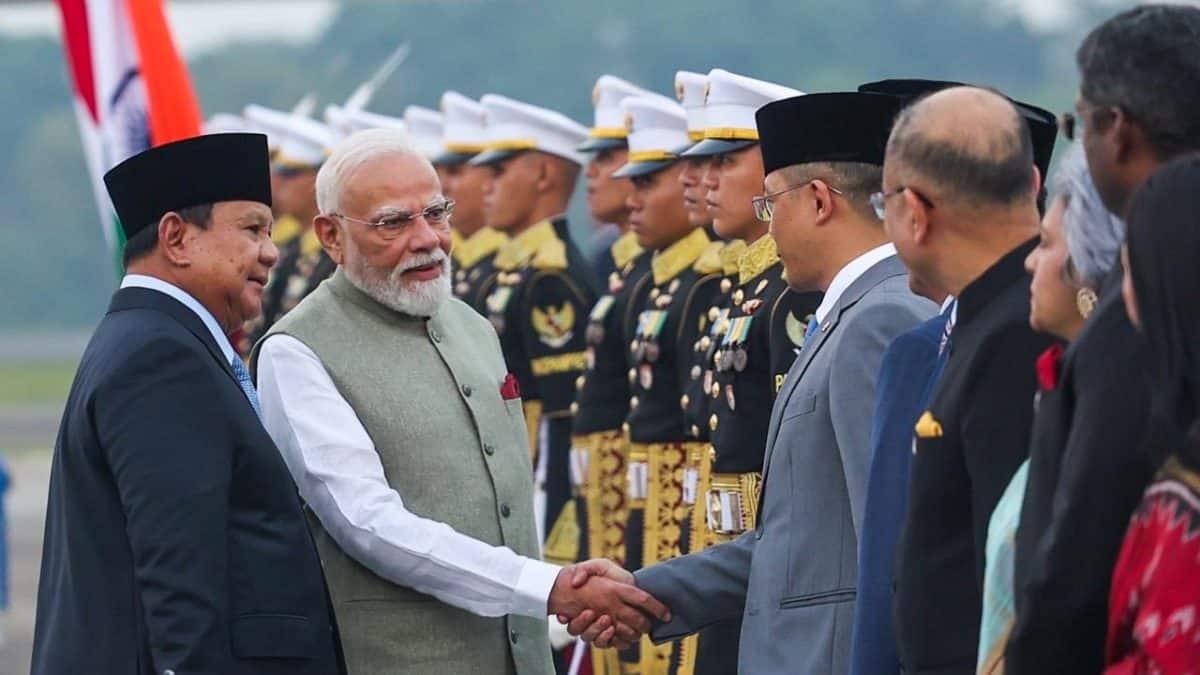
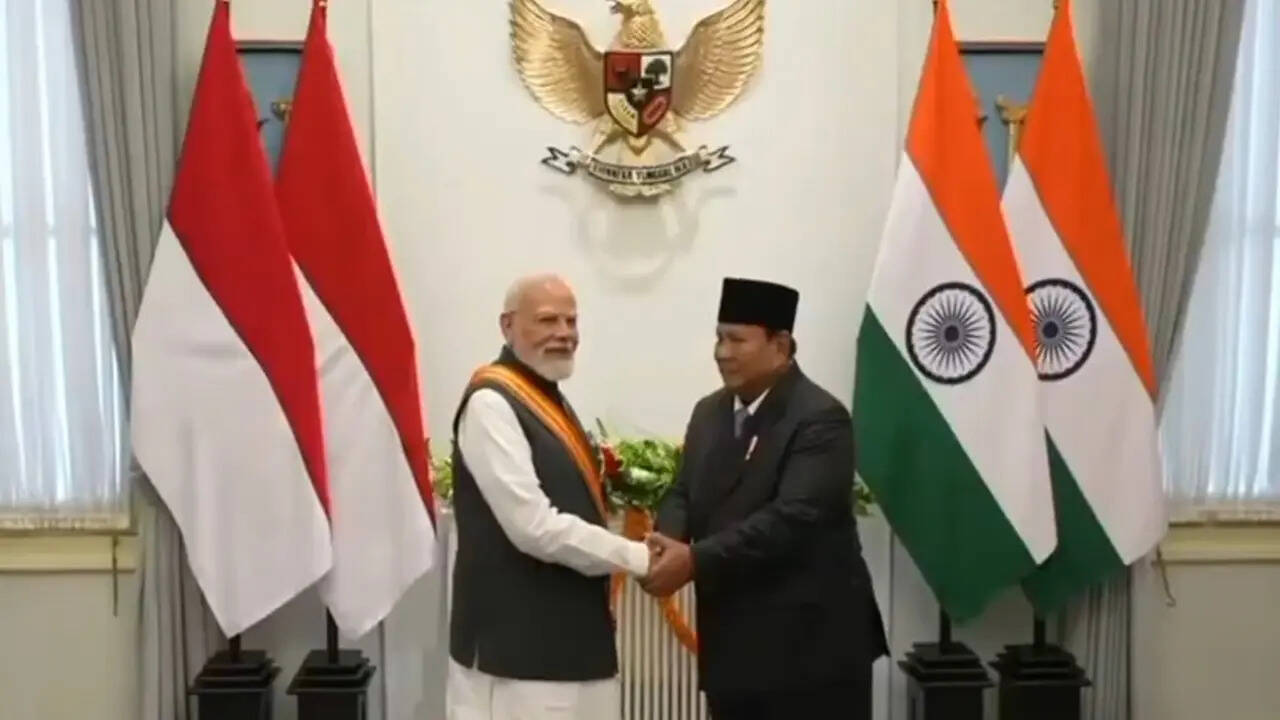
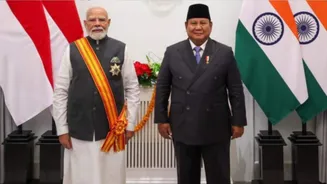
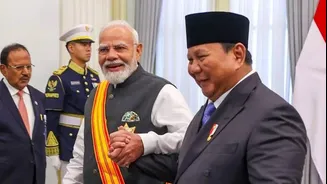
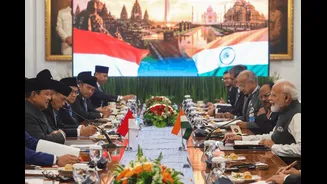
Prime Minister Narendra Modi has had a very fruitful visit to Indonesia. On his three-day visit, which ends today (July 8), the PM signed over 20 deals on defence, maritime cooperation, critical minerals, technology, digital payments, and education.
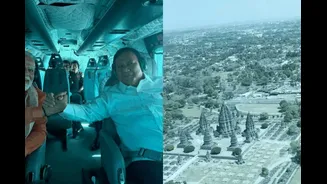
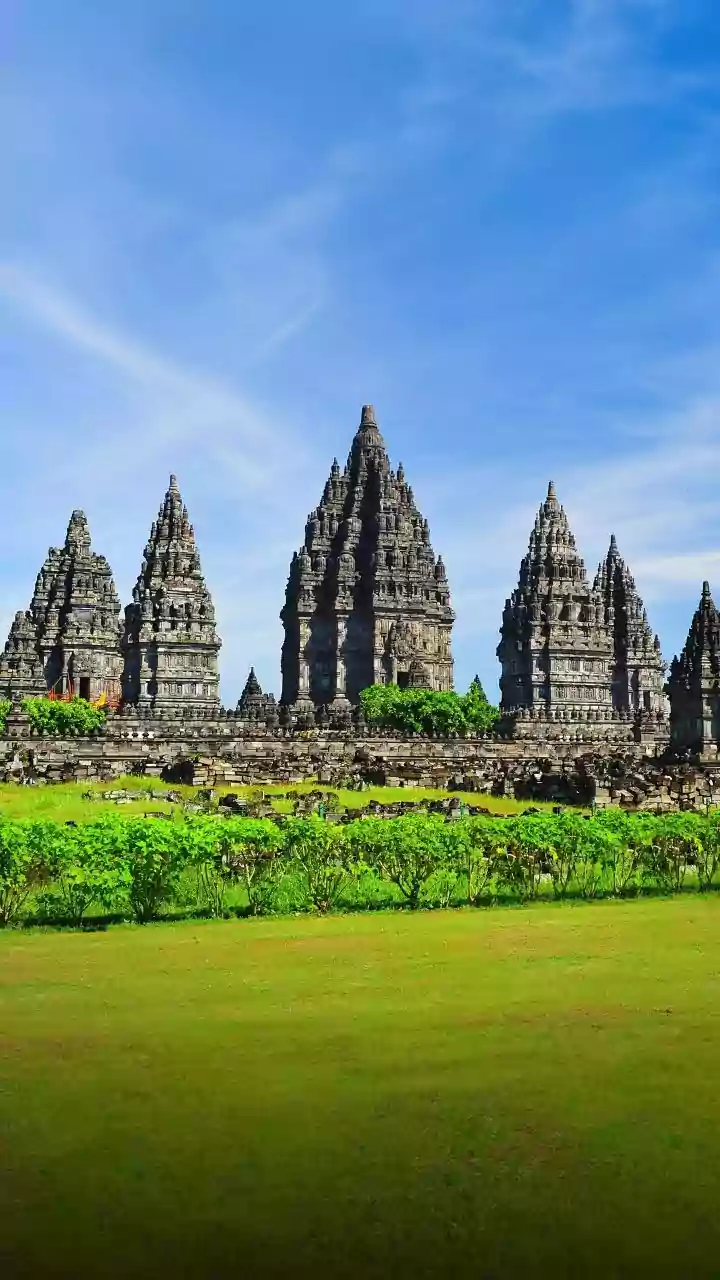
Amid this flurry of agreements and huge outcomes, one is of great cultural significance. India has stepped in to help Indonesia restore the iconic 1,000-year-old Prambanan Temple in Yogyakarta. Moreover, PM Modi is visiting the temple today along with Indonesian President Prabowo Subianto.
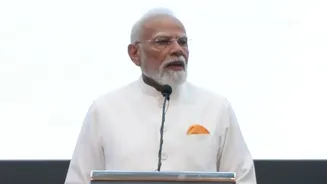
“Friends, tomorrow I will have the privilege of launching the conservation project of the Prambanan Temple with President Prabowo. The Prambanan Temple, which is more than 1,000 years old, is a symbol of the shared cultural heritage of India and Indonesia,” PM Modi said during a joint statement with President Subianto on Tuesday (July 7).
But what makes this temple so iconic? Why is PM Modi visiting it?
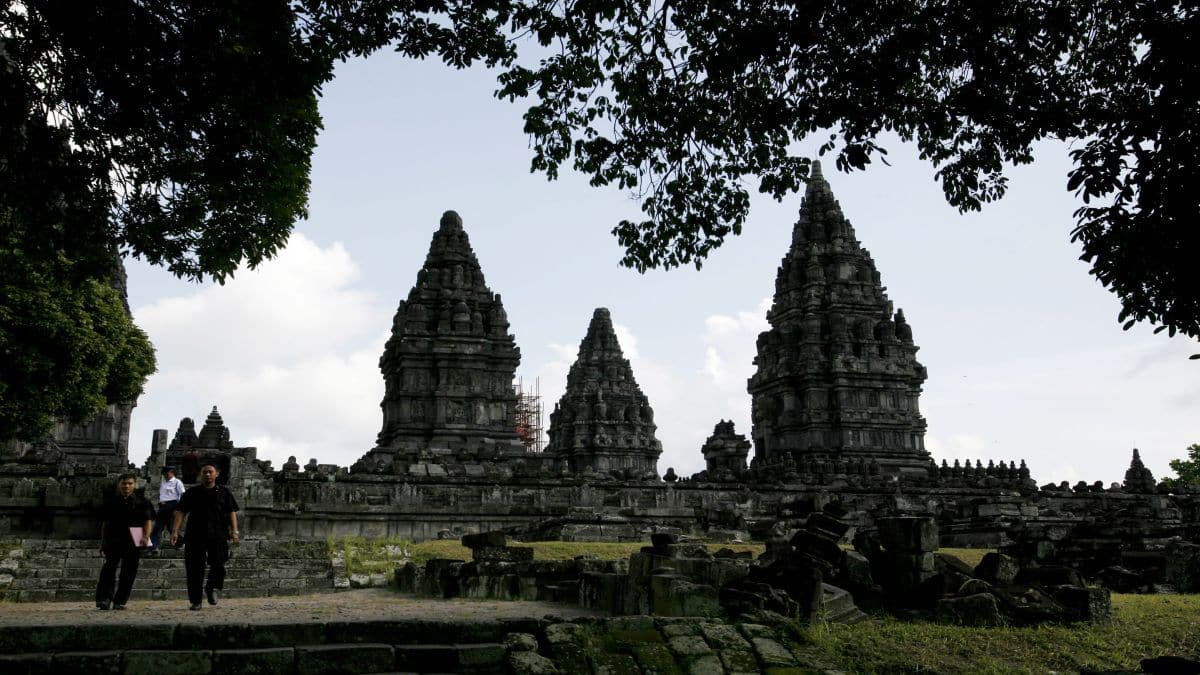
The Prambanan Temple, built in the ninth century, is Indonesia’s largest Hindu temple complex. Located a short distance from the Buddhist Borobudur temple, the two structures indicate that in Java, Buddhism and Hinduism lived peacefully next to one another.
The Prambanan is a masterpiece of Hindu architecture. Rather than one single structure, it is a complex of temples built during the reigns of two kings, namely Rakai Pikatan and Rakai Balitung. The complex consists of 240 temples dedicated to Shiva, Vishnu, and Brahma.
There’s also a Javanese legend for the Prambanan Temple. According to the legend, there was a man named Bandung Bondowoso who loved Roro Jonggrang. However, Jonggrang demanded proof of Bondowoso’s love and set him a challenge of making her a temple with 1,000 statues within one night. Bondowoso took the help of genies to accomplish this almost impossible task. The request was nearly fulfilled when Jonggrang asked the villagers to pound rice and to set a fire in order to make it look like daybreak. Thus cheated, Bondowoso, who only completed 999 statues, cursed Jonggrang to be the thousandth statue.
The design of the Prambanan complex is unique. It contains three concentric squares, with the inner one containing 16 temples. Of these, the most significant is the 47-metre tall central Shiva temple flanked to the north by the Brahma temple and to the south by the Vishnu temple.
Inside the Shiva temple, one can see impressive and interesting carvings. The interior of the Shiva temple is divided into four rooms — the main room has a Shiva statue, while the other three rooms have the statues of Durga (Shiva’s wife), Agastya (Shiva’s teacher), and Ganesh (Shiva’s son).
The carvings on the walls of the Prambanan temple complex feature scenes from the Ramayana, one of India’s most famous epics. According to guides, the Ramayana is narrated through the carvings on the wall.
The Prambanan temple was abandoned in the 10th century, and over the years, powerful earthquakes reduced many of the structures to ruins. However, in 1991, the Prambanan Temple was named a World Heritage Site by Unesco due to its remarkable cultural value and magnificent architecture.
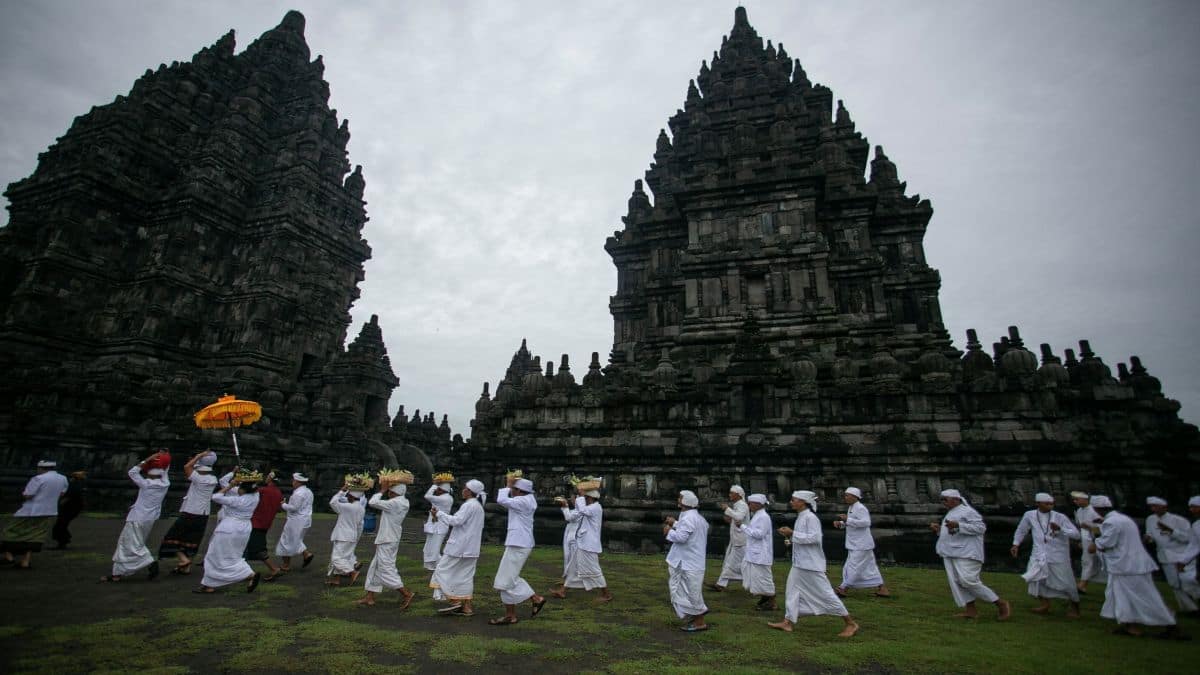
Today, the Prambanan temple is a popular tourist site. But it also remains a place of worship for Hindus in Indonesia.
On full moon evenings from May to October, the Ramayana ballet is performed in an open-air theatre on the southern side of the temple.
After detailed discussions on deepening ties between India and Indonesia, PM Modi announced that New Delhi would provide assistance to Jakarta for the conservation of the Prambanan Temple. He noted that the temple symbolises the shared cultural heritage of Indonesia and India.
Later, a joint statement said, “Both leaders welcomed the inauguration of the India-supported project towards restoration and conservation of the Unesco World Heritage Prambanan Temple Compounds in Yogyakarta by Archaeological Survey of India (ASI).”
Earlier in March, an ASI team had surveyed the temple premises and determined that the process of restoration and additional preservation would be completed through the anastylosis technique, a process of reassembling buildings using the original stones discovered on location. The ASI team also highlighted that the scattered architectural blocks across the grounds make the work challenging, as matching stones to specific temples demands meticulous cataloguing, reported The Print.
India’s decision to help restore the Prambanan Temple is part of the country’s ongoing strategy of reviving shared heritage.
One of the earliest examples of this is the MoU signed with Vietnam in 2014 to restore the UNESCO-listed Mỹ Sơn Sanctuary. The temple complex is mostly made up of Shaivite temples and was constructed between the 4th and 13th centuries. It was the religious hub of the Champa kingdom. It also has Cham Buddhist temple towers from the 7th to the 11th centuries.
In 2017, India also signed an MoU with Myanmar to restore monuments damaged by the 2016 earthquake in the Unesco-listed Bagan Archaeological Zone.
India has also played a major role in conserving Cambodia’s Angkor Wat complex. And in Laos, India completed restoration work at the 1,000-year-old Vat Phou Temple dedicated to Lord Shiva in 2024.
Under PM Modi, conservation work has also been undertaken by India in Sri Lanka and Bangladesh.
With inputs from agencies
Amid this flurry of agreements and huge outcomes, one is of great cultural significance. India has stepped in to help Indonesia restore the iconic 1,000-year-old Prambanan Temple in Yogyakarta. Moreover, PM Modi is visiting the temple today along with Indonesian President Prabowo Subianto.
The majestic Prambanan Temple! pic.twitter.com/pRS2S9X5gm
— Narendra Modi (@narendramodi) July 8, 2026
“Friends, tomorrow I will have the privilege of launching the conservation project of the Prambanan Temple with President Prabowo. The Prambanan Temple, which is more than 1,000 years old, is a symbol of the shared cultural heritage of India and Indonesia,” PM Modi said during a joint statement with President Subianto on Tuesday (July 7).
But what makes this temple so iconic? Why is PM Modi visiting it?
The history of the Prambanan Temple
The Prambanan Temple, built in the ninth century, is Indonesia’s largest Hindu temple complex. Located a short distance from the Buddhist Borobudur temple, the two structures indicate that in Java, Buddhism and Hinduism lived peacefully next to one another.
The Prambanan is a masterpiece of Hindu architecture. Rather than one single structure, it is a complex of temples built during the reigns of two kings, namely Rakai Pikatan and Rakai Balitung. The complex consists of 240 temples dedicated to Shiva, Vishnu, and Brahma.
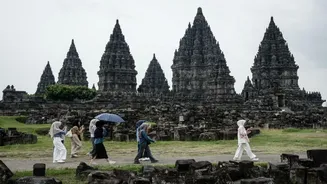
Visitors walk through the Hindu temples at Prambanan in the ancient Indonesian city of Yogyakarta. File image/Reuters
There’s also a Javanese legend for the Prambanan Temple. According to the legend, there was a man named Bandung Bondowoso who loved Roro Jonggrang. However, Jonggrang demanded proof of Bondowoso’s love and set him a challenge of making her a temple with 1,000 statues within one night. Bondowoso took the help of genies to accomplish this almost impossible task. The request was nearly fulfilled when Jonggrang asked the villagers to pound rice and to set a fire in order to make it look like daybreak. Thus cheated, Bondowoso, who only completed 999 statues, cursed Jonggrang to be the thousandth statue.
The design of the Prambanan complex is unique. It contains three concentric squares, with the inner one containing 16 temples. Of these, the most significant is the 47-metre tall central Shiva temple flanked to the north by the Brahma temple and to the south by the Vishnu temple.
Inside the Shiva temple, one can see impressive and interesting carvings. The interior of the Shiva temple is divided into four rooms — the main room has a Shiva statue, while the other three rooms have the statues of Durga (Shiva’s wife), Agastya (Shiva’s teacher), and Ganesh (Shiva’s son).
The carvings on the walls of the Prambanan temple complex feature scenes from the Ramayana, one of India’s most famous epics. According to guides, the Ramayana is narrated through the carvings on the wall.
The Prambanan temple was abandoned in the 10th century, and over the years, powerful earthquakes reduced many of the structures to ruins. However, in 1991, the Prambanan Temple was named a World Heritage Site by Unesco due to its remarkable cultural value and magnificent architecture.
Today, the Prambanan temple is a popular tourist site. But it also remains a place of worship for Hindus in Indonesia.
On full moon evenings from May to October, the Ramayana ballet is performed in an open-air theatre on the southern side of the temple.
Hindu worshipers carry offerings as they walk around Prambanan temple during the Tawur Agung Kesanga ritual ahead of Nyepi Day, a day of silence for self-reflection marking the Balinese Hindu new year, in Sleman, Yogyakarta, Indonesia. File image/Reuters
India to assist in conservation of Prambanan temple
After detailed discussions on deepening ties between India and Indonesia, PM Modi announced that New Delhi would provide assistance to Jakarta for the conservation of the Prambanan Temple. He noted that the temple symbolises the shared cultural heritage of Indonesia and India.
Later, a joint statement said, “Both leaders welcomed the inauguration of the India-supported project towards restoration and conservation of the Unesco World Heritage Prambanan Temple Compounds in Yogyakarta by Archaeological Survey of India (ASI).”
Earlier in March, an ASI team had surveyed the temple premises and determined that the process of restoration and additional preservation would be completed through the anastylosis technique, a process of reassembling buildings using the original stones discovered on location. The ASI team also highlighted that the scattered architectural blocks across the grounds make the work challenging, as matching stones to specific temples demands meticulous cataloguing, reported The Print.
India’s cultural diplomacy
India’s decision to help restore the Prambanan Temple is part of the country’s ongoing strategy of reviving shared heritage.
One of the earliest examples of this is the MoU signed with Vietnam in 2014 to restore the UNESCO-listed Mỹ Sơn Sanctuary. The temple complex is mostly made up of Shaivite temples and was constructed between the 4th and 13th centuries. It was the religious hub of the Champa kingdom. It also has Cham Buddhist temple towers from the 7th to the 11th centuries.
In 2017, India also signed an MoU with Myanmar to restore monuments damaged by the 2016 earthquake in the Unesco-listed Bagan Archaeological Zone.
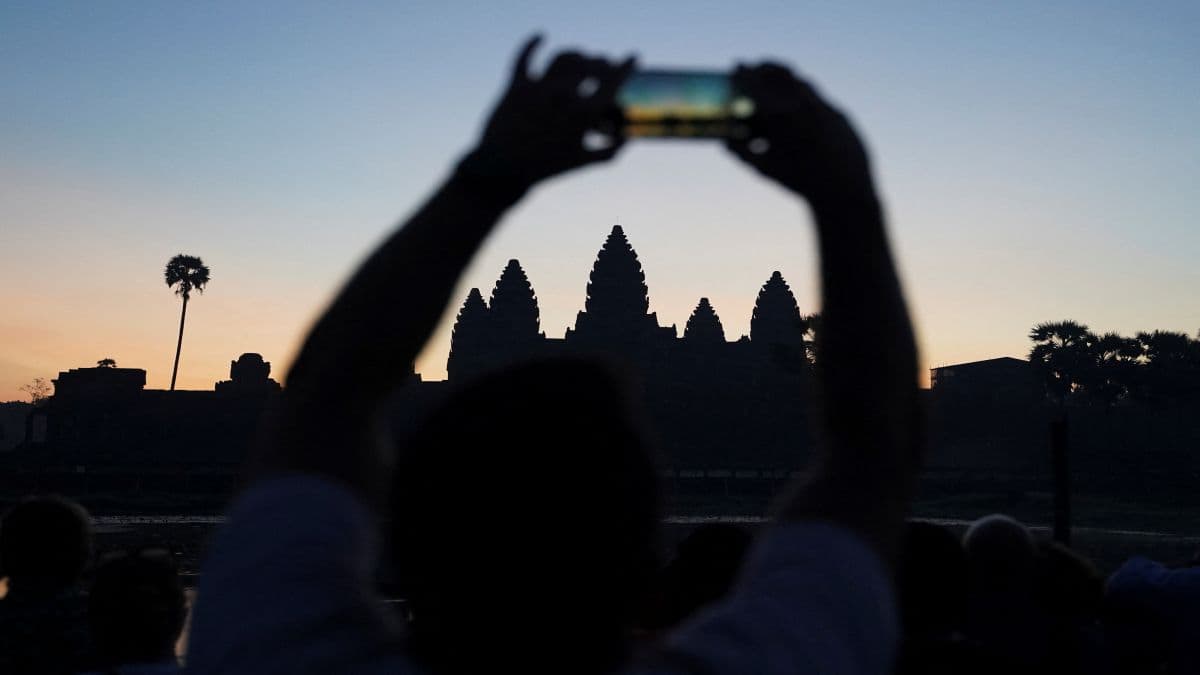
A tourist takes a picture of the sunrise at the Angkor Wat temple in Siem Reap, Cambodia. File image/Reuters
India has also played a major role in conserving Cambodia’s Angkor Wat complex. And in Laos, India completed restoration work at the 1,000-year-old Vat Phou Temple dedicated to Lord Shiva in 2024.
Under PM Modi, conservation work has also been undertaken by India in Sri Lanka and Bangladesh.
With inputs from agencies