





What is the story about?
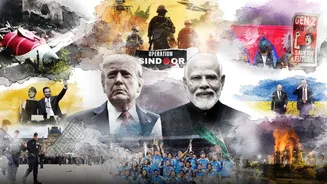
It's been a rollercoaster of a year. In January, Donald Trump took the oath to the most powerful office in the world. Through the first year of his presidency, he has upended global trade policy, slapping tariffs on almost every country in the world. His administration has been cracking down on every form of immigration to the US, with the immigrant population dropping for the first time in decades.
There has been a continuation and increase in global conflicts. The Israel-Gaza truce is on shaky grounds, and the Russia-Ukraine war is dragging on as talks of a ceasefire meet one roadblock after another. Israel and Iran were embroiled in a 12-day war, the India-Pakistan conflict lasted for four days, and Thailand and Cambodia are fighting once again after the Trump-brokered peace deal fell apart. In Africa, the ongoing civil war in Sudan is one of the most neglected global crises of the year; the continent saw coups in Madagascar and Guinea-Bissau.
Gen-Z took centre stage as they toppled the government in countries like Nepal and demanded change in Morocco, Indonesia, and Belgium, to name a few. Meanwhile, Gen Alpha were hollering “6-7” in classrooms.
Earthquakes, plane crashes, floods, and wildfires, the disasters were aplenty. There were terror attacks – Pahalgam, the Red Fort blast, Bondi Beach and more. There were several incidents of car ploughing in Europe, the worst was the one at the Liverpool FC Victory parade.
We also bid goodbye to some notable names – Pope Francis, Dick Cheney, Val Kilmer, Zubeen Garg, and Dharmendra, among others.
It was also the year of internet outages and the rise of Artificial Intelligence. We saw people falling in love with AI; we also saw some despising it, for egging their loved ones to die by suicide, commit murder and whatnot.
Amid this, there is plenty to cheer about – the victory of the Indian cricket team at the ICC Women’s World Cup, the successful journey of the first Indian astronaut, Shubanshu Shukla, to the ISS, the invention of the first quantum supercomputer, 15-year-old Owen Cooper making Emmy history for his performance in
Adolescence, and India’s Homebound being shortlisted for the Oscars.
As we count down to the end of the year, here is a review of 2025… from A to Z.
It’s one of the biggest tragedies of the year. On 12 June, Flight 171 from Ahmedabad to London went down just 32 seconds after take off. It crashed into a medical college hostel complex. The crash, one of the deadliest in aviation history, killed 260 people – 242 on board and 19 on the ground. Miraculously, one passenger survived.
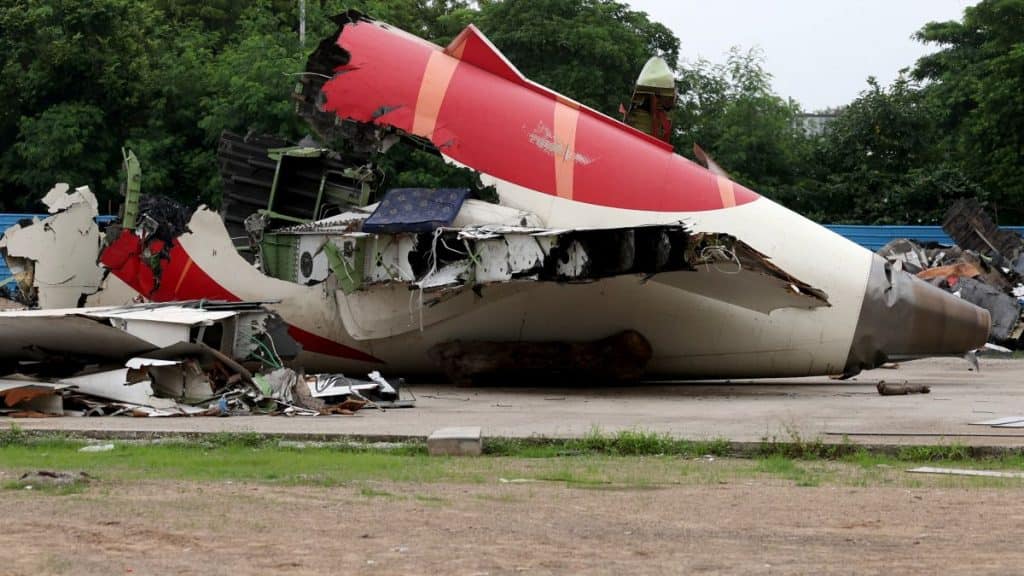
But what is the cause of the tragedy? A preliminary report by India's Aircraft Accident Investigation Bureau (AAIB) found that both engines had shut down within the space of one second, leading to immediate loss of altitude. The voices in the cockpit – a conversation between two pilots – raised eyebrows. In September, the Supreme Court questioned this report, deeming some aspects “irresponsible”. Now six months on, many questions remain unanswered as families of victims are grappling with the loss.
Sydney’s famous Bondi Beach has been synonymous with golden sands, blue waters, and surfing. However, it is now tainted by the killing of 15 people. On a bustling Sunday (December 14), two gunmen fired 100 rounds in a few seconds, as they targeted a Jewish gathering to celebrate the start of Hanukkah.
Australia condemned the shooting as a terror attack. It was carried by a father-son duo – Sajid Akram, who was killed by the police, and Naveed Akram , who was in a coma but has woken up. They reportedly had links to the Islamic State and went to the Philippines to receive ‘military-style training’.
As Australia mourned the attack, stories of heroes emerged: Ahmed Al Ahmed, who disarmed Sajid Akram; Revuen Morrision, who threw bricks at the terrorist, and Boris and Sofia Gurman, who tried to stop the gunman. While Ahmed survived with two bullet wounds, the others did not.
Charlie Kirk was a divisive figure in the United States. The 31-year-old was a conservative activist, podcaster and an ally of US President Donald Trump. He was known for founding Turning Point USA, a student organisation focused on spreading conservative ideas on college campuses.
It was at a gathering on one such campus that Kirk was assassinated. He was addressing an outdoor crowd of around 3,000 at Utah Valley University in Orem when a single gunshot was fired. He was seen clutching his neck and collapsing, with blood gushing from the wound. He was rushed to a hospital but died.
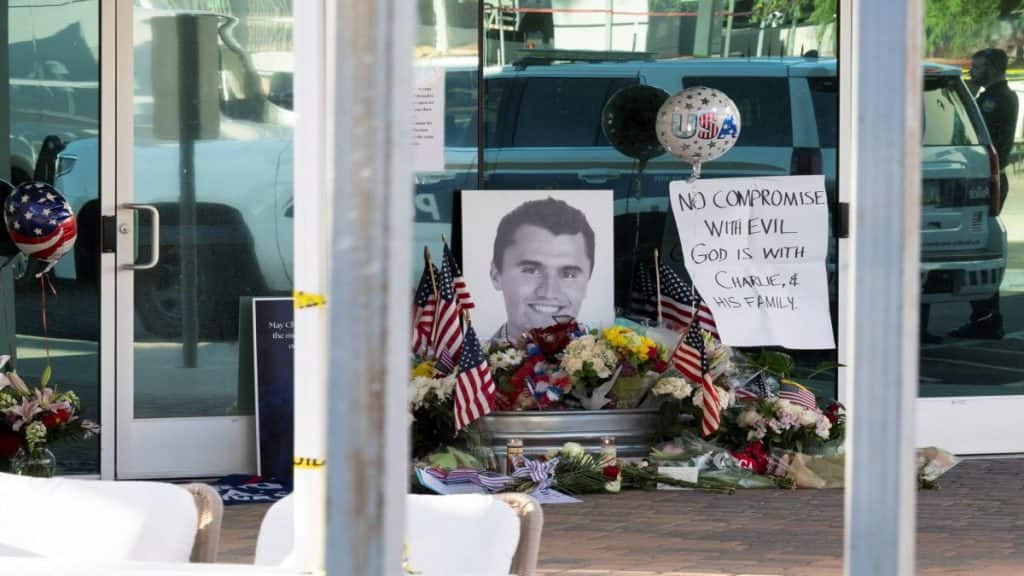
The death fuelled a flurry of conspiracy theories, and thrust his wife, Erika Kirk, who is now leading Turning Point, into the spotlight.
Twenty-two-year-old Tyler Robinson was arrested for Kirk’s killing. He was charged with aggravated murder and felony use of a firearm, as well as obstruction of justice, witness tampering and commission of a violent offence in the presence of a child. A three-day preliminary hearing has been set to begin on May 18, 2026.
In February, a Chinese AI company caught the world’s attention. The startup DeepSeek’s app topped download charts worldwide, overtaking its rival, OpenAI’s ChatGPT.
The AI startup, which released its latest model DeepSeek R1, said it rivalled the tech used by ChatGPT, but creating it cost far less.

DeepSeek’s popularity rattled the US and sent Big Tech reeling. Overnight, almost $600 billion was wiped off the value of AI microchip maker Nvidia. While it suffered the biggest one-day loss in share market history, other tech giants were not spared. Microsoft, Alphabet and Amazon were all hit.
Now, as DeepSeek works on an upcoming model, a report says that it is using Nvidia’s smuggled Blackwell chips, the company’s most advanced offerings, to stay ahead in the AI race. However, Nvidia has said that smuggling seems far-fetched.
If there is one thing that has haunted the first year of Trump’s second presidential term, it’s the controversial Epstein Files. What are the Epstein Files? They contain emails, flight logs and testimonies linked to Jeffrey Epstein, the late financier and convicted sex offender.
It is no secret that Epstein and Trump were friendly – they moved in the same social circles. The president has been under immense pressure not only from his opponents but also from within his Republican Party and supporters for more transparency on the federal investigation into the Epstein case.
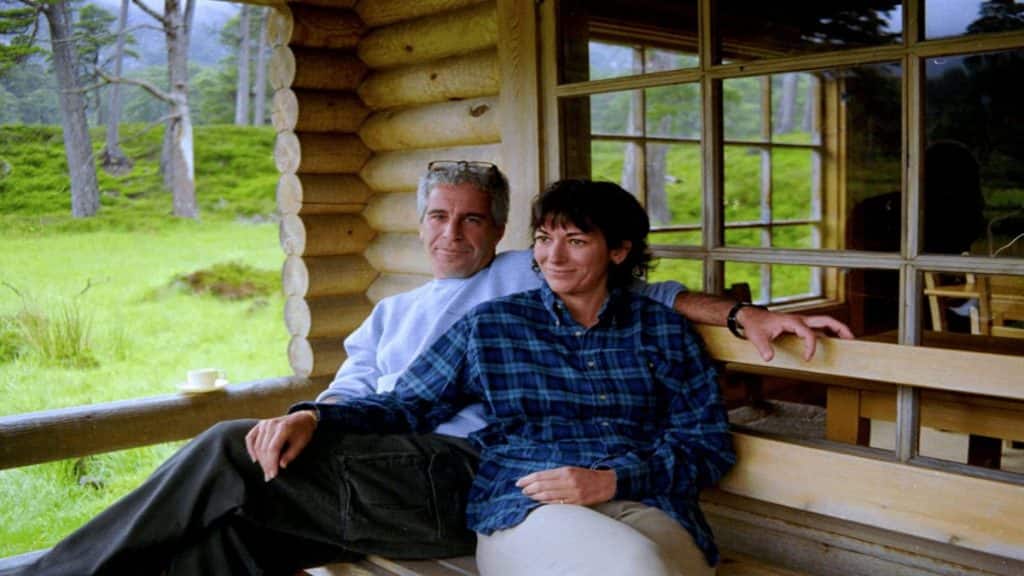
In November, after weeks of resisting the release of the files, Trump buckled, urging Republicans to vote to open the documents to public scrutiny. After the US Congress passed a law, the US Justice Department released the investigative documents on December 19. A trove of information, including images have been released showing the true extent of Epstein’s friendship with powerful people across the world, including former US President
Bill Clinton, Microsoft founder Bill Gates and former British prince Andrew.
With each year, the climate crisis only worsens. This year, storms swept through South and Southeast Asia, leaving at least 1,600 dead.
Since mid-November, tropical cyclones and an unprecedented monsoon triggered flooding and landslides across Sri Lanka, Indonesia, Thailand, Malaysia and Vietnam.
Cyclone Ditwah wreaked havoc in Sri Lanka, with some flood waters reaching the second floor of buildings. And Cyclone Senar hit Indonesia’s Sumatra and Peninsular Malaysia. There was death and destruction everywhere, with hundreds of people losing their homes and livelihoods.
An analysis by World Weather Attribution, a consortium of climate scientists, points to climate change. “The combination of heavy monsoon rains and climate change is a deadly mix,” Dr Sarah Kew, an academic at the Royal Netherlands Meteorological Institute and the lead author of the study, was quoted as saying by The Guardian. “Monsoon rains are normal in this part of the world. What is not normal is the growing intensity of these storms.”
Gen Z often get a bad rap… for being entitled, sensitive, addicted to tech, and whatnot. But this year, this generation, roughly born in the late ’1990s to early 2010s, made themselves heard. They took to the streets across countries, some toppled governments, and ushered in change with chats, memes, and anime pirate flags.
It started in Nepal in September after a social media ban. The protests turned violent, with parliament buildings and other government offices and property being set ablaze. Politicians were assaulted, and dozens of protesters were killed. The ban was reversed, KP Sharma Oli resigned as PM, and Sushila Karki, a former chief justice, was picked as interim PM.
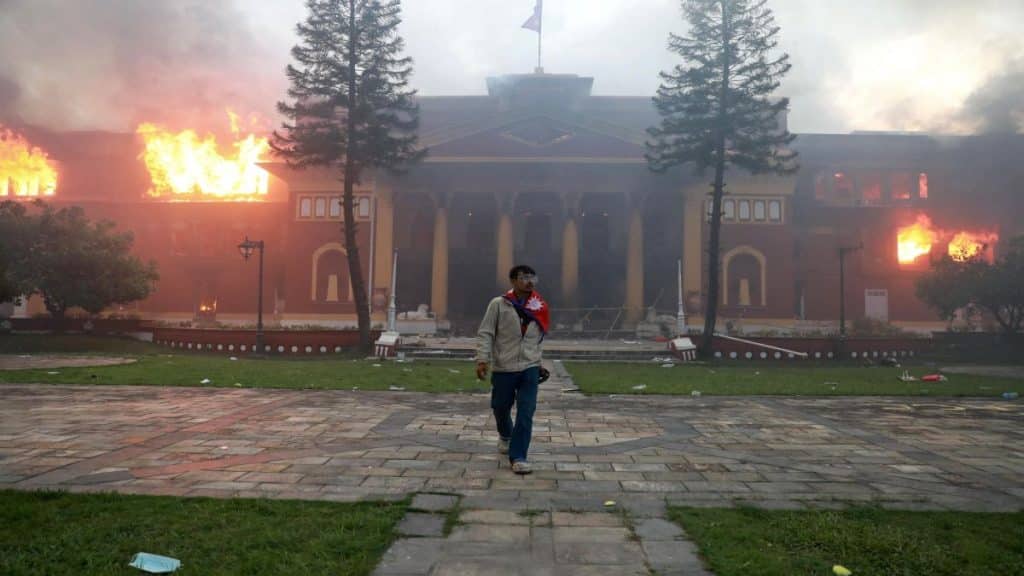
However, Nepal was not the only country that saw an uprising. Gen Z protests erupted in Indonesia over perks for politicians, Peru against the ‘political class’, Madagascar against water and power outage, and, most recently, Bulgaria against corruption and a controversial budget.
The picture of an old man in distress, as high-rises behind him go up in flames, is one of the most haunting images of the year. It tells us the story of the deadly Hong Kong fire that killed 160 people.
On November 26, a fire broke out at the Wang Fuk apartment complex in Tai Po and spread quickly, consuming seven out of the eight blocks. It was so deadly it raged on for more than 40 hours.
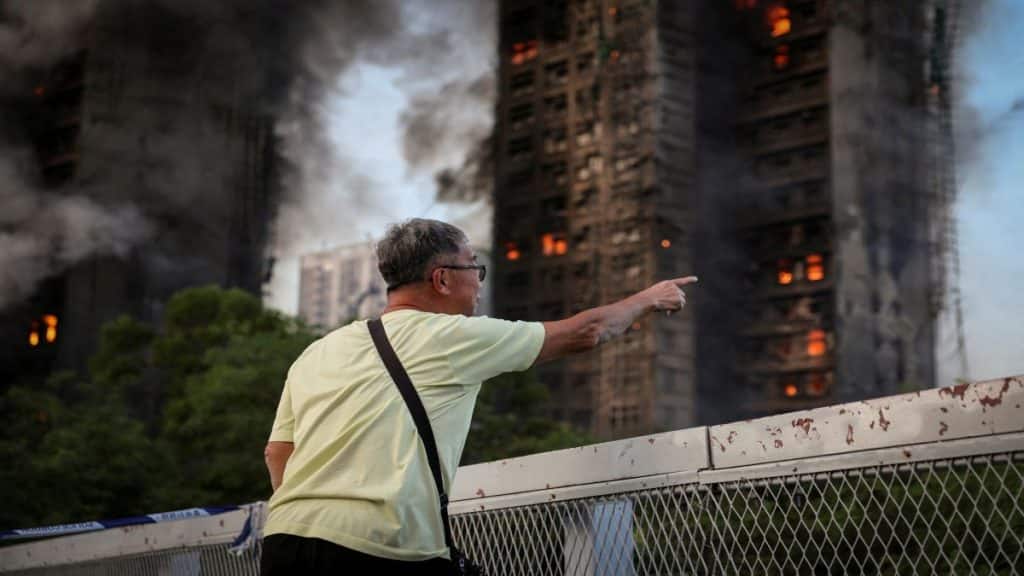
What caused the fire? The buildings were under renovation. The lethal combination of combustible materials, like the bamboo scaffolding, substandard netting and polystyrene foam boards installed on windows, caused the blaze to tear through the 32-storeyed high-rises with stunning speed.
Authorities in Hong Kong have arrested at least 14 people linked to the fire at the estate, which houses 5,000 people. Hong Kong’s anti-corruption watchdog has arrested the current and former chairmen of the Wang Fuk Court owners’ corporation as part of an investigation into renovation works.
It's called the 12-day war. Between June 13 and the days that followed, Israel, with the help of the United States, carried out airstrikes on Iran. They targeted the Iranian nuclear facilities and military infrastructure. Israel and the US said that the goal was to stop Iran from creating a nuclear bomb.
It started with Israeli fighter jets hitting Iran’s nuclear and military facilities along civilian neighbourhoods across Iran. The Islamic Republic retaliated by firing ballistic missiles at Israeli cities. As the conflict escalated, there were casualties on both sides.
The US entered the clash on June 22, using bunker-buster bombs to strike the key Iranian nuclear facilities of Natanz, Fordow and Isfahan. Two days later, Washington brokered a truce after Iran hit its airbase in Qatar.
So who won this war? It depends on whom you ask. All three parties claimed victory.
Japan had 104 prime ministers before Sanae Takaichi. All of them were men. She scripted history by becoming the first woman to hold the position.
The 64-year-old is a staunch conservative and admirer of the late former UK PM Margaret Thatcher. She is known as Japan’s Iron Lady.
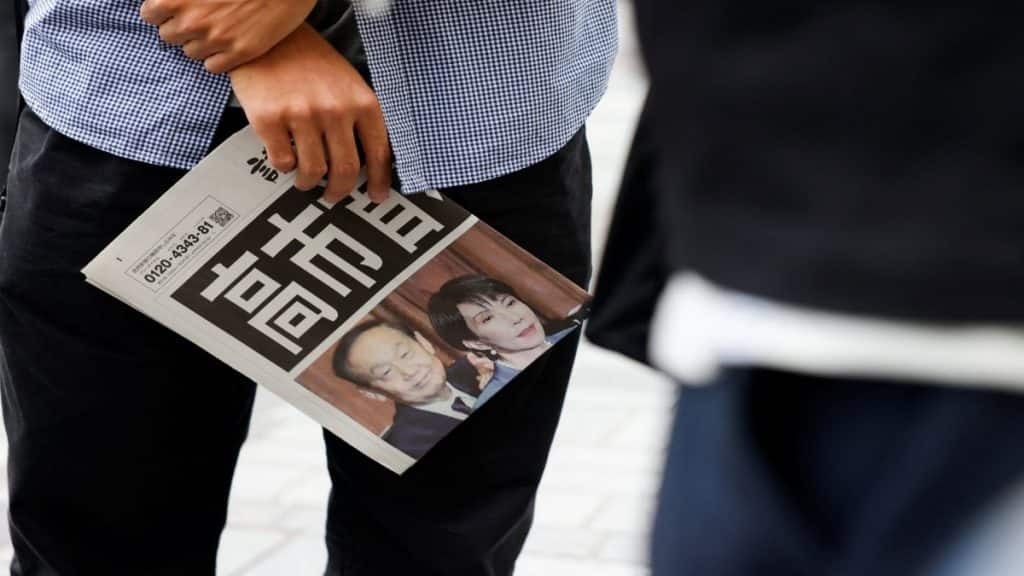
Beyond politics, Takaichi is known for heavy metal. She was a drummer in a band during her college days and has been a fan of groups like Black Sabbath and Iron Maiden. Even today, she has an electric drum set at home that she turns to when stressed. While she hangs on to her drumsticks, she has given up another hobby – riding motorcycles. At 32, when she became a lawmaker, she stopped riding her Kawasaki to avoid accidents that could hinder her work.
In a patriarchal Japan, Takaichi's win should have been seen as a big feminist win. However, the 64-year-old is a staunch conservative and has avoided gender themes in the past. Many prominent feminists do not regard her achievements as a win for women.
They came, they hunted, they conquered. KPop Demon Hunters, the animated Netflix film which released in June, became a global hit. The story is about Huntr/x, an all-female K-pop group (Rumi, Mira and Zoey), which doubles up as secret guardians of the world, who hunt demons. It is a story about friendship, trust, and being true to one’s identity. The film has it all: music, comedy, action, and supernatural horror. And it struck a chord, becoming Netflix’s most-watched film since it began releasing original songs.
KPop Demon Hunters surpassed 325 million views in its first three months. Its soundtrack reached No 1 on the Billboard 200 and has been streamed 8.3 billion times. The hit “Golden” spent 17 weeks atop the Billboard Global 200 chart, according to a report in TIME, which has picked the movie as “2025 Breakthrough of the Year”.
The Netflix film became just a sensation that sing-along events were held in theatres across the world, including India. No one could escape the “Demon Hunters” magic. Not even tennis superstar Novak Djokovic. He celebrated his US Open win with a viral dance from the movie, dedicating it to his daughter Tara.
It's infamous as the “heist of the century”. On a brazen robbery on Sunday, October 19, four thieves broke into the Louvre’s Apollo Gallery between 9.30 am and 9.40 am. They entered using a cherry picker, a kind of hydraulic ladder, and stole eight pieces of priceless jewellery, all in not more than seven minutes. The thieves left on a motorcycle with a sapphire diadem, necklace, an emerald necklace and earrings gifted by Napoleon to his second wife, Marie-Louise of Austria, a brooch, among others.
The stolen jewels from the Paris museum have been valued at more than $100 million (approximately 88 million euros), a French prosecutor said.
At least seven people, including the four robbers, have been arrested in connection with the heist. However, there is little hope that the jewels will be recovered. Interpol has listed the pieces in its database of stolen art amid fears they could be broken up or smuggled abroad.
The year began on a tumultuous note for Canada. In January, Justin Trudeau announced that he was quitting as Canada’s prime minister under growing pressure from his own party, ending his nine-year tenure as leader. Amid the political uncertainty, the Liberal Party picked
Mark Carney as its new leader. He was sworn in as interim PM but called for a snap election, which he went on to win in April.
Carney was the former Bank of England boss, the first non-British person to hold the position. He was at the helm of the Bank of Canada during the 2008 financial crash. Interestingly, this is his first political stint.
The job has been a tough one, but Carney has had some success in dealing with a fickle Donald Trump and his tariff policies. The US and Canada are launching formal talks to review a free trade agreement in January.
Under Carney, ties with India have improved, but there have been some hiccups because of the Khalistan issue. The Canadian PM met his Indian counterpart, Narendra Modi, on the sidelines of the G20 summit in Johannesburg in November, with the two sides agreeing to launch new negotiations on a trade pact. Carney is expected to visit India in early 2026.
Entertainment as we know it could change. It changed with the rise of streaming platforms like Netflix, and now it could potentially spell the end of theatres, at least that is what many fear.
Netflix is expected to buy Warner Bros. Discovery’s storied movie studio and popular HBO streaming networks for $82.7 billion. The blockbuster deal is likely to shake up the world of entertainment.
While Paramount Skydance launched a $108-billion hostile takeover bid, Warner Bros.’ board told its shareholders to reject that.
With the Netflix buyout, the streaming giant will take over most of Warner Bros., including its film studio and franchises (Harry Potter, DC Comics brands like Superman and Batman) and premium TV network HBO, home to hit shows like
Game of Thrones and The White Lotus. However, the deal does not involve CNN, Discovery and Cartoon Network.
The Netflix bid is making Hollywood uneasy. Many worry that if the world’s largest streaming platform acquires one of the world’s most important movie studios, it could accelerate the decline of the traditional cinema, according to a DW report. Netflix has shown little enthusiasm for theatre releases.
However, Netflix co-CEO Ted Sarandos has been promising movie lovers that after the takeover, they will “continue to release Warner Bros. studio movies in theatres”. But is he giving us the complete picture?
In the wee hours of May 7, India launched strikes against terror targets in Pakistan. It was called Operation Sindoor to avenge the deaths of the 26 civilians, mostly tourists, killed in the Pahalgam terror attack, where many were murdered in front of their wives and children.
After India’s airstrikes, Pakistan retaliated. What followed was a four-day intense conflict between the two neighbours, the first since Kargil in 1999. India hit targets up to 100 km inside Pakistan and Pakistan-occupied Kashmir; Pakistan launched aerial strikes, targeting Jammu and Kashmir, Punjab and Haryana.
India destroyed nine terrorist camps inside Pakistan, taking out Lashkar-e-Taiba, Jaish-e-Mohammed and Hizbul Mujahideen facilities. It inflicted a big blow to Pakistan’s military and terror infrastructure. Pakistan barely caused any damage to India, but it continued to peddle false claims.
Operation Sindoor was in many ways a made-in-India success story, as it showcased the might of India’s indigenous defence industry with BrahMos missiles, Akash air defence systems, and D4 anti-drone systems playing a big role. Most importantly, it displayed the emergence of India’s new doctrine of deterrence.
In 2025, the papacy turned a new page: Francis, who ushered in reforms, passed on; Leo XIV began setting the tone for the future of the Roman Catholic Church.
Pope Francis, the first non-European head of the Church in more than a millennium, died on April 21 after a stroke. His death, following bouts of pneumonia, bronchitis and other medical problems, set in motion the conclave to choose a new papal leader.
After a nine-day mourning period, culminating with Francis’s burial, the conclave convened to elect his successor. A total of 133 cardinals – the largest ever in a papal election – were locked inside the Sistine Chapel to participate in the 2025 conclave. The world had its eyes glued on the chimney of this 15th-century papal sanctuary – black smoke indicated a stalemate, while white heralded a new pontiff. The new pope was elected after five votes taken over two days.
Cardinal Robert Pervost became the new head of the Church. The first US-born pontiff, he took the name Pope Leo XIV. When the 69-year-old spoke for the first time from the balcony of St Peter’s Basilica, he said he would seek “to walk together with you as a united church searching all together for peace and justice, working together as women and men.” In recent months, he has criticised the “dictatorship” of economic inequality and has been vocal in his support for migrants, signalling a bold approach to the US administration that continues its crackdown on “illegal aliens”.
With his commitment to equality, Pope Leo’s leadership signals a future where the Church may stand as a stronger moral compass in turbulent times.
There are a few things that have not changed in 2025. One of them is Trump’s propensity for insults, especially targeting women journalists.
On board Air Force One, on November 14, Trump was asked about released emails linked to the late convicted sex offender Jeffrey Epstein. He brushed off the question, saying he knew nothing about that, and people should focus on others named in the email, including former President Bill Clinton.
After Catherine Lucey, a journalist from Bloomberg News, tried to ask a follow-up question on Epstein, the president turned to her and said, “Quiet. Quiet, piggy.” The clip grabbed millions of views online four days after it happened, with many outraged. Some Democrats decided to hit back in kind. California Governor Gavin Newsom’s press office used the clip to bully the president back, photoshopping Trump’s face onto pigs and repeatedly tweeting “Quiet, piggy”. It became a hashtag and a meme.
The White House did what it does best – defend Potus. Press Secretary Karoline Leavitt said that Trump was re-elected because of his bluntness and that members of the media should appreciate his willingness to answer their questions.
The phrase and the meme might fade, but the insult remains as a reminder of Trump’s politics of provocation.
It's the most heartbreaking real-life story from Hollywood this year. Beloved director Rob Reiner was found dead in the plush Los Angeles home alongside his wife, Michele. Their bodies were found by their daughter, Romy, with multiple stab wounds.
Rob Reiner, whose best works include When Harry Met Sally, The Princess Bride and A Few Good Men, was 78. Michele, who was also a producer, was 70.
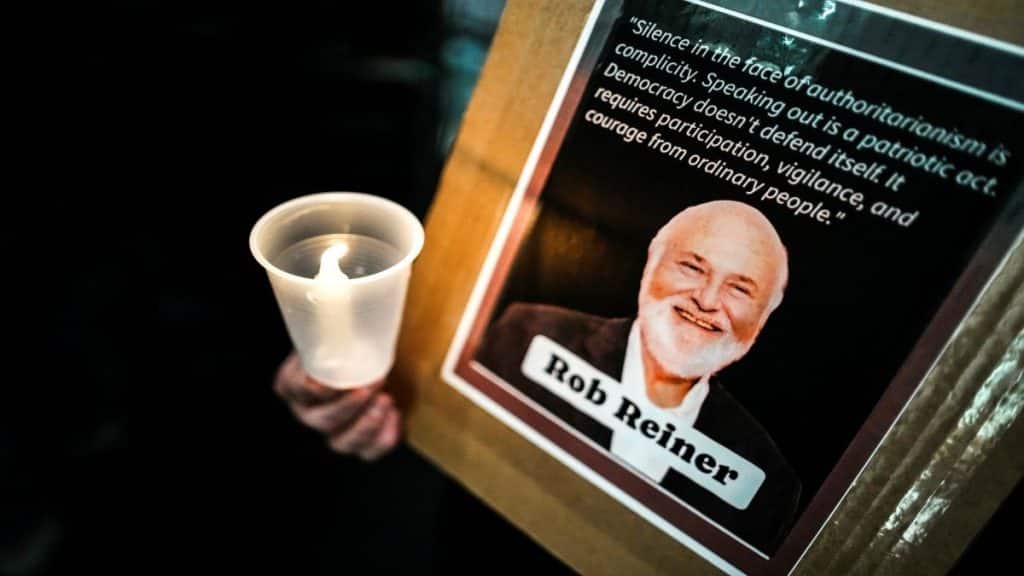
The case took a more tragic turn when it was revealed that their son, Nick Reiner, was a suspect in the homicide. He was arrested and has been charged with two counts of first-degree murder after his parents’ deaths.
A family friend of the Reiners told The Post about an explosive fight between the parents and the son days before the killings. They argued at the TV host and comic Conon O Brien’s holiday party. “Rob had been telling people that they’re scared for Nick and scared that his mental state was deteriorating,” they shared.
Nick Reiner was reportedly an addict and had 18 stints in rehab. He was diagnosed with schizophrenia just weeks before his parents were murdered. He is on suicide watch in solitary confinement in a Los Angeles jail, according to media reports.
In March 2025, the Trump administration faced its first major security crisis, dubbed “Signal-gate”.
US National Security Advisor Michael Waltz inadvertently added Jeffrey Goldberg, the editor-in-chief of The Atlantic, to a private Signal group chat titled "Houthi PC small group." The group, which included US Vice President JD Vance and US Defence Secretary Pete Hegseth, was using the encrypted app to coordinate Operation Rough Rider — a series of airstrikes against Houthi rebels in Yemen.
Goldberg published transcripts revealing that Hegseth had shared specific strike timings and drone coordinates on an unapproved, commercial platform.
While the administration dismissed the incident as a "glitch," a December 2025 Pentagon Inspector General report confirmed the lapse put US troops in "great peril."
The scandal led to the departure of several mid-level aides and forced Mike Waltz to transition from National Security Advisor to US Ambassador to the UN later in the year.
Tariffs. Donald Trump says it is his favourite word. It has haunted almost every country in the world.
Upon taking office, Trump aggressively leveraged the International Emergency Economic Powers Act (IEEPA) to overhaul US trade. By April 2025, a universal 10 per cent tariff was applied to almost all imports, while specific 25 per cent levies were slapped on Canada and Mexico to pressure them into stricter border enforcement.
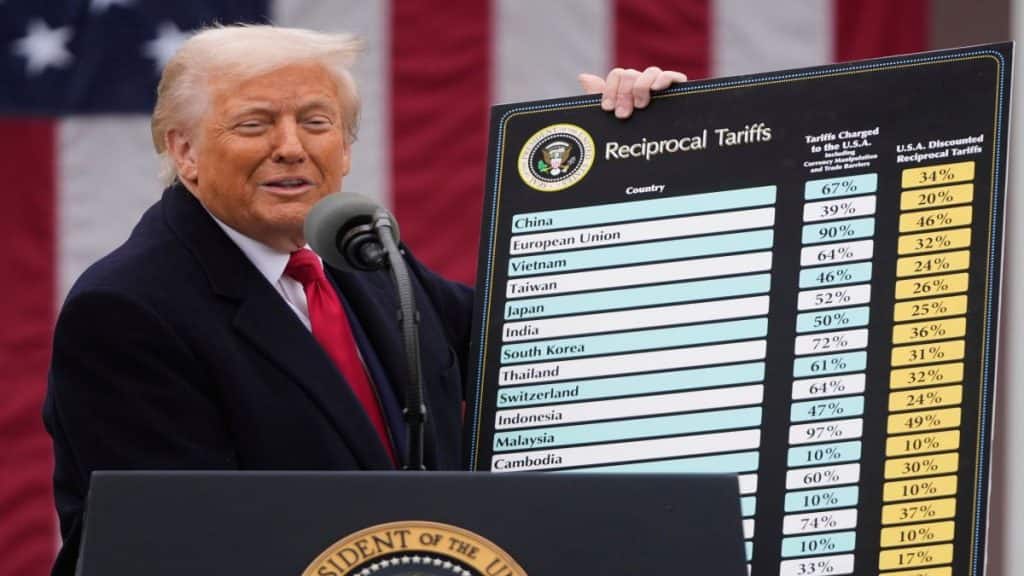
While the US Treasury reported record-breaking monthly revenues exceeding $30 billion by September, the policy sparked a 90-day stock market pause in the spring and retaliatory measures from the EU and China.
India became a central figure in this trade war. After Trump’s offer to mediate the India-Pakistan skirmishes in May was rejected by New Delhi, trade relations soured.
By August 2025, the US hiked tariffs on Indian goods to a staggering 50 per cent, combining the baseline rate with "reciprocal" duties and a 25 per cent penalty specifically targeting India's continued imports of Russian oil.
Trump also threatened 100 per cent tariffs on Brics nations if they attempted to replace the US dollar. Although the administration argues these measures are essential for reviving domestic manufacturing, the year ends with a cooling GDP growth rate in the US and ongoing legal battles over the executive branch's authority to impose such sweeping taxes without direct Congressional approval.
In its third year, the Russia-Ukraine war drags on with no end in sight. However, there’s hope that this will come to an end soon as
high-stakes peace negotiations continue. A US-led delegation, featuring Steve Witkoff and Jared Kushner, has spent the month brokering a “90 per cent finalised” draft plan.
The proposal reportedly includes a "Free Economic Zone" in contested territories — a compromise where Ukrainian troops would withdraw without a Russian advance, though sovereignty remains the ultimate sticking point.
Ukrainian President Volodymyr Zelenskyy has expressed cautious optimism but warned that Ukraine will not "give away the Donbas."
Meanwhile, Russian President Vladimir Putin used his year-end military address to demand full recognition of annexed territories, threatening to extend his buffer zone if the current talks fail.
The year concludes with a "coalition of the willing" from Europe offering security guarantees to Ukraine outside of the Nato framework, as Washington pushes for a "swift peace" to fulfil its 2024 campaign promises.
In 2025, Venezuela, the South American country, grabbed headlines as its leader, Nicolas Maduro, squared off against US President Donald Trump.
Tensions between the two have grown in the latter months of the year after the US military carried out a series of lethal boat strikes in the Caribbean and eastern Pacific, which US officials said targeted vessels involved in drug trafficking. These operations resulting in several deaths have triggered harsh criticism from foreign governments, human rights bodies such as the United Nations, and US lawmakers from both the Republican and Democratic parties.
The reason for these strikes, the US claims, is to put an end to drug trafficking. In fact, in August, the US State Department doubled a reward for information that led to Maduro’s arrest to $50 million, alleging he managed the Cártel de los Soles, which is responsible for mass cocaine importation and the arming of Venezuelan gangs.
But Maduro, who has labelled himself as “more famous than Taylor Swift in the US”, remains unfazed. He insists that the real purpose of the US military operations is to force him from power.
India is a cricket-loving nation. And in 2025, the wait for the Indian Women’s Cricket team to stand shoulder to shoulder with the men came to an end as the Women in Blue did the unthinkable by winning the 13th edition of the ICC Women’s World Cup.
It was a campaign of redemption and resilience. From three straight defeats in the group stage to a flawless knockout run, India’s turnaround was as dramatic as it was defining.
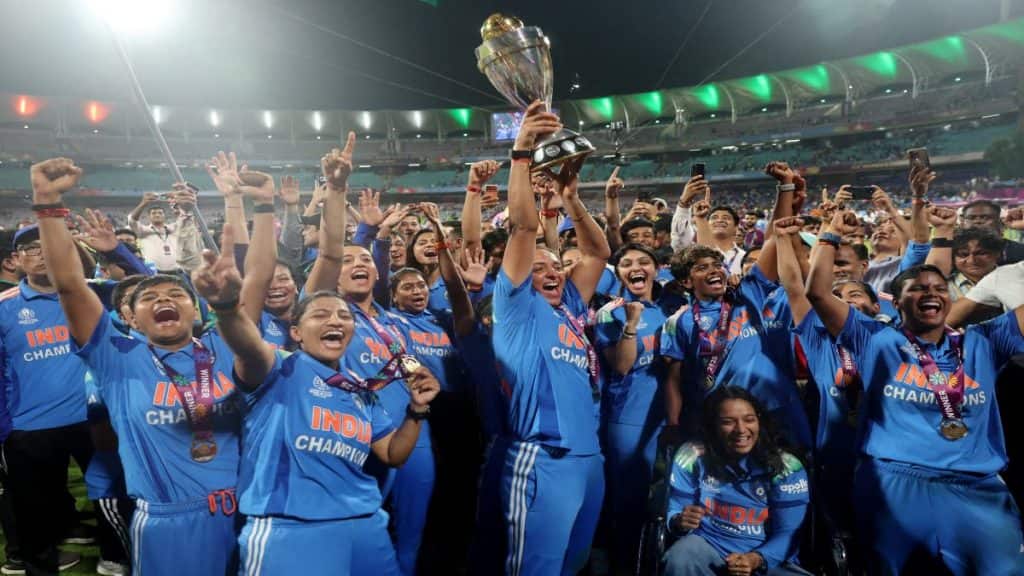
Fuelled by the performances of Deepti Sharma and Shafali Verma, the Indian women outclassed the South African side by 52 runs to finally get their hands on the trophy, which they had lost out on narrowly back in 2005 and 2017, losing to Australia and England, respectively.
What came later were celebrations, tears of joy, and an acknowledgement that Indian women can achieve anything they dream of!
One of the biggest stories of this year would be the US trying to declare economic war on China, and China, under the leadership of Xi Jinping, fighting back. This year, Xi showed he is willing to use his country’s dominance as not just a source of wealth, but of power. His restrictions on rare-earth exports were one example of how China used other countries’ dependency as a weapon.
But that’s not all. This year, Xi also showed his diplomatic prowess. At the 25th meeting of the Shanghai Cooperation Organisation (SCO) in Tianjin, he was seen sharing a bonhomie with Prime Minister Narendra Modi as well as Russian President Vladimir Putin.
In fact, it was one image from the SCO summit that got everyone talking; it showed Modi clasping Putin’s hand while the Russian leader chuckled, and the Chinese president gave a measured smile. For many, it wasn’t just optics, but a deliberate message to the world, especially the United States.
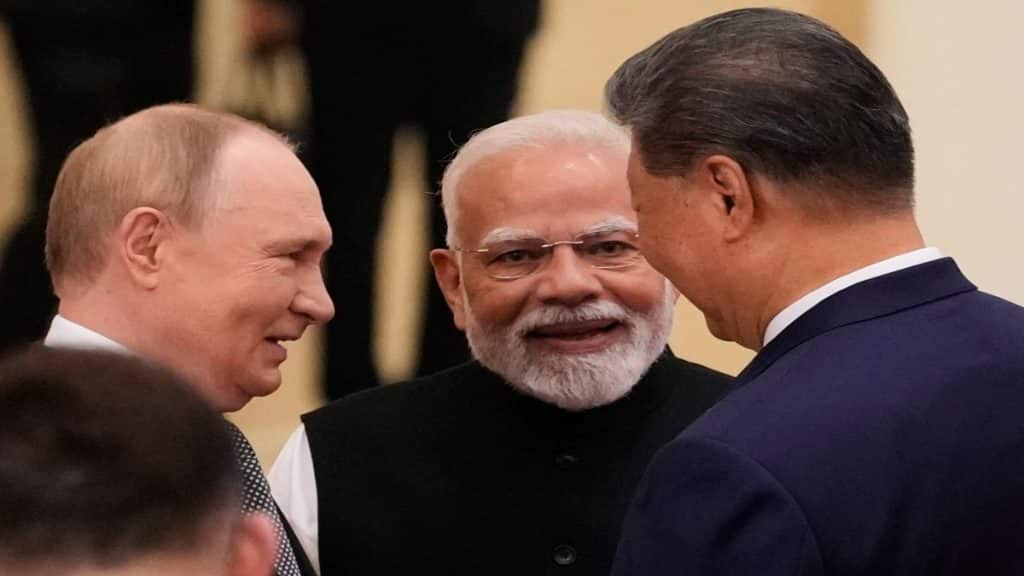
CNN’s political commentator Van Jones called it an image that “should send a chill down the spine of every American,” describing the ‘tableau’ of Xi, Putin, Modi, and other leaders like Iran’s president and North Korea’s Kim Jong Un as a 'new world order' where the West finds itself increasingly boxed in. “It was the United States and China together and Russia by itself. Now we’re on the bad end of the triangle. It’s everybody against us. That is not good for America,” he told viewers.
Xi also flexed his military might this year. He presided over the country’s largest-ever military parade, orchestrated to mark the 80th anniversary of the end of World War II, which China calls the War of Resistance Against Japanese Aggression.
What if we were to say that an asteroid was hurtling towards Earth? Most would respond saying it sounded like something out of a Hollywood movie script. But this year, it became almost real when astronomers discovered an asteroid near the planet.
Called the 2024 YR4 asteroid, it’s somewhere between 40 and 100 metres in size — the size of a building.

Notably, the space rock looked at first as if it might hit our planet by December 22, 2032. The chance of that impact changed with every new observation, peaking at 3.1 per cent in February — odds that made it the riskiest asteroid ever observed.
Discussions soon began as to what would be the effect of the asteroid hitting Earth. As John Tonry, an astronomer at the University of Hawaii, told Scientific American, “The impact would be equivalent to a 10-megaton bomb. Everything within three or four kilometres would be incinerated. Everything out to maybe 10 kilometres is smashed. It’s not a nuclear explosion, but it’s an extremely hot explosion. There would be a huge fireball that would start fires out to 15 kilometres, something like that. It would kill a lot of people if they haven’t moved out of the way.”
But YR4 is currently moving away from Earth in almost a straight line, making it difficult to accurately determine its precise orbit before it returns towards Earth.
According to ESA, “It is possible that asteroid 2024 YR4 will fade from view before we are able to entirely rule out any chance of impact in 2032. In this case, the asteroid will likely remain on ESA’s risk list until it becomes observable again in 2028.”
Few political contests in 2025 drew as much global attention as New York City’s mayoral race. And in November, a 34-year-old Muslim and person of
South Asian descent, Zohran Mamdani, claimed victory, scripting history in America’s largest city.
Mamdani, the Ugandan-born Democratic socialist with no administrative experience, defeated former New York Governor Andrew Cuomo, who ran as an Independent, and Republican Curtis Sliwa in the election.
The win marks a remarkable ascent for Mamdani, who was a relatively unknown state assembly member representing a district in Queens when he entered the crowded mayoral race last year. He went on to win June’s Democratic primary by 12 percentage points, quickly becoming one of the country’s most popular and polarising politicians along the way.
Mamdani will be sworn in as mayor on January 1, 2026, and there’s a lot that he needs to get done. He’s vowed to make the most expensive city in the US affordable again and that’s going to be no easy feat.
There has been a continuation and increase in global conflicts. The Israel-Gaza truce is on shaky grounds, and the Russia-Ukraine war is dragging on as talks of a ceasefire meet one roadblock after another. Israel and Iran were embroiled in a 12-day war, the India-Pakistan conflict lasted for four days, and Thailand and Cambodia are fighting once again after the Trump-brokered peace deal fell apart. In Africa, the ongoing civil war in Sudan is one of the most neglected global crises of the year; the continent saw coups in Madagascar and Guinea-Bissau.
Gen-Z took centre stage as they toppled the government in countries like Nepal and demanded change in Morocco, Indonesia, and Belgium, to name a few. Meanwhile, Gen Alpha were hollering “6-7” in classrooms.
Earthquakes, plane crashes, floods, and wildfires, the disasters were aplenty. There were terror attacks – Pahalgam, the Red Fort blast, Bondi Beach and more. There were several incidents of car ploughing in Europe, the worst was the one at the Liverpool FC Victory parade.
We also bid goodbye to some notable names – Pope Francis, Dick Cheney, Val Kilmer, Zubeen Garg, and Dharmendra, among others.
It was also the year of internet outages and the rise of Artificial Intelligence. We saw people falling in love with AI; we also saw some despising it, for egging their loved ones to die by suicide, commit murder and whatnot.
Amid this, there is plenty to cheer about – the victory of the Indian cricket team at the ICC Women’s World Cup, the successful journey of the first Indian astronaut, Shubanshu Shukla, to the ISS, the invention of the first quantum supercomputer, 15-year-old Owen Cooper making Emmy history for his performance in
As we count down to the end of the year, here is a review of 2025… from A to Z.
A for Air India crash
It’s one of the biggest tragedies of the year. On 12 June, Flight 171 from Ahmedabad to London went down just 32 seconds after take off. It crashed into a medical college hostel complex. The crash, one of the deadliest in aviation history, killed 260 people – 242 on board and 19 on the ground. Miraculously, one passenger survived.
Wreckage of the Air India Boeing 787-8 Dreamliner plane sits on the open ground, outside Sardar Vallabhbhai Patel International Airport, where it took off and crashed nearby shortly afterwards, in Ahmedabad, India. File image/Reuters
But what is the cause of the tragedy? A preliminary report by India's Aircraft Accident Investigation Bureau (AAIB) found that both engines had shut down within the space of one second, leading to immediate loss of altitude. The voices in the cockpit – a conversation between two pilots – raised eyebrows. In September, the Supreme Court questioned this report, deeming some aspects “irresponsible”. Now six months on, many questions remain unanswered as families of victims are grappling with the loss.
B for Bondi Beach attack
Sydney’s famous Bondi Beach has been synonymous with golden sands, blue waters, and surfing. However, it is now tainted by the killing of 15 people. On a bustling Sunday (December 14), two gunmen fired 100 rounds in a few seconds, as they targeted a Jewish gathering to celebrate the start of Hanukkah.
Australia condemned the shooting as a terror attack. It was carried by a father-son duo – Sajid Akram, who was killed by the police, and Naveed Akram , who was in a coma but has woken up. They reportedly had links to the Islamic State and went to the Philippines to receive ‘military-style training’.
As Australia mourned the attack, stories of heroes emerged: Ahmed Al Ahmed, who disarmed Sajid Akram; Revuen Morrision, who threw bricks at the terrorist, and Boris and Sofia Gurman, who tried to stop the gunman. While Ahmed survived with two bullet wounds, the others did not.
Charlie Kirk assassination
Charlie Kirk was a divisive figure in the United States. The 31-year-old was a conservative activist, podcaster and an ally of US President Donald Trump. He was known for founding Turning Point USA, a student organisation focused on spreading conservative ideas on college campuses.
It was at a gathering on one such campus that Kirk was assassinated. He was addressing an outdoor crowd of around 3,000 at Utah Valley University in Orem when a single gunshot was fired. He was seen clutching his neck and collapsing, with blood gushing from the wound. He was rushed to a hospital but died.
A memorial held for Charlie Kirk, who was shot and killed in Utah, at the Turning Point USA headquarters in Phoenix, Arizona. File image/Reuters
The death fuelled a flurry of conspiracy theories, and thrust his wife, Erika Kirk, who is now leading Turning Point, into the spotlight.
Twenty-two-year-old Tyler Robinson was arrested for Kirk’s killing. He was charged with aggravated murder and felony use of a firearm, as well as obstruction of justice, witness tampering and commission of a violent offence in the presence of a child. A three-day preliminary hearing has been set to begin on May 18, 2026.
D for DeepSeek
In February, a Chinese AI company caught the world’s attention. The startup DeepSeek’s app topped download charts worldwide, overtaking its rival, OpenAI’s ChatGPT.
The AI startup, which released its latest model DeepSeek R1, said it rivalled the tech used by ChatGPT, but creating it cost far less.
An illustration of the Deepseek logo. File image/Reuters
DeepSeek’s popularity rattled the US and sent Big Tech reeling. Overnight, almost $600 billion was wiped off the value of AI microchip maker Nvidia. While it suffered the biggest one-day loss in share market history, other tech giants were not spared. Microsoft, Alphabet and Amazon were all hit.
Now, as DeepSeek works on an upcoming model, a report says that it is using Nvidia’s smuggled Blackwell chips, the company’s most advanced offerings, to stay ahead in the AI race. However, Nvidia has said that smuggling seems far-fetched.
E for Epstein Files
If there is one thing that has haunted the first year of Trump’s second presidential term, it’s the controversial Epstein Files. What are the Epstein Files? They contain emails, flight logs and testimonies linked to Jeffrey Epstein, the late financier and convicted sex offender.
It is no secret that Epstein and Trump were friendly – they moved in the same social circles. The president has been under immense pressure not only from his opponents but also from within his Republican Party and supporters for more transparency on the federal investigation into the Epstein case.
Ghislaine Maxwell and Jeffrey Epstein are seen in this image released by the Department of Justice as part of a new trove of documents from its investigations into the late financier and convicted sex offender Jeffrey Epstein. US Justice Department/Reuters
In November, after weeks of resisting the release of the files, Trump buckled, urging Republicans to vote to open the documents to public scrutiny. After the US Congress passed a law, the US Justice Department released the investigative documents on December 19. A trove of information, including images have been released showing the true extent of Epstein’s friendship with powerful people across the world, including former US President
Floods in Asia
With each year, the climate crisis only worsens. This year, storms swept through South and Southeast Asia, leaving at least 1,600 dead.
Since mid-November, tropical cyclones and an unprecedented monsoon triggered flooding and landslides across Sri Lanka, Indonesia, Thailand, Malaysia and Vietnam.
Cyclone Ditwah wreaked havoc in Sri Lanka, with some flood waters reaching the second floor of buildings. And Cyclone Senar hit Indonesia’s Sumatra and Peninsular Malaysia. There was death and destruction everywhere, with hundreds of people losing their homes and livelihoods.
An analysis by World Weather Attribution, a consortium of climate scientists, points to climate change. “The combination of heavy monsoon rains and climate change is a deadly mix,” Dr Sarah Kew, an academic at the Royal Netherlands Meteorological Institute and the lead author of the study, was quoted as saying by The Guardian. “Monsoon rains are normal in this part of the world. What is not normal is the growing intensity of these storms.”
G for Gen-Z protests
Gen Z often get a bad rap… for being entitled, sensitive, addicted to tech, and whatnot. But this year, this generation, roughly born in the late ’1990s to early 2010s, made themselves heard. They took to the streets across countries, some toppled governments, and ushered in change with chats, memes, and anime pirate flags.
It started in Nepal in September after a social media ban. The protests turned violent, with parliament buildings and other government offices and property being set ablaze. Politicians were assaulted, and dozens of protesters were killed. The ban was reversed, KP Sharma Oli resigned as PM, and Sushila Karki, a former chief justice, was picked as interim PM.
A man is draped in the Nepal national flag as a fire rages through the president's office in Kathmandu. File image/AFP
However, Nepal was not the only country that saw an uprising. Gen Z protests erupted in Indonesia over perks for politicians, Peru against the ‘political class’, Madagascar against water and power outage, and, most recently, Bulgaria against corruption and a controversial budget.
H for Hong Kong fire
The picture of an old man in distress, as high-rises behind him go up in flames, is one of the most haunting images of the year. It tells us the story of the deadly Hong Kong fire that killed 160 people.
On November 26, a fire broke out at the Wang Fuk apartment complex in Tai Po and spread quickly, consuming seven out of the eight blocks. It was so deadly it raged on for more than 40 hours.
Wong, 71, reacts after saying his wife is trapped inside Wang Fuk Court during a major fire, in Tai Po, Hong Kong. File image/Reuters
What caused the fire? The buildings were under renovation. The lethal combination of combustible materials, like the bamboo scaffolding, substandard netting and polystyrene foam boards installed on windows, caused the blaze to tear through the 32-storeyed high-rises with stunning speed.
Authorities in Hong Kong have arrested at least 14 people linked to the fire at the estate, which houses 5,000 people. Hong Kong’s anti-corruption watchdog has arrested the current and former chairmen of the Wang Fuk Court owners’ corporation as part of an investigation into renovation works.
Israel vs Iran
It's called the 12-day war. Between June 13 and the days that followed, Israel, with the help of the United States, carried out airstrikes on Iran. They targeted the Iranian nuclear facilities and military infrastructure. Israel and the US said that the goal was to stop Iran from creating a nuclear bomb.
It started with Israeli fighter jets hitting Iran’s nuclear and military facilities along civilian neighbourhoods across Iran. The Islamic Republic retaliated by firing ballistic missiles at Israeli cities. As the conflict escalated, there were casualties on both sides.
The US entered the clash on June 22, using bunker-buster bombs to strike the key Iranian nuclear facilities of Natanz, Fordow and Isfahan. Two days later, Washington brokered a truce after Iran hit its airbase in Qatar.
So who won this war? It depends on whom you ask. All three parties claimed victory.
Japan’s first woman PM
Japan had 104 prime ministers before Sanae Takaichi. All of them were men. She scripted history by becoming the first woman to hold the position.
The 64-year-old is a staunch conservative and admirer of the late former UK PM Margaret Thatcher. She is known as Japan’s Iron Lady.
A person holds an extra edition of a newspaper reporting that the leader of Japan's ruling Liberal Democratic Party (LDP), Sanae Takaichi, has become Japan's new prime minister, in Tokyo. File image/Reuters
Beyond politics, Takaichi is known for heavy metal. She was a drummer in a band during her college days and has been a fan of groups like Black Sabbath and Iron Maiden. Even today, she has an electric drum set at home that she turns to when stressed. While she hangs on to her drumsticks, she has given up another hobby – riding motorcycles. At 32, when she became a lawmaker, she stopped riding her Kawasaki to avoid accidents that could hinder her work.
In a patriarchal Japan, Takaichi's win should have been seen as a big feminist win. However, the 64-year-old is a staunch conservative and has avoided gender themes in the past. Many prominent feminists do not regard her achievements as a win for women.
K for KPop Demon Hunters
They came, they hunted, they conquered. KPop Demon Hunters, the animated Netflix film which released in June, became a global hit. The story is about Huntr/x, an all-female K-pop group (Rumi, Mira and Zoey), which doubles up as secret guardians of the world, who hunt demons. It is a story about friendship, trust, and being true to one’s identity. The film has it all: music, comedy, action, and supernatural horror. And it struck a chord, becoming Netflix’s most-watched film since it began releasing original songs.
KPop Demon Hunters surpassed 325 million views in its first three months. Its soundtrack reached No 1 on the Billboard 200 and has been streamed 8.3 billion times. The hit “Golden” spent 17 weeks atop the Billboard Global 200 chart, according to a report in TIME, which has picked the movie as “2025 Breakthrough of the Year”.
The Netflix film became just a sensation that sing-along events were held in theatres across the world, including India. No one could escape the “Demon Hunters” magic. Not even tennis superstar Novak Djokovic. He celebrated his US Open win with a viral dance from the movie, dedicating it to his daughter Tara.
L for Louvre heist
It's infamous as the “heist of the century”. On a brazen robbery on Sunday, October 19, four thieves broke into the Louvre’s Apollo Gallery between 9.30 am and 9.40 am. They entered using a cherry picker, a kind of hydraulic ladder, and stole eight pieces of priceless jewellery, all in not more than seven minutes. The thieves left on a motorcycle with a sapphire diadem, necklace, an emerald necklace and earrings gifted by Napoleon to his second wife, Marie-Louise of Austria, a brooch, among others.
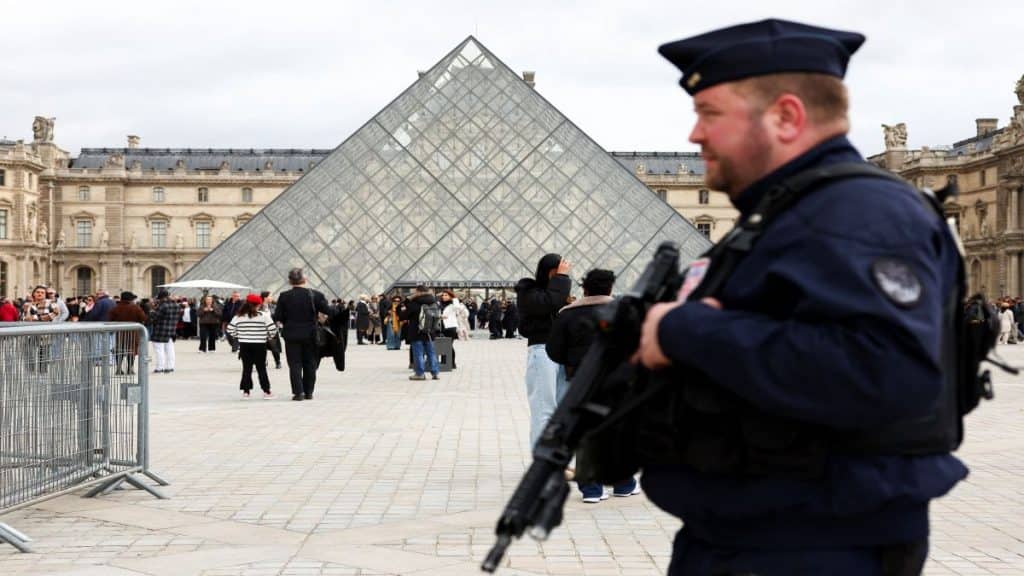
A French CRS riot police officer patrols near the glass Pyramid of the Louvre Museum, after French police arrested suspects in the Louvre heist case, in Paris, France. File image/Reuters
The stolen jewels from the Paris museum have been valued at more than $100 million (approximately 88 million euros), a French prosecutor said.
At least seven people, including the four robbers, have been arrested in connection with the heist. However, there is little hope that the jewels will be recovered. Interpol has listed the pieces in its database of stolen art amid fears they could be broken up or smuggled abroad.
M for Mark Carney
The year began on a tumultuous note for Canada. In January, Justin Trudeau announced that he was quitting as Canada’s prime minister under growing pressure from his own party, ending his nine-year tenure as leader. Amid the political uncertainty, the Liberal Party picked
Carney was the former Bank of England boss, the first non-British person to hold the position. He was at the helm of the Bank of Canada during the 2008 financial crash. Interestingly, this is his first political stint.
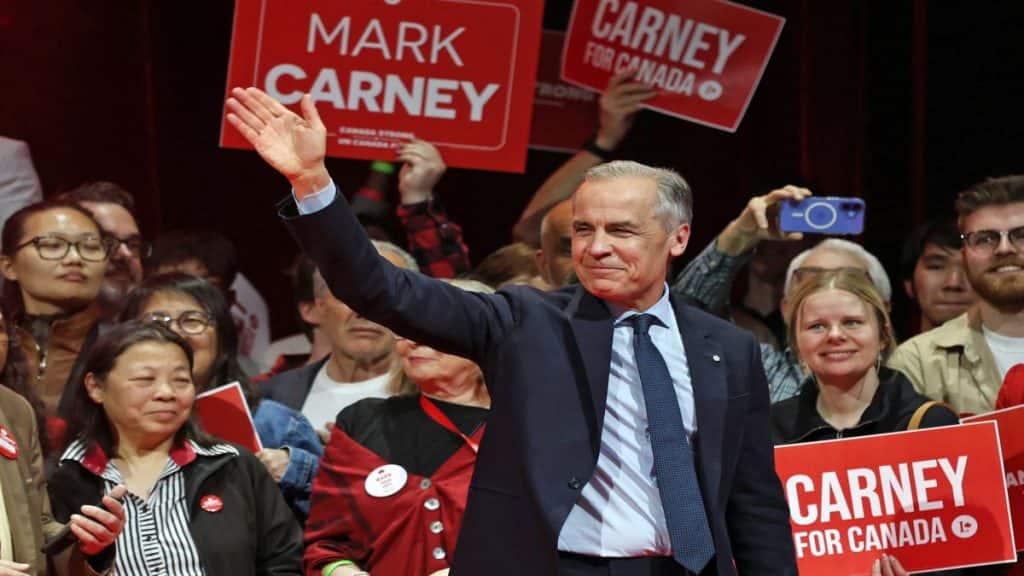
Canada's Prime Minister and Liberal Party leader Mark Carney waves to supporters at a victory party in Ottawa, Ontario. File image/AFP
The job has been a tough one, but Carney has had some success in dealing with a fickle Donald Trump and his tariff policies. The US and Canada are launching formal talks to review a free trade agreement in January.
Under Carney, ties with India have improved, but there have been some hiccups because of the Khalistan issue. The Canadian PM met his Indian counterpart, Narendra Modi, on the sidelines of the G20 summit in Johannesburg in November, with the two sides agreeing to launch new negotiations on a trade pact. Carney is expected to visit India in early 2026.
Netflix-Warner Bros deal
Entertainment as we know it could change. It changed with the rise of streaming platforms like Netflix, and now it could potentially spell the end of theatres, at least that is what many fear.
Netflix is expected to buy Warner Bros. Discovery’s storied movie studio and popular HBO streaming networks for $82.7 billion. The blockbuster deal is likely to shake up the world of entertainment.
While Paramount Skydance launched a $108-billion hostile takeover bid, Warner Bros.’ board told its shareholders to reject that.
With the Netflix buyout, the streaming giant will take over most of Warner Bros., including its film studio and franchises (Harry Potter, DC Comics brands like Superman and Batman) and premium TV network HBO, home to hit shows like
The Netflix bid is making Hollywood uneasy. Many worry that if the world’s largest streaming platform acquires one of the world’s most important movie studios, it could accelerate the decline of the traditional cinema, according to a DW report. Netflix has shown little enthusiasm for theatre releases.
However, Netflix co-CEO Ted Sarandos has been promising movie lovers that after the takeover, they will “continue to release Warner Bros. studio movies in theatres”. But is he giving us the complete picture?
O for Operation Sindoor
In the wee hours of May 7, India launched strikes against terror targets in Pakistan. It was called Operation Sindoor to avenge the deaths of the 26 civilians, mostly tourists, killed in the Pahalgam terror attack, where many were murdered in front of their wives and children.
After India’s airstrikes, Pakistan retaliated. What followed was a four-day intense conflict between the two neighbours, the first since Kargil in 1999. India hit targets up to 100 km inside Pakistan and Pakistan-occupied Kashmir; Pakistan launched aerial strikes, targeting Jammu and Kashmir, Punjab and Haryana.
India destroyed nine terrorist camps inside Pakistan, taking out Lashkar-e-Taiba, Jaish-e-Mohammed and Hizbul Mujahideen facilities. It inflicted a big blow to Pakistan’s military and terror infrastructure. Pakistan barely caused any damage to India, but it continued to peddle false claims.
Operation Sindoor was in many ways a made-in-India success story, as it showcased the might of India’s indigenous defence industry with BrahMos missiles, Akash air defence systems, and D4 anti-drone systems playing a big role. Most importantly, it displayed the emergence of India’s new doctrine of deterrence.
P for Pope
In 2025, the papacy turned a new page: Francis, who ushered in reforms, passed on; Leo XIV began setting the tone for the future of the Roman Catholic Church.
Pope Francis, the first non-European head of the Church in more than a millennium, died on April 21 after a stroke. His death, following bouts of pneumonia, bronchitis and other medical problems, set in motion the conclave to choose a new papal leader.
After a nine-day mourning period, culminating with Francis’s burial, the conclave convened to elect his successor. A total of 133 cardinals – the largest ever in a papal election – were locked inside the Sistine Chapel to participate in the 2025 conclave. The world had its eyes glued on the chimney of this 15th-century papal sanctuary – black smoke indicated a stalemate, while white heralded a new pontiff. The new pope was elected after five votes taken over two days.
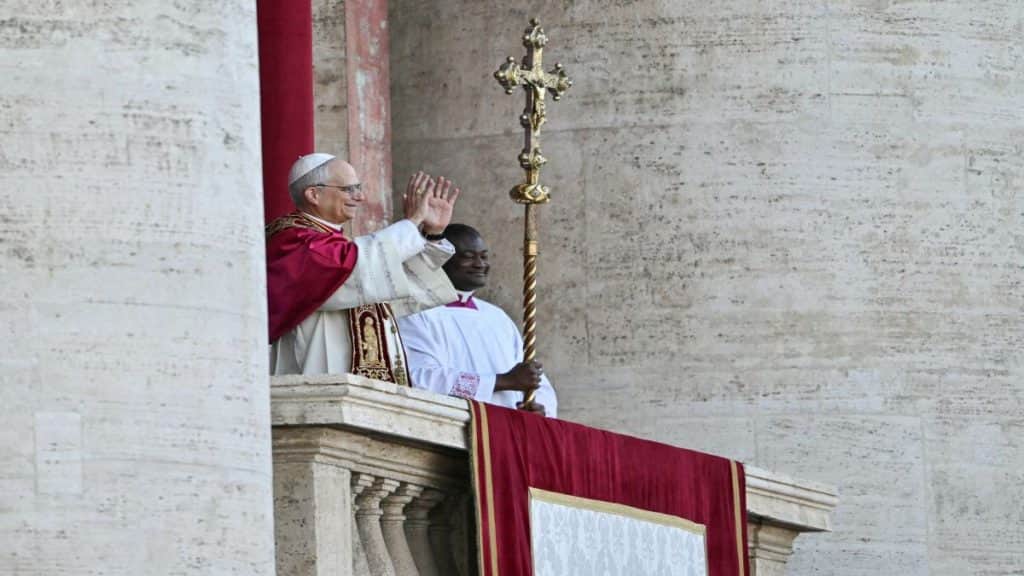
Newly elected Pope Leo XIV, Robert Francis Prevost gestures on the main central loggia balcony of the St Peter's Basilica, after the cardinals ended the conclave, in The Vatican, on May 8, 2025. Robert Francis Prevost was elected the first pope from the United States, the Vatican announced. File image/AFP
Cardinal Robert Pervost became the new head of the Church. The first US-born pontiff, he took the name Pope Leo XIV. When the 69-year-old spoke for the first time from the balcony of St Peter’s Basilica, he said he would seek “to walk together with you as a united church searching all together for peace and justice, working together as women and men.” In recent months, he has criticised the “dictatorship” of economic inequality and has been vocal in his support for migrants, signalling a bold approach to the US administration that continues its crackdown on “illegal aliens”.
With his commitment to equality, Pope Leo’s leadership signals a future where the Church may stand as a stronger moral compass in turbulent times.
Q for Quiet Piggy
There are a few things that have not changed in 2025. One of them is Trump’s propensity for insults, especially targeting women journalists.
On board Air Force One, on November 14, Trump was asked about released emails linked to the late convicted sex offender Jeffrey Epstein. He brushed off the question, saying he knew nothing about that, and people should focus on others named in the email, including former President Bill Clinton.
After Catherine Lucey, a journalist from Bloomberg News, tried to ask a follow-up question on Epstein, the president turned to her and said, “Quiet. Quiet, piggy.” The clip grabbed millions of views online four days after it happened, with many outraged. Some Democrats decided to hit back in kind. California Governor Gavin Newsom’s press office used the clip to bully the president back, photoshopping Trump’s face onto pigs and repeatedly tweeting “Quiet, piggy”. It became a hashtag and a meme.
During a gaggle on Air Force One this Friday, a female White House correspondent for Bloomberg began asking President Trump a question about the Epstein files, when the president pointed at her and said, "Quiet. Quiet Piggy," before moving on to another reporter's question. pic.twitter.com/mpwVcMKdCU
— CBS News (@CBSNews) November 19, 2025
The White House did what it does best – defend Potus. Press Secretary Karoline Leavitt said that Trump was re-elected because of his bluntness and that members of the media should appreciate his willingness to answer their questions.
The phrase and the meme might fade, but the insult remains as a reminder of Trump’s politics of provocation.
R for Rob Reiner
It's the most heartbreaking real-life story from Hollywood this year. Beloved director Rob Reiner was found dead in the plush Los Angeles home alongside his wife, Michele. Their bodies were found by their daughter, Romy, with multiple stab wounds.
Rob Reiner, whose best works include When Harry Met Sally, The Princess Bride and A Few Good Men, was 78. Michele, who was also a producer, was 70.
A person holds a candle and a picture of actor-director and activist Rob Reiner during a candlelight vigil in memory of him and his wife, Michele Singer Reiner, outside Trump Tower on Fifth Avenue in New York City. File image/Reuters
The case took a more tragic turn when it was revealed that their son, Nick Reiner, was a suspect in the homicide. He was arrested and has been charged with two counts of first-degree murder after his parents’ deaths.
A family friend of the Reiners told The Post about an explosive fight between the parents and the son days before the killings. They argued at the TV host and comic Conon O Brien’s holiday party. “Rob had been telling people that they’re scared for Nick and scared that his mental state was deteriorating,” they shared.
Nick Reiner was reportedly an addict and had 18 stints in rehab. He was diagnosed with schizophrenia just weeks before his parents were murdered. He is on suicide watch in solitary confinement in a Los Angeles jail, according to media reports.
S for Signal-gate
In March 2025, the Trump administration faced its first major security crisis, dubbed “Signal-gate”.
US National Security Advisor Michael Waltz inadvertently added Jeffrey Goldberg, the editor-in-chief of The Atlantic, to a private Signal group chat titled "Houthi PC small group." The group, which included US Vice President JD Vance and US Defence Secretary Pete Hegseth, was using the encrypted app to coordinate Operation Rough Rider — a series of airstrikes against Houthi rebels in Yemen.
Goldberg published transcripts revealing that Hegseth had shared specific strike timings and drone coordinates on an unapproved, commercial platform.
While the administration dismissed the incident as a "glitch," a December 2025 Pentagon Inspector General report confirmed the lapse put US troops in "great peril."
The scandal led to the departure of several mid-level aides and forced Mike Waltz to transition from National Security Advisor to US Ambassador to the UN later in the year.
T for Tariffs
Tariffs. Donald Trump says it is his favourite word. It has haunted almost every country in the world.
Upon taking office, Trump aggressively leveraged the International Emergency Economic Powers Act (IEEPA) to overhaul US trade. By April 2025, a universal 10 per cent tariff was applied to almost all imports, while specific 25 per cent levies were slapped on Canada and Mexico to pressure them into stricter border enforcement.
US President Donald Trump announces new tariffs in the Rose Garden at the White House in Washington. File image/AP
While the US Treasury reported record-breaking monthly revenues exceeding $30 billion by September, the policy sparked a 90-day stock market pause in the spring and retaliatory measures from the EU and China.
India became a central figure in this trade war. After Trump’s offer to mediate the India-Pakistan skirmishes in May was rejected by New Delhi, trade relations soured.
By August 2025, the US hiked tariffs on Indian goods to a staggering 50 per cent, combining the baseline rate with "reciprocal" duties and a 25 per cent penalty specifically targeting India's continued imports of Russian oil.
Trump also threatened 100 per cent tariffs on Brics nations if they attempted to replace the US dollar. Although the administration argues these measures are essential for reviving domestic manufacturing, the year ends with a cooling GDP growth rate in the US and ongoing legal battles over the executive branch's authority to impose such sweeping taxes without direct Congressional approval.
U for Ukraine peace talks
In its third year, the Russia-Ukraine war drags on with no end in sight. However, there’s hope that this will come to an end soon as
The proposal reportedly includes a "Free Economic Zone" in contested territories — a compromise where Ukrainian troops would withdraw without a Russian advance, though sovereignty remains the ultimate sticking point.
Ukrainian President Volodymyr Zelenskyy has expressed cautious optimism but warned that Ukraine will not "give away the Donbas."
Meanwhile, Russian President Vladimir Putin used his year-end military address to demand full recognition of annexed territories, threatening to extend his buffer zone if the current talks fail.
The year concludes with a "coalition of the willing" from Europe offering security guarantees to Ukraine outside of the Nato framework, as Washington pushes for a "swift peace" to fulfil its 2024 campaign promises.
V for Venezuela
In 2025, Venezuela, the South American country, grabbed headlines as its leader, Nicolas Maduro, squared off against US President Donald Trump.
Tensions between the two have grown in the latter months of the year after the US military carried out a series of lethal boat strikes in the Caribbean and eastern Pacific, which US officials said targeted vessels involved in drug trafficking. These operations resulting in several deaths have triggered harsh criticism from foreign governments, human rights bodies such as the United Nations, and US lawmakers from both the Republican and Democratic parties.
The reason for these strikes, the US claims, is to put an end to drug trafficking. In fact, in August, the US State Department doubled a reward for information that led to Maduro’s arrest to $50 million, alleging he managed the Cártel de los Soles, which is responsible for mass cocaine importation and the arming of Venezuelan gangs.
But Maduro, who has labelled himself as “more famous than Taylor Swift in the US”, remains unfazed. He insists that the real purpose of the US military operations is to force him from power.
W for Women’s World Cup glory
India is a cricket-loving nation. And in 2025, the wait for the Indian Women’s Cricket team to stand shoulder to shoulder with the men came to an end as the Women in Blue did the unthinkable by winning the 13th edition of the ICC Women’s World Cup.
It was a campaign of redemption and resilience. From three straight defeats in the group stage to a flawless knockout run, India’s turnaround was as dramatic as it was defining.
India's Harmanpreet Kaur and teammates celebrate with the trophy after winning the ICC Women's World Cup. File image/Reuters
Fuelled by the performances of Deepti Sharma and Shafali Verma, the Indian women outclassed the South African side by 52 runs to finally get their hands on the trophy, which they had lost out on narrowly back in 2005 and 2017, losing to Australia and England, respectively.
What came later were celebrations, tears of joy, and an acknowledgement that Indian women can achieve anything they dream of!
X for Xi Jinping
One of the biggest stories of this year would be the US trying to declare economic war on China, and China, under the leadership of Xi Jinping, fighting back. This year, Xi showed he is willing to use his country’s dominance as not just a source of wealth, but of power. His restrictions on rare-earth exports were one example of how China used other countries’ dependency as a weapon.
But that’s not all. This year, Xi also showed his diplomatic prowess. At the 25th meeting of the Shanghai Cooperation Organisation (SCO) in Tianjin, he was seen sharing a bonhomie with Prime Minister Narendra Modi as well as Russian President Vladimir Putin.
In fact, it was one image from the SCO summit that got everyone talking; it showed Modi clasping Putin’s hand while the Russian leader chuckled, and the Chinese president gave a measured smile. For many, it wasn’t just optics, but a deliberate message to the world, especially the United States.
Russian President Vladimir Putin, Prime Minister Narendra Modi and Chinese President Xi Jinping talk ahead of the Shanghai Cooperation Organization (SCO) summit at the Meijiang Convention and Exhibition Centre in Tianjin, China. File image/AP
CNN’s political commentator Van Jones called it an image that “should send a chill down the spine of every American,” describing the ‘tableau’ of Xi, Putin, Modi, and other leaders like Iran’s president and North Korea’s Kim Jong Un as a 'new world order' where the West finds itself increasingly boxed in. “It was the United States and China together and Russia by itself. Now we’re on the bad end of the triangle. It’s everybody against us. That is not good for America,” he told viewers.
Xi also flexed his military might this year. He presided over the country’s largest-ever military parade, orchestrated to mark the 80th anniversary of the end of World War II, which China calls the War of Resistance Against Japanese Aggression.
Y for YR4 asteroid
What if we were to say that an asteroid was hurtling towards Earth? Most would respond saying it sounded like something out of a Hollywood movie script. But this year, it became almost real when astronomers discovered an asteroid near the planet.
Called the 2024 YR4 asteroid, it’s somewhere between 40 and 100 metres in size — the size of a building.
An image of the asteroid 2024 YR4 taken by the European Southern Observatory's Very Large Telescope. Reuters
Notably, the space rock looked at first as if it might hit our planet by December 22, 2032. The chance of that impact changed with every new observation, peaking at 3.1 per cent in February — odds that made it the riskiest asteroid ever observed.
Discussions soon began as to what would be the effect of the asteroid hitting Earth. As John Tonry, an astronomer at the University of Hawaii, told Scientific American, “The impact would be equivalent to a 10-megaton bomb. Everything within three or four kilometres would be incinerated. Everything out to maybe 10 kilometres is smashed. It’s not a nuclear explosion, but it’s an extremely hot explosion. There would be a huge fireball that would start fires out to 15 kilometres, something like that. It would kill a lot of people if they haven’t moved out of the way.”
But YR4 is currently moving away from Earth in almost a straight line, making it difficult to accurately determine its precise orbit before it returns towards Earth.
According to ESA, “It is possible that asteroid 2024 YR4 will fade from view before we are able to entirely rule out any chance of impact in 2032. In this case, the asteroid will likely remain on ESA’s risk list until it becomes observable again in 2028.”
Z for Zohran Mamdani
Few political contests in 2025 drew as much global attention as New York City’s mayoral race. And in November, a 34-year-old Muslim and person of
Mamdani, the Ugandan-born Democratic socialist with no administrative experience, defeated former New York Governor Andrew Cuomo, who ran as an Independent, and Republican Curtis Sliwa in the election.
The win marks a remarkable ascent for Mamdani, who was a relatively unknown state assembly member representing a district in Queens when he entered the crowded mayoral race last year. He went on to win June’s Democratic primary by 12 percentage points, quickly becoming one of the country’s most popular and polarising politicians along the way.
Mamdani will be sworn in as mayor on January 1, 2026, and there’s a lot that he needs to get done. He’s vowed to make the most expensive city in the US affordable again and that’s going to be no easy feat.