









What is the story about?
A senior Lashkar-e-Taiba (LeT) leader and kin of the Pahalgam terrorist has openly admitted to close links between the Pakistan Army and the banned outfit, exposing Islamabad’s long-standing approach of using terrorism as an instrument of state policy against India.
Saifullah Kasuri, deputy chief of the Hafiz Saeed-led LeT and the alleged mastermind of the Pahalgam terror attack, said the Pakistan Army regularly invites him to official military events and even asks him to lead funeral prayers for its soldiers.
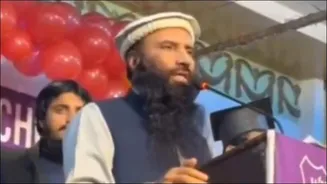
“The Pakistan Army sends me invitations… it invites me to lead funeral prayers for its soldiers,” Kasuri said while addressing schoolchildren at an event in Pakistan, in an undated video that has now surfaced.
His remarks lay bare the deep nexus between Pakistan’s military establishment and proscribed terrorist groups, directly contradicting Pakistan’s repeated assurances to the international community about taking action against terror networks operating from its soil.
Kasuri also issued provocative threats against India, claiming New Delhi was “scared” of him. “Do you know India is scared of me?” he told the gathering.
Earlier, while acknowledging that India’s Operation Sindoor destroyed terrorist infrastructure in Pakistan, Kasuri claimed India had “made a mistake” by targeting terror camps. He openly reiterated LeT’s focus on Kashmir, declaring that the outfit would “never back down from the Kashmir mission”.
“India made a big mistake in Operation Sindoor by targeting only terrorist hideouts,” Kasuri was heard saying in another undated video.
Earlier in a separate rally in Punjab province's Kasur, the LeT leader claimed he had gained global notoriety after being named the mastermind of the Pahalgam terror attack. “I was blamed for being the mastermind of the Pahalgam terror attack. Now my name is famous across the world,” he said.
India launched Operation Sindoor on May 7, targeting terror infrastructure in Pakistan and Pakistan-occupied Kashmir in retaliation for the April 22 Pahalgam attack in which Islamabad-backed terrorists killed 26 civilians. After four days of intense cross-border drone and missile strikes, India and Pakistan reached an understanding on May 10 to end the conflict.
Saifullah Kasuri, deputy chief of the Hafiz Saeed-led LeT and the alleged mastermind of the Pahalgam terror attack, said the Pakistan Army regularly invites him to official military events and even asks him to lead funeral prayers for its soldiers.
‘Pakistan Army invites me’
“The Pakistan Army sends me invitations… it invites me to lead funeral prayers for its soldiers,” Kasuri said while addressing schoolchildren at an event in Pakistan, in an undated video that has now surfaced.
His remarks lay bare the deep nexus between Pakistan’s military establishment and proscribed terrorist groups, directly contradicting Pakistan’s repeated assurances to the international community about taking action against terror networks operating from its soil.
Provocative threats against India
Kasuri also issued provocative threats against India, claiming New Delhi was “scared” of him. “Do you know India is scared of me?” he told the gathering.
Earlier, while acknowledging that India’s Operation Sindoor destroyed terrorist infrastructure in Pakistan, Kasuri claimed India had “made a mistake” by targeting terror camps. He openly reiterated LeT’s focus on Kashmir, declaring that the outfit would “never back down from the Kashmir mission”.
“India made a big mistake in Operation Sindoor by targeting only terrorist hideouts,” Kasuri was heard saying in another undated video.
Boasts of role in Pahalgam attack
Earlier in a separate rally in Punjab province's Kasur, the LeT leader claimed he had gained global notoriety after being named the mastermind of the Pahalgam terror attack. “I was blamed for being the mastermind of the Pahalgam terror attack. Now my name is famous across the world,” he said.
Operation Sindoor and India’s response
India launched Operation Sindoor on May 7, targeting terror infrastructure in Pakistan and Pakistan-occupied Kashmir in retaliation for the April 22 Pahalgam attack in which Islamabad-backed terrorists killed 26 civilians. After four days of intense cross-border drone and missile strikes, India and Pakistan reached an understanding on May 10 to end the conflict.