






What is the story about?
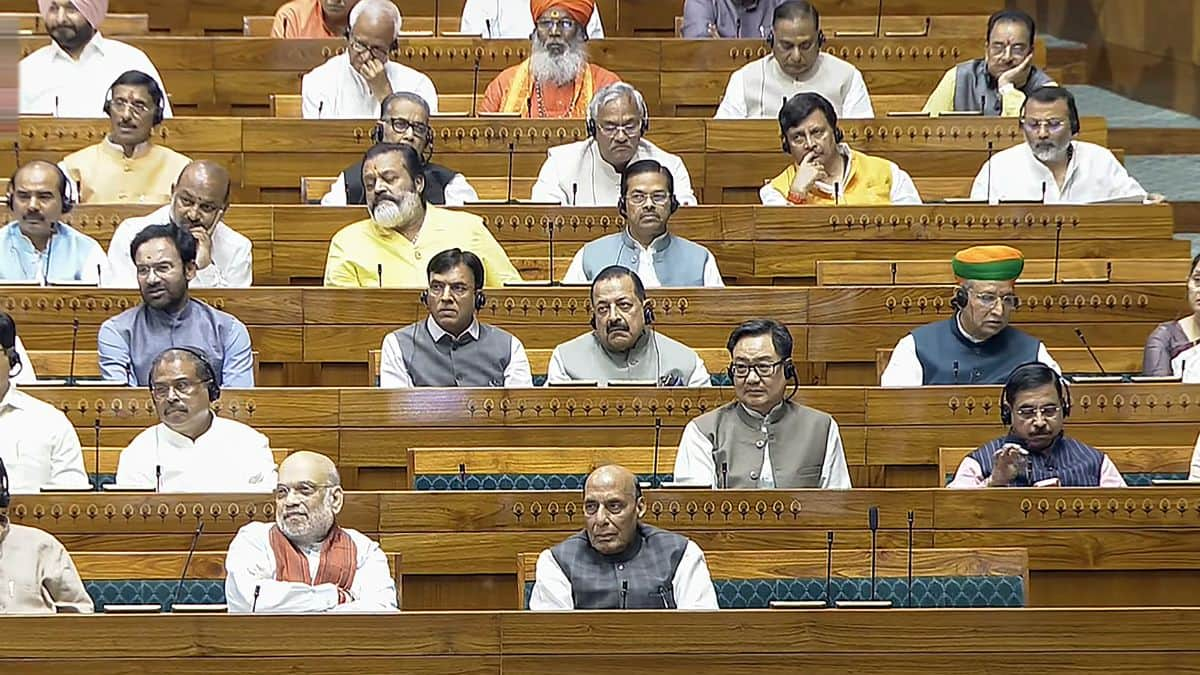
The Centre has tabled three bills in the Lok Sabha during a three-day special session that began today (April 16). These bills – the Constitution (One Hundred and Thirty-First Amendment) Bill, 2026, the Delimitation Bill, 2026 and the Union Territories Laws (Amendment Bill), 2026 — are expected to cause a showdown in Parliament.
The opposition is up in arms over delimitation, which the government has linked to the implementation of reserving one-third of seats for women in the Lok Sabha and in the Legislative Assemblies of States and Union Territories (UTs). These bills aim to expedite the rollout of the women’s quota before the 2029 general elections.
Let’s take a closer look.
The Centre has proposed amendments to the 'Nari Shakti Vandan Adhiniyam', commonly called the Women's Reservation Act, 2023.
The Constitution (131st Amendment) Bill seeks to amend this Act and accelerate the implementation of women’s reservation in the Lok Sabha and state Assemblies.
With the Union Territories Laws (Amendment Bill), 2026, the Centre aims to extend women’s reservation to UTs with Legislative Assemblies.
The Nari Shakti Vandan Adhiniyam was passed by Parliament in September 2023 with near unanimity, reserving 33 per cent of seats in the Lok Sabha and state Assemblies for women.
However, its implementation was tied to the 2021 Census, which was delayed and has only just begun. As the Act would have been enforced after the delimitation and the first census following the passing of the legislation, women’s reservation would have actually come into force by 2034.
The Centre now seeks to get the Nari Shakti Vandan Adhiniyam Amendment Bill passed during the ongoing special sitting in the extended Budget session.
This amendment will allow the implementation of a 33 per cent quota for women in the Lok Sabha and state Assemblies as early as 2029.
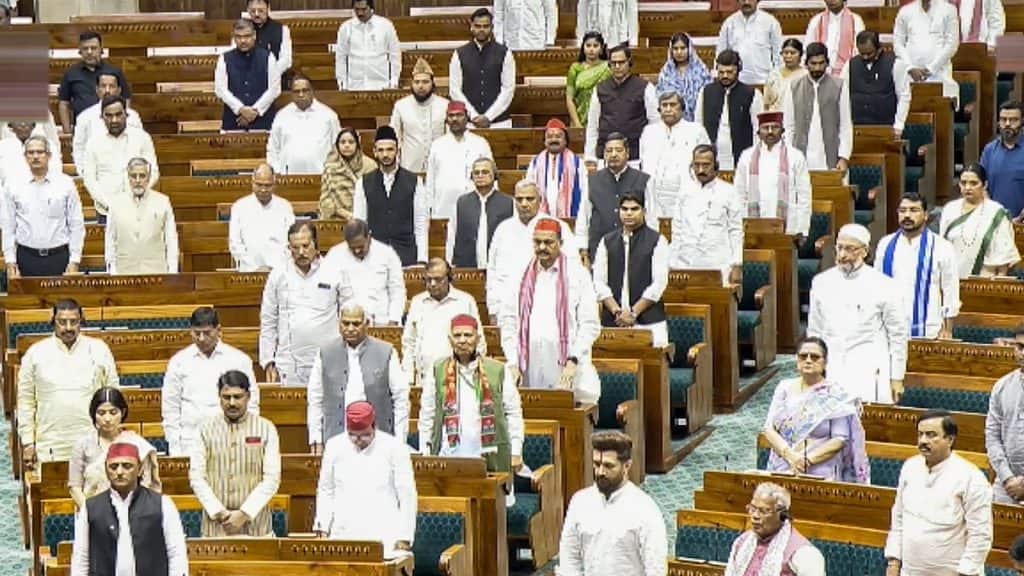
The statement of objects and reasons of the Constitutional Amendment Bill states: “The next census and the consequential delimitation exercise thereafter will take considerable time and thus, delay the effective and dedicated participation of women in our democratic polity.
“Hence, the objective of the proposed bill is to operationalise one-third reservation for women, including women belonging to the Scheduled Castes and the Scheduled Tribes, in the House of the People and the legislative assemblies of the states, the National Capital Territory of Delhi and the Union territories through delimitation exercise to be undertaken on the basis of the population figures of the latest published census,” it read.
The government has linked the delimitation exercise to the implementation of the Women’s Reservation Act. By introducing the three bills together, the Centre plans to kick off the delimitation process by proposing amendments to the constitutional provision that had put a pause on the exercise.
In normal circumstances, delimitation would have been carried out following the publication of the first census after 2026. But the Centre aims to do away with this proviso entirely.
The new bill paves the way for delimitation to be carried out on the basis of the data before the 2026-27 Census. India's last population count was conducted in 2011.
The draft Constitution amendment bill wants to redraw parliamentary seats and expand the number of Lok Sabha seats up to 850 from the current 543.
This, it says, is being done to "operationalise" the women's reservation law before the 2029 parliamentary polls, following a delimitation exercise based on the 2011 Census.
Seats will also be increased in state and Union territory Assemblies for the rollout of 33 per cent reservation for women.
While women comprise nearly half of India's population, they make up only about 14 per cent of MPs in the Lower House. The implementation of the women's quota bill will increase that to a third, bringing the South Asian country closer to global norms.
The seats reserved for women in the Lok Sabha and Legislative Assemblies "shall be allotted by rotation to different constituencies in a state or Union territory," according to the draft bill circulated among lawmakers.
If the legislation gets the Parliament nod, the women's quota will first be implemented in Uttar Pradesh, Punjab, Gujarat and Uttarakhand, which go to polls next year, reported Hindustan Times (HT).
While the opposition parties support the women's reservation bill, they have questioned the government's timing for its introduction and linking it to delimitation.
They have asked why the three bills have been tabled ahead of the Assembly elections in Tamil Nadu and West Bengal this month, when they could have been brought following the end of polling on April 29.
Opposition leaders in southern states have also objected to delimitation, which would lead to an increase in the number of Lok Sabha seats. They argue that southern states that controlled population growth will be “penalised” if parliamentary constituencies are redrawn based solely on the census.
However, the government sources have assured that the representation of each state in the Lok Sabha will rise by 50 per cent. However, the bill does not specify the change in exact seat count or a fixed percentage following delimitation.
Amid opposition's objections, the government is hoping to get the bills passed in Parliament. However, as it is a constitutional amendment bill, the Bharatiya Janata Party-led National Democratic Alliance (NDA) needs a two-thirds majority, which it does not have in either House.
Even if the bills do not get Parliament's approval, the BJP could corner the opposition and portray them as parties that “opposed” women’s reservation.
The opposition fears that expediting the rollout of the women’s quota bill is only a “ploy” to conduct delimitation and redraw parliamentary constituencies ahead of the 2029 Lok Sabha elections in a way that gives the saffron party an “advantage”, as per
Indian Express.
Congress president Mallikarjun Kharge has written to Prime Minister Narendra Modi, accusing the Centre of rushing the process for "political mileage" due to the election season. He also pointed out that while the women's reservation bill was passed unanimously in 2023, the Union government decided not to implement it despite consensus in Parliament.
Meanwhile, Prime Minister Narendra Modi, who is set to speak on the Women’s Reservation Bill today, has sought the support of political parties for its implementation.
With inputs from agencies
The opposition is up in arms over delimitation, which the government has linked to the implementation of reserving one-third of seats for women in the Lok Sabha and in the Legislative Assemblies of States and Union Territories (UTs). These bills aim to expedite the rollout of the women’s quota before the 2029 general elections.
Let’s take a closer look.
Women’s reservation bill
The Centre has proposed amendments to the 'Nari Shakti Vandan Adhiniyam', commonly called the Women's Reservation Act, 2023.
The Constitution (131st Amendment) Bill seeks to amend this Act and accelerate the implementation of women’s reservation in the Lok Sabha and state Assemblies.
With the Union Territories Laws (Amendment Bill), 2026, the Centre aims to extend women’s reservation to UTs with Legislative Assemblies.
The Nari Shakti Vandan Adhiniyam was passed by Parliament in September 2023 with near unanimity, reserving 33 per cent of seats in the Lok Sabha and state Assemblies for women.
However, its implementation was tied to the 2021 Census, which was delayed and has only just begun. As the Act would have been enforced after the delimitation and the first census following the passing of the legislation, women’s reservation would have actually come into force by 2034.
The Centre now seeks to get the Nari Shakti Vandan Adhiniyam Amendment Bill passed during the ongoing special sitting in the extended Budget session.
This amendment will allow the implementation of a 33 per cent quota for women in the Lok Sabha and state Assemblies as early as 2029.
The Parliament is expected to witness a showdown during the three-day special session. PTI
The statement of objects and reasons of the Constitutional Amendment Bill states: “The next census and the consequential delimitation exercise thereafter will take considerable time and thus, delay the effective and dedicated participation of women in our democratic polity.
“Hence, the objective of the proposed bill is to operationalise one-third reservation for women, including women belonging to the Scheduled Castes and the Scheduled Tribes, in the House of the People and the legislative assemblies of the states, the National Capital Territory of Delhi and the Union territories through delimitation exercise to be undertaken on the basis of the population figures of the latest published census,” it read.
How delimitation becomes key to women’s quota
The government has linked the delimitation exercise to the implementation of the Women’s Reservation Act. By introducing the three bills together, the Centre plans to kick off the delimitation process by proposing amendments to the constitutional provision that had put a pause on the exercise.
In normal circumstances, delimitation would have been carried out following the publication of the first census after 2026. But the Centre aims to do away with this proviso entirely.
The new bill paves the way for delimitation to be carried out on the basis of the data before the 2026-27 Census. India's last population count was conducted in 2011.
The draft Constitution amendment bill wants to redraw parliamentary seats and expand the number of Lok Sabha seats up to 850 from the current 543.
This, it says, is being done to "operationalise" the women's reservation law before the 2029 parliamentary polls, following a delimitation exercise based on the 2011 Census.
Seats will also be increased in state and Union territory Assemblies for the rollout of 33 per cent reservation for women.
While women comprise nearly half of India's population, they make up only about 14 per cent of MPs in the Lower House. The implementation of the women's quota bill will increase that to a third, bringing the South Asian country closer to global norms.
The seats reserved for women in the Lok Sabha and Legislative Assemblies "shall be allotted by rotation to different constituencies in a state or Union territory," according to the draft bill circulated among lawmakers.
If the legislation gets the Parliament nod, the women's quota will first be implemented in Uttar Pradesh, Punjab, Gujarat and Uttarakhand, which go to polls next year, reported Hindustan Times (HT).
Can the government get the bills passed?
While the opposition parties support the women's reservation bill, they have questioned the government's timing for its introduction and linking it to delimitation.
They have asked why the three bills have been tabled ahead of the Assembly elections in Tamil Nadu and West Bengal this month, when they could have been brought following the end of polling on April 29.
Opposition leaders in southern states have also objected to delimitation, which would lead to an increase in the number of Lok Sabha seats. They argue that southern states that controlled population growth will be “penalised” if parliamentary constituencies are redrawn based solely on the census.
However, the government sources have assured that the representation of each state in the Lok Sabha will rise by 50 per cent. However, the bill does not specify the change in exact seat count or a fixed percentage following delimitation.
Amid opposition's objections, the government is hoping to get the bills passed in Parliament. However, as it is a constitutional amendment bill, the Bharatiya Janata Party-led National Democratic Alliance (NDA) needs a two-thirds majority, which it does not have in either House.
VIDEO | Parliament Special Session: Speaking in Lok Sabha, Union Minister Arjun Ram Meghwal (@arjunrammeghwal) says, "I am proud and happy to speak today. This day will be written in golden letters in the history India's parliamentary affairs."
(Full video available on PTI… pic.twitter.com/dlMZkd4J2A
— Press Trust of India (@PTI_News) April 16, 2026
Even if the bills do not get Parliament's approval, the BJP could corner the opposition and portray them as parties that “opposed” women’s reservation.
The opposition fears that expediting the rollout of the women’s quota bill is only a “ploy” to conduct delimitation and redraw parliamentary constituencies ahead of the 2029 Lok Sabha elections in a way that gives the saffron party an “advantage”, as per
Congress president Mallikarjun Kharge has written to Prime Minister Narendra Modi, accusing the Centre of rushing the process for "political mileage" due to the election season. He also pointed out that while the women's reservation bill was passed unanimously in 2023, the Union government decided not to implement it despite consensus in Parliament.
Meanwhile, Prime Minister Narendra Modi, who is set to speak on the Women’s Reservation Bill today, has sought the support of political parties for its implementation.
With inputs from agencies