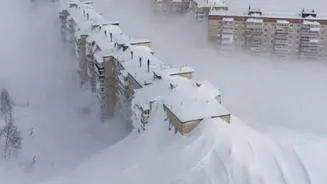






Russia’s remote Kamchatka Peninsula in the far east is facing what many locals are calling a “snow apocalypse” after an extraordinary winter storm dumped record levels of snow across the region. Streets, cars and entire neighbourhoods have been buried under drifts so deep that in some areas the snow has climbed up to the height of multi‑storey buildings, transforming towns into near‑unrecognisable white landscapes.
Watch the video here:
Exoplanet...
Kamchatka. After a snow storm, people are sliding down from the fourth floor. pic.twitter.com/BMGqsNj5wn
— Black Hole (@konstructivizm) January 19, 2026
Meteorological agencies say this blizzard is one of the heaviest in decades, with snow depths exceeding two metres in many districts—amounts not seen since the early 1970s—and continuous snowfall piling up over several days.
Chaos on the ground
The capital of Kamchatka Krai, Petropavlovsk‑Kamchatsky, has been especially hard hit.
Snow has blocked major roads, halted public transport, and made normal life nearly impossible for residents. Cars are almost completely engulfed. People have been forced to dig tunnels through the snow just to reach the street, while some have resorted to exiting their homes through windows because entrances are impassable.
Officials declared a state of emergency earlier this week to mobilise additional resources for snow removal and emergency aid, while schools and many businesses have closed amid transport chaos.
At least two people have died after large slabs of snow and ice slid off rooftop edges and buried them. Authorities have issued warnings to residents about the dangers of heavy rooftop accumulations and unpredictable drifting snow. Emergency workers are urging people to stay indoors and avoid needless travel.
Local stores have also reported shortages of essentials like bread, milk and eggs, as blocked roads make it harder for deliveries to reach neighbourhoods. Heavy machinery and crews continue working around the clock to clear key routes and help isolated families.
While Kamchatka is no stranger to winter weather, scientists note the unprecedented intensity of this storm, part of a broader series of extreme winter events affecting parts of Russia and neighbouring regions this season.