




What is the story about?
There is a lockdown in Islamabad, the cause is not a virus but the capital's status as a grand stage for US-Iran peace talks. Whole hunk of capital's roads are unsettlingly quiet; schools and shops are shut; government workers have been told to work from home, bringing Islamabad into pandemic-style limbo.
Labourers are finding themselves deprived of work, while others remain stuck in one place. As uncertainty reigns in negotiations between Washington and Tehran, the shutdown has only heightened frustration among ordinary Pakistanis.
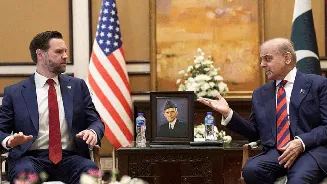
Restrictions have remained in place in Islamabad even as the peace talks were postponed, after US Vice President JD Vance called off his trip due to Iran’s no-show.
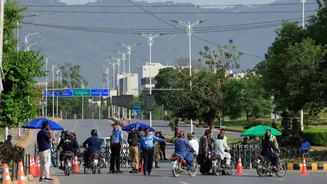
Strict restrictions have been imposed by security forces on the “red zone" areas that are near the negotiating venue, resulting in the closure of key roads, shops and schools, and ordering officials and office workers to work from home.
Major roads have been shut in recent days to ease the movement of foreign delegations and US cargo planes delivering equipment. Some measures enforced from the first round of US-Iran talks in Islamabad, which eventually stalled, have not been lifted.
Workers in Islamabad and neighbouring Rawalpindi who could not afford to rent flats were abruptly kicked out of their hostels on Saturday (April 18) following a government order, according to reports.
Promised peace talks fail to take place, and day after day, the capital's lockdown extends, leaving many with questions about how long it will continue as they face hurdles in their livelihoods.
Areej Akthar, a health officer at Pakistan Institute of Medical Sciences, a government hospital in Islamabad, said, "Saturday was chaotic. I am lucky enough that my village is a three-hour drive away. But many people, who were from distant cities and provinces had to beg their colleagues, friends and relatives to allow them to stay until the US-Iran negotiations took place," the Guardian reported.
As the delay in talks continued, Akthar’s frustration grew. “It is like we are living in a cage,” she added. "We can’t go back to work. Many like me can’t afford to rent a flat, that’s why we live in hostels.”
Pakistanis assert that stern restrictions have impacted their daily activities. Office worker Zainab Ali Uthmankhail told AFP, "We have to live here; the Red Zone has been shut down. Children cannot go to school, and shops are closed from time to time."
“Personally, I do find it very annoying. My time is wasted. Transport fares have increased. But I am happy that we are doing something positive," she added.
In an already struggling economy, this lockdown is affecting small business owners and daily-wage workers across the country.
The owner of a small jewellery kiosk, Muhammad Ahsan, 35, told
AFP, "The impact of the lockdown is that we are not seeing any customers here in the market... the government does not know what one day of their lockdown does to our households."
"Our stoves do not run, we do not find food in the market," he added.
A daily-wage labourer, Muhammad Zubair, 45, asserted that he has been unable to work for the past six days and is growing hungrier with each passing day.
“A lockdown means no work, and no work means no food. The government does not care about the poor. We need work to feed our children," angered Zubair added, according to the
Guardian.
A senior official said it felt as though the entire nation had come to a standstill as they awaited decisions from the US and Iran. “We are all under a lockdown, and it feels like we are back to coronavirus days," the news outlet reported.
The US-Iran talks are at a historic tipping point.
The prospects for the peace talks remained uncertain, even as US President Donald Trump said discussions could resume by Friday following Tehran's submission of a unified proposal to end the conflict in West Asia.
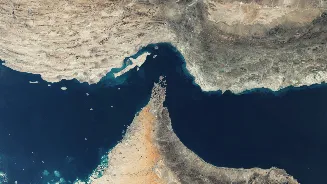
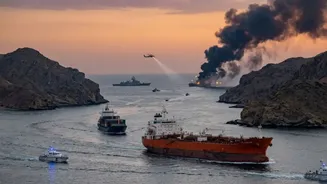
The naval blockade around the Strait of Hormuz has disrupted Iran’s trade flows, which are now emerging as a key sticking point in the negotiations.
Iran declined to negotiate earlier under what it called the “shadow of threats." Tensions have escalated further after Touska, an Iranian vessel, was seized.
Tehran also reportedly detained two ships in the Strait of Hormuz after Trump announced an indefinite extension of the ceasefire.
With inputs from agencies
Labourers are finding themselves deprived of work, while others remain stuck in one place. As uncertainty reigns in negotiations between Washington and Tehran, the shutdown has only heightened frustration among ordinary Pakistanis.
Islamabad in pandemic-style limbo
Restrictions have remained in place in Islamabad even as the peace talks were postponed, after US Vice President JD Vance called off his trip due to Iran’s no-show.
Strict restrictions have been imposed by security forces on the “red zone" areas that are near the negotiating venue, resulting in the closure of key roads, shops and schools, and ordering officials and office workers to work from home.
Major roads have been shut in recent days to ease the movement of foreign delegations and US cargo planes delivering equipment. Some measures enforced from the first round of US-Iran talks in Islamabad, which eventually stalled, have not been lifted.
Workers in Islamabad and neighbouring Rawalpindi who could not afford to rent flats were abruptly kicked out of their hostels on Saturday (April 18) following a government order, according to reports.
Promised peace talks fail to take place, and day after day, the capital's lockdown extends, leaving many with questions about how long it will continue as they face hurdles in their livelihoods.
"Like living in a cage"
Areej Akthar, a health officer at Pakistan Institute of Medical Sciences, a government hospital in Islamabad, said, "Saturday was chaotic. I am lucky enough that my village is a three-hour drive away. But many people, who were from distant cities and provinces had to beg their colleagues, friends and relatives to allow them to stay until the US-Iran negotiations took place," the Guardian reported.
As the delay in talks continued, Akthar’s frustration grew. “It is like we are living in a cage,” she added. "We can’t go back to work. Many like me can’t afford to rent a flat, that’s why we live in hostels.”
Pakistanis assert that stern restrictions have impacted their daily activities. Office worker Zainab Ali Uthmankhail told AFP, "We have to live here; the Red Zone has been shut down. Children cannot go to school, and shops are closed from time to time."
“Personally, I do find it very annoying. My time is wasted. Transport fares have increased. But I am happy that we are doing something positive," she added.
In an already struggling economy, this lockdown is affecting small business owners and daily-wage workers across the country.
The owner of a small jewellery kiosk, Muhammad Ahsan, 35, told
"Our stoves do not run, we do not find food in the market," he added.
A daily-wage labourer, Muhammad Zubair, 45, asserted that he has been unable to work for the past six days and is growing hungrier with each passing day.
“A lockdown means no work, and no work means no food. The government does not care about the poor. We need work to feed our children," angered Zubair added, according to the
A senior official said it felt as though the entire nation had come to a standstill as they awaited decisions from the US and Iran. “We are all under a lockdown, and it feels like we are back to coronavirus days," the news outlet reported.
Peace talks remain uncertain
The US-Iran talks are at a historic tipping point.
The prospects for the peace talks remained uncertain, even as US President Donald Trump said discussions could resume by Friday following Tehran's submission of a unified proposal to end the conflict in West Asia.
The naval blockade around the Strait of Hormuz has disrupted Iran’s trade flows, which are now emerging as a key sticking point in the negotiations.
Iran declined to negotiate earlier under what it called the “shadow of threats." Tensions have escalated further after Touska, an Iranian vessel, was seized.
Tehran also reportedly detained two ships in the Strait of Hormuz after Trump announced an indefinite extension of the ceasefire.
With inputs from agencies