





What is the story about?
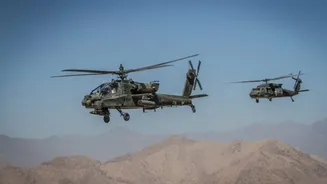
With the deployment of A-10 Warthogs and Apache gunships to the Iran theatre, the US military has started moving from high-altitude precision strikes on fixed infrastructure to lower-altitude attacks to suppress Iran's mobile and maritime capabilities.
The focus of these ground attack aircraft on fast patrol boats suggests the campaign to reopen the Strait of Hormuz has begun.
Joint Chiefs of Staff Chairman General Dan Caine has said that A-10 Warthogs are "engaged across the southern flank, targeting fast-attack watercraft in the Strait of Hormuz" and Apache gunships have also "joined the fight on the southern flank".
Caine said that the US military continued to “hunt and kill” all of Iran’s weapons facilities and assets being used to block the Strait of Hormuz.
“We continue to hunt and kill afloat assets, including more than 120 vessels and 44 minelayers. And the pressure will continue. We’re flying further to the east now and penetrating deeper into Iranian airspace to hunt and kill one-way attack gear,” Caine said at a press conference.
ALSO READ: Iran's military warns Strait of Hormuz could be ‘completely’ closed if US bombs power plants
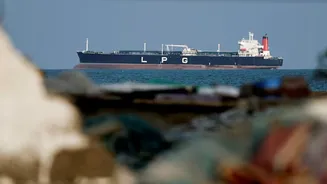
US President Donald Trump is under pressure at home and abroad over the continued closure of the Strait of Hormuz. The closure has cut of 20-25 per cent of the world's oil and gas supply, creating a global shortage and sending prices soaring . The situation has been worsened by production cuts announced by West Asian energy producers under Iranian retaliatory strikes. Energy prices skyrocketed in the United States as well.
For weeks, Trump has been lashing out at allies for not rushing to reopen the Strait of Hormuz. But, until now, Trump had himself not committed any resources for any Strait-related operation.
Moreover, Trump was completely caught by surprise when Iran struck Gulf countries and blockaded the Strait even as every assessment for decades had concluded that Iran would blockade the Strait at the onset of any war.
In the run-up to the war, Iran had telegraphed it would strike Gulf countries in case of any American-Israeli offensive.
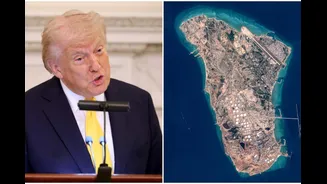
But Trump claimed: “No, the greatest experts, nobody thought they were going to hit. They were, I wouldn’t say friendly countries. They were like neutral. They lived with them for years.”
With Warthogs and Apaches, the US military appears to be laying the groundwork for a weekslong operation to clear the Strait that is not just blockaded with the threat of Iranian strikes but is also believed to be mined. With aerial assets deployed, the deployment of warships is expected to be the next steps. Even as allies have so far refused the call to unilaterally reopen the Strait in a war they did not wage,
they have said that they would be willing to join a multinational effort.
"We express our readiness to contribute to appropriate efforts to ensure safe passage through the Strait. We welcome the commitment of nations who are engaging in preparatory planning," a joint statement by 20 Western nations, including the United Kingdom, France, and Canada, said last week.
The focus of these ground attack aircraft on fast patrol boats suggests the campaign to reopen the Strait of Hormuz has begun.
Joint Chiefs of Staff Chairman General Dan Caine has said that A-10 Warthogs are "engaged across the southern flank, targeting fast-attack watercraft in the Strait of Hormuz" and Apache gunships have also "joined the fight on the southern flank".
Caine said that the US military continued to “hunt and kill” all of Iran’s weapons facilities and assets being used to block the Strait of Hormuz.
“We continue to hunt and kill afloat assets, including more than 120 vessels and 44 minelayers. And the pressure will continue. We’re flying further to the east now and penetrating deeper into Iranian airspace to hunt and kill one-way attack gear,” Caine said at a press conference.
ALSO READ: Iran's military warns Strait of Hormuz could be ‘completely’ closed if US bombs power plants
US President Donald Trump is under pressure at home and abroad over the continued closure of the Strait of Hormuz. The closure has cut of 20-25 per cent of the world's oil and gas supply, creating a global shortage and sending prices soaring . The situation has been worsened by production cuts announced by West Asian energy producers under Iranian retaliatory strikes. Energy prices skyrocketed in the United States as well.
Trump moves to reopen Hormuz after failing to expect blockade, Iranian retaliation
For weeks, Trump has been lashing out at allies for not rushing to reopen the Strait of Hormuz. But, until now, Trump had himself not committed any resources for any Strait-related operation.
Moreover, Trump was completely caught by surprise when Iran struck Gulf countries and blockaded the Strait even as every assessment for decades had concluded that Iran would blockade the Strait at the onset of any war.
In the run-up to the war, Iran had telegraphed it would strike Gulf countries in case of any American-Israeli offensive.
But Trump claimed: “No, the greatest experts, nobody thought they were going to hit. They were, I wouldn’t say friendly countries. They were like neutral. They lived with them for years.”
With Warthogs and Apaches, the US military appears to be laying the groundwork for a weekslong operation to clear the Strait that is not just blockaded with the threat of Iranian strikes but is also believed to be mined. With aerial assets deployed, the deployment of warships is expected to be the next steps. Even as allies have so far refused the call to unilaterally reopen the Strait in a war they did not wage,
"We express our readiness to contribute to appropriate efforts to ensure safe passage through the Strait. We welcome the commitment of nations who are engaging in preparatory planning," a joint statement by 20 Western nations, including the United Kingdom, France, and Canada, said last week.