







What is the story about?
Skygazers around the world are in for a treat on January 3 (Saturday) as the the full "wolf moon" is set to grace the skies. This celestial event will offer people around the world a chance to see a brighter and larger Moon than usual.
According to astronomers, the 'wolf moon' will be a stunning sight for anyone drawn to the Moon’s simple beauty and the night sky’s sense of mystery, with the Moon at its closest approach to Earth. Sadly, this will be the last supermoon visible till November this year.
Steeped in cultural meaning and astrological lore, the January Supermoon promises to be the highlight of the year.
So, what makes it so special, and when is the best time to see it? Here’s what we know
The term supermoon is used when the Moon is both full and at perigee, the nearest point in its orbit around Earth. Since the Moon’s path around Earth is not a perfect circle, it moves closer to and farther from our planet at different times.
The Moon’s perigee places it about 226,000 miles (363,300 kilometres) away from Earth. During the January 3 event, the Moon will be roughly 3,56,500 kilometres away. Due to this, the lunar disc appears up to 14 per cent larger and 30 per cent brighter than when it is at its furthest point, known as apogee.
As the supermoon rises or sets, its colour deepens to orange, while high above it looks bright white. The shift happens because low-angle moonlight travels through more atmosphere, filtering out blue wavelengths.
Skywatchers generally witness three or four supermoons a year, but it is unusual to have four supermoons a year. Interestingly, these appear like clockwork and one after another, and roughly 29.5 days apart. The last supermoon appeared on December 4, 2025, as the Cold Moon.
This celestial event is named the Wolf Supermoon because wolves were typically thought to be more active, and howling, in January. According to the Old Farmer's Almanac, January’s wolf moon is named for the increased howling of wolves during this time of year.
Noah Petro, chief of Nasa’s Planetary, Geology, Geophysics and Geochemistry Laboratory at Goddard Space Flight Center in Greenbelt, Maryland, was quoted telling CNN, "We describe names to full moons based on what is happening around that time."
Ancient communities made the conscious choice to label the full moons based on their immediate survival needs. They served as practical markers of seasonal change, with names linked to notable events like the Hunter, Harvest and Flower Moons.
According to the
Old Farmer's Almanac, some other Native American names for this full moon include the Cold Moon, the Frost Exploding Moon, the Freeze-Up Moon, the Severe Moon, the Hard Moon, the Center Moon, and the Canada Goose Moon. In Europe, it's often called the Moon After Yule, after the ancient festival that stretches from the winter solstice on December 21 through January 1.
The Wolf Supermoon will reach its peak brightness at around 5 am EST on January 3. The supermoon will be visible in India as well and the best time to observe it will be at 5:45 pm, local time, when it will be at its peak. If skies remain clear, the Moon will be visible throughout the night from January 2 to January 3.
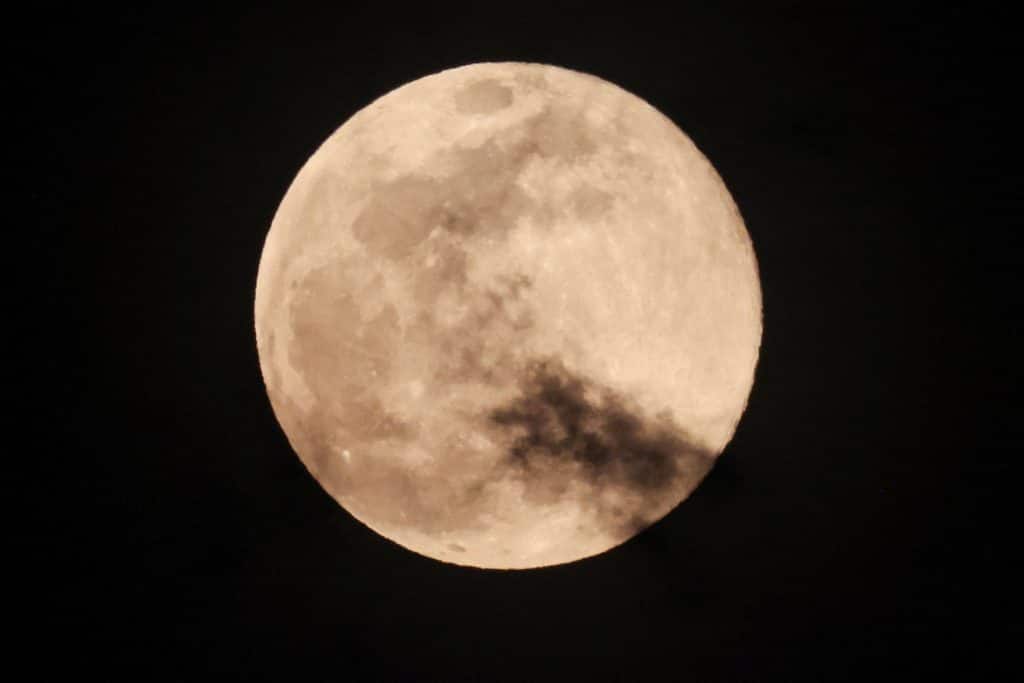
For the best view, experts suggest catching the Moon at moonrise or moonset, near sunset or sunrise. Nasa says it often looks bigger near the horizon because of the “moon illusion,” even though its size stays the same.
This will be the first of three supermoons in 2026, with the largest and closest supermoon likely to take place on December 24.
With inputs from agencies
According to astronomers, the 'wolf moon' will be a stunning sight for anyone drawn to the Moon’s simple beauty and the night sky’s sense of mystery, with the Moon at its closest approach to Earth. Sadly, this will be the last supermoon visible till November this year.
Steeped in cultural meaning and astrological lore, the January Supermoon promises to be the highlight of the year.
So, what makes it so special, and when is the best time to see it? Here’s what we know
What occurs during a supermoon?
The term supermoon is used when the Moon is both full and at perigee, the nearest point in its orbit around Earth. Since the Moon’s path around Earth is not a perfect circle, it moves closer to and farther from our planet at different times.
The Moon’s perigee places it about 226,000 miles (363,300 kilometres) away from Earth. During the January 3 event, the Moon will be roughly 3,56,500 kilometres away. Due to this, the lunar disc appears up to 14 per cent larger and 30 per cent brighter than when it is at its furthest point, known as apogee.
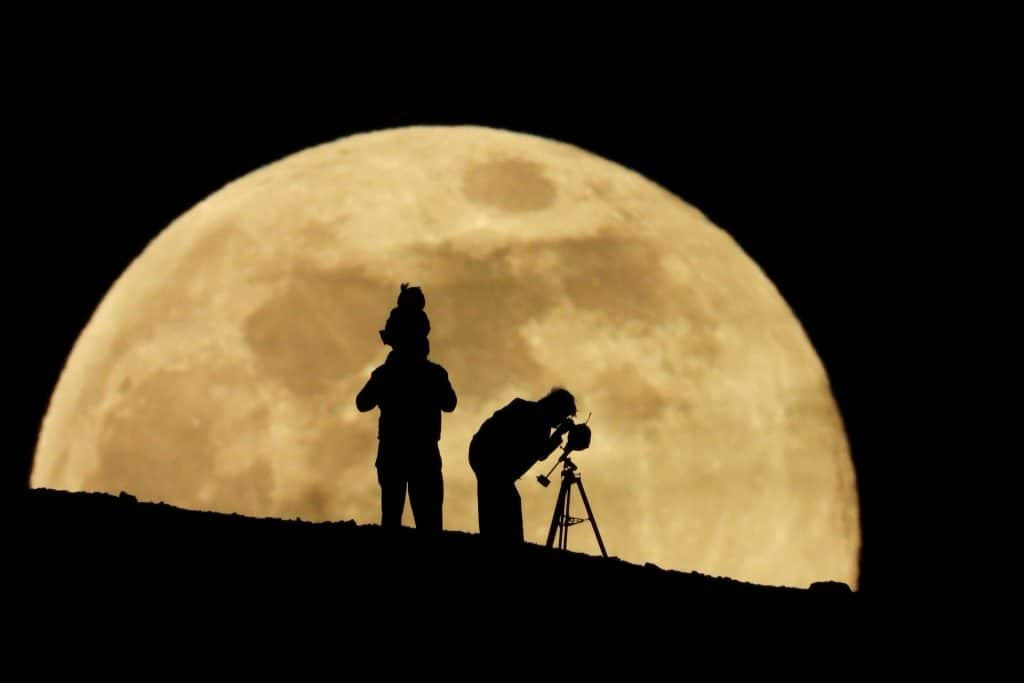
A couple and their daughter use a telescope to observe the last supermoon of 2025, known as the Cold Moon in Spain. File image/Reuters
As the supermoon rises or sets, its colour deepens to orange, while high above it looks bright white. The shift happens because low-angle moonlight travels through more atmosphere, filtering out blue wavelengths.
Skywatchers generally witness three or four supermoons a year, but it is unusual to have four supermoons a year. Interestingly, these appear like clockwork and one after another, and roughly 29.5 days apart. The last supermoon appeared on December 4, 2025, as the Cold Moon.
Why will this be called the Wolf Supermoon?
This celestial event is named the Wolf Supermoon because wolves were typically thought to be more active, and howling, in January. According to the Old Farmer's Almanac, January’s wolf moon is named for the increased howling of wolves during this time of year.
Noah Petro, chief of Nasa’s Planetary, Geology, Geophysics and Geochemistry Laboratory at Goddard Space Flight Center in Greenbelt, Maryland, was quoted telling CNN, "We describe names to full moons based on what is happening around that time."
Ancient communities made the conscious choice to label the full moons based on their immediate survival needs. They served as practical markers of seasonal change, with names linked to notable events like the Hunter, Harvest and Flower Moons.
According to the
When will the supermoon be visible?
The Wolf Supermoon will reach its peak brightness at around 5 am EST on January 3. The supermoon will be visible in India as well and the best time to observe it will be at 5:45 pm, local time, when it will be at its peak. If skies remain clear, the Moon will be visible throughout the night from January 2 to January 3.
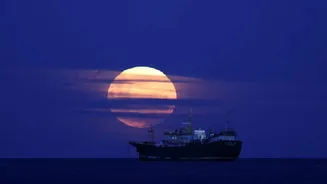
The Cold Moon lights up the night sky in Mexico City, Mexico. File image/Reuters
For the best view, experts suggest catching the Moon at moonrise or moonset, near sunset or sunrise. Nasa says it often looks bigger near the horizon because of the “moon illusion,” even though its size stays the same.
This will be the first of three supermoons in 2026, with the largest and closest supermoon likely to take place on December 24.
With inputs from agencies