




What is the story about?
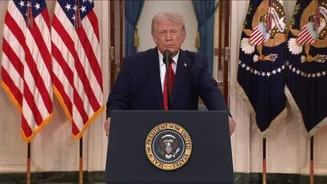
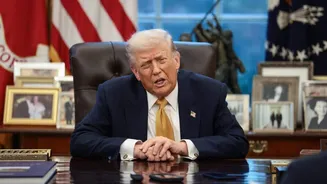
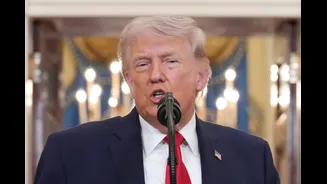
In his first national address since the start of the Iran war, US President Donald Trump has maintained that "regime change was not the US's goal," backing down from the insinuations he made at the start of the conflict. On Wednesday night (local time), Trump attempted to justify Operation Epic Fury against Iran, insisting that the West Asian nation was "right at the doorstep" of gaining nuclear weapons.
"Regime change was not our goal—we never said regime change—but regime change has occurred because of all of their original leaders' deaths. They are dead," Trump said, adding that diplomatic discussions between the two nations are ongoing.
"The new group is less radical and much more reasonable. Yet if during this period of time no deal is made, we have our eyes on key targets. If there is no deal, we are going to hit every one of their electric generating plants very hard and probably simultaneously," he added.
While on paper, both Trump and US Defence Secretary Pete Hegseth have maintained a similar stance, on numerous occasions, Trump has outrightly expressed their intention for regime change. Earlier this week, Trump lauded the American operation in Venezuela, hinting that something similar could be done in Iran.
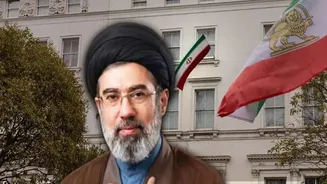
"Look at Venezuela, how well that's working out,” Trump continued, referencing his relationship with interim President Delcy Rodríguez. “Maybe we find somebody like that in Iran.” He went on to say that the US has been talking to a "top person" in Iran—someone other than the new Supreme Leader, Mojtaba Khamenei.
Calls for regime change before the war
Before the US and Israel conducted a joint strike on Iran, the country was grappling with a major anti-government protest. Thousands took to the streets to protest over the deplorable state of the Iranian economy. Even at that time, the Trump administration kept on calling for regime change.
Trump often encouraged Iranians to "take matter in their own hands" and change the regime then-led by Ayatollah Ali Khamenei. The protests, interestingly, brought the son of the former Shah of Iran, Reza Pahlavi, back to prominence.
While sitting in the US, Pahlavi slammed the Iranian regime that toppled his father's reign and called for regime change. He was frequently seen running within the Trump circle, with many wondering if he has the ambition to return to Iran.
Earlier this week, the son of the former shah pitched himself to a right-wing summit in the United States and received a raucous welcome. Reza Pahlavi spoke at the Conservative Political Action Conference (CPAC) in Texas on Saturday, urging US President Donald Trump not to cut a deal with Iran and instead seek regime change.
“Can you imagine Iran going from ‘Death to America’ to ‘God Bless America’?” the self-styled crown prince asked his audience in Grapevine, Texas. “President Trump is making America great again. I intend to make Iran great again,” he declared.
Before the war, Pahlavi even held talks with Trump in this regard. However, the American leader himself downplayed the possibility that the son of the former shah, who was expelled from Iran during the country’s 1979 revolution, could play a central role in Iran if the current government were to collapse.
Trump said that Pahlavi “looks like a very nice person“, but indicated that the shah’s son lacks popularity in Iran. “It would seem to me that somebody from within, maybe, would be more appropriate,” Trump averred.
'Three good choices': Is one of them Ghalibaf?
While Pahlavi continues with his bid, on March 1, Trump said he had shortlisted three leaders for Iran, who could potentially lead the country after the war is over. Speaking to The New York Times, Trump said that he had "three very good choices" for who could lead Iran, but he did not name them. "I won’t be revealing them now. Let’s get the job done first," he added.
After Trump's proclamation, reports started to emerge that the US is in talks with Iran’s Parliament speaker, Mohammad Baqer Qalibaf and is reportedly eyeing him as a potential US-backed leader of Iran. However, Qalibaf has denied having direct negotiations with the Trump Administration.
It is pertinent to note that several key leaders of Iran have been killed since the war broke out. Among them were Ali Larijani, secretary of the Supreme National Security Council, and Gholamreza Soleimani, the commander of Iran’s Basij force—a plain-clothes militia unit of the influential and powerful Islamic Revolutionary Guard Corps (IRGC). Other casualties include Iranian Defence Minister Aziz Nasirzadeh, IRGC commander Mohammad Pakpour, IRGC navy commander Alireza Tangsiri, and the Iran Defence Council Secretary Ali Shamkhani.
However, it was Khamenei's death that rocked the political landscape of Iran. Despite all these killings, key leaders remain alive, including President Masoud Pezeshkian, Chief Justice Gholam-Hossein Mohseni-Eje’i, and Ayatollah Alireza Arafi.
Warming up to a 'not so politically correct' idea
Over the years, Trump has warmed to the notion of regime change, which he once promised to oppose. At the start of 2026, the Trump administration intervened in Venezuela to arrest its sitting leader.
Interestingly, last year, Trump foreshadowed the current military campaign when he warned that the “not politically correct” term might be necessary for Iran. However, his government maintained at the surface level that "regime change is not the goal." Administration officials such as Vice President JD Vance and Secretary of State Marco Rubio insisted “we don’t want regime change” and “we’re not into the regime change business here.”
Trump later baulked at his own suggestion, saying later that June that regime change “takes chaos, and ideally, we don’t want to see so much chaos.”
Now, amid the calls for negotiations to end the war, which is unpopular among Americans, Trump seemed to expand the definition of regime change to embrace it. Last week, he told CNBC that regime change is an apt descriptor for what the US has already achieved in Iran.
"Regime change was not our goal—we never said regime change—but regime change has occurred because of all of their original leaders' deaths. They are dead," Trump said, adding that diplomatic discussions between the two nations are ongoing.
"The new group is less radical and much more reasonable. Yet if during this period of time no deal is made, we have our eyes on key targets. If there is no deal, we are going to hit every one of their electric generating plants very hard and probably simultaneously," he added.
While on paper, both Trump and US Defence Secretary Pete Hegseth have maintained a similar stance, on numerous occasions, Trump has outrightly expressed their intention for regime change. Earlier this week, Trump lauded the American operation in Venezuela, hinting that something similar could be done in Iran.
"Look at Venezuela, how well that's working out,” Trump continued, referencing his relationship with interim President Delcy Rodríguez. “Maybe we find somebody like that in Iran.” He went on to say that the US has been talking to a "top person" in Iran—someone other than the new Supreme Leader, Mojtaba Khamenei.
Phalavi's lobbying or talks with Ghalibaf: What US is doing behind the scenes
Calls for regime change before the war
Before the US and Israel conducted a joint strike on Iran, the country was grappling with a major anti-government protest. Thousands took to the streets to protest over the deplorable state of the Iranian economy. Even at that time, the Trump administration kept on calling for regime change.
Trump often encouraged Iranians to "take matter in their own hands" and change the regime then-led by Ayatollah Ali Khamenei. The protests, interestingly, brought the son of the former Shah of Iran, Reza Pahlavi, back to prominence.
While sitting in the US, Pahlavi slammed the Iranian regime that toppled his father's reign and called for regime change. He was frequently seen running within the Trump circle, with many wondering if he has the ambition to return to Iran.
Earlier this week, the son of the former shah pitched himself to a right-wing summit in the United States and received a raucous welcome. Reza Pahlavi spoke at the Conservative Political Action Conference (CPAC) in Texas on Saturday, urging US President Donald Trump not to cut a deal with Iran and instead seek regime change.
“Can you imagine Iran going from ‘Death to America’ to ‘God Bless America’?” the self-styled crown prince asked his audience in Grapevine, Texas. “President Trump is making America great again. I intend to make Iran great again,” he declared.
Before the war, Pahlavi even held talks with Trump in this regard. However, the American leader himself downplayed the possibility that the son of the former shah, who was expelled from Iran during the country’s 1979 revolution, could play a central role in Iran if the current government were to collapse.
Trump said that Pahlavi “looks like a very nice person“, but indicated that the shah’s son lacks popularity in Iran. “It would seem to me that somebody from within, maybe, would be more appropriate,” Trump averred.
'Three good choices': Is one of them Ghalibaf?
While Pahlavi continues with his bid, on March 1, Trump said he had shortlisted three leaders for Iran, who could potentially lead the country after the war is over. Speaking to The New York Times, Trump said that he had "three very good choices" for who could lead Iran, but he did not name them. "I won’t be revealing them now. Let’s get the job done first," he added.
After Trump's proclamation, reports started to emerge that the US is in talks with Iran’s Parliament speaker, Mohammad Baqer Qalibaf and is reportedly eyeing him as a potential US-backed leader of Iran. However, Qalibaf has denied having direct negotiations with the Trump Administration.
It is pertinent to note that several key leaders of Iran have been killed since the war broke out. Among them were Ali Larijani, secretary of the Supreme National Security Council, and Gholamreza Soleimani, the commander of Iran’s Basij force—a plain-clothes militia unit of the influential and powerful Islamic Revolutionary Guard Corps (IRGC). Other casualties include Iranian Defence Minister Aziz Nasirzadeh, IRGC commander Mohammad Pakpour, IRGC navy commander Alireza Tangsiri, and the Iran Defence Council Secretary Ali Shamkhani.
However, it was Khamenei's death that rocked the political landscape of Iran. Despite all these killings, key leaders remain alive, including President Masoud Pezeshkian, Chief Justice Gholam-Hossein Mohseni-Eje’i, and Ayatollah Alireza Arafi.
Warming up to a 'not so politically correct' idea
Over the years, Trump has warmed to the notion of regime change, which he once promised to oppose. At the start of 2026, the Trump administration intervened in Venezuela to arrest its sitting leader.
Interestingly, last year, Trump foreshadowed the current military campaign when he warned that the “not politically correct” term might be necessary for Iran. However, his government maintained at the surface level that "regime change is not the goal." Administration officials such as Vice President JD Vance and Secretary of State Marco Rubio insisted “we don’t want regime change” and “we’re not into the regime change business here.”
Trump later baulked at his own suggestion, saying later that June that regime change “takes chaos, and ideally, we don’t want to see so much chaos.”
Now, amid the calls for negotiations to end the war, which is unpopular among Americans, Trump seemed to expand the definition of regime change to embrace it. Last week, he told CNBC that regime change is an apt descriptor for what the US has already achieved in Iran.