






What is the story about?
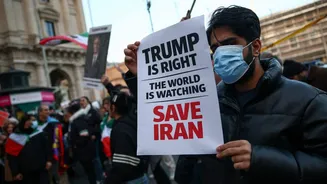
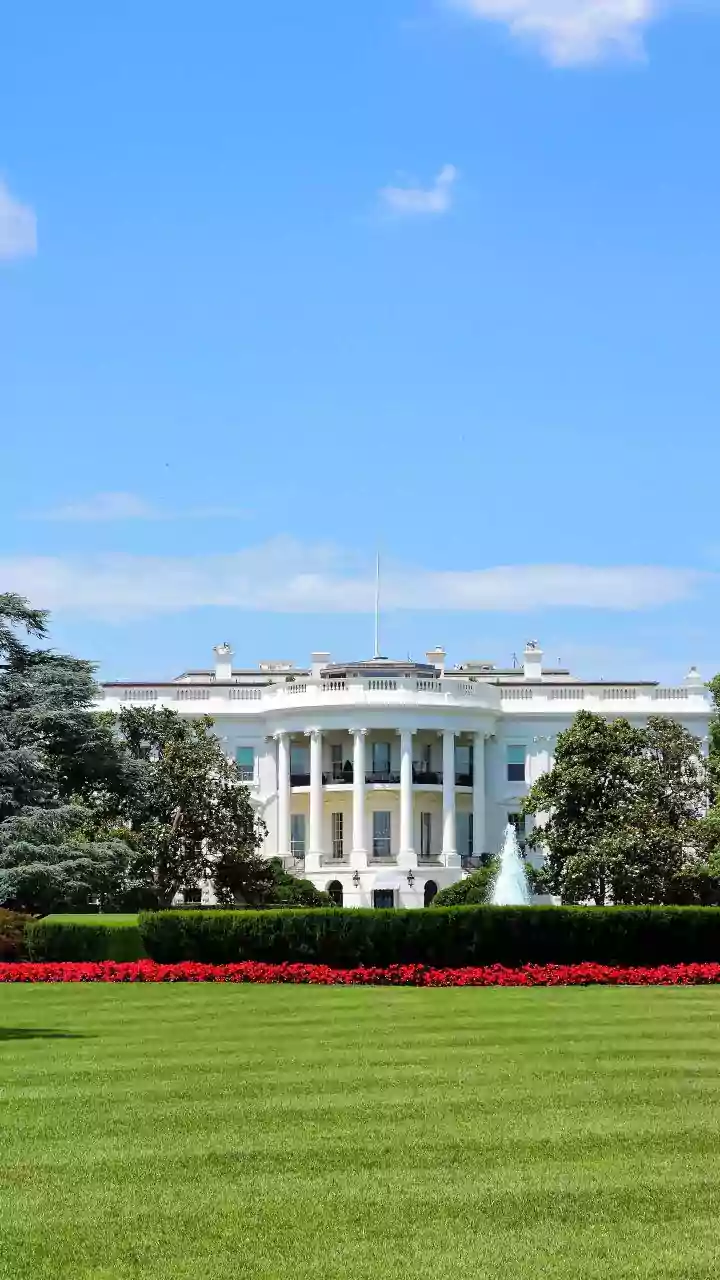
United States President Donald Trump has decided to pause potential military action against Iran.
The development comes days of sharp warnings over Tehran’s violent crackdown on nationwide protests.
While the White House continues to insist that “all options remain on the table,” diplomatic pressure from Arab allies, appeals from Israeli Prime Minister Benjamin Netanyahu, and concerns over US military positioning appear to have influenced Washington’s current approach.
Several US partners in West Asia have urged the Trump administration to refrain from launching military strikes against Iran following the regime’s deadly suppression of protesters.
According to an Arab diplomat familiar with the matter, senior officials from Egypt, Oman, Saudi Arabia, and Qatar raised concerns over the past 48 hours that US military intervention could destabilise an already volatile region and disrupt the global economy, reported
AP.
On January 15, oil prices declined as investors reacted to signals that Trump’s tone on Iran had softened after several days of issuing strong threats against Tehran.
Despite this apparent shift, the White House has maintained that military options have not been ruled out.
Press secretary Karoline Leavitt told reporters, “The truth is only President Trump knows what he’s going to do and a very, very small team of advisers are read into his thinking on that.” Leavitt also said, “He continues to closely monitor the situation on the ground in Iran.”
Arab officials have not only pressed Washington to avoid military action but have also urged Iranian leaders to end their violent repression of demonstrators. They warned that any retaliation against US or regional targets could have serious consequences for Tehran.
At the United Nations, US Ambassador Mike Waltz reinforced the administration’s hardline stance, even as diplomatic efforts continued behind the scenes.
“President Trump is a man of action, not endless talk like we see at the United Nations,” Waltz said during a Security Council meeting focused on Iran’s protests. “He has made it clear all options are on the table to stop the slaughter.”
Meanwhile, Trump’s own public messaging appeared to soften. He highlighted a Fox News report about the alleged suspension of a death sentence for 26-year-old Iranian shopkeeper Erfan Soltani, writing, “This is good news. Hopefully, it will continue!”
Iranian state media denied that Soltani had been sentenced to death. Judicial authorities said he was being held in a detention facility outside Tehran and had been accused of “propaganda activities against the regime.”
The White House later claimed that Iran had halted 800 scheduled executions.
Trump has a record of maintaining ambiguity about military plans. Last June, as Israel carried out strikes on Iran, Leavitt read a message from Trump saying he would decide whether to strike Iran “within the next two weeks.”
Less than two days later, US B-2 bombers carried out attacks on key Iranian nuclear facilities.
Israeli Prime Minister Benjamin Netanyahu also asked Trump to delay potential US strikes on Iran, according to a senior American official cited by The New York Times .
The two leaders spoke on the same day Trump said he had heard “on good authority” that Iranian authorities had stopped killing protesters — a statement that suggested a reduced sense of urgency for immediate military action.
Following the report, Israel informed Washington that while it would support any US decision, it was not actively pushing for a strike at that moment, according to
Channel 12. The network added that American officials continued to keep military action as an option while assessing developments.
Jerusalem and Washington have been holding daily consultations, with US Secretary of State Marco Rubio speaking with Netanyahu for the third time in six days.
While the possibility of military action remains, US officials also view the current pause as a potential opening for diplomatic engagement.
A US official told Channel 12 that Iran’s leadership would collapse unless Supreme Leader Ali Khamenei agreed to speak directly with Trump.
Within Israel, however, there is disagreement over how to handle Iran’s internal crisis. Some officials believe the protests have been significantly suppressed and no longer pose an immediate threat to the regime.
Others argue for a more aggressive approach. Former strategic affairs minister Ron Dermer, who previously played a leading role in Israel’s Iran policy, has reportedly been advocating for a tougher stance and communicating that view to American officials.
Saudi Arabia, Qatar, Turkey, and Oman warned Washington that a US attack could trigger a prolonged and uncontrollable conflict across West Asia. These warnings appear to have influenced Trump’s decision to hold off on military action late Wednesday.
Saudi Arabia’s caution reportedly extended to denying the US access to its airspace for any potential strikes on Iran. Saudi Foreign Minister Prince Faisal bin Farhan spoke by phone with his counterparts from Iran, Oman, and Turkey as diplomatic discussions continued.
Iran remains politically distant from the Gulf states due to its support for regional proxy groups, disputes over three Gulf islands claimed by the United Arab Emirates, and its refusal to endorse a two-state solution for Palestine.
However, Iranian Foreign Minister Abbas Araghchi has worked to improve relations with Arab capitals. Araghchi visited Bahrain for the first time since 2010 and travelled to Cairo four times last year in an effort to rebuild ties after diplomatic relations were severed in 2016.
The Saudi-Iranian relationship, once one of the most tense in the region, has been on a recovery path for three years.
Gulf states remain aware of Iran’s capacity to disrupt maritime traffic in the Persian Gulf, a critical artery for global energy supplies. Araghchi has also sought to convince Gulf leaders that Iran poses less of a threat to regional stability than Israel.
This argument gained traction after Israel bombed Doha last September in an attempt to kill Hamas negotiators who had been based in Qatar for nearly a decade. While the primary targets were not hit, five lower-ranking members of the group were reportedly killed.
The US was not informed in advance of the Israeli strikes and later apologised directly to Qatar’s emir, offering new security guarantees to protect Doha from further attacks. Qatar accused Israel of trying to sabotage peace efforts in the region.
US special envoy Steve Witkoff supports Qatar’s role as a global mediator. However, as tensions escalated, Washington withdrew key personnel from the al-Udeid airbase in Qatar after Tehran openly threatened to target US bases in the region if attacked.
Iranian officials have claimed that the US ordered Israel to end its 12-day summer assault on Iran’s leadership and nuclear programme after Iran struck a US base.
Araghchi has also used his diplomatic outreach to explain Tehran’s rationale for the crackdown to Arab leaders.
While many Arab states resent Iranian proxy interference in Lebanon, Iraq, and Yemen, few would welcome the example of an authoritarian regime being toppled by mass protests driven by economic hardship.
Several governments in the region remain cautious about the possibility of democratic transitions or the fragmentation of a unified Iranian state.
Saudi Arabia has recently suppressed a rebellion in southern Yemen that could have split the country. Egypt’s military leadership continues to focus on containing calls for human rights reforms.
Qatar’s foreign ministry spokesperson Majed al-Ansari said, “The big challenges in the region – and we are talking about internal and external challenges in different countries – require all of us to return to the negotiating table.”
Turkey’s foreign minister Hakan Fidan echoed that position, saying, “Hopefully, the United States and Iran will resolve this issue among themselves – whether through mediators, other actors, or direct dialogue. We are closely following these developments.”
After a late-night Situation Room meeting, senior national security officials believed a decision to strike Iran was approaching.
Trump was reportedly influenced by footage showing past executions, raising concerns that similar violence would continue amid the ongoing crackdown on protesters, reported CNN.
By Wednesday morning, after encouraging Iranians to take to the streets and saying “help is on its way,” the president appeared closer than ever to approving a limited military operation.
However, by the following day, Trump surprised his advisers by saying “very important sources on the other side” had informed him that the killing of protesters had stopped, suggesting there was no immediate need for military action.
At that time, US intelligence had not confirmed that the violence had ended. Many officials still believed strikes were likely, and precautionary steps had already been taken, including evacuating non-essential personnel from the largest US airbase in the region.
US officials say they continue to prepare for possible military action, including repositioning assets to give the president that option if he chooses to move forward.
A carrier strike group — believed to be the USS Abraham Lincoln group — has been moving toward West Asia from the South China Sea. Such groups typically include an aircraft carrier, guided missile cruisers, anti-aircraft warships, and anti-submarine destroyers or frigates.
Trump has expressed a preference for limited strikes rather than extensive military operations that could entangle the US in a broader conflict.
However, national security officials remain uncertain whether such limited action would significantly change conditions inside Iran or shift momentum toward the opposition.
Jeremy Shapiro, research director at the European Council on Foreign Relations, suggested that the absence of key US military assets may also be influencing the delay.
“There are currently no US aircraft carriers, considered a critical asset in a significant military operation, in the region,” he said. “It might be that they’re delaying things and using the time for getting that posture correct.”
Alongside military preparations, the Trump administration has continued to apply economic pressure on Tehran.
New sanctions were announced targeting the secretary of Iran’s Supreme Council for National Security, whom the Treasury Department accused of being among the first officials to call for violence against protesters.
The Treasury’s Office of Foreign Assets Control also sanctioned 18 individuals and companies accused of laundering money from Iranian oil sales through a shadow banking network linked to Bank Melli and Shahr Bank.
With inputs from agencies
The development comes days of sharp warnings over Tehran’s violent crackdown on nationwide protests.
While the White House continues to insist that “all options remain on the table,” diplomatic pressure from Arab allies, appeals from Israeli Prime Minister Benjamin Netanyahu, and concerns over US military positioning appear to have influenced Washington’s current approach.
How regional allies pushed Washington to avoid escalation
Several US partners in West Asia have urged the Trump administration to refrain from launching military strikes against Iran following the regime’s deadly suppression of protesters.
According to an Arab diplomat familiar with the matter, senior officials from Egypt, Oman, Saudi Arabia, and Qatar raised concerns over the past 48 hours that US military intervention could destabilise an already volatile region and disrupt the global economy, reported
On January 15, oil prices declined as investors reacted to signals that Trump’s tone on Iran had softened after several days of issuing strong threats against Tehran.
Despite this apparent shift, the White House has maintained that military options have not been ruled out.
Press secretary Karoline Leavitt told reporters, “The truth is only President Trump knows what he’s going to do and a very, very small team of advisers are read into his thinking on that.” Leavitt also said, “He continues to closely monitor the situation on the ground in Iran.”
Arab officials have not only pressed Washington to avoid military action but have also urged Iranian leaders to end their violent repression of demonstrators. They warned that any retaliation against US or regional targets could have serious consequences for Tehran.
At the United Nations, US Ambassador Mike Waltz reinforced the administration’s hardline stance, even as diplomatic efforts continued behind the scenes.
“President Trump is a man of action, not endless talk like we see at the United Nations,” Waltz said during a Security Council meeting focused on Iran’s protests. “He has made it clear all options are on the table to stop the slaughter.”
Meanwhile, Trump’s own public messaging appeared to soften. He highlighted a Fox News report about the alleged suspension of a death sentence for 26-year-old Iranian shopkeeper Erfan Soltani, writing, “This is good news. Hopefully, it will continue!”
Iranian state media denied that Soltani had been sentenced to death. Judicial authorities said he was being held in a detention facility outside Tehran and had been accused of “propaganda activities against the regime.”
The White House later claimed that Iran had halted 800 scheduled executions.
Trump has a record of maintaining ambiguity about military plans. Last June, as Israel carried out strikes on Iran, Leavitt read a message from Trump saying he would decide whether to strike Iran “within the next two weeks.”
Less than two days later, US B-2 bombers carried out attacks on key Iranian nuclear facilities.
How Netanyahu stepped in to urge a delay
Israeli Prime Minister Benjamin Netanyahu also asked Trump to delay potential US strikes on Iran, according to a senior American official cited by The New York Times .
The two leaders spoke on the same day Trump said he had heard “on good authority” that Iranian authorities had stopped killing protesters — a statement that suggested a reduced sense of urgency for immediate military action.
Following the report, Israel informed Washington that while it would support any US decision, it was not actively pushing for a strike at that moment, according to
Jerusalem and Washington have been holding daily consultations, with US Secretary of State Marco Rubio speaking with Netanyahu for the third time in six days.
While the possibility of military action remains, US officials also view the current pause as a potential opening for diplomatic engagement.
A US official told Channel 12 that Iran’s leadership would collapse unless Supreme Leader Ali Khamenei agreed to speak directly with Trump.
Within Israel, however, there is disagreement over how to handle Iran’s internal crisis. Some officials believe the protests have been significantly suppressed and no longer pose an immediate threat to the regime.
Others argue for a more aggressive approach. Former strategic affairs minister Ron Dermer, who previously played a leading role in Israel’s Iran policy, has reportedly been advocating for a tougher stance and communicating that view to American officials.
How Gulf states, Turkey have reacted
Saudi Arabia, Qatar, Turkey, and Oman warned Washington that a US attack could trigger a prolonged and uncontrollable conflict across West Asia. These warnings appear to have influenced Trump’s decision to hold off on military action late Wednesday.
Saudi Arabia’s caution reportedly extended to denying the US access to its airspace for any potential strikes on Iran. Saudi Foreign Minister Prince Faisal bin Farhan spoke by phone with his counterparts from Iran, Oman, and Turkey as diplomatic discussions continued.
Iran remains politically distant from the Gulf states due to its support for regional proxy groups, disputes over three Gulf islands claimed by the United Arab Emirates, and its refusal to endorse a two-state solution for Palestine.
However, Iranian Foreign Minister Abbas Araghchi has worked to improve relations with Arab capitals. Araghchi visited Bahrain for the first time since 2010 and travelled to Cairo four times last year in an effort to rebuild ties after diplomatic relations were severed in 2016.
The Saudi-Iranian relationship, once one of the most tense in the region, has been on a recovery path for three years.
Gulf states remain aware of Iran’s capacity to disrupt maritime traffic in the Persian Gulf, a critical artery for global energy supplies. Araghchi has also sought to convince Gulf leaders that Iran poses less of a threat to regional stability than Israel.
This argument gained traction after Israel bombed Doha last September in an attempt to kill Hamas negotiators who had been based in Qatar for nearly a decade. While the primary targets were not hit, five lower-ranking members of the group were reportedly killed.
The US was not informed in advance of the Israeli strikes and later apologised directly to Qatar’s emir, offering new security guarantees to protect Doha from further attacks. Qatar accused Israel of trying to sabotage peace efforts in the region.
US special envoy Steve Witkoff supports Qatar’s role as a global mediator. However, as tensions escalated, Washington withdrew key personnel from the al-Udeid airbase in Qatar after Tehran openly threatened to target US bases in the region if attacked.
Iranian officials have claimed that the US ordered Israel to end its 12-day summer assault on Iran’s leadership and nuclear programme after Iran struck a US base.
Araghchi has also used his diplomatic outreach to explain Tehran’s rationale for the crackdown to Arab leaders.
While many Arab states resent Iranian proxy interference in Lebanon, Iraq, and Yemen, few would welcome the example of an authoritarian regime being toppled by mass protests driven by economic hardship.
Several governments in the region remain cautious about the possibility of democratic transitions or the fragmentation of a unified Iranian state.
Saudi Arabia has recently suppressed a rebellion in southern Yemen that could have split the country. Egypt’s military leadership continues to focus on containing calls for human rights reforms.
Qatar’s foreign ministry spokesperson Majed al-Ansari said, “The big challenges in the region – and we are talking about internal and external challenges in different countries – require all of us to return to the negotiating table.”
Turkey’s foreign minister Hakan Fidan echoed that position, saying, “Hopefully, the United States and Iran will resolve this issue among themselves – whether through mediators, other actors, or direct dialogue. We are closely following these developments.”
How Trump changed his decision
After a late-night Situation Room meeting, senior national security officials believed a decision to strike Iran was approaching.
Trump was reportedly influenced by footage showing past executions, raising concerns that similar violence would continue amid the ongoing crackdown on protesters, reported CNN.
By Wednesday morning, after encouraging Iranians to take to the streets and saying “help is on its way,” the president appeared closer than ever to approving a limited military operation.
However, by the following day, Trump surprised his advisers by saying “very important sources on the other side” had informed him that the killing of protesters had stopped, suggesting there was no immediate need for military action.
At that time, US intelligence had not confirmed that the violence had ended. Many officials still believed strikes were likely, and precautionary steps had already been taken, including evacuating non-essential personnel from the largest US airbase in the region.
What next for Trump
US officials say they continue to prepare for possible military action, including repositioning assets to give the president that option if he chooses to move forward.
A carrier strike group — believed to be the USS Abraham Lincoln group — has been moving toward West Asia from the South China Sea. Such groups typically include an aircraft carrier, guided missile cruisers, anti-aircraft warships, and anti-submarine destroyers or frigates.
Trump has expressed a preference for limited strikes rather than extensive military operations that could entangle the US in a broader conflict.
However, national security officials remain uncertain whether such limited action would significantly change conditions inside Iran or shift momentum toward the opposition.
Jeremy Shapiro, research director at the European Council on Foreign Relations, suggested that the absence of key US military assets may also be influencing the delay.
“There are currently no US aircraft carriers, considered a critical asset in a significant military operation, in the region,” he said. “It might be that they’re delaying things and using the time for getting that posture correct.”
Alongside military preparations, the Trump administration has continued to apply economic pressure on Tehran.
New sanctions were announced targeting the secretary of Iran’s Supreme Council for National Security, whom the Treasury Department accused of being among the first officials to call for violence against protesters.
The Treasury’s Office of Foreign Assets Control also sanctioned 18 individuals and companies accused of laundering money from Iranian oil sales through a shadow banking network linked to Bank Melli and Shahr Bank.
With inputs from agencies