






What is the story about?
The abrupt removal of US Navy Secretary John Phelan has put a spotlight on the Pentagon’s leadership dynamics under US Defence Secretary Pete Hegseth, particularly as the United States navigates a fragile ceasefire Iran.
The development, first reported by Reuters on Wednesday, comes at a time when the US Navy is playing a main operational role in enforcing a blockade in the Strait of Hormz.
Although the US Department of Defense publicly acknowledged Phelan’s departure, it offered no official explanation for why he left his post so suddenly.
However, multiple reports and accounts from officials familiar with internal deliberations suggest that strained relationships, disagreements over key defence priorities, and dissatisfaction with administrative performance contributed to his exit.
The Pentagon stated that Phelan
was leaving his position “effective immediately.”
Pentagon spokesperson Sean Parnell said, “On behalf of the Secretary of War and Deputy Secretary of War, we are grateful to Secretary Phelan for his service to the Department and the United States Navy. We wish him well in his future endeavours.”
Despite the formal tone of appreciation, subsequent reporting indicated that Phelan had in fact been removed from his role. This makes him the first service secretary selected during US President Donald Trump’s current term to be dismissed.
His removal occurred just a day after he had publicly addressed a large gathering of sailors and defence industry stakeholders at the Navy’s annual conference in Washington, DC, where he outlined his priorities and engaged with reporters.
A significant factor behind Phelan’s removal appears to have been prolonged friction with senior leadership within the Pentagon.
Reports describe months of tension between Phelan and key figures, including Hegseth, Deputy Defence Secretary Stephen Feinberg, and Navy Under Secretary Hung Cao.
These disagreements were not limited to personal differences but extended to substantive issues involving the Navy’s strategic direction, particularly its efforts to revitalise shipbuilding.
The US Navy is under mounting pressure to expand its fleet in response to shifting global dynamics, especially the rapid growth of China’s naval capabilities, which have surpassed those of the United States in ship production capacity.
Phelan had been a leading advocate of the “Golden Fleet” initiative, a large-scale effort aimed at significantly increasing the number of operational vessels through a major procurement push.
The plan, described by Pentagon officials as the most ambitious shipbuilding request in decades, is backed by a proposed defence budget of approximately $1.5 trillion for fiscal year 2027.
Within this allocation, more than $65 billion has been earmarked for the acquisition of 18 warships and 16 support vessels to be built by major defence contractors, including General Dynamics and Huntington Ingalls Industries.
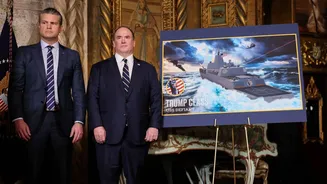
In addition to expanding the fleet, the initiative also includes proposals for advanced platforms such as a new “Trump-class” battleship.
However, despite Phelan’s support for the programme, officials within the Pentagon reportedly became dissatisfied with the pace at which reforms were being implemented. Concerns emerged that progress was not keeping up with expectations, particularly given the urgency of the broader strategic environment.
Feinberg was said to be especially critical of how the programme was being managed, at one point reportedly redistributing aspects of the project’s oversight away from Phelan. Differences also arose over management style, personnel decisions, and broader organisational priorities.
Phelan’s relationship with Hung Cao, his immediate subordinate, was also described as strained. Cao was viewed as being more closely aligned with Hegseth and other senior leadership figures.
One source pointed to an ethics investigation involving his office, though details of the inquiry were not made public.
There were also reports of political tensions influencing perceptions of his performance. Phelan was reportedly criticised for not taking a more assertive stance against US Senator Mark Kelly after the senator appeared in a video advising military personnel to disregard what he described as “illegal orders.”
This episode reportedly became a point of contention with senior Pentagon leadership, including Hegseth.
Phelan’s background also drew attention during his tenure. Unlike many of his predecessors, he did not have prior military service or extensive experience in defence administration before his appointment.
Instead, he was known as a billionaire investor, art collector, and prominent Republican donor who had led private investment firms, including Rugger Management LLC.
His association with non-profit work related to defence policy, including an advisory role with Spirit of America, was cited as part of his credentials. However, his lack of direct military experience was frequently noted as a distinguishing factor in his appointment.
Separate reporting also indicated that Phelan’s name appeared in historical flight records linked to Jeffrey Epstein, based on documents released by the Department of Justice. These records showed that he had travelled on Epstein’s private aircraft in 2006.
No allegations of wrongdoing were associated with this detail.
Phelan’s departure is consistent with a broader pattern of leadership changes within the Department of Defence since Hegseth assumed office. Over the past year, several senior military officials have been removed from their positions, including top generals, admirals, and other high-ranking leaders.
Among the most notable of these changes was the dismissal of US army chief Randy George earlier in April. That decision, like Phelan’s removal, was carried out without a detailed public explanation.
Reports later suggested that it was linked to tensions between Hegseth and Army Secretary Daniel Driscoll, as well as suspicions regarding internal leaks to the media.
The Wall Street Journal reported that George’s dismissal occurred during a brief phone call, reflecting the abrupt nature of the decision. His removal came shortly after the United States initiated military action against Iran, making the timing particularly notable.
In addition to George, other senior figures who have reportedly been removed include the chairman of the Joint Chiefs of Staff, Air Force General CQ Brown, as well as the chief of naval operations and the Air Force vice chief of staff.
Taken together, these actions point to a significant reshaping of the Pentagon’s leadership structure under Hegseth.
US Senator Jack Reed, the ranking Democrat on the Senate Armed Services Committee, expressed concern about the implications of these changes. He described Phelan’s removal as “troubling” and added, “I am concerned it is yet another example of the instability and dysfunction that have come to define the Department of Defense under President Trump and Secretary Hegseth.”
Following Phelan’s departure, Navy Under Secretary Hung Cao assumed the role of acting Secretary of the Navy. His appointment brings a markedly different background to the position.
Born on August 3, 1971, Cao arrived in the United States as a refugee from Vietnam in 1975, eventually settling in Virginia after spending time in West Africa. He was part of the inaugural graduating class of Thomas Jefferson High School for Science and Technology in Alexandria, a highly competitive institution.
Cao went on to attend the United States Naval Academy, where he was commissioned as a Special Operations officer. His military career spanned 25 years and included service in conflict zones such as Iraq, Afghanistan, and Somalia.
He specialised in explosive ordnance disposal and deep-sea diving and also held roles involving the management of the Navy’s $140 billion budget.
In addition to his operational experience, Cao worked with agencies such as the Department of Homeland Security and the FBI’s Joint Terrorism Task Force. He holds a master’s degree in physics from the Naval Postgraduate School and has completed fellowships at the Massachusetts Institute of Technology and Harvard University.
After retiring from active duty, Cao entered politics, running as a Republican candidate in Virginia’s 10th congressional district in 2022 and later for a US Senate seat in 2024. Despite receiving endorsement from President Trump, he was unsuccessful in both campaigns.
His appointment as Under Secretary of the Navy in 2025 marked his entry into executive branch leadership. Now, as acting Secretary, he assumes responsibility for overseeing the Navy and the Marine Corps at a time of heightened operational demands.
The leadership transition comes at a moment when the US Navy is under significant pressure to address both immediate operational requirements and long-term strategic challenges.
The ongoing blockade of Iranian-linked shipping has underscored the importance of naval power in US foreign policy, while broader concerns about fleet size and capability continue to shape defence planning.
The “Golden Fleet” initiative remains central to these efforts, representing a substantial investment in expanding and modernising the Navy’s capabilities.
The success of this programme will depend not only on funding and industrial capacity but also on effective leadership and coordination within the Pentagon.
As Hung Cao steps into the role on an acting basis, questions remain about how the Navy’s priorities will evolve and whether the internal tensions that characterised Phelan’s tenure will subside.
With inputs from agencies
The development, first reported by Reuters on Wednesday, comes at a time when the US Navy is playing a main operational role in enforcing a blockade in the Strait of Hormz.
Although the US Department of Defense publicly acknowledged Phelan’s departure, it offered no official explanation for why he left his post so suddenly.
However, multiple reports and accounts from officials familiar with internal deliberations suggest that strained relationships, disagreements over key defence priorities, and dissatisfaction with administrative performance contributed to his exit.
Why was Phelan fired?
The Pentagon stated that Phelan
Pentagon spokesperson Sean Parnell said, “On behalf of the Secretary of War and Deputy Secretary of War, we are grateful to Secretary Phelan for his service to the Department and the United States Navy. We wish him well in his future endeavours.”
Despite the formal tone of appreciation, subsequent reporting indicated that Phelan had in fact been removed from his role. This makes him the first service secretary selected during US President Donald Trump’s current term to be dismissed.
His removal occurred just a day after he had publicly addressed a large gathering of sailors and defence industry stakeholders at the Navy’s annual conference in Washington, DC, where he outlined his priorities and engaged with reporters.
A significant factor behind Phelan’s removal appears to have been prolonged friction with senior leadership within the Pentagon.
Reports describe months of tension between Phelan and key figures, including Hegseth, Deputy Defence Secretary Stephen Feinberg, and Navy Under Secretary Hung Cao.
These disagreements were not limited to personal differences but extended to substantive issues involving the Navy’s strategic direction, particularly its efforts to revitalise shipbuilding.
The US Navy is under mounting pressure to expand its fleet in response to shifting global dynamics, especially the rapid growth of China’s naval capabilities, which have surpassed those of the United States in ship production capacity.
Phelan had been a leading advocate of the “Golden Fleet” initiative, a large-scale effort aimed at significantly increasing the number of operational vessels through a major procurement push.
The plan, described by Pentagon officials as the most ambitious shipbuilding request in decades, is backed by a proposed defence budget of approximately $1.5 trillion for fiscal year 2027.
Within this allocation, more than $65 billion has been earmarked for the acquisition of 18 warships and 16 support vessels to be built by major defence contractors, including General Dynamics and Huntington Ingalls Industries.
In addition to expanding the fleet, the initiative also includes proposals for advanced platforms such as a new “Trump-class” battleship.
However, despite Phelan’s support for the programme, officials within the Pentagon reportedly became dissatisfied with the pace at which reforms were being implemented. Concerns emerged that progress was not keeping up with expectations, particularly given the urgency of the broader strategic environment.
Feinberg was said to be especially critical of how the programme was being managed, at one point reportedly redistributing aspects of the project’s oversight away from Phelan. Differences also arose over management style, personnel decisions, and broader organisational priorities.
Phelan’s relationship with Hung Cao, his immediate subordinate, was also described as strained. Cao was viewed as being more closely aligned with Hegseth and other senior leadership figures.
Was Washington involved?
One source pointed to an ethics investigation involving his office, though details of the inquiry were not made public.
There were also reports of political tensions influencing perceptions of his performance. Phelan was reportedly criticised for not taking a more assertive stance against US Senator Mark Kelly after the senator appeared in a video advising military personnel to disregard what he described as “illegal orders.”
This episode reportedly became a point of contention with senior Pentagon leadership, including Hegseth.
Phelan’s background also drew attention during his tenure. Unlike many of his predecessors, he did not have prior military service or extensive experience in defence administration before his appointment.
Instead, he was known as a billionaire investor, art collector, and prominent Republican donor who had led private investment firms, including Rugger Management LLC.
His association with non-profit work related to defence policy, including an advisory role with Spirit of America, was cited as part of his credentials. However, his lack of direct military experience was frequently noted as a distinguishing factor in his appointment.
Separate reporting also indicated that Phelan’s name appeared in historical flight records linked to Jeffrey Epstein, based on documents released by the Department of Justice. These records showed that he had travelled on Epstein’s private aircraft in 2006.
No allegations of wrongdoing were associated with this detail.
What does this say about Hegseth's leadership style?
Phelan’s departure is consistent with a broader pattern of leadership changes within the Department of Defence since Hegseth assumed office. Over the past year, several senior military officials have been removed from their positions, including top generals, admirals, and other high-ranking leaders.
Among the most notable of these changes was the dismissal of US army chief Randy George earlier in April. That decision, like Phelan’s removal, was carried out without a detailed public explanation.
Reports later suggested that it was linked to tensions between Hegseth and Army Secretary Daniel Driscoll, as well as suspicions regarding internal leaks to the media.
The Wall Street Journal reported that George’s dismissal occurred during a brief phone call, reflecting the abrupt nature of the decision. His removal came shortly after the United States initiated military action against Iran, making the timing particularly notable.
In addition to George, other senior figures who have reportedly been removed include the chairman of the Joint Chiefs of Staff, Air Force General CQ Brown, as well as the chief of naval operations and the Air Force vice chief of staff.
Taken together, these actions point to a significant reshaping of the Pentagon’s leadership structure under Hegseth.
US Senator Jack Reed, the ranking Democrat on the Senate Armed Services Committee, expressed concern about the implications of these changes. He described Phelan’s removal as “troubling” and added, “I am concerned it is yet another example of the instability and dysfunction that have come to define the Department of Defense under President Trump and Secretary Hegseth.”
Who is Hung Cao, stepping in as acting Navy Secretary?
Following Phelan’s departure, Navy Under Secretary Hung Cao assumed the role of acting Secretary of the Navy. His appointment brings a markedly different background to the position.
Born on August 3, 1971, Cao arrived in the United States as a refugee from Vietnam in 1975, eventually settling in Virginia after spending time in West Africa. He was part of the inaugural graduating class of Thomas Jefferson High School for Science and Technology in Alexandria, a highly competitive institution.
Cao went on to attend the United States Naval Academy, where he was commissioned as a Special Operations officer. His military career spanned 25 years and included service in conflict zones such as Iraq, Afghanistan, and Somalia.
He specialised in explosive ordnance disposal and deep-sea diving and also held roles involving the management of the Navy’s $140 billion budget.
In addition to his operational experience, Cao worked with agencies such as the Department of Homeland Security and the FBI’s Joint Terrorism Task Force. He holds a master’s degree in physics from the Naval Postgraduate School and has completed fellowships at the Massachusetts Institute of Technology and Harvard University.
After retiring from active duty, Cao entered politics, running as a Republican candidate in Virginia’s 10th congressional district in 2022 and later for a US Senate seat in 2024. Despite receiving endorsement from President Trump, he was unsuccessful in both campaigns.
His appointment as Under Secretary of the Navy in 2025 marked his entry into executive branch leadership. Now, as acting Secretary, he assumes responsibility for overseeing the Navy and the Marine Corps at a time of heightened operational demands.
What does this mean for the US Navy?
The leadership transition comes at a moment when the US Navy is under significant pressure to address both immediate operational requirements and long-term strategic challenges.
The ongoing blockade of Iranian-linked shipping has underscored the importance of naval power in US foreign policy, while broader concerns about fleet size and capability continue to shape defence planning.
The “Golden Fleet” initiative remains central to these efforts, representing a substantial investment in expanding and modernising the Navy’s capabilities.
The success of this programme will depend not only on funding and industrial capacity but also on effective leadership and coordination within the Pentagon.
As Hung Cao steps into the role on an acting basis, questions remain about how the Navy’s priorities will evolve and whether the internal tensions that characterised Phelan’s tenure will subside.
With inputs from agencies