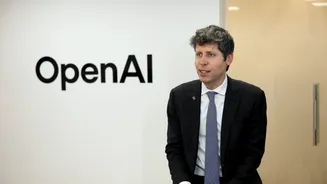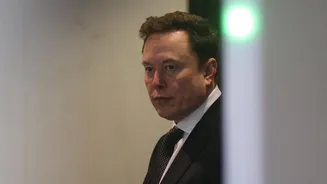







During the recent high-stakes legal battle between Elon Musk and Sam Altman over the future of OpenAI, both tech magnates hinted that they were motivated to start OpenAI more than a decade ago out of fear that Demis Hassabis and Google could dominate and steer the AI industry. One of the emails presented as evidence in court reportedly revealed Musk stating, “Unfortunately, humanity’s future is in the hands of Demis.”
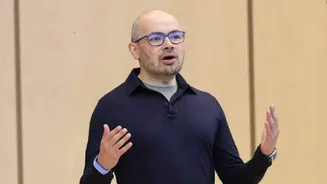
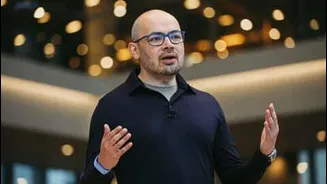
Recently, during Google’s annual I/O developer conference, Hassabis shared his perspective on the future of AI with the world. He stated, “When we look back at this time, I think we will realize that we were standing in the foothills of the singularity. It will be a profound moment for humanity.” While Sundar Pichai generally delivers the closing remarks at the event, this year the tables turned, with Hassabis summing up the collective future envisioned by Google.
Pichai opened the two-hour keynote by teasing a flurry of new products centered around AI being developed by Google DeepMind. His presentation included the launch of the new Gemini 3.5 model family, an upgraded coding assistant, and a timeline for Google’s revived smart glasses lineup.
Towards the end of the event, Hassabis added that AGI would be “the most profound and impactful technology ever invented.” He further stated, “We’re in a moment of immense promise, but also enormous responsibility.”
Concerns Regarding Hassabis’ Vision
Google’s gradual transformation of its search engine into an AI-powered chatbot, both cosmetically and functionally, has raised concerns among many users. As the company moves ahead with combining AI’s computational capabilities, indexed webpages, and users’ personal preferences, Google could soon create an experience so deeply personalized that it may fundamentally change the way people use the internet.
Search advertising continues to form the backbone of Alphabet’s business, contributing significantly to the company’s reported $402.8 billion revenue in 2025. These massive revenue streams allow Google to aggressively invest in sweeping AI-driven changes to its products and user interface. Evidence of growing dependence on these revamped AI-powered systems is already visible. According to Pichai, the more users engaged with AI-powered search features, the more they continued to search.
Pichai further noted that AI-generated queries have doubled every year since launch and that the platform now has over 1 billion monthly users. These product launches represent a major milestone and highlight how Google plans to compete aggressively with both frontier AI model makers and chip giant Nvidia.
A Peek Into the Past
Back in 2015, DeepMind had just begun demonstrating its capabilities, and Silicon Valley was captivated by its potential. Tech leaders such as Peter Thiel, Google executives, Facebook leadership, and Elon Musk quickly realized how transformative the technology could become. Reports suggest that Hassabis first met Musk in 2012 during a lunch meeting at the SpaceX factory in California.
At the time, Musk reportedly told Hassabis that his priority was “getting to Mars as a backup planet, in case something went wrong here.” Hassabis, however, pointed out a flaw in that plan, reportedly responding: “What if AI was the thing that went wrong? Then being on Mars wouldn’t help you, because if we got there, it would obviously be easy for an AI to get there through our communication systems or whatever it was.”
According to reports, Musk paused for a moment before acknowledging the possibility. Shortly after that meeting, Musk became an investor in DeepMind.
In 2014, Google acquired DeepMind for around €400 million, after which Musk and Peter Thiel shifted their focus toward backing rival AI startup OpenAI.
Hassabis has continued to predict several major leaps in AI capabilities over the coming years, particularly in how models handle and combine different types of data. He envisions a future built around multimodal convergence, with rapid advances in image and video generation eventually merging seamlessly with language models. DeepMind is already working on systems such as Genie 3 — interactive simulated environments that users can walk around in much like a video game world.
Reliable AI agents capable of independently completing delegated tasks, along with the creation of a universal AI assistant, also remain central to Hassabis’ long-term vision for the future of artificial intelligence.