




What is the story about?
Iran is witnessing mass protests over the country’s plummeting national currency and economic crisis. Demonstrators took to the streets on December 28 and 29, with Iranian President Masoud Pezeshkian calling on his government to listen to protesters’ “legitimate demands”.
The protests that spread across Iran have increased pressure on the government. Amid the turmoil, the head of Iran’s central bank has reportedly resigned.
Let’s take a closer look.
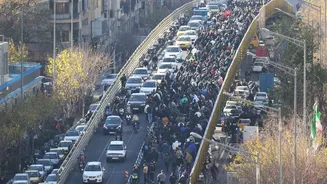
On Sunday, traders shut their shops near two major tech and mobile phone shopping centres in Tehran’s Jomhouri area. Protests were also reported around the capital’s main Grand Bazaar, with demonstrators chanting anti-government slogans.
Further protests took place on Monday. As per Associated Press (AP), traders and shopkeepers marched in Saadi Street in downtown Tehran as well as in the Shush neighbourhood near the capital's main Grand Bazaar.
Footage on social media showed demonstrators chanting: “Don’t be afraid, we are together.”
In a video, protesters can be heard chanting “azadi,” the Farsi word for freedom.
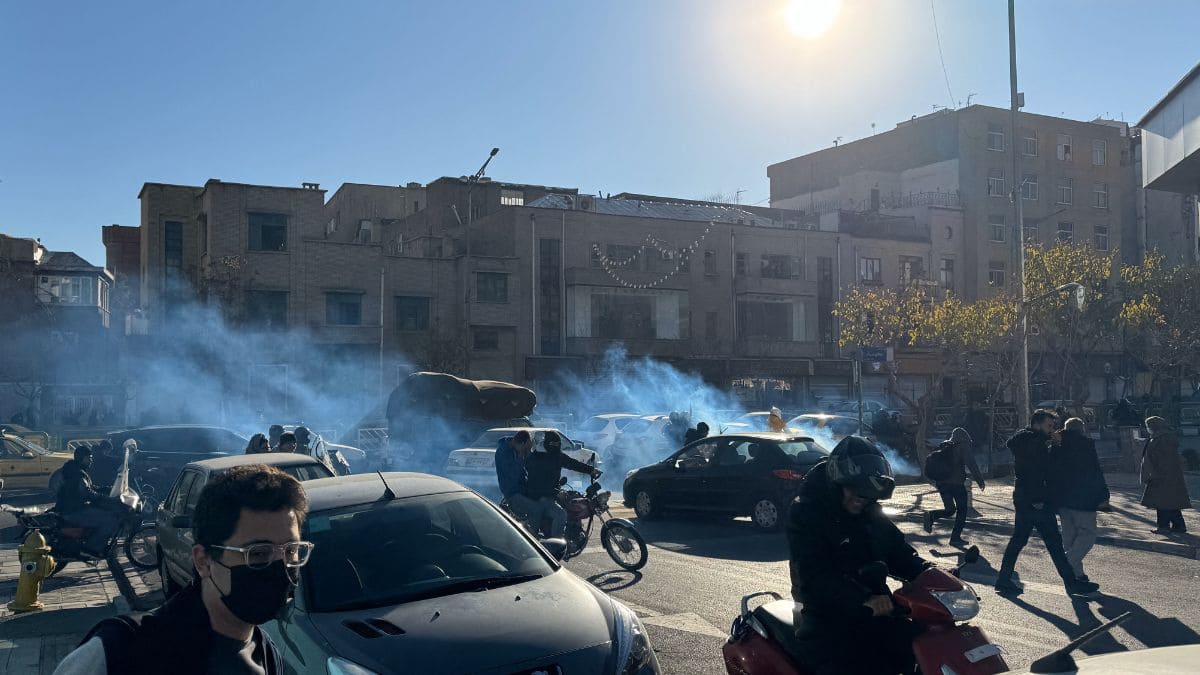
Security forces fired tear gas to disperse protesters in Tehran. Witnesses told AP that shopkeepers closed their businesses on Monday and asked others to do the same. The semiofficial ILNA news agency reported that many businesses stopped trading, but some shops remained open.
Similar rallies were reported in other major cities, including Isfahan in central
Iran, Shiraz in the south and Mashhad in the northeast.
Demonstrations also occurred in the Yaftabad district in west Tehran.
In Qeshm Island, on Iran’s Persian Gulf coast, chants of “death to the dictator” were heard at night as motorists honked in support, Wall Street Journal (WSJ) reported, citing verified footage.
In western Iran’s Hamedan, protesters called for the return of the Pahlavi dynasty, which ruled Iran before being toppled by the Islamic revolution in 1979.
Iran last saw mass protests in 2022, when the death of 22-year-old Mahsa Jina Amini in police custody triggered widespread demonstrations. Amini was arrested by Iran’s morality police for allegedly not wearing her hijab properly.
Protests in Iran come as the country is grappling with severe inflation and the collapse of the national currency.
According to the state statistics centre, inflation touched 42.2 per cent in December, up 1.8 percentage points from November.
Food prices rose 72 per cent, and health and medical items surged 50 per cent from December last year.
Iran’s economic woes compounded as its currency declined to a record low this past weekend against the US dollar.
The US dollar traded at around 1.42 million rials on Sunday on the unofficial market, compared to 820,000 rials a year ago. On Monday, Iran’s rial traded at 1.38 million to the dollar.
As per Iran's main state news agency IRNA, mobile phone vendors were upset as their businesses were under threat due to the unchecked depreciation of the rial.
It confirmed on Monday that protesters had chanted slogans condemning Iran’s plunging exchange rate at Tehran’s bazaar, forcing merchants to stop trading.
“In some sectors, the level of trade activity was reduced to a minimum, and many units preferred to refrain from conducting transactions to avoid potential losses,” IRNA said.
The collapse of the currency has hit ordinary Iranians hard as it undermines their savings and raises costs.
Iranians can no longer afford to invite friends over anxiety about their salaries. Speaking to New York Times (NYT), Mariam, a 41-year-old bank employee in Tehran whose salary now only covers two-thirds of her monthly expenses, said she hardly dined out and tried not to buy meat or invite guests over for meals.
“Things have gotten so expensive that over the past few days when I had guests, I was constantly crunching numbers to ensure I wouldn’t run out of money before the end of the month,” she said.
On Monday, Iranian Chief Justice Gholamhossein Mohseni Ejei said that “anyone who engages in hoarding (foreign currency) is a criminal and must be dealt with firmly.”
Iran’s currency has been dropping rapidly over recent weeks as the United States and its Western allies have increased sanctions and diplomatic pressure on Tehran over its nuclear programme.
Concerns over another conflict with Israel after the 12-day war earlier this year also loom large in Iran.
US President Donald Trump, who met Israeli Prime Minister Benjamin Netanyahu on Monday in Florida, expressed support for a possible Israeli attack on Iran if Tehran rebuilds its nuclear programme.
Iran's protests also indicate a wider disgruntlement with the country’s theocratic establishment in power since the 1979 revolution.
The West Asian country is facing a growing energy crisis, as power shortages have become common. Tehran is also running out of water.
The Islamic Republic has one of the most restricted internet landscapes globally.
This month, Iran hiked gasoline prices, resulting in warnings by Iranian lawmakers of a repeat of the violent fuel protests in 2019 that led to the death of hundreds.
Reports in official Iranian media that the government plans to increase taxes in the Iranian new year, which begins March 21, have caused more concern.
Mostafa Tajzadeh, the imprisoned Iranian politician and prominent dissident, said to The Telegraph: “Now the time has come for all those who want a prosperous, free, and independent Iran to speak with one voice and call for the separation of religious institutions from political institutions, for the clergy to hand power back to the people, and to return to their traditional base in the seminaries.
“The safest and most reliable way out of the crises is to convene a constituent assembly and amend the constitution in line with the will of the nation.”
Mustapha Pakzad, an independent geopolitical analyst focused on Iran, told WSJ that the rising food inflation and enhanced political repression “have knocked out even the most optimistic of bystanders.”
Iran's government has promised to tackle the economic crisis.
President Masoud Pezeshkian addressed the demonstrations late Monday on social media.
“The livelihood of the people is my daily concern,” he wrote in a post on X, adding that the government has actions planned to “reform the monetary and banking system and preserve the purchasing power of the people.”
Pezeshkian said he had also asked the interior minister to “hear the legitimate demands of the protesters through dialogue with their representatives.”
Defending his government’s controversial budget bill that proposes a 20 per cent increase in wages while inflation is around 50 per cent, Iran’s president vowed to fight inflation and the high cost of living.
Pezeshkian said on Sunday in the parliament: “I have no motivation to remain in government or to remain president if I cannot solve the problems of the people and the deprived.
“This is not something I want to be proud of. We cannot govern while people have problems … they say salaries are low, so they are low, they say you are taking too much in taxes, so we are taking too much tax.
“On the other side, they say increase salaries. Someone tell me where I should get the money from to give?”
On Monday, the Parliament rejected the proposed budget, as per the semiofficial Tasnim News Agency.
The head of Iran's Central Bank, Mohammad Reza Farzin, resigned Monday amid protests.
Iran's economic crisis is a big challenge for its leaders ruling over 92 million (9.2 crore) people while facing threats from the US and Israel.
With inputs from agencies
The protests that spread across Iran have increased pressure on the government. Amid the turmoil, the head of Iran’s central bank has reportedly resigned.
Let’s take a closer look.
Protests erupt in Iran
On Sunday, traders shut their shops near two major tech and mobile phone shopping centres in Tehran’s Jomhouri area. Protests were also reported around the capital’s main Grand Bazaar, with demonstrators chanting anti-government slogans.
Further protests took place on Monday. As per Associated Press (AP), traders and shopkeepers marched in Saadi Street in downtown Tehran as well as in the Shush neighbourhood near the capital's main Grand Bazaar.
Footage on social media showed demonstrators chanting: “Don’t be afraid, we are together.”
In a video, protesters can be heard chanting “azadi,” the Farsi word for freedom.
Security forces fired tear gas to disperse protesters in Tehran. Witnesses told AP that shopkeepers closed their businesses on Monday and asked others to do the same. The semiofficial ILNA news agency reported that many businesses stopped trading, but some shops remained open.
Shopkeepers and traders protest in the street against the economic conditions and Iran's embattled currency in Tehran on December 29, 2025. Fars News Agency via AFP
Similar rallies were reported in other major cities, including Isfahan in central
Demonstrations also occurred in the Yaftabad district in west Tehran.
In Qeshm Island, on Iran’s Persian Gulf coast, chants of “death to the dictator” were heard at night as motorists honked in support, Wall Street Journal (WSJ) reported, citing verified footage.
In western Iran’s Hamedan, protesters called for the return of the Pahlavi dynasty, which ruled Iran before being toppled by the Islamic revolution in 1979.
Iran last saw mass protests in 2022, when the death of 22-year-old Mahsa Jina Amini in police custody triggered widespread demonstrations. Amini was arrested by Iran’s morality police for allegedly not wearing her hijab properly.
Why is Iran facing economic crisis?
Protests in Iran come as the country is grappling with severe inflation and the collapse of the national currency.
According to the state statistics centre, inflation touched 42.2 per cent in December, up 1.8 percentage points from November.
Food prices rose 72 per cent, and health and medical items surged 50 per cent from December last year.
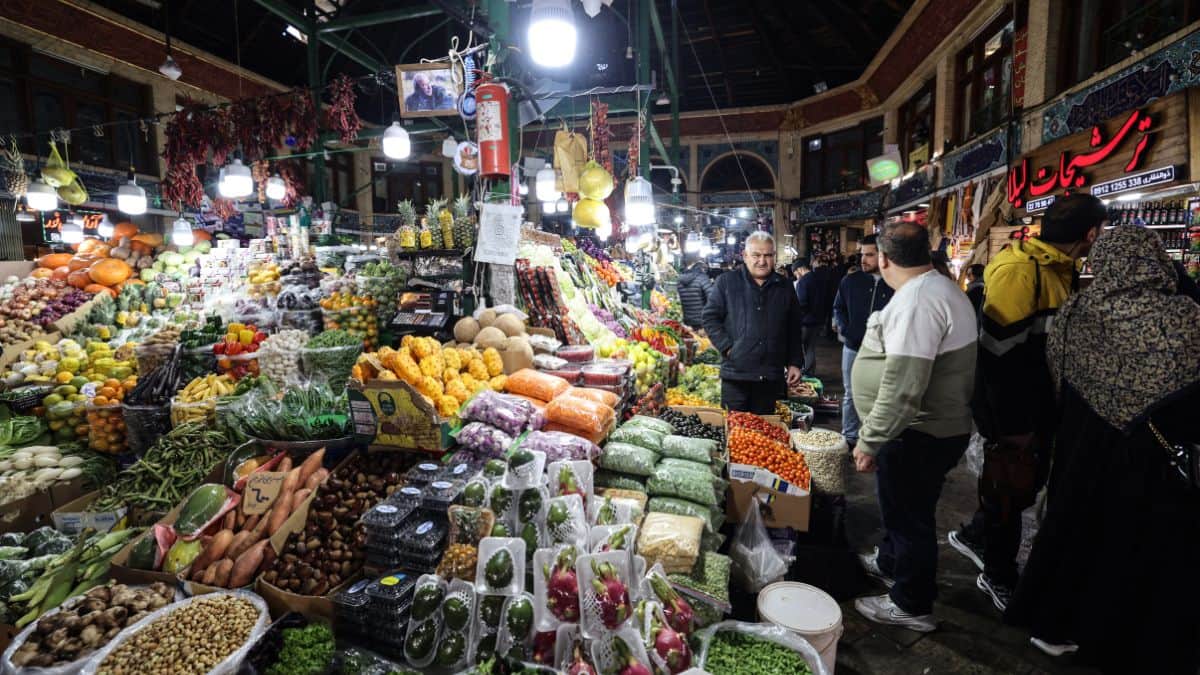
People shop for fresh products at Tajrish Bazaar in Iran's capital Tehran on December 29, 2025. AFP
Iran’s economic woes compounded as its currency declined to a record low this past weekend against the US dollar.
The US dollar traded at around 1.42 million rials on Sunday on the unofficial market, compared to 820,000 rials a year ago. On Monday, Iran’s rial traded at 1.38 million to the dollar.
As per Iran's main state news agency IRNA, mobile phone vendors were upset as their businesses were under threat due to the unchecked depreciation of the rial.
It confirmed on Monday that protesters had chanted slogans condemning Iran’s plunging exchange rate at Tehran’s bazaar, forcing merchants to stop trading.
“In some sectors, the level of trade activity was reduced to a minimum, and many units preferred to refrain from conducting transactions to avoid potential losses,” IRNA said.
The collapse of the currency has hit ordinary Iranians hard as it undermines their savings and raises costs.
Iranians can no longer afford to invite friends over anxiety about their salaries. Speaking to New York Times (NYT), Mariam, a 41-year-old bank employee in Tehran whose salary now only covers two-thirds of her monthly expenses, said she hardly dined out and tried not to buy meat or invite guests over for meals.
“Things have gotten so expensive that over the past few days when I had guests, I was constantly crunching numbers to ensure I wouldn’t run out of money before the end of the month,” she said.
On Monday, Iranian Chief Justice Gholamhossein Mohseni Ejei said that “anyone who engages in hoarding (foreign currency) is a criminal and must be dealt with firmly.”
Iran’s currency has been dropping rapidly over recent weeks as the United States and its Western allies have increased sanctions and diplomatic pressure on Tehran over its nuclear programme.
Concerns over another conflict with Israel after the 12-day war earlier this year also loom large in Iran.
US President Donald Trump, who met Israeli Prime Minister Benjamin Netanyahu on Monday in Florida, expressed support for a possible Israeli attack on Iran if Tehran rebuilds its nuclear programme.
Iran's protests also indicate a wider disgruntlement with the country’s theocratic establishment in power since the 1979 revolution.
The West Asian country is facing a growing energy crisis, as power shortages have become common. Tehran is also running out of water.
The Islamic Republic has one of the most restricted internet landscapes globally.
This month, Iran hiked gasoline prices, resulting in warnings by Iranian lawmakers of a repeat of the violent fuel protests in 2019 that led to the death of hundreds.
Reports in official Iranian media that the government plans to increase taxes in the Iranian new year, which begins March 21, have caused more concern.
Mostafa Tajzadeh, the imprisoned Iranian politician and prominent dissident, said to The Telegraph: “Now the time has come for all those who want a prosperous, free, and independent Iran to speak with one voice and call for the separation of religious institutions from political institutions, for the clergy to hand power back to the people, and to return to their traditional base in the seminaries.
“The safest and most reliable way out of the crises is to convene a constituent assembly and amend the constitution in line with the will of the nation.”
Mustapha Pakzad, an independent geopolitical analyst focused on Iran, told WSJ that the rising food inflation and enhanced political repression “have knocked out even the most optimistic of bystanders.”
What is Iran govt doing?
Iran's government has promised to tackle the economic crisis.
President Masoud Pezeshkian addressed the demonstrations late Monday on social media.
“The livelihood of the people is my daily concern,” he wrote in a post on X, adding that the government has actions planned to “reform the monetary and banking system and preserve the purchasing power of the people.”
Pezeshkian said he had also asked the interior minister to “hear the legitimate demands of the protesters through dialogue with their representatives.”
Defending his government’s controversial budget bill that proposes a 20 per cent increase in wages while inflation is around 50 per cent, Iran’s president vowed to fight inflation and the high cost of living.
Pezeshkian said on Sunday in the parliament: “I have no motivation to remain in government or to remain president if I cannot solve the problems of the people and the deprived.
“This is not something I want to be proud of. We cannot govern while people have problems … they say salaries are low, so they are low, they say you are taking too much in taxes, so we are taking too much tax.
“On the other side, they say increase salaries. Someone tell me where I should get the money from to give?”
On Monday, the Parliament rejected the proposed budget, as per the semiofficial Tasnim News Agency.
The head of Iran's Central Bank, Mohammad Reza Farzin, resigned Monday amid protests.
Iran's economic crisis is a big challenge for its leaders ruling over 92 million (9.2 crore) people while facing threats from the US and Israel.
With inputs from agencies