







What is the story about?
If you are planning a European holiday, brace yourself for big changes, as the European Union’s new Entry/Exit System (EES) will become fully operational on Friday (April 10).
The EES system will replace passport stamping with biometric registration for non-EU travellers, with authorities warning of longer wait times at airports during the initial phase.
Here’s all that you need to know about the new system and whether it will hinder your travel plans.
The EES system is essentially a method to track the movement of non-EU citizens within the Schengen area. Today, the Schengen Zone comprises 29 members — 25 of the 27 European Union member states as well as Switzerland, Norway, Iceland, and Liechtenstein. It is the world’s biggest area without internal border controls, where more than 400 million people can travel freely inside the zone.
Under this system, non-EU citizens will have to register by having their fingerprints and photograph taken while entering and leaving the zone. Their passport will also have to be scanned. It will apply only to those persons staying in the Schengen zone for a short while.
It is not applicable to citizens of the EU. A non-EU traveller has been defined as someone who does not hold EU nationality or the nationality of Iceland, Liechtenstein, Norway, or Switzerland. Citizens of the United States, Canada, Australia, the United Kingdom, and India will have to undergo the EES.
However, it will not be applicable to citizens of Ireland, Cyprus, those holding passports issued by the Vatican City or the Holy See, non-EU citizens travelling for research, study, voluntary services, or au pair services.
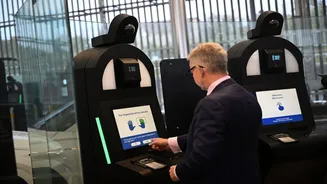
The EES will register the individual’s name, type of travel document, biometric data — fingerprints and captured facial images — and the date and place of entry and exit. When you first visit one of the listed countries, you will need to register your details at an automated kiosk.
Kiosks have already been set up in places such as airports, train or bus stations for people to self-register. There’s no pre-registration required, and there’s also no fee involved.
However, there is another option for travellers who want a faster process. The Travel to Europe mobile app, an official EU app specifically designed for the EES system, allows third-country travellers to pre-register biometric photos and passport data 72 hours before arrival, to quicken border checks. However, it does not replace the required border control interview.
The central idea of introducing this system is to make border crossings more efficient. As the European Council noted earlier, the EES seeks to “improve the effectiveness and efficiency of controls at the EU’s external borders”.
The EU says the system will allow it to tamp down on criminals and illegal border crossings. “The EES will also help to significantly reduce identity fraud,” an official statement said. EU minister for immigration and integration, Rasmus Stoklund, was quoted as saying, “We must do everything we can to prevent terrorists and irregular migrants from entering the Schengen area illegally.”
“It is crucial that we maintain effective control over third-country nationals entering the Schengen Area, so that we can strengthen security at the external borders. With an EU-wide IT system, it will become easier to monitor who is crossing our borders,” he said.
The EES will also make repeat trips smoother. With biometric details stored, identities will be verified faster during subsequent visits. Registrations are valid for three years or until the traveller’s passport expires. The EU has said travellers’ data will generally be retained for three years before being deleted, though certain exceptions apply.
The answer is a possible yes. There are likely to be delays at airports in the initial months, despite the EU promising to allow flexibility.
In fact, during the phased rollouts in some EU countries, travellers have complained of waiting times. According to Semafor, skiers arriving in Geneva have been made to wait as long as three hours. Travellers arriving in Tenerife in the Canary Islands have also faced massive delays. There have also been reports of airports warning that wait times could stretch to six hours during peak travel periods, and there are already reports of people missing flights.
Julia Lo Bue-Said, who runs travel agent network Advantage Partnership, told the BBC that “without question, the new system has created even more bottlenecks and pinch points [in places] that were already challenged”.
Travel expert Simon Calder also told Sky News that the digital border scheme is “unravelling”. He said countries such as France are still “far from ready”, there are known problems connecting to the system’s central database, and the hopes of ending “wet stamping” at all frontiers by April 10 are no longer realistic.
However, these delays are likely to ease subsequently, once the EES processes are smoother. In the meantime, experts warn travellers to give themselves “extra time” as well as choose longer layovers. Lo Bue-Said told the BBC that non-EU travellers must add at least four hours of buffer time to their plans. If you are booking a connecting flight through a busy European hub, look for options with extra-long layovers to reduce the risk of missing your connection.
1) When is the EES system rolling out?
The EES, Entry/Exit System, where travellers use their biometric data to pass through the frontier into a Schengen-area country, will be fully operation from April 10.
2) Who is exempt from the EES?
EU and Schengen-area members are exempt, as are their family members and holders of ID cards. So are plane and army personnel, and nationals of Andorra, San Marino, Monaco, and the Vatican City will also be exempt. Cyprus and Ireland are not part of the new EES, so passports will still be stamped at these borders.
Children under 12 don’t have to provide fingerprints, but still need to have a photo taken.
3) Will there be any payment to be made?
No, payment starts, in theory, later in 2026.
4) Do you need to register in advance for the EES?
One doesn’t have to register in advance for the EES, as registration happens at the border when you arrive in the EU.
With inputs from agencies
The EES system will replace passport stamping with biometric registration for non-EU travellers, with authorities warning of longer wait times at airports during the initial phase.
Here’s all that you need to know about the new system and whether it will hinder your travel plans.
What is the Entry/Exit System (EES)?
The EES system is essentially a method to track the movement of non-EU citizens within the Schengen area. Today, the Schengen Zone comprises 29 members — 25 of the 27 European Union member states as well as Switzerland, Norway, Iceland, and Liechtenstein. It is the world’s biggest area without internal border controls, where more than 400 million people can travel freely inside the zone.
Under this system, non-EU citizens will have to register by having their fingerprints and photograph taken while entering and leaving the zone. Their passport will also have to be scanned. It will apply only to those persons staying in the Schengen zone for a short while.
It is not applicable to citizens of the EU. A non-EU traveller has been defined as someone who does not hold EU nationality or the nationality of Iceland, Liechtenstein, Norway, or Switzerland. Citizens of the United States, Canada, Australia, the United Kingdom, and India will have to undergo the EES.
However, it will not be applicable to citizens of Ireland, Cyprus, those holding passports issued by the Vatican City or the Holy See, non-EU citizens travelling for research, study, voluntary services, or au pair services.
How will EES work?
The EES will register the individual’s name, type of travel document, biometric data — fingerprints and captured facial images — and the date and place of entry and exit. When you first visit one of the listed countries, you will need to register your details at an automated kiosk.
Kiosks have already been set up in places such as airports, train or bus stations for people to self-register. There’s no pre-registration required, and there’s also no fee involved.
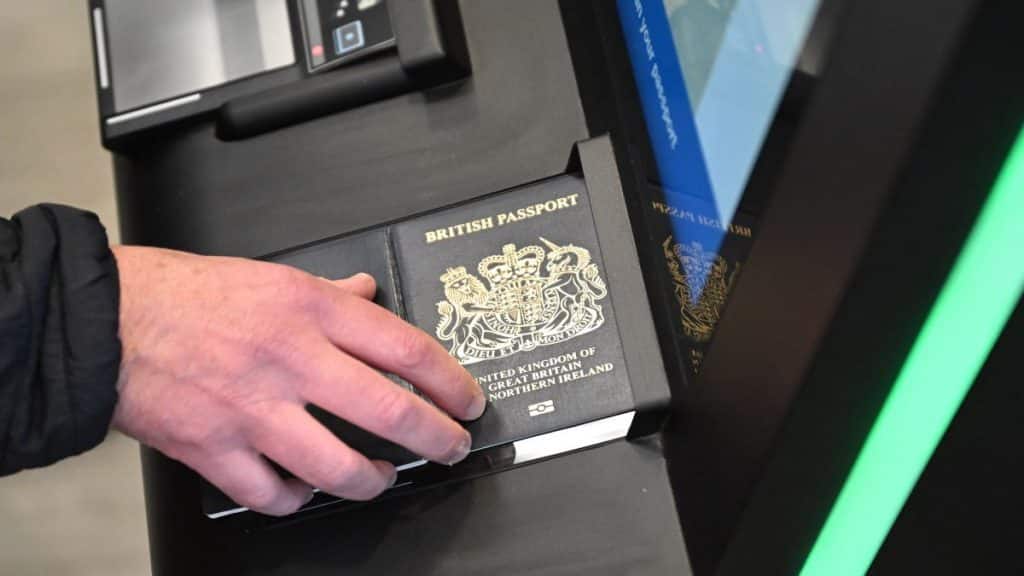
A person waits as their passport is scanned whilst using an Automated European Union Entry/Exit System (EES) kiosk in England. AFP
However, there is another option for travellers who want a faster process. The Travel to Europe mobile app, an official EU app specifically designed for the EES system, allows third-country travellers to pre-register biometric photos and passport data 72 hours before arrival, to quicken border checks. However, it does not replace the required border control interview.
Why has the EU introduced the EES?
The central idea of introducing this system is to make border crossings more efficient. As the European Council noted earlier, the EES seeks to “improve the effectiveness and efficiency of controls at the EU’s external borders”.
The EU says the system will allow it to tamp down on criminals and illegal border crossings. “The EES will also help to significantly reduce identity fraud,” an official statement said. EU minister for immigration and integration, Rasmus Stoklund, was quoted as saying, “We must do everything we can to prevent terrorists and irregular migrants from entering the Schengen area illegally.”
“It is crucial that we maintain effective control over third-country nationals entering the Schengen Area, so that we can strengthen security at the external borders. With an EU-wide IT system, it will become easier to monitor who is crossing our borders,” he said.
The EES will also make repeat trips smoother. With biometric details stored, identities will be verified faster during subsequent visits. Registrations are valid for three years or until the traveller’s passport expires. The EU has said travellers’ data will generally be retained for three years before being deleted, though certain exceptions apply.
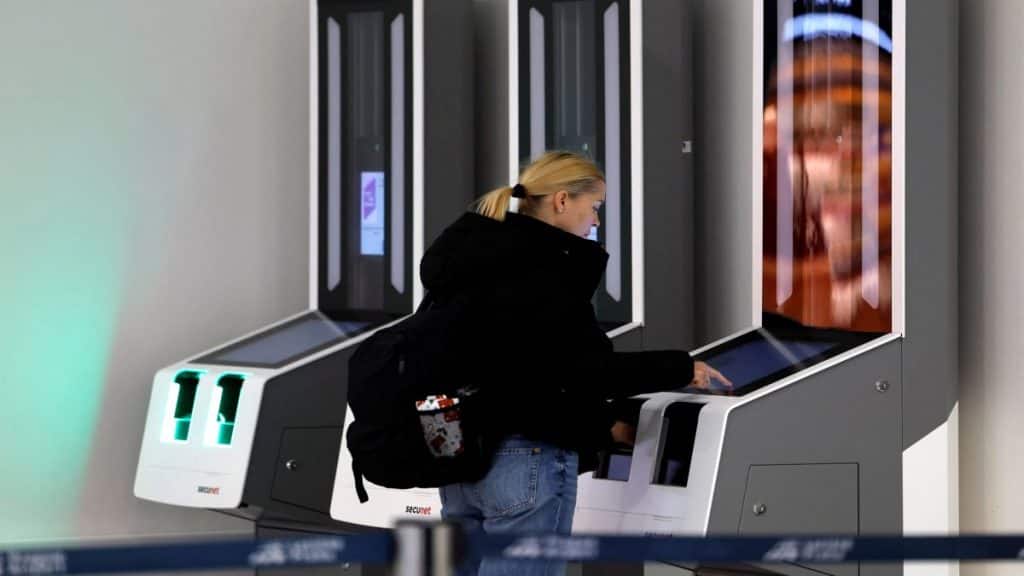
A passenger uses an automated terminal for registration to the Entry/Exit System (EES), which requires all non-EU citizens to provide personal details, including fingerprints and facial images, upon their first entry into the Schengen area, at Vaclav Havel Airport in Prague, Czech Republic. Reuters
Will the introduction of the EES cause airport delays?
The answer is a possible yes. There are likely to be delays at airports in the initial months, despite the EU promising to allow flexibility.
In fact, during the phased rollouts in some EU countries, travellers have complained of waiting times. According to Semafor, skiers arriving in Geneva have been made to wait as long as three hours. Travellers arriving in Tenerife in the Canary Islands have also faced massive delays. There have also been reports of airports warning that wait times could stretch to six hours during peak travel periods, and there are already reports of people missing flights.
Julia Lo Bue-Said, who runs travel agent network Advantage Partnership, told the BBC that “without question, the new system has created even more bottlenecks and pinch points [in places] that were already challenged”.
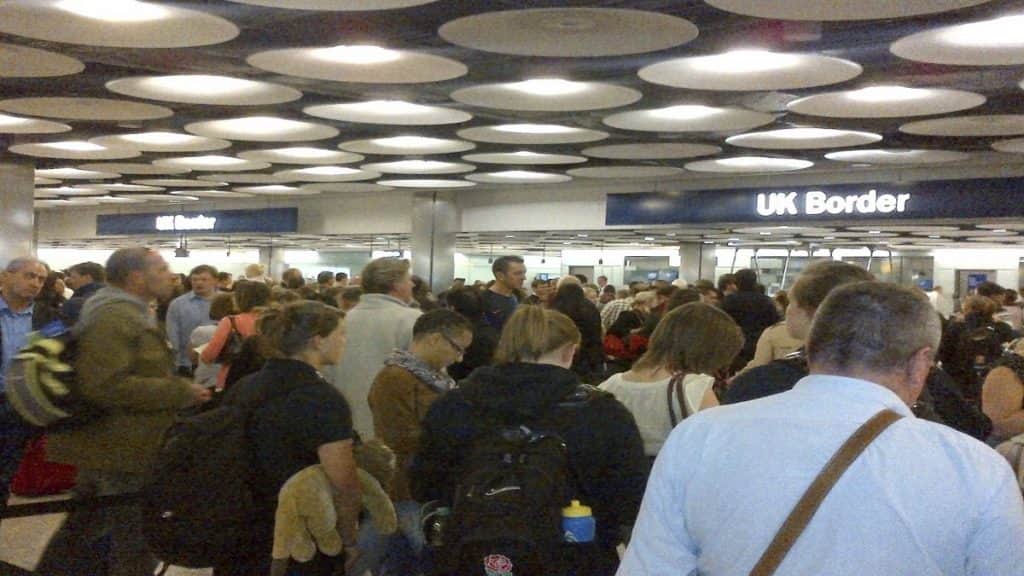
Travellers queue to be processed by UK Border Agency immigration control officers at Heathrow airport's Terminal 5 in London. File image/Reuters
Travel expert Simon Calder also told Sky News that the digital border scheme is “unravelling”. He said countries such as France are still “far from ready”, there are known problems connecting to the system’s central database, and the hopes of ending “wet stamping” at all frontiers by April 10 are no longer realistic.
However, these delays are likely to ease subsequently, once the EES processes are smoother. In the meantime, experts warn travellers to give themselves “extra time” as well as choose longer layovers. Lo Bue-Said told the BBC that non-EU travellers must add at least four hours of buffer time to their plans. If you are booking a connecting flight through a busy European hub, look for options with extra-long layovers to reduce the risk of missing your connection.
FAQs
1) When is the EES system rolling out?
The EES, Entry/Exit System, where travellers use their biometric data to pass through the frontier into a Schengen-area country, will be fully operation from April 10.
2) Who is exempt from the EES?
EU and Schengen-area members are exempt, as are their family members and holders of ID cards. So are plane and army personnel, and nationals of Andorra, San Marino, Monaco, and the Vatican City will also be exempt. Cyprus and Ireland are not part of the new EES, so passports will still be stamped at these borders.
Children under 12 don’t have to provide fingerprints, but still need to have a photo taken.
3) Will there be any payment to be made?
No, payment starts, in theory, later in 2026.
4) Do you need to register in advance for the EES?
One doesn’t have to register in advance for the EES, as registration happens at the border when you arrive in the EU.
With inputs from agencies