




What is the story about?
Indian mangoes are selling like hot cakes in the United States. But it is not just the Indian-Americans going gaga over the juicy fruit. A growing number of Americans are falling in love with mangoes imported from the South Asian country.
India is the world's largest mango producer, growing over 24 million metric tonnes annually. While the nation accounts for roughly half of the global mango output, it exports just one per cent of the summer fruit.
India's beloved fruit has become a premium offering in the US.
Let’s take a closer look.
People in the US are going wild over Indian mangoes. As per a Wall Street Journal (WSJ) report, Americans are doing "anything" to get their hands on the "King of Fruits".
From tracking flight arrivals to halting meetings and driving to warehouses, mango lovers are going the extra mile to acquire the seasonal fruit.
“The moment a new shipment gets announced, I literally stop whatever I’m doing,” Carfax chief marketing officer Nakul Goyal told the American newspaper.
American consumers are increasingly showing their love for Indian mangoes. “Our most loyal customers are Americans,” said Jaidev Sharma, a Chicago-based importer.
A social media post gave an insight into how quickly mangoes are selling in the US. "Getting good mangoes in the US is absurdly hard," a viral post read. "4:56 pm: new shipment in, 5:16 pm: sold out."
Another user claimed that people attended mango parties just to get a taste of the delicious fruit.
"Last year we put some of the best minds at work to solve the mango shortage and we’re BACK. the 4th annual sf mango party is happening end of the month. dm or reply with your fav kind of mango if you want to come," they wrote online.
If you are at any American grocery store, you will probably be buying mangoes that are mostly Mexican. These mangoes cost $10 (Rs 952) per box and are available throughout the year.
However, consumers of Indian varieties are confident that what they are eating is unique. “South American mango basically screwed up the mango,” Bhaskar Savani, who has been importing Indian mangoes since 2007, was quoted as saying. “It tastes like a raw potato.”
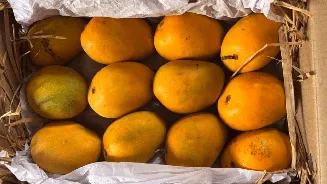
A box of 10 to 12 premium Alphonso or Kesar mangoes reportedly costs $50 (Rs 4,760) to $65 (Rs 6,188) this year, a jump from $40-$45 (Rs 3,808-4,284) in 2025.
Despite the high prices of premium Indian mangoes, Americans are overwhelmingly consuming the summer fruit.
Among the 1,500 mango varieties in India, America exports some of the most famous ones, including Alphonso from Maharashtra, Kesar from Gujarat, Chausa and Langra from the north and Banganapalli from the south.
“The problem is that the mango boxes come and they get sold out,” Sameer Phanase, an importer based in Virginia, told WSJ.
Mango prices are high in the US due to several component costs, including Indian farm costs, irradiation costs, and inspection costs, as per the USDA Economic Research Service analysis.
Indian mangoes face strict import regulations. They have to undergo gamma irradiation at certified facilities and are inspected by the US Department of Agriculture officials before they hit the American market.
To maintain its quality, the fruit has to be exported within a week. Air freight accounts for nearly 30 per cent of the cost.
Unlike Latin American mangoes, which are sold year-round at lower prices, the Indian varieties are available for a limited time.
“Mango sells itself,” said Bhaskar Savani, an importer involved in bringing Indian mangoes to the market.
The demand for Indian mangoes continues to rise in the US, with some importers reportedly offering seasonal subscription boxes priced near $1,000 (Rs 95,200.55) for regular deliveries.
Mangos from India were banned in the US between 1989 and 2006 over pest concerns. It took nearly 17 years for the Indian varieties to return to the American market.
In 2006, the then US President George W Bush visited India and signed a nuclear pact with then Prime Minister Manmohan Singh. The deal also included concessions for Indian imports of American Harley-Davidson motorcycles in exchange for the US easing restrictions on the export of Indian mangos.
The trip saw Bush relishing an Alphonso mango, reportedly calling it a “hell of a fruit.”
"The US is looking forward to eating Indian mangoes," he said.
The first Indian “mango nuclear deal” shipment arrived in the US in April 2007, the “most eagerly anticipated fruit delivery ever", noted Juggernaut.
However, Indian exports still face stiff Sanitary and Phytosanitary (SPS) measures. The mangoes have to undergo vapour-heat treatment or irradiation, particularly in the US and Japan, which adds to their costs.
But now, Americans do not care even if they have to pay much more for Indian varieties than Mexican mangoes.
They are ordering the delicious goodness online, signing up for subscription boxes and continuously tracking their arrivals. They know that once you have tried the Indian mango, there is no going back.
With inputs from agencies
India is the world's largest mango producer, growing over 24 million metric tonnes annually. While the nation accounts for roughly half of the global mango output, it exports just one per cent of the summer fruit.
India's beloved fruit has become a premium offering in the US.
Let’s take a closer look.
‘King of Fruits’ frenzy takes over US
People in the US are going wild over Indian mangoes. As per a Wall Street Journal (WSJ) report, Americans are doing "anything" to get their hands on the "King of Fruits".
From tracking flight arrivals to halting meetings and driving to warehouses, mango lovers are going the extra mile to acquire the seasonal fruit.
“The moment a new shipment gets announced, I literally stop whatever I’m doing,” Carfax chief marketing officer Nakul Goyal told the American newspaper.
American consumers are increasingly showing their love for Indian mangoes. “Our most loyal customers are Americans,” said Jaidev Sharma, a Chicago-based importer.
A social media post gave an insight into how quickly mangoes are selling in the US. "Getting good mangoes in the US is absurdly hard," a viral post read. "4:56 pm: new shipment in, 5:16 pm: sold out."
Getting good mangoes in the US is absurdly hard.
4:56pm: new shipment in
5:16pm: sold out https://t.co/euFo8ncQpq pic.twitter.com/nVkDfTh81L
— Sheel Mohnot (@pitdesi) May 4, 2026
Another user claimed that people attended mango parties just to get a taste of the delicious fruit.
"Last year we put some of the best minds at work to solve the mango shortage and we’re BACK. the 4th annual sf mango party is happening end of the month. dm or reply with your fav kind of mango if you want to come," they wrote online.
How much do Indian mangoes cost in the US?
If you are at any American grocery store, you will probably be buying mangoes that are mostly Mexican. These mangoes cost $10 (Rs 952) per box and are available throughout the year.
However, consumers of Indian varieties are confident that what they are eating is unique. “South American mango basically screwed up the mango,” Bhaskar Savani, who has been importing Indian mangoes since 2007, was quoted as saying. “It tastes like a raw potato.”
A box of 10 to 12 premium Alphonso or Kesar mangoes reportedly costs $50 (Rs 4,760) to $65 (Rs 6,188) this year, a jump from $40-$45 (Rs 3,808-4,284) in 2025.
Despite the high prices of premium Indian mangoes, Americans are overwhelmingly consuming the summer fruit.
Among the 1,500 mango varieties in India, America exports some of the most famous ones, including Alphonso from Maharashtra, Kesar from Gujarat, Chausa and Langra from the north and Banganapalli from the south.
“The problem is that the mango boxes come and they get sold out,” Sameer Phanase, an importer based in Virginia, told WSJ.
Mango prices are high in the US due to several component costs, including Indian farm costs, irradiation costs, and inspection costs, as per the USDA Economic Research Service analysis.
Indian mangoes face strict import regulations. They have to undergo gamma irradiation at certified facilities and are inspected by the US Department of Agriculture officials before they hit the American market.
To maintain its quality, the fruit has to be exported within a week. Air freight accounts for nearly 30 per cent of the cost.
Unlike Latin American mangoes, which are sold year-round at lower prices, the Indian varieties are available for a limited time.
“Mango sells itself,” said Bhaskar Savani, an importer involved in bringing Indian mangoes to the market.
The demand for Indian mangoes continues to rise in the US, with some importers reportedly offering seasonal subscription boxes priced near $1,000 (Rs 95,200.55) for regular deliveries.
When the US banned Indian mangoes
Mangos from India were banned in the US between 1989 and 2006 over pest concerns. It took nearly 17 years for the Indian varieties to return to the American market.
In 2006, the then US President George W Bush visited India and signed a nuclear pact with then Prime Minister Manmohan Singh. The deal also included concessions for Indian imports of American Harley-Davidson motorcycles in exchange for the US easing restrictions on the export of Indian mangos.
The trip saw Bush relishing an Alphonso mango, reportedly calling it a “hell of a fruit.”
"The US is looking forward to eating Indian mangoes," he said.
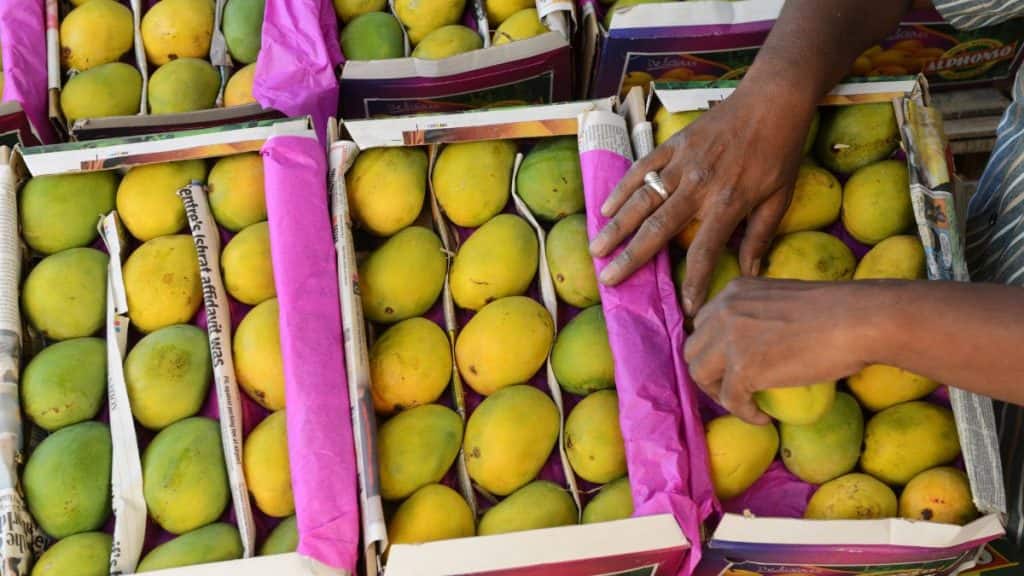
An Indian shopkeeper arranges Alphonso mangoes at his shop in Ahmedabad on May 1, 2014. File Photo/AFP
The first Indian “mango nuclear deal” shipment arrived in the US in April 2007, the “most eagerly anticipated fruit delivery ever", noted Juggernaut.
However, Indian exports still face stiff Sanitary and Phytosanitary (SPS) measures. The mangoes have to undergo vapour-heat treatment or irradiation, particularly in the US and Japan, which adds to their costs.
But now, Americans do not care even if they have to pay much more for Indian varieties than Mexican mangoes.
They are ordering the delicious goodness online, signing up for subscription boxes and continuously tracking their arrivals. They know that once you have tried the Indian mango, there is no going back.
With inputs from agencies