









What is the story about?
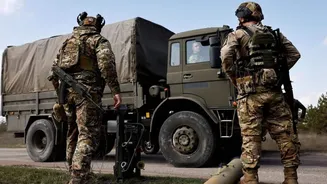
On Thursday (April 9), Russian President Vladimir Putin announced a 32-hour ceasefire with Ukraine for the duration of the Orthodox Easter holidays, expecting his Ukrainian counterparts to do the same.
"In connection with the approaching holiday of Orthodox Easter, a ceasefire is declared from 16:00 on Saturday (11 April) until the end of the day on 12 April 2026," the Kremlin's statement said.
Adding, "We proceed on the basis that the Ukrainian side will follow the example of the Russian Federation."
The announcement further stated that Defence Minister Andrei Belousov had instructed Russia’s top commander, Chief of the General Staff Valery Gerasimov, "to stop for this period military action in all directions".
After Kyiv’s earlier proposal for a halt in hostilities over the holiday, President Volodymyr Zelenskyy said on X that Ukraine was “ready for symmetrical steps.” Putin's announcement was similar to a 30-hour ceasefire he ordered last year. However, each side accused the other of violating it.
According to the Orthodox calendar, which is followed in both Russia and Ukraine, Orthodox Easter falls on Sunday (April 12) this year. Today (April 10) is Orthodox Good Friday.
But what is Orthodox Easter, and how is it different from Easter?
Here's a deep dive.
Honoured by Orthodox Christians, it is officially observed in Bulgaria, Cyprus, Greece, Lebanon, the Republic of Macedonia, Romania, Russia, and Ukraine. In the United States, several Orthodox Christians celebrate Easter, but its date is often later than that observed by most other Western churches.
Both Easter and Orthodox Easter hold the same significance, with differences in dates and some specific traditions.
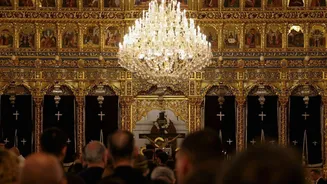
Orthodox Easter is a remembrance of the crucifixion and resurrection of Jesus Christ. It is considered the holiest and most crucial period of the Eastern Christian church's calendar, as it represents the belief in new eternal life after death.
Simply put, those who have faith in Jesus Christ are promised eternal life after death, and hence, this season becomes so sacred.
Orthodox Easter also marks the end of “Great Lent,” a 40-day period of self-examination and fasting that commences on Clean Monday and concludes on Lazarus Saturday, according to
History.com.
Then comes Palm Sunday, observed a week before Easter and commemorates the entry of Jesus Christ into Jerusalem. This is followed by Holy Week, which concludes on Easter Sunday, also known as Pascha.
Let's put it simply- different dates have to do with different calendars observed by separate religious affiliations.
Most Western countries and Christian denominations follow the Gregorian calendar, whereas the date of Orthodox Easter is based on the old Julian calendar.
All Christians were following the Julian calendar in the fourth century. The calendar was on the solar cycle, or Earth’s revolutions around the sun and was established in 45 B.C.
Even after the Western and Orthodox churches split in 1054, Christians worldwide continued to celebrate Easter on the same date.
However, in 1582, Pope Gregory XIII instituted the Gregorian calendar to correct inaccuracies in the Julian Calendar, incorporating leap years to address an 11-minute miscalculation that had caused the seasons to drift out of alignment.
However, only Western churches followed the Pope's change.
Even though the Gregorian calendar has been officially adopted worldwide, Orthodox churches in countries such as Greece, Cyprus, Russia, Romania, and Bulgaria still adhere to the Julian calendar. The two calendars result in two different Easter Sunday celebrations most years, according to
History.com.
This year, Catholics and other Western Christians celebrated Easter on Sunday (April 5), whereas Eastern Orthodox Christians will mark the holiday a week later, as Orthodox Easter occurs on Sunday (April 12).
Orthodox Easter, like Easter, is celebrated with joyful church services, family gatherings, and plenty of white lilies. However, it also includes unique traditions.
Eastern Orthodox churches usually observe a Paschal Vigil, or Easter Vigil, on Holy Saturday, the day before Easter, which lasts until just before midnight and is often followed by a candlelight procession as Easter services and celebrations begin at midnight.
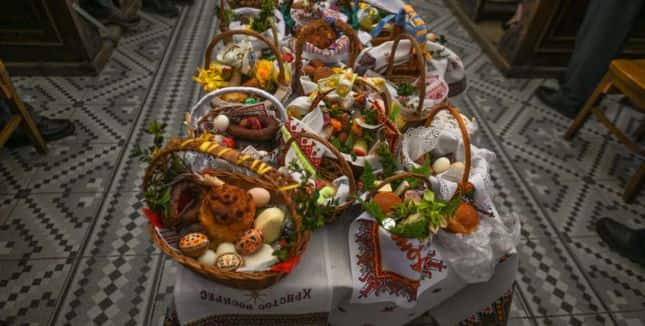
The occasion is then marked by festive meals, where family and friends gather to enjoy traditional dishes such as roasted lamb and Easter bread.
Eggs also play a crucial role in Orthodox Easter celebrations, but their significance varies slightly from nation to nation.
In Greece, hard-boiled eggs are dyed a bright red. In Ukraine, Pysanky eggs are adorned with intricate designs using a wax-resist method. Romanian Easter eggs are decked up in a variety of colours and patterns, including yellow, red, and black.
In Russia, Easter eggs are typically made from wood and adorned with traditional designs and images.
Traditions and dates may differ between Orthodox Easter and Easter, but many believe that the message is always the same: Jesus Christ has risen!
With inputs from agencies
"In connection with the approaching holiday of Orthodox Easter, a ceasefire is declared from 16:00 on Saturday (11 April) until the end of the day on 12 April 2026," the Kremlin's statement said.
Adding, "We proceed on the basis that the Ukrainian side will follow the example of the Russian Federation."
The announcement further stated that Defence Minister Andrei Belousov had instructed Russia’s top commander, Chief of the General Staff Valery Gerasimov, "to stop for this period military action in all directions".
After Kyiv’s earlier proposal for a halt in hostilities over the holiday, President Volodymyr Zelenskyy said on X that Ukraine was “ready for symmetrical steps.” Putin's announcement was similar to a 30-hour ceasefire he ordered last year. However, each side accused the other of violating it.
According to the Orthodox calendar, which is followed in both Russia and Ukraine, Orthodox Easter falls on Sunday (April 12) this year. Today (April 10) is Orthodox Good Friday.
But what is Orthodox Easter, and how is it different from Easter?
Here's a deep dive.
What is Orthodox Easter?
Honoured by Orthodox Christians, it is officially observed in Bulgaria, Cyprus, Greece, Lebanon, the Republic of Macedonia, Romania, Russia, and Ukraine. In the United States, several Orthodox Christians celebrate Easter, but its date is often later than that observed by most other Western churches.
What is the meaning of Orthodox Easter?
Both Easter and Orthodox Easter hold the same significance, with differences in dates and some specific traditions.
Orthodox Easter is a remembrance of the crucifixion and resurrection of Jesus Christ. It is considered the holiest and most crucial period of the Eastern Christian church's calendar, as it represents the belief in new eternal life after death.
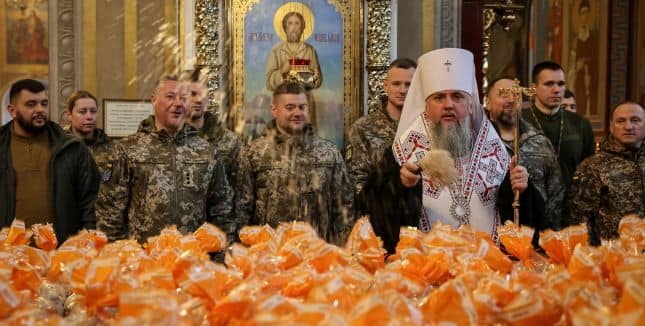
Metropolitan Epiphanius I, head of the Orthodox Church of Ukraine, sprinkles holy water to bless Easter cakes which are to be transferred to Ukrainian servicemen fighting on the frontline amid Russia's attack on Ukraine, during a ceremony at St Michael's Cathedral before Orthodox Easter, in Kyiv, Ukraine, April 9, 2026. Reuters
Simply put, those who have faith in Jesus Christ are promised eternal life after death, and hence, this season becomes so sacred.
Orthodox Easter also marks the end of “Great Lent,” a 40-day period of self-examination and fasting that commences on Clean Monday and concludes on Lazarus Saturday, according to
Then comes Palm Sunday, observed a week before Easter and commemorates the entry of Jesus Christ into Jerusalem. This is followed by Holy Week, which concludes on Easter Sunday, also known as Pascha.
How is Orthodox Easter different from Easter?
Let's put it simply- different dates have to do with different calendars observed by separate religious affiliations.
Most Western countries and Christian denominations follow the Gregorian calendar, whereas the date of Orthodox Easter is based on the old Julian calendar.
All Christians were following the Julian calendar in the fourth century. The calendar was on the solar cycle, or Earth’s revolutions around the sun and was established in 45 B.C.
Even after the Western and Orthodox churches split in 1054, Christians worldwide continued to celebrate Easter on the same date.
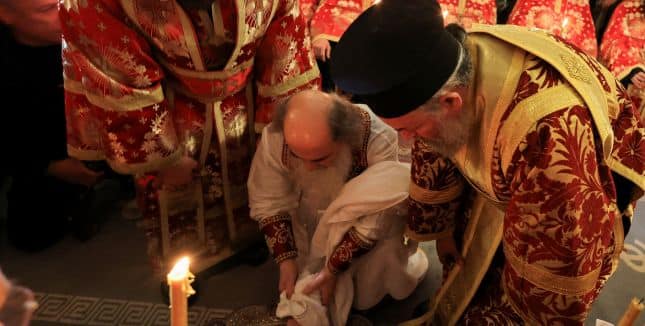
Greek Orthodox Patriarch of Jerusalem Theophilos III takes part in the Washing of the Feet ceremony during the Orthodox Easter Holy Week, following the announcement of a two-week ceasefire in the Iran war, in the Church of the Holy Sepulchre in Jerusalem's Old City, April 9, 2026. Reuters
However, in 1582, Pope Gregory XIII instituted the Gregorian calendar to correct inaccuracies in the Julian Calendar, incorporating leap years to address an 11-minute miscalculation that had caused the seasons to drift out of alignment.
However, only Western churches followed the Pope's change.
Even though the Gregorian calendar has been officially adopted worldwide, Orthodox churches in countries such as Greece, Cyprus, Russia, Romania, and Bulgaria still adhere to the Julian calendar. The two calendars result in two different Easter Sunday celebrations most years, according to
This year, Catholics and other Western Christians celebrated Easter on Sunday (April 5), whereas Eastern Orthodox Christians will mark the holiday a week later, as Orthodox Easter occurs on Sunday (April 12).
What are Orthodox Easter traditions?
Orthodox Easter, like Easter, is celebrated with joyful church services, family gatherings, and plenty of white lilies. However, it also includes unique traditions.
Eastern Orthodox churches usually observe a Paschal Vigil, or Easter Vigil, on Holy Saturday, the day before Easter, which lasts until just before midnight and is often followed by a candlelight procession as Easter services and celebrations begin at midnight.
The occasion is then marked by festive meals, where family and friends gather to enjoy traditional dishes such as roasted lamb and Easter bread.
Eggs also play a crucial role in Orthodox Easter celebrations, but their significance varies slightly from nation to nation.
Eggs are a symbol of Easter and of new life. At Easter, eggs are dyed red to represent the blood of Jesus that was shed on the cross for the redemption of all men. Image courtesy: X
In Greece, hard-boiled eggs are dyed a bright red. In Ukraine, Pysanky eggs are adorned with intricate designs using a wax-resist method. Romanian Easter eggs are decked up in a variety of colours and patterns, including yellow, red, and black.
In Russia, Easter eggs are typically made from wood and adorned with traditional designs and images.
Traditions and dates may differ between Orthodox Easter and Easter, but many believe that the message is always the same: Jesus Christ has risen!
With inputs from agencies