
Any liberal economist must, in principle, argue for free trade. The case is well established: openness improves allocative efficiency, raises productivity, lowers prices, and disciplines domestic incumbents. From Ricardo to modern firm-level trade models, the presumption in favour of liberalisation is strong.
Yet even the most orthodox liberal tradition recognises an exception. Some sectors are protected not because governments misunderstand economics, but because they understand political economy. These are sectors where the assumptions that make free trade welfare-enhancing simply do not hold.
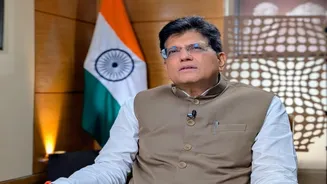
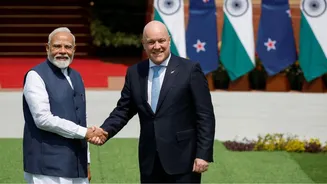
India’s dairy sector sits squarely in that category. Commerce Minister Piyush Goyal has said that India will never open dairy in trade negotiations. On 22 December 2025, India and New Zealand finalised a free trade agreement (FTA). Surprisingly, New Zealand’s Foreign Minister, Winston Peters, called it “neither free nor fair”. Expectedly, one of the reasons for his claim was dairy, as he pointed out that “India is not reducing the significant tariff barriers currently facing our major dairy products.” But why does dairy always become one of the most debated issues in India’s trade negotiations with any country?
Modern trade theory is explicit—if often understated—about its key assumption: losers from trade can be compensated. Whether in Ricardian models, Heckscher-Ohlin frameworks, or contemporary heterogeneous-firm models, liberalisation is justified because aggregate gains exceed losses and redistribution is feasible.
India’s dairy sector violates this assumption. More than 80 million households depend on dairy for income. Production is atomised, labour-intensive, and geographically dispersed. Producers typically own two or three animals, integrated into mixed subsistence farming. They are not firms that can relocate, retool, or absorb price shocks.
There is no fiscally credible or administratively workable mechanism by which the Indian state could compensate tens of millions of small dairy producers if import competition depressed prices. Liberalisation in such a setting would lead to massive welfare reduction.
In advanced economies, dairy is an agribusiness. In India, it tends to act as social infrastructure. Milk is a primary source of protein for low-income households. Per capita availability now exceeds the global average because the state has spent decades building domestic capacity through cooperative procurement, breeding missions, and veterinary networks. Around 70 per cent of dairy labour is female, making it one of the largest sources of independent income for rural women.
From a welfare perspective, dairy performs the same function as rice and wheat: stabilising nutrition and smoothing incomes in an economy with weak formal safety nets. It is a livelihood good—that is, a sector whose value lies not in export competitiveness but in risk mitigation.
Trade models that treat dairy as interchangeable with sugar, cotton, or wine are therefore mis-specified.
Critics of the India-New Zealand FTA argue that New Zealand has opened its market fully while India has not reciprocated on dairy. This frames symmetry of tariffs as the benchmark of fairness. But trade theory also requires symmetry of welfare gains.
New Zealand’s dairy sector is capital-intensive, vertically integrated, and export-oriented. India’s is labour-intensive, domestically oriented, and deliberately fragmented through cooperative design to prevent monopsony power. Reciprocal tariff cuts across such structurally dissimilar sectors transmit price shocks to immobile factors of production.
The distributional effects of such shocks are magnified, not mitigated. Selective exclusion, therefore, is not protectionism; it is optimal policy under factor immobility.
The India-New Zealand agreement does not ignore dairy. It offers duty-free access for dairy inputs meant for re-export, fast-track regulatory pathways, and a right-to-negotiate clause if India ever opens dairy to another partner.
This is a familiar technique in trade law: functional access without factor-market disruption. Countries routinely liberalise inputs and processing while protecting primary producers. India is offering value-chain integration without exposing smallholders to global price volatility.
Calling this a “low-quality” outcome mistakes political disappointment for economic incoherence.
Trade orthodoxy prioritises price efficiency. Food-security economics does not. In large, low-income countries with weak income-support systems, exposure of staple foods to world markets can worsen malnutrition even when average prices fall, because volatility is transmitted faster than incomes adjust. The literature is clear on this point.
India’s dairy policy is designed to internalise productivity gains while insulating producers from international price cycles. Liberalisation would reverse that logic, socialising risk without social insurance.
The same dairy impasse exists in India’s negotiations with the United States and the European Union. From a trade-partner perspective, this consistency increases predictability. The constraint is clear and stable.
Trade agreements are constrained optimisation problems, not ideological manifestos. India’s constraint is rural stability and nutritional security. New Zealand’s is export expansion. The agreement maximises welfare subject to both.
The real error critics make is benchmarking the agreement against an imagined ideal FTA in which all sectors are tradable. No such agreement exists once politically foundational sectors are involved.
The correct benchmark is governability. An FTA that destabilises rural incomes and nutrition is not high-quality; it is fragile. India learned this lesson early.
(The author (X: @adityasinha004) writes on macroeconomic and geopolitical issues. Views expressed in the above piece are personal and solely those of the author. They do not necessarily reflect Firstpost’s views.)