





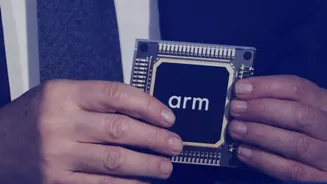

Arm Holdings, the UK-based company, has unveiled the first physical silicon of its own for the first time. Arm Holdings has been synonymous with licensing its instruction sets to some of the world’s biggest chipmakers and collecting royalties on every processor that is based on its designs. Rene Haas, Arm CEO, unveiled his company’s first in-house chip on Tuesday at an event in San Francisco. Arm is calling the new data centre central processing unit the AGI CPU. The launch of this chip reinitiates the rules of competition in the market. Meta is the first one to sign on, as the social media firm builds out multiple gigawatts of AI data and plans to shell out up to $135 billion on capital expenditures this year. In February, Meta had secured a huge amount of chips from both Nvidia and Advanced Micro Devices.
Meta’s software engineer, Paul Saab, who has assisted the Arm chip project since its start in 2023, in an interview with CNBC, said that in today’s world, you really only have a couple of players—the new launch adds another player to the ecosystem for us. He further added that the new deal marks a major win and a stamp of approval from one of the most valuable companies in the world.
Arm spent $71 million and about 18 months building three new lab rooms at its campus in Austin, Texas, where a once tiny team has grown to over 1,000 people. Inside, engineers bring up the chips by putting them through multiple rounds of testing once they come off the factory line. Arm currently manufactures its CPU at Taiwan Semiconductor Manufacturing Company fabrication plants.
A different architecture than that of AMD and Intel
Arm is mostly taking aim at chipmakers like AMD and Intel, which build CPUs based on a different architecture. The brand is risking potentially alienating some of its longtime partners by releasing its own chips. Nvidia, which primarily makes GPUs, also bundles Arm-based CPUs into its rack systems. Earlier this year, Nvidia said it would sell stand-alone CPUs for the first time. Meta was one of its first-time buyers.
Right now, Arm is planning to launch a streamlined CPU with a relatively small number of cores—the chips built in processing units designed specifically for running AI agents. Over time, it’s possible that Arm may extend into more general-purpose CPUs, while AMD and Intel develop chips tailored for agentic AI.
Arm is right now trying to get in on the fast-growing market for data centre CPUs. Creative Strategies forecasts that demand for such chips will grow from $25 billion this year to $60 billion globally by 2030. That figure represents only CPUs for traditional cloud computing data centres. When CPUs for agentic AI are factored in, demand estimates jump closer to $100 billion by 2030. Even if Arm is capable of capturing a sliver of that, it can create a significant revenue stream for itself.