




What is the story about?
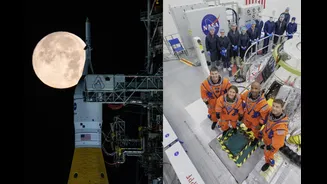
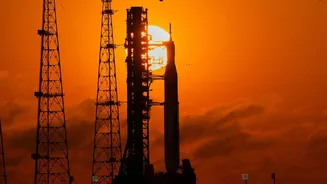
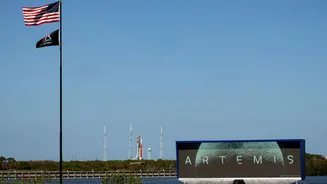
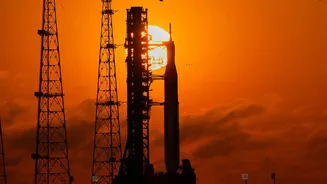
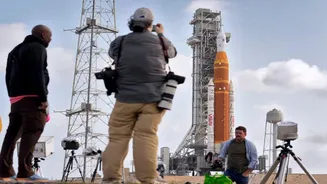
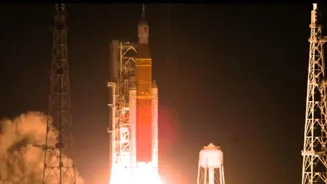
NASA’s Artemis II SLS (Space Launch System) rocket and Orion spacecraft are all set for launch from the agency’s Kennedy Space Center in Florida. The US is all set to push the boundaries of space exploration, science, and technology once again, as America is on the verge of exploring more of the Moon than ever before.
This new era of lunar exploration programme, called Artemis, is named after the twin sister of Apollo; she is the Goddess of the Moon. NASA is all set to put humans on the Moon again after over half a century. The world is technologically much more advanced. Private industry is now deeply involved in exploring space, including tourism.
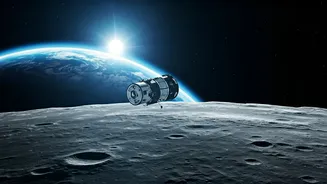
Artemis I was an uncrewed flight test of the SLS and the Orion spacecraft around the Moon. Artemis II will be the first crewed flight test of the SLS and the Orion spacecraft around the Moon. This test flight will send four astronauts on a more than 950,000 kilometre, 10-day journey around the Moon (a lunar flyby) to test critical spacecraft systems ahead of Artemis III, which aims to someday land astronauts near the Moon’s South Pole, a region never explored by humans. Artemis IV debuts humanity’s first lunar space station, launched by a larger, more powerful version of the SLS rocket and the new mobile launcher.
Artemis II is testing the critical systems needed for a future lunar landing, much as the early Apollo missions prepared NASA to land humans on the Moon. There were three launch windows spread across February, March, and April. 01 April is the final choice for NASA to send the rocket, spacecraft, and crew to the Moon.
The Plan to Return to the Moon Unfolds
The earlier plan was to send robots to the Moon starting in 2021 and astronauts in 2024, and to build a long-term presence on the Moon by 2030. Then the Moon was to be used as the stepping stone for human exploration of Mars. There was to be an orbiting Gateway space station, lunar landers (SpaceX Starship, Blue Origin Blue Moon), and scientific research, with a long-term goal of regular lunar landings and deeper space exploration.
Finally, Artemis I, an uncrewed Moon-orbiting mission, was launched in November 2022. It was the first integrated flight test of the Orion spacecraft and SLS rocket, and its main objective was to test the Orion spacecraft, especially its heat shield, in preparation for subsequent Artemis missions.
The Apollo Programme
The Apollo programme was the United States human spaceflight programme led by NASA, which landed the first humans on the Moon in 1969. It was conceived in 1960 as a three-person spacecraft during the presidency of Dwight D. Eisenhower. Apollo was later dedicated to President John F. Kennedy’s national goal for the 1960s of “landing a man on the Moon and returning him safely to the Earth” in an address to the US Congress on 25 May 1961.
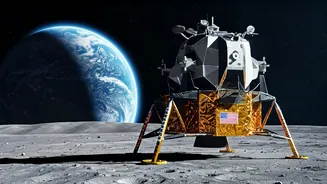
Apollo 11 was launched by a Saturn V rocket from Kennedy Space Center on Merritt Island, Florida, on 16 July, and it was the fifth crewed mission of NASA’s Apollo programme. Kennedy’s goal was accomplished on 20 July 1969, when Commander Neil Armstrong and lunar module pilot Buzz Aldrin formed the American crew that landed the Apollo Lunar Module “Eagle”.
Armstrong became the first person to step onto the lunar surface six hours and 39 minutes after landing. Aldrin joined him 19 minutes later. They spent about two and a quarter hours together outside the spacecraft. Michael Collins flew the Command Module Columbia alone in lunar orbit while they were on the Moon’s surface. Armstrong and Aldrin spent 21 hours, 36 minutes on the lunar surface at a site they named Tranquillity Base before lifting off to re-join Columbia in lunar orbit. All three landed safely on Earth in the Pacific Ocean on 24 July. Five subsequent Apollo missions also landed astronauts on the Moon, the last, Apollo 17, in December 1972. In these six spaceflights, twelve people walked on the Moon.
Armstrong’s first step onto the lunar surface was broadcast live on television to a worldwide audience. He described the event as “one small step for man, one giant leap for mankind”. Apollo 11 effectively ended the “Space Race” and fulfilled a national goal proposed in 1961 by President John F. Kennedy: “before this decade is out, of landing a man on the Moon and returning him safely to the Earth.” It has been over 50 years since then.
The Apollo programme ran from 1961 to 1972, with the first crewed flight in 1968. It encountered a major setback in 1967 when the Apollo 1 cabin fire killed the entire crew during a pre-launch test. After the first Moon landing, sufficient flight hardware remained for nine follow-on landings with a plan for extended lunar geological and astrophysical exploration. The Apollo 13 landing had to be aborted after an oxygen tank exploded en route to the Moon, crippling the CSM.
The crew barely managed a safe return to Earth by using the Lunar Module as a “lifeboat” on the return journey. Apollo used the Saturn family of rockets as launch vehicles, which were also used for an Apollo Applications Programme, which consisted of Skylab, a space station that supported three crewed missions in 1973-1974, and the Apollo-Soyuz Test Project, a joint United States-Soviet Union low Earth orbit mission in 1975.
Overall, the Apollo programme returned 382 kg of lunar rocks and soil to Earth, greatly contributing to the understanding of the Moon’s composition and geological history. The programme laid the foundation for NASA’s subsequent human spaceflight capability and funded construction of its Johnson Space Center and Kennedy Space Center. Apollo also spurred advances in many areas of technology incidental to rocketry and human spaceflight, including avionics, telecommunications, and computers.
International Space Station
The International Space Station (ISS) is a modular, habitable, microgravity research laboratory orbiting Earth at approximately 400 km altitude, travelling at 28,000 km/h. Operated by a partnership between NASA (USA), Roscosmos (Russia), ESA (Europe), JAXA (Japan), and CSA (Canada), it has been continuously occupied since November 2000—the longest continuous human presence in low Earth orbit. Humans have continuously lived and worked aboard the ISS ever since.
Roughly the size of a football field, the ISS is the largest human-made structure in space, featuring massive solar arrays. It was assembled in space between 1998 and 2011.
The ISS programme evolved from Space Station Freedom, an American proposal conceived in 1984 to construct a permanently manned Earth-orbiting station, and the contemporaneous Soviet/Russian Mir-2 proposal with similar aims. The ISS is the ninth space station to be inhabited by crews, following the Soviet and later Russian Salyut, Almaz, and Mir stations and the US Skylab. The ISS consists of pressurised habitation modules, structural trusses, photovoltaic solar arrays, thermal radiators, docking ports, experiment bays, and robotic arms.
Major ISS modules have been launched by Russian Proton and Soyuz rockets and US Space Shuttles. The station is serviced by a variety of visiting spacecraft such as the Russian Soyuz and Progress, the SpaceX Dragon 2, the Northrop Grumman Cygnus, the Japanese H-II Transfer Vehicle, and, formerly, the European Automated Transfer Vehicle (ATV).
It generally hosts a crew of six to seven astronauts, providing a continuous human presence in space. The station is divided into two sections: the Russian Orbital Segment (ROS), operated by Russia, and the United States Orbital Segment (USOS), which is shared by many nations.
The orbit is maintained by means of reboost manoeuvres using the engines of the Zvezda Service Module or visiting spacecraft. The ISS circles the Earth in roughly 93 minutes, completing 15.5 orbits per day.
The ISS enables long-term scientific research in biology, physics, astronomy, and meteorology that cannot be conducted on Earth. It serves as a test bed for technology needed for future lunar and Mars missions. While operation is confirmed through at least 2030, technical assessments suggest potential for operation beyond that date. The ISS is often visible from Earth with the naked eye, appearing as a fast-moving bright light in the night sky.
As of August 2025, 290 individuals from 26 countries have visited the ISS: 160 from the USA, 60 from Russia, Japan (11), Canada (9), and Italy (6). France and Germany have had four each; the United Arab Emirates and Saudi Arabia (two each); and one individual each from Belgium, Brazil, Denmark, Israel, Kazakhstan, Malaysia, the Netherlands, India, Turkey, Belarus, South Africa, Poland, South Korea, Spain, Sweden, and the United Kingdom. Roughly 13 private individuals—space tourists, known as private astronauts—have also visited via missions like Axiom.
Russian cosmonauts Oleg Kononenko and Nikolai Chub hold the record for the longest single stay aboard the ISS, spending 374 days in orbit, returning in September 2024. The longest single mission by a NASA astronaut is 371 days, set by Frank Rubio in 2023.
Artemis Main System Architecture
The Artemis programme is organised around the SLS carrying an Orion spacecraft. The Lunar Gateway plays a supporting role in human habitation. Supporting infrastructure for Artemis includes the Commercial Lunar Payload Services, development of ground infrastructure, Artemis Base Camp on the Moon, Moon rovers, and spacesuits. The higher-power SLS Block 1B will be required to deliver the I-HAB Gateway module for connection to the Lunar Gateway (2028). The missions will deliver the European Space Agency’s ESPRIT refuelling and communications module and Canadarm3, a Canadian-built robotic arm system for the Gateway. Also, to be delivered will be NASA’s Lunar Terrain Vehicle (2030). The missions will use Blue Origin’s Blue Moon lander to take astronauts to the Moon’s surface.
Support missions include robotic landers, delivery of Gateway modules, Gateway logistics, delivery of the Human Landing System (HLS), and delivery of elements of the Moon base. Most of these missions are executed under NASA contracts to commercial providers under the Commercial Lunar Payload Services (CLPS) programme. Several robotic landers will deliver scientific instruments and robotic rovers to the lunar surface. The HLS is a spacecraft that can convey crew members from Near-Rectilinear Halo Orbit (NRHO) to the lunar surface, support them on the surface, and return them to NRHO. Each crewed landing needs one HLS, although some or all of the spacecraft may be reusable.
The initial commercial contract was awarded to SpaceX for two Starship HLS missions, one uncrewed and one crewed, as part of Artemis III. A separate contract for an upgraded Starship HLS for Artemis IV was awarded to Blue Origin to develop a third crewed lunar lander, which will make its first crewed flight as part of the Artemis V mission. The Gateway will be resupplied and supported by launches of Dragon XL spacecraft launched by Falcon Heavy. Each Dragon XL will remain attached to Gateway for up to six months. The Dragon XLs will not return to Earth, but will be disposed of, probably by deliberate crashes on the lunar surface.
Artemis II Mission (2026)
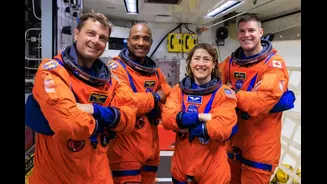
On 10 January 2026, NASA released a launch window timeline which includes sixteen possible openings for the launch of Artemis II, with the first window being 7 February 2026 at 02:41:00 UTC (local evening of 6 February) and the last window being 30 April 2026 at 22:06:00 UTC. Artemis II is accordingly scheduled for the first launch window from the launch site in Cape Canaveral, Florida. Reid Wiseman (NASA, second spaceflight) will be the Commander. Victor Glover (NASA, second spaceflight) will be the Pilot. Christina Koch (NASA, second spaceflight) will be the Payload Specialist. Jeremy Hansen (CSA, first spaceflight) will be the Mission Specialist. Jenni Sidey-Gibbons is Hansen’s backup. Glover, Koch, and Hansen are planned to be the first person of colour, woman, and non-US citizen to go beyond low Earth orbit, respectively.
The journey to the Moon is expected to last three days, and astronauts will spend one day in lunar observation on the far side of the Moon (with some parts of the far side having never been seen before). The crew will take time to observe the far side of the Moon, which cannot be seen by any human on Earth. The previous missions (such as Apollo) always saw the near side of the Moon upon their respective launches. The astronauts have been trained to observe the far side of the Moon regardless of lighting at the time of the mission.
NASA will also fly a payload titled AVATAR (A Virtual Astronaut Tissue Analog Response), which can mimic individual astronaut organs, with Artemis II marking the first time that AVATAR is tested outside the ISS, and outside the “Van Allen Belt”. Crew health for this mission is critical for missions in deep space in the future. NASA will also launch a new payload titled ARCHAR (Artemis Research for Crew Health and Readiness). For ARCHAR, crew members will wear movement and sleep monitors before, during, and after the mission to study real-time health and behavioural information for crew members so scientists can study sleep patterns and overall health performance.
Scientists will also test immune biomarkers, with crew providing saliva samples before, during, and after the mission to test their immune system and how they are affected by radiation, isolation, and the distance away from Earth during deep-space flight. This mission will also allow astronauts and scientists to understand space weather that will be faced in future missions as well as how humans can survive and sustain themselves in space.
Upon completion of the mission, the astronauts will make a three-day journey back to Earth. They are slated to land in the Pacific Ocean near San Diego, where the US Navy will conduct assessments to ensure a safe recovery of the astronauts. Once they are safely removed from Orion, the capsule will be towed by the Navy and the astronauts will be sent to a medical centre for evaluation. Once the astronauts are safely back on Earth, they will be tested in an “obstacle course” to see how quickly they can function during a gravity spacewalk; the astronauts will also perform a simulated spacewalk to investigate how quickly they can adjust to a change of gravity for the landing on the Moon and a possible mission to Mars.
The Plan Ahead
The Artemis III crewed lunar landing is expected to launch no earlier than mid-2027, the Artemis IV docking (with the Lunar Gateway) is planned for late 2028, the Artemis V docking (with the European Space Agency’s ESPRIT, Canada’s Canadarm3, and NASA’s Lunar Terrain Vehicle) is planned for early 2030, and the Artemis VI docking (which is expected to integrate the Crew and Science Airlock with the Lunar Gateway station) is planned for early 2031.
After Artemis VI (2032), NASA plans yearly landings on the Moon from then on. Artemis X (2036) is planned to be the eighth crewed lunar landing, which will feature the delivery of additional lunar surface logistics using an SLS Block 2 rocket, and will also include astronauts staying on the Moon for an extended period of time.
The programme faced its greatest threat due to the economics of launch changing drastically in the early 2020s because of reusable launch vehicles. After multiple sessions of Congress debated the viability of the programme, it was ultimately funded by the passage of the 2025 One Big Beautiful Bill Act.
The programme is intended to re-establish a human presence on the Moon for the first time since the Apollo 17 mission in 1973, with a stated long-term goal of establishing a permanent base on the Moon. This will facilitate human missions to Mars. The final goal is to establish a long-term human presence on the Moon, explore the lunar South Pole for resources like water ice, develop technologies and operations for Mars missions, and promote economic benefits and international collaboration.
(The writer is former Director General, Centre for Air Power Studies. Views expressed in the above piece are personal and solely those of the author. They do not necessarily reflect Firstpost’s views.)