






What is the story about?
A measles outbreak in Bangladesh that has left 100 people dead, including 98 children, has left some in India concerned.
Dhaka on Sunday launched an emergency vaccination campaign after the country has witnessed thousands of suspected measles cases over the past three weeks.
This comes after Prime Minister Tarique Rahman last week ordered two senior ministers to traverse Bangladesh to assess the scope of the crisis. But what do we know? Is India at risk?
Let’s take a closer look.
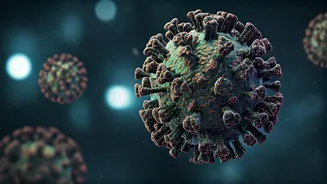
According to the World Health Organization, measles is one of the world’s most contagious diseases. It is transmitted when a person coughs or sneezes. While the disease can affect a person of any age, it is most common among children and can cause complications, including brain swelling and severe breathing problems.
Its symptoms can include:
The WHO estimates that as many as 95,000 measles deaths occur globally every year, mostly among unvaccinated or under-vaccinated children under the age of five, according to its latest statistics. There is no specific treatment for measles once caught.
According to the WHO, 95 per cent of the population needs to be vaccinated in order to stop the spread of measles.
According to BBC, data from Bangladesh’s health ministry shows that the country has registered 7,500 suspected measles cases since March 15. Over 900 of these cases have been confirmed, a massive increase from last year, which witnessed merely 125 measles cases the entire year.
According to Moneycontrol, at least 98 deaths have been reported over the past three weeks. Dhaka’s Infectious Diseases Hospital has already seen 255 children admitted since January. The hospital registered just 69 cases in 2025.
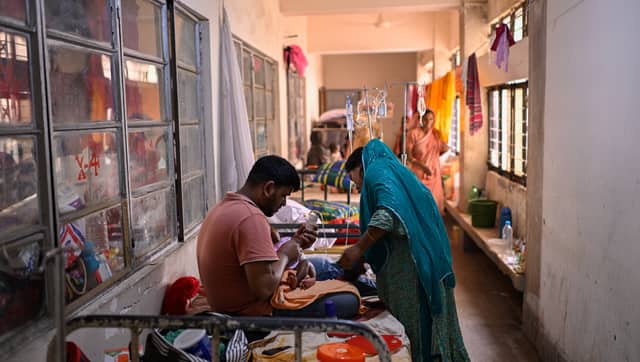
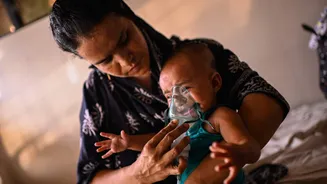
According to reports, there are not enough beds for patients, and some children are even reportedly being treated on the floor of the hospital. Other hospitals too are witnessing a steady intake of patients, particularly children.
"Vaccines are foundational to child survival," Rana Flowers, the UNICEF representative in Bangladesh, said in a statement on Sunday, as per BBC. Flowers added that the current measles outbreak was "putting thousands of children, especially the youngest and most vulnerable, at serious risk."
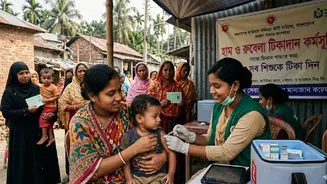
As per BBC, Bangladesh has launched an emergency vaccination campaign for measles and rubella alongside UNICEF and the WHO.
The campaign will be looking to vaccinate over 1.2 million children between six months and five years old. It will focus on "children who have missed routine immunisation and are most vulnerable to severe illness and complications", according to Unicef.
Health Minister Sardar Shakhawat Hossain Bakul said the vaccination drive will cover the “worst affected areas” before being expanded to other regions. There is a special focus on Dhaka, which has identified 30 of the most affected areas in the region.
Bangladesh holds special measles vaccination campaigns every four years. However, the past few years have seen these special campaigns put off — first due to the COVID-19 pandemic and then due to a turbulent political situation.
The Sheikh Hasina government in August 2024 was toppled by student-led protests. An interim government took over after Hasina, and elections were only held in February, in which the Bangladesh National Party led by Tarique Rehman registered a landslide victory.
Shahriar Sajjad, deputy director of the Health Department, told BBC Bangla that a special vaccination campaign that was slated to be held in April has not yet occurred.
The developments in Bangladesh have resulted in gaps in vaccination coverage. This is particularly true in remote and marginalised communities. Being a country of 170 million people, high population density is a problem for Bangladesh. Meanwhile, nutrition has suffered over the past few years.
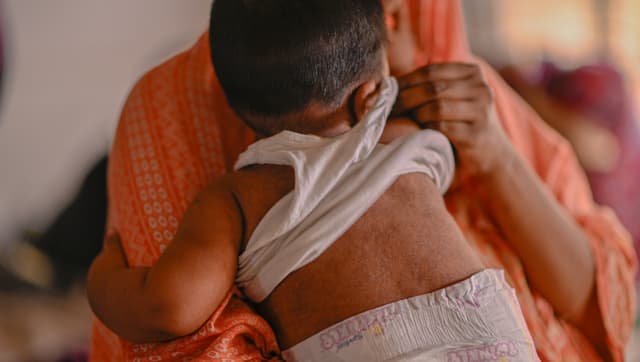
All this makes it a recipe for disaster. BBC quoted Unicef as saying in its statement that though "Bangladesh has a strong history of high immunisation coverage, even small disruptions can lead to the gradual accumulation of immunity gaps over time."
While Bangladesh routinely vaccinates infants as young as 9 months old against measles, unfortunately many of those infected during the current wave are under the age of nine months.
The infections of these young infants, "who are not yet eligible for routine vaccination, are especially alarming", Flowers added.
“We committed to reducing the number to zero by December 2025 but failed to achieve the target due to poor vaccination programmes,” said Mahmudur Rahman, chief of the National Verification Committee of Measles and Rubella.
The Daily Star quoted a health official as saying that a shortage of vaccines, including those for measles, has come about as a result of procurement issues. Some are even blaming the previous interim government for the situation.
Tajul Islam A Bari, a former official at the Expanded Programme on Immunisation and a public health expert, told AFP that although funds had been allocated for vaccine purchases, authorities had failed to procure them.
“Now we see the result. The situation is scary,” Bari said.
According to experts, measles remains a challenge in India.
As per The Week, the WHO in 2025 released data from April to October 2025 showing India was in the top 10 countries when it comes to measles outbreaks. India in that period registered 8,035 reported cases of measles. The country previously witnessed several measles cases flaring up across multiple states, particularly in Maharashtra in 2023.
India added the Measles-Rubella (MR) vaccine to the Universal Immunisation Programme (UIP) in 2017. The UIP, which comprises publicly funded healthcare centres, workers, cold-chain infrastructure, and a strong digital network, provides two free doses of the Measles-Rubella (MR) vaccine.
The first dose is given between 9 and 12 months and the second between 16 and 24 months. Data from 2024–25 shows India’s coverage is at 93.7 per cent for the first dose and 92.2 per cent for the second dose. In 2024, measles cases declined by 73 per cent and rubella cases by 17 per cent compared to the previous year.
Like Bangladesh, India has a high population density. Experts say that rural areas may be vulnerable.
Professor Dr Sanjeev Bagai, Padma Shri awardee and Senior Consultant Paediatrician & Nephrologist, told
The Week that “while India follows a strong immunisation schedule — a measles dose at 8–9 months, MMR at 14 months, and a booster at 3–5 years — global vaccination coverage dipped sharply during and after COVID-19 due to lockdowns and supply-chain disruptions.”
"In India, the catch-up vaccination drive named Mission Indradhanush was intensified in 2024, successfully rectifying the vaccination gaps that occurred during the COVID pandemic. But the disease can still spread among pockets of the population where vaccination coverage remains low,” Dr Rajeev Jayadevan, ex-President of IMA Cochin and Convener of the Research Cell, Kerala, told
HealthandMe.
1) What caused the measles outbreak in Bangladesh?
The outbreak is largely due to disrupted vaccination campaigns, gaps in immunisation coverage, high population density, and healthcare challenges following COVID-19 and political instability.
2) Is India at risk of a similar outbreak?
India has strong vaccination coverage, but experts warn that pockets of low immunisation and high population density mean outbreaks are still possible.
3) How can measles be prevented?
Measles can be effectively prevented through vaccination. The WHO recommends at least 95 per cent population coverage to stop its spread.
With inputs from agencies
Dhaka on Sunday launched an emergency vaccination campaign after the country has witnessed thousands of suspected measles cases over the past three weeks.
This comes after Prime Minister Tarique Rahman last week ordered two senior ministers to traverse Bangladesh to assess the scope of the crisis. But what do we know? Is India at risk?
Let’s take a closer look.
A brief look at measles
According to the World Health Organization, measles is one of the world’s most contagious diseases. It is transmitted when a person coughs or sneezes. While the disease can affect a person of any age, it is most common among children and can cause complications, including brain swelling and severe breathing problems.
Its symptoms can include:
- High fever
- Sore, red and watery eyes
- Coughing
- Sneezing
The WHO estimates that as many as 95,000 measles deaths occur globally every year, mostly among unvaccinated or under-vaccinated children under the age of five, according to its latest statistics. There is no specific treatment for measles once caught.
According to the WHO, 95 per cent of the population needs to be vaccinated in order to stop the spread of measles.
Measles outbreak in Bangladesh
According to BBC, data from Bangladesh’s health ministry shows that the country has registered 7,500 suspected measles cases since March 15. Over 900 of these cases have been confirmed, a massive increase from last year, which witnessed merely 125 measles cases the entire year.
According to Moneycontrol, at least 98 deaths have been reported over the past three weeks. Dhaka’s Infectious Diseases Hospital has already seen 255 children admitted since January. The hospital registered just 69 cases in 2025.
Bangladesh has launched an emergency vaccination campaign for measles and rubella alongside Unicef and the WHO. AP
According to reports, there are not enough beds for patients, and some children are even reportedly being treated on the floor of the hospital. Other hospitals too are witnessing a steady intake of patients, particularly children.
"Vaccines are foundational to child survival," Rana Flowers, the UNICEF representative in Bangladesh, said in a statement on Sunday, as per BBC. Flowers added that the current measles outbreak was "putting thousands of children, especially the youngest and most vulnerable, at serious risk."
What is Bangladesh doing?
As per BBC, Bangladesh has launched an emergency vaccination campaign for measles and rubella alongside UNICEF and the WHO.
The campaign will be looking to vaccinate over 1.2 million children between six months and five years old. It will focus on "children who have missed routine immunisation and are most vulnerable to severe illness and complications", according to Unicef.
Health Minister Sardar Shakhawat Hossain Bakul said the vaccination drive will cover the “worst affected areas” before being expanded to other regions. There is a special focus on Dhaka, which has identified 30 of the most affected areas in the region.
Why is this happening?
Bangladesh holds special measles vaccination campaigns every four years. However, the past few years have seen these special campaigns put off — first due to the COVID-19 pandemic and then due to a turbulent political situation.
The Sheikh Hasina government in August 2024 was toppled by student-led protests. An interim government took over after Hasina, and elections were only held in February, in which the Bangladesh National Party led by Tarique Rehman registered a landslide victory.
Shahriar Sajjad, deputy director of the Health Department, told BBC Bangla that a special vaccination campaign that was slated to be held in April has not yet occurred.
The developments in Bangladesh have resulted in gaps in vaccination coverage. This is particularly true in remote and marginalised communities. Being a country of 170 million people, high population density is a problem for Bangladesh. Meanwhile, nutrition has suffered over the past few years.
While Bangladesh routinely vaccinates infants as young as 9 months old against measles, unfortunately many of those infected during the current wave are under the age of nine months. AP
All this makes it a recipe for disaster. BBC quoted Unicef as saying in its statement that though "Bangladesh has a strong history of high immunisation coverage, even small disruptions can lead to the gradual accumulation of immunity gaps over time."
While Bangladesh routinely vaccinates infants as young as 9 months old against measles, unfortunately many of those infected during the current wave are under the age of nine months.
The infections of these young infants, "who are not yet eligible for routine vaccination, are especially alarming", Flowers added.
“We committed to reducing the number to zero by December 2025 but failed to achieve the target due to poor vaccination programmes,” said Mahmudur Rahman, chief of the National Verification Committee of Measles and Rubella.
The Daily Star quoted a health official as saying that a shortage of vaccines, including those for measles, has come about as a result of procurement issues. Some are even blaming the previous interim government for the situation.
Tajul Islam A Bari, a former official at the Expanded Programme on Immunisation and a public health expert, told AFP that although funds had been allocated for vaccine purchases, authorities had failed to procure them.
“Now we see the result. The situation is scary,” Bari said.
Is India at risk?
According to experts, measles remains a challenge in India.
As per The Week, the WHO in 2025 released data from April to October 2025 showing India was in the top 10 countries when it comes to measles outbreaks. India in that period registered 8,035 reported cases of measles. The country previously witnessed several measles cases flaring up across multiple states, particularly in Maharashtra in 2023.
India added the Measles-Rubella (MR) vaccine to the Universal Immunisation Programme (UIP) in 2017. The UIP, which comprises publicly funded healthcare centres, workers, cold-chain infrastructure, and a strong digital network, provides two free doses of the Measles-Rubella (MR) vaccine.
The first dose is given between 9 and 12 months and the second between 16 and 24 months. Data from 2024–25 shows India’s coverage is at 93.7 per cent for the first dose and 92.2 per cent for the second dose. In 2024, measles cases declined by 73 per cent and rubella cases by 17 per cent compared to the previous year.
Like Bangladesh, India has a high population density. Experts say that rural areas may be vulnerable.
Professor Dr Sanjeev Bagai, Padma Shri awardee and Senior Consultant Paediatrician & Nephrologist, told
"In India, the catch-up vaccination drive named Mission Indradhanush was intensified in 2024, successfully rectifying the vaccination gaps that occurred during the COVID pandemic. But the disease can still spread among pockets of the population where vaccination coverage remains low,” Dr Rajeev Jayadevan, ex-President of IMA Cochin and Convener of the Research Cell, Kerala, told
FAQs
1) What caused the measles outbreak in Bangladesh?
The outbreak is largely due to disrupted vaccination campaigns, gaps in immunisation coverage, high population density, and healthcare challenges following COVID-19 and political instability.
2) Is India at risk of a similar outbreak?
India has strong vaccination coverage, but experts warn that pockets of low immunisation and high population density mean outbreaks are still possible.
3) How can measles be prevented?
Measles can be effectively prevented through vaccination. The WHO recommends at least 95 per cent population coverage to stop its spread.
With inputs from agencies