








What is the story about?
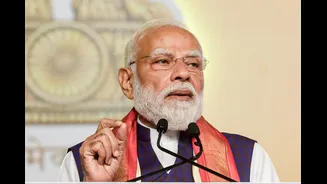
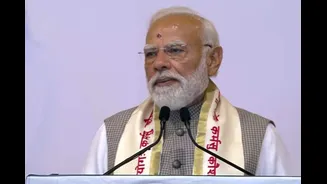
Social media is still buzzing after Prime Minister Narendra Modi appealed to every Indian to work from home wherever possible. On Sunday (May 10), the PM, speaking at an event in Telangana’s Secunderabad, urged every citizen to cut petrol and diesel consumption, postpone foreign travel, and temporarily pause gold purchases amid the ongoing conflict in West Asia.
The PM’s appeal has elicited mixed reactions from employees and employers. While some seem enthusiastic about a return to work from home practices, many were not so keen, claiming that work from home affects productivity.
While discussions continue about the benefits and disadvantages of work from home, the question many are now asking: Can corporate India go back to Covid-like work patterns if needed? Also, can employers refuse work-from-home policies?
On Sunday, PM Modi said India must collectively prepare to tackle the economic fallout of the crisis by cutting dependence on
imported fuel and conserving foreign exchange.
“In this time of global crisis, we have to make a resolution keeping duty paramount and fulfil it with complete dedication,” the prime minister said. “A big resolution is to use petrol and diesel sparingly. We must curb our use of petrol and diesel.”
Drawing parallels with the Covid-19 pandemic period, PM Modi suggested that these practices should once again be widely adopted “in the national interest” to reduce fuel consumption linked to commuting and business travel. “During the Corona period, we developed many systems of
work from home, online meetings, and video conferences, and we even became accustomed to them. Today, the demands of the times are such that if we restart these systems, it will be in the national interest. We must prioritise work from home, online conferences, and virtual meetings again,” he said.
On Monday, he reiterated his call for reduced fuel consumption while addressing a gathering in Vadodara. He appealed to people to opt for work from home, a pandemic-era practice, wherever possible, and reduce foreign travel.
The PM even urged citizens to adopt local products and support entrepreneurs from villages, towns, and cities instead of relying on foreign goods.
PM Modi further urged employers to encourage a work-from-home culture among their workers.
Shortly after PM Modi made his appeal to Indians, many companies began to rethink their work policies.
Nasscom, the apex body for the IT industry in India, noted that IT companies are already enabling remote and hybrid work “where operationally appropriate” to reduce energy usage and commuting. “The technology industry in India continues to operate on well-established hybrid work models, with organisations calibrating work-from-home and in-office arrangements based on role requirements and customer needs,” Nasscom said in a statement.
“In light of the ongoing West Asia tensions, companies have adopted prudent energy management measures across campuses, including optimising non-essential consumption, rationalising select facility services, and enabling remote or hybrid work where operationally appropriate to reduce overall energy usage and commuting,” Nasscom said.
Other big conglomerates have also begun to take stock of existing work options. A spokesperson for KPMG in India told the Economic Times , “The announcement is being evaluated, and will be addressed suitably, keeping people, business, and client commitments in mind.”
Reliance and the Tata Group are also weighing their options. “We are assessing the situation,” said a Reliance spokesperson.

Other firms like Deloitte, EY, RPG, Tata Motors, and Mercedes-Benz India already have hybrid working models in place, and will continue to follow the same, said their spokespersons.
Zoho founder and CEO Sridhar Vembu said his company will consider the policy of remote work. “I hope all of us heed the prime minister’s appeal. As a company, we adopted work from office fully in recent months, but we will revisit work from home now. We have adopted natural farming in our farm and we are also actively looking for ways to cut diesel use,” he wrote in a post on X.
As companies begin to rethink their work-from-home policies, what does the law say about it?
In fact, many employees as well as employers were pondering whether Modi’s request is enforceable. According to labour law experts, the PM’s appeal, for now, remains advisory and not legally binding.
As of today, India doesn’t have a dedicated law giving employees the legal right to work from home. Workplace attendance is governed by employment contracts and state Shops and Establishments Acts.
“Unless remote work is part of the employment contract, company policy, collective agreement, or mandated through a government notification, employers retain discretion over attendance requirements,” said a labour law expert to
News18.
Importantly, the new labour laws in the country formally recognise remote and hybrid work, but that too is dependent on “mutual agreement”, meaning the employer and employee have to agree.
Notably, work from home became mandatory during the Covid-19 pandemic, as state governments used emergency powers along with provisions of the Disaster Management Act, 2005, the Epidemic Diseases Act, 1897, and state disaster-management regulations. Additionally, the Union Ministry of Home Affairs issued binding guidelines directing offices to operate remotely wherever possible. Those orders gave work from home legal backing across many sectors between 2020 and 2022.
But how much fuel will India save if work from home is enacted? There is no official estimate yet on how much fuel WFH could save nationwide. But experts note that hybrid work would definitely support India’s fuel conservation goals, especially in large urban centres.
“Hybrid work can support India’s fuel conservation and energy security objectives by reducing congestion-intensive daily commuting in major metropolitan regions, particularly among private vehicle users in the services and IT sectors,” Alekhya Datta, director, electricity and renewables division at Delhi-based think tank The Energy and Resources Institute (TERI), told
Business Standard.
“Given India’s high dependence on imported crude oil of around 85 per cent, even moderate reductions in peak-hour travel can contribute to lower transport fuel demand and associated urban emissions,” he added.
In fact, the best indicator of how much fuel India can save can be gleaned from the Covid-19 lockdown. According to the Petroleum Planning and Analysis Cell (PPAC) of the Ministry of Petroleum and Natural Gas (MoPNG), India’s petroleum product consumption fell 45.8 per cent in April 2020 compared with April 2019 as industrial activity and transportation were sharply curtailed during nationwide restrictions.
Whether work from home reduces India’s fuel consumption will depend on how companies will implement hybrid working.
With inputs from agencies
The PM’s appeal has elicited mixed reactions from employees and employers. While some seem enthusiastic about a return to work from home practices, many were not so keen, claiming that work from home affects productivity.
While discussions continue about the benefits and disadvantages of work from home, the question many are now asking: Can corporate India go back to Covid-like work patterns if needed? Also, can employers refuse work-from-home policies?
Modi’s WFH appeal
On Sunday, PM Modi said India must collectively prepare to tackle the economic fallout of the crisis by cutting dependence on
“In this time of global crisis, we have to make a resolution keeping duty paramount and fulfil it with complete dedication,” the prime minister said. “A big resolution is to use petrol and diesel sparingly. We must curb our use of petrol and diesel.”
Impact of West Asia crisis is one of the biggest crisis of this century says Indian PM Modi; Adds, govt is trying to reduce impact but citizens need to conserve fuel, implement WFH etc pic.twitter.com/UCA8HlnzBe
— Sidhant Sibal (@sidhant) May 11, 2026
Drawing parallels with the Covid-19 pandemic period, PM Modi suggested that these practices should once again be widely adopted “in the national interest” to reduce fuel consumption linked to commuting and business travel. “During the Corona period, we developed many systems of
On Monday, he reiterated his call for reduced fuel consumption while addressing a gathering in Vadodara. He appealed to people to opt for work from home, a pandemic-era practice, wherever possible, and reduce foreign travel.
The PM even urged citizens to adopt local products and support entrepreneurs from villages, towns, and cities instead of relying on foreign goods.
PM Modi further urged employers to encourage a work-from-home culture among their workers.
India Inc extends support to Modi’s WFH appeal
Shortly after PM Modi made his appeal to Indians, many companies began to rethink their work policies.
Nasscom, the apex body for the IT industry in India, noted that IT companies are already enabling remote and hybrid work “where operationally appropriate” to reduce energy usage and commuting. “The technology industry in India continues to operate on well-established hybrid work models, with organisations calibrating work-from-home and in-office arrangements based on role requirements and customer needs,” Nasscom said in a statement.
“In light of the ongoing West Asia tensions, companies have adopted prudent energy management measures across campuses, including optimising non-essential consumption, rationalising select facility services, and enabling remote or hybrid work where operationally appropriate to reduce overall energy usage and commuting,” Nasscom said.
Other big conglomerates have also begun to take stock of existing work options. A spokesperson for KPMG in India told the Economic Times , “The announcement is being evaluated, and will be addressed suitably, keeping people, business, and client commitments in mind.”
Reliance and the Tata Group are also weighing their options. “We are assessing the situation,” said a Reliance spokesperson.
Prime Minister Narendra Modi has urged Indians to adopt work from home amid the West Asia crisis. Representational image/Pixabay
Other firms like Deloitte, EY, RPG, Tata Motors, and Mercedes-Benz India already have hybrid working models in place, and will continue to follow the same, said their spokespersons.
Zoho founder and CEO Sridhar Vembu said his company will consider the policy of remote work. “I hope all of us heed the prime minister’s appeal. As a company, we adopted work from office fully in recent months, but we will revisit work from home now. We have adopted natural farming in our farm and we are also actively looking for ways to cut diesel use,” he wrote in a post on X.
Labour laws and WFH policies
As companies begin to rethink their work-from-home policies, what does the law say about it?
In fact, many employees as well as employers were pondering whether Modi’s request is enforceable. According to labour law experts, the PM’s appeal, for now, remains advisory and not legally binding.
As of today, India doesn’t have a dedicated law giving employees the legal right to work from home. Workplace attendance is governed by employment contracts and state Shops and Establishments Acts.
“Unless remote work is part of the employment contract, company policy, collective agreement, or mandated through a government notification, employers retain discretion over attendance requirements,” said a labour law expert to
Importantly, the new labour laws in the country formally recognise remote and hybrid work, but that too is dependent on “mutual agreement”, meaning the employer and employee have to agree.
Notably, work from home became mandatory during the Covid-19 pandemic, as state governments used emergency powers along with provisions of the Disaster Management Act, 2005, the Epidemic Diseases Act, 1897, and state disaster-management regulations. Additionally, the Union Ministry of Home Affairs issued binding guidelines directing offices to operate remotely wherever possible. Those orders gave work from home legal backing across many sectors between 2020 and 2022.
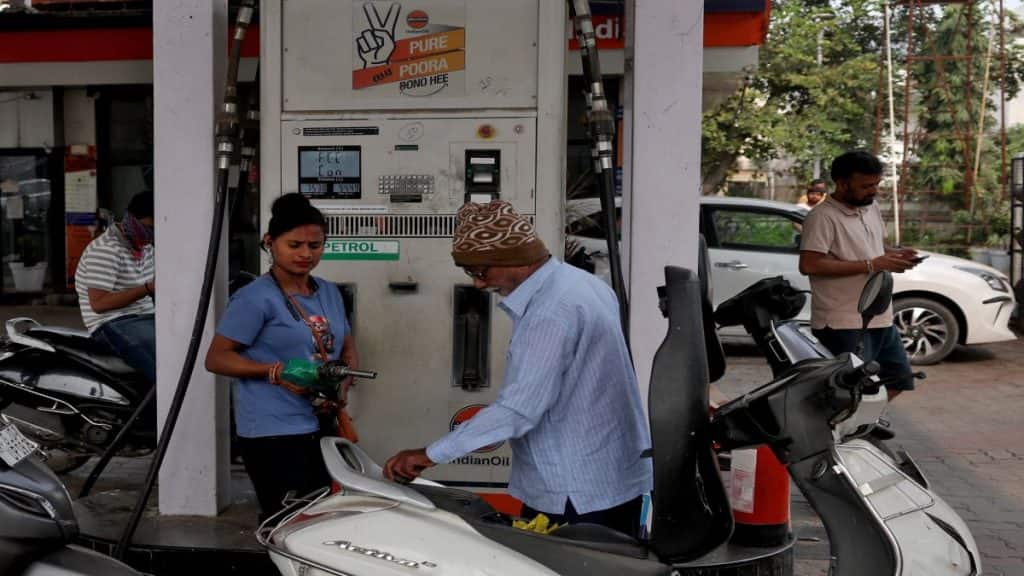
Many are pondering whether work from home will actually help cut India's fuel bill? File image/Reuters
WFH policies and fuel saving
But how much fuel will India save if work from home is enacted? There is no official estimate yet on how much fuel WFH could save nationwide. But experts note that hybrid work would definitely support India’s fuel conservation goals, especially in large urban centres.
“Hybrid work can support India’s fuel conservation and energy security objectives by reducing congestion-intensive daily commuting in major metropolitan regions, particularly among private vehicle users in the services and IT sectors,” Alekhya Datta, director, electricity and renewables division at Delhi-based think tank The Energy and Resources Institute (TERI), told
“Given India’s high dependence on imported crude oil of around 85 per cent, even moderate reductions in peak-hour travel can contribute to lower transport fuel demand and associated urban emissions,” he added.
In fact, the best indicator of how much fuel India can save can be gleaned from the Covid-19 lockdown. According to the Petroleum Planning and Analysis Cell (PPAC) of the Ministry of Petroleum and Natural Gas (MoPNG), India’s petroleum product consumption fell 45.8 per cent in April 2020 compared with April 2019 as industrial activity and transportation were sharply curtailed during nationwide restrictions.
Whether work from home reduces India’s fuel consumption will depend on how companies will implement hybrid working.
With inputs from agencies