







What is the story about?
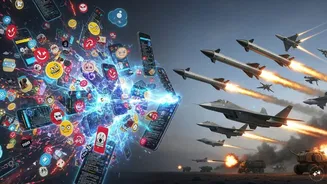
‘Rage bait diplomacy' witnessed in the current Iran war symbolises a paradigm shift in modes of modern warfare. International warfare, as we once knew it to be, of stoic leaders with strategies and infantry with guns and missiles having the power to destroy some nations and begin their reign over others, is slowly transforming into a new yet terrifyingly effective form: ‘Rage Bait Diplomacy’.
This new form is in the current war between the United States of America and Iran. It is important to recall that way back in 2005, Iran outlined a decentralised military doctrine called ‘Mosaic Defence', which was subsequently restructured into 31 provincial commands in 2008. Significantly, during America’s Operation Epic Fury, Iran implemented the ‘Mosaic Defence Doctrine’ and added a secret 32nd command, which is rage-baiting social media posts.
The Mechanism of Rage Baiting
‘Rage bait', which was declared by the Oxford University Press as ‘Word of the Year, 2025’, is defined as “online content deliberately designed to elicit anger or outrage by being frustrating, provocative, or offensive, typically posted in order to increase traffic to or engagement with a particular web page or social media content." It is metaphorically and digitally waving a red rag in front of a bull. In the context of the US-Iran War, rage-bait diplomacy has been extensively utilised, not for gaining popularity, but to spread indignity of the opponent. This diplomacy has revealed that even the “strongest nation on earth” could be effectively neutralised, not through firepower, but by provoking a reaction out of them, making them seem unhinged and defensive. 'Rage bait' diplomacy can make a world leader seem like a ridiculous figure.
Rage baiting is a weapon that does not bleed but hits the heart hard. However, the ultimate metric of defeat, as Generation Z's digital ecosystem illustrates, is getting "ratioed". It is defined as an occurrence where the response to a post gets more engagement than the original one. For world leaders, getting ‘ratioed’ is being stripped of their public authority. It is the modern signifier of the breakdown of a superpower’s soft power.
Timeline of Tactical Mockery
Four days into the war, the White House began portraying their attacks on Iran in a ludicrous and comically glorified way through their X posts and TikTok videos. According to an analysis by
The Wall Street Journal, out of 100 posts on the war, the US used clips from at least 11 movies, 5 TV shows, and 4 video games, along with historic sports moments, to make “edits” of military strikes on Iran. Furthermore, nearly every post portrayed President Trump to be the “main character”. Dangerous waters were already rising for the US, with the directors of these movies and shows speaking up against use of their content to mock the horrors of war.
However, the digital retaliation from Iran is what truly turned the tides heavily turbulent for the United States of America. In response to America’s use of violent war video games, Iran used the creative legacy of Lego along with a rap song essentially opposing and pointing out the erraticism of the Trump administration.
Additionally, they approached the war using emotional appeal, claiming their battle was justice for the victims of Epstein Island and in memory of the people killed in Afghanistan and Vietnam. Moreover, they steered away from the US tactic of glorifying an individual as a central and heroic figure. They portrayed their stance as a collective voice of the people.
It is a marvel to witness how Iran and their viral memes swiftly ‘ratioed’ the US and reduced the president of a superpower to a frustrated and heavily rage-baited man hurling threats and curses on social media. The true power of rage bait diplomacy lies in the simple formula: if the target ignores the bait, they lose the narrative; if they respond, they validate the troll. As for the US-Iran War, this tactic is not just a social media annoyance but an evolved and legitimate tool of statecraft.
The Paradigm Shift
The US-Iran War teaches us that modern battles are not conquered with just the physical hard power of a nation but through the ‘digital humour power’. The paradigm shift is such that lack of cultural resonance in the digital ecosystem often trumps the nuclear payload in defining a nation’s legitimacy.
For those wondering how meme culture and virality on social media have surpassed the influence of traditional media, the secret lies in the basics of mass communication: The further the reach stretches, the deeper it impacts, and higher it reigns.
It may be underlined that in the emerging digital world order, the platform that gets the highest engagement will drive the future of diplomacy. We have heard that the pen is mightier than the sword, but as the current warfare landscape indicates, a meme can be mightier than the mightiest nation of the planet.
(Anindita Mahapatra is the Research and Program Coordinator at Kalinga Institute of Indo-Pacific Studies and is a postgraduate in Journalism and Mass Communication. Views expressed are personal and do not necessarily reflect those of Firstpost.)
This new form is in the current war between the United States of America and Iran. It is important to recall that way back in 2005, Iran outlined a decentralised military doctrine called ‘Mosaic Defence', which was subsequently restructured into 31 provincial commands in 2008. Significantly, during America’s Operation Epic Fury, Iran implemented the ‘Mosaic Defence Doctrine’ and added a secret 32nd command, which is rage-baiting social media posts.
The Mechanism of Rage Baiting
‘Rage bait', which was declared by the Oxford University Press as ‘Word of the Year, 2025’, is defined as “online content deliberately designed to elicit anger or outrage by being frustrating, provocative, or offensive, typically posted in order to increase traffic to or engagement with a particular web page or social media content." It is metaphorically and digitally waving a red rag in front of a bull. In the context of the US-Iran War, rage-bait diplomacy has been extensively utilised, not for gaining popularity, but to spread indignity of the opponent. This diplomacy has revealed that even the “strongest nation on earth” could be effectively neutralised, not through firepower, but by provoking a reaction out of them, making them seem unhinged and defensive. 'Rage bait' diplomacy can make a world leader seem like a ridiculous figure.
Rage baiting is a weapon that does not bleed but hits the heart hard. However, the ultimate metric of defeat, as Generation Z's digital ecosystem illustrates, is getting "ratioed". It is defined as an occurrence where the response to a post gets more engagement than the original one. For world leaders, getting ‘ratioed’ is being stripped of their public authority. It is the modern signifier of the breakdown of a superpower’s soft power.
Timeline of Tactical Mockery
Four days into the war, the White House began portraying their attacks on Iran in a ludicrous and comically glorified way through their X posts and TikTok videos. According to an analysis by
However, the digital retaliation from Iran is what truly turned the tides heavily turbulent for the United States of America. In response to America’s use of violent war video games, Iran used the creative legacy of Lego along with a rap song essentially opposing and pointing out the erraticism of the Trump administration.
Additionally, they approached the war using emotional appeal, claiming their battle was justice for the victims of Epstein Island and in memory of the people killed in Afghanistan and Vietnam. Moreover, they steered away from the US tactic of glorifying an individual as a central and heroic figure. They portrayed their stance as a collective voice of the people.
It is a marvel to witness how Iran and their viral memes swiftly ‘ratioed’ the US and reduced the president of a superpower to a frustrated and heavily rage-baited man hurling threats and curses on social media. The true power of rage bait diplomacy lies in the simple formula: if the target ignores the bait, they lose the narrative; if they respond, they validate the troll. As for the US-Iran War, this tactic is not just a social media annoyance but an evolved and legitimate tool of statecraft.
The Paradigm Shift
The US-Iran War teaches us that modern battles are not conquered with just the physical hard power of a nation but through the ‘digital humour power’. The paradigm shift is such that lack of cultural resonance in the digital ecosystem often trumps the nuclear payload in defining a nation’s legitimacy.
For those wondering how meme culture and virality on social media have surpassed the influence of traditional media, the secret lies in the basics of mass communication: The further the reach stretches, the deeper it impacts, and higher it reigns.
It may be underlined that in the emerging digital world order, the platform that gets the highest engagement will drive the future of diplomacy. We have heard that the pen is mightier than the sword, but as the current warfare landscape indicates, a meme can be mightier than the mightiest nation of the planet.
(Anindita Mahapatra is the Research and Program Coordinator at Kalinga Institute of Indo-Pacific Studies and is a postgraduate in Journalism and Mass Communication. Views expressed are personal and do not necessarily reflect those of Firstpost.)