





What is the story about?
India and the United Arab Emirates on Monday announced a set of economic and strategic outcomes, spanning energy security, defence cooperation, space, food exports, investment and advanced computing while committing to double bilateral trade to $200 billion by 2032.
The agreements were signed during UAE President Sheikh Mohamed bin Zayed Al Nahyan’s one-day state visit to India.
The trade target underscores the deepening India-UAE economic partnership, which has expanded rapidly since the Comprehensive Economic Partnership Agreement (CEPA) came into force. Briefing the media after talks between Sheikh Mohamed and Prime Minister Narendra Modi, Foreign Secretary Vikram Misri said the UAE has now emerged as India’s second-largest supplier of liquefied natural gas (LNG).
A key energy outcome was the signing of a long-term sales and purchase agreement between Hindustan Petroleum Corporation Limited (HPCL) and ADNOC Gas. Under the pact, India will receive LNG supplies for 10 years starting in 2028, bolstering long-term energy security at a time of volatility in global gas markets.
In the strategic domain, India and the UAE signed a Letter of Intent on a Strategic Defence Partnership, signalling closer collaboration in defence manufacturing, technology and capability development.
Space cooperation also received a boost, with the Indian National Space Promotion and Authorisation Centre (IN-SPACe) and the UAE Space Agency signing a Letter of Intent to promote space industry development and commercial collaboration. The initiative is aimed at enabling private sector participation, joint ventures and cooperation in space infrastructure and downstream applications.
The two sides also agreed to establish a supercomputing cluster in India, highlighting growing cooperation in advanced digital and high-performance computing capabilities.
https://twitter.com/MEAIndia/status/2013257486363762749
A Letter of Intent was signed between the Government of Gujarat and the UAE Ministry of Investment for the development of the Dholera Special Investment Region, a flagship industrial and infrastructure hub.
To deepen financial and logistics linkages, First Abu Dhabi Bank (FAB) and global port operator DP World will set up offices and operations in GIFT City, Gujarat, reinforcing India’s ambitions to position the centre as a regional financial and trade services hub.
In agriculture, a memorandum of understanding between India’s Agricultural and Processed Food Products Export Development Authority (APEDA) and the UAE Ministry of Climate Change and Environment will focus on food safety and technical standards, easing market access for Indian agricultural and processed food exports to the Gulf.
The two countries also agreed to promote bilateral civil nuclear cooperation and explore the establishment of “digital/data embassies”, reflecting a growing level of trust in sensitive and future-facing sectors.
Beyond economics and strategy, India and the UAE announced plans to set up a ‘House of India’ in Abu Dhabi, a cultural space showcasing Indian art, heritage and archaeology, and to promote youth exchanges, adding a soft-power dimension to the partnership.
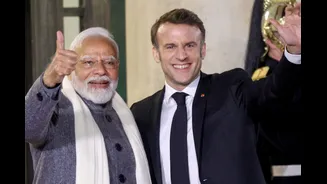
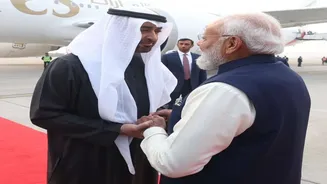
Prime Minister Modi received Sheikh Mohamed bin Zayed Al Nahyan in New Delhi. In a post on X, Modi said the visit underlined the importance the UAE leadership attaches to ties with India and said he looked forward to discussions.
https://twitter.com/narendramodi/status/2013211937710952841
Taken together, the outcomes signal an India-UAE partnership that now extends well beyond hydrocarbons, with a clear push towards trade expansion, long-term investment and collaboration in strategic and high-technology sectors over the coming decade.
The deepening India-UAE partnership comes against a shifting geopolitical backdrop in West Asia. Ties between the UAE and Saudi Arabia have shown signs of strain in recent years, particularly over differing approaches to the Yemen conflict, where Abu Dhabi and Riyadh have backed rival factions despite being part of the same military coalition.
Adding to the regional churn, Pakistan’s Defence Minister Khawaja Asif has recently signalled the possibility of expanding Islamabad’s strategic defence relationship with Saudi Arabia. Asif has spoken of the need for a broader collective security framework involving other Muslim-majority countries, a move that could reshape security alignments in the Gulf and its wider neighbourhood.
Against this backdrop, India’s expanding defence, energy and technology cooperation with the UAE highlights New Delhi’s effort to deepen strategic autonomy in West Asia, building bilateral partnerships that are not tied to any single regional bloc.
The agreements were signed during UAE President Sheikh Mohamed bin Zayed Al Nahyan’s one-day state visit to India.
The trade target underscores the deepening India-UAE economic partnership, which has expanded rapidly since the Comprehensive Economic Partnership Agreement (CEPA) came into force. Briefing the media after talks between Sheikh Mohamed and Prime Minister Narendra Modi, Foreign Secretary Vikram Misri said the UAE has now emerged as India’s second-largest supplier of liquefied natural gas (LNG).
A key energy outcome was the signing of a long-term sales and purchase agreement between Hindustan Petroleum Corporation Limited (HPCL) and ADNOC Gas. Under the pact, India will receive LNG supplies for 10 years starting in 2028, bolstering long-term energy security at a time of volatility in global gas markets.
Defence, space and technology push
In the strategic domain, India and the UAE signed a Letter of Intent on a Strategic Defence Partnership, signalling closer collaboration in defence manufacturing, technology and capability development.
Space cooperation also received a boost, with the Indian National Space Promotion and Authorisation Centre (IN-SPACe) and the UAE Space Agency signing a Letter of Intent to promote space industry development and commercial collaboration. The initiative is aimed at enabling private sector participation, joint ventures and cooperation in space infrastructure and downstream applications.
The two sides also agreed to establish a supercomputing cluster in India, highlighting growing cooperation in advanced digital and high-performance computing capabilities.
https://twitter.com/MEAIndia/status/2013257486363762749
Trade, investment and export momentum
A Letter of Intent was signed between the Government of Gujarat and the UAE Ministry of Investment for the development of the Dholera Special Investment Region, a flagship industrial and infrastructure hub.
To deepen financial and logistics linkages, First Abu Dhabi Bank (FAB) and global port operator DP World will set up offices and operations in GIFT City, Gujarat, reinforcing India’s ambitions to position the centre as a regional financial and trade services hub.
In agriculture, a memorandum of understanding between India’s Agricultural and Processed Food Products Export Development Authority (APEDA) and the UAE Ministry of Climate Change and Environment will focus on food safety and technical standards, easing market access for Indian agricultural and processed food exports to the Gulf.
The two countries also agreed to promote bilateral civil nuclear cooperation and explore the establishment of “digital/data embassies”, reflecting a growing level of trust in sensitive and future-facing sectors.
People-to-people ties
Beyond economics and strategy, India and the UAE announced plans to set up a ‘House of India’ in Abu Dhabi, a cultural space showcasing Indian art, heritage and archaeology, and to promote youth exchanges, adding a soft-power dimension to the partnership.
Prime Minister Modi received Sheikh Mohamed bin Zayed Al Nahyan in New Delhi. In a post on X, Modi said the visit underlined the importance the UAE leadership attaches to ties with India and said he looked forward to discussions.
https://twitter.com/narendramodi/status/2013211937710952841
Taken together, the outcomes signal an India-UAE partnership that now extends well beyond hydrocarbons, with a clear push towards trade expansion, long-term investment and collaboration in strategic and high-technology sectors over the coming decade.
The deepening India-UAE partnership comes against a shifting geopolitical backdrop in West Asia. Ties between the UAE and Saudi Arabia have shown signs of strain in recent years, particularly over differing approaches to the Yemen conflict, where Abu Dhabi and Riyadh have backed rival factions despite being part of the same military coalition.
Adding to the regional churn, Pakistan’s Defence Minister Khawaja Asif has recently signalled the possibility of expanding Islamabad’s strategic defence relationship with Saudi Arabia. Asif has spoken of the need for a broader collective security framework involving other Muslim-majority countries, a move that could reshape security alignments in the Gulf and its wider neighbourhood.
Against this backdrop, India’s expanding defence, energy and technology cooperation with the UAE highlights New Delhi’s effort to deepen strategic autonomy in West Asia, building bilateral partnerships that are not tied to any single regional bloc.