




What is the story about?
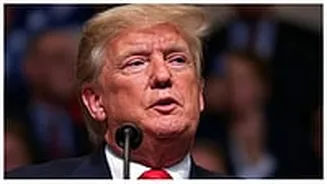
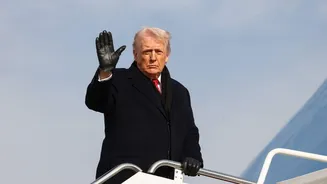
In a move that mirrors the 'Strategic Petroleum Reserve' created after the oil shock of the 1970s, President Donald Trump on Monday launched Project Vault to stockpile 50 critical minerals and 17 rare earth elements to safeguard the United States and its allies against China’s weaponisation of mineral supplies.
Trump said the stockpile will ensure that American businesses and workers “are never harmed by any shortage”. He said it will be financed by $12 billion in a public–private partnership through a $10 billion loan from the state-run US Export–Import Bank, and $2 billion in private capital.
In an apparent reference to China, Trump said “we don’t want to ever go through what we went through a year ago”.
Last year, in response to Trump’s tariff war, China stopped the supply of rare earths that are used in nearly everything in modern life from everyday essentials like smartphones, computers, refrigerators, and cars to fighter planes, missiles, radars, and heavy machinery.
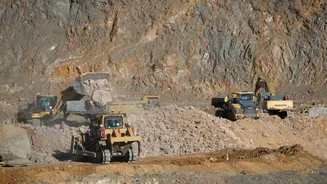
China controls around 70 per cent of the world’s rare earths' mining, and around 90 per cent of rare earths' processing. Moreover, China controls around 40–60 per cent of the world’s mining of critical minerals and 60–90 per cent of processing.
“Just as we have long had a Strategic Petroleum Reserve, and a stockpile of critical minerals for national defense, we’re now creating this reserve for American industry, so we don’t have any problems. This historic initiative will combine $10 billion in Export–Import Bank financing with $2 billion in private sector financing. And we even expect the American taxpayer to make a profit from the interest on the loan,” Trump said.
China's control of world's rare earths' mining:
Even though Trump said China’s squeeze on rare earth supply did not affect the United States, analysts have said the move had almost crippled American industry. They have said it was the driver of Trump seeking a compromise with Chinese leader Xi Jinping and settling on a trade deal under the G-2 arrangement instead of continuing with the containment strategy that had been the bipartisan US position on China for several years.
In 1973, Arab oil producers stopped selling oil to the United States and its allies in response to their support for Israel in the Arab–Israel War of 1973.
The oil embargo led to an oil and gas shortage in the United States. Fuel prices spiked, and the economy came under strain.
As a result, in 1975, President Gerald Ford signed the Energy Policy and Conservation Act (EPCA) to authorise the establishment of the Strategic Petroleum Reserve (SPR), with a capacity of up to 1 billion barrels of oil. It was designed to serve both as a deterrent to embargoes like that of 1973 and as an emergency stockpile. Over the years, the US government entered into partnerships with European and Asian countries to develop a global network of such oil reserves.
While the first delivery to the SPR was made in 1977—412,000 barrels—it reached its peak of 727 million barrels by January 2010.
Over the years, the US government has drawn oil from the SPR to address domestic requirements and calm international markets in times of geopolitical upheaval, such as the Iraqi invasion of Kuwait (1991), Hurricane Katrina (2005), the Libya crisis (2011), and the Russian invasion of Ukraine (2022–).
Now, Trump has attempted something similar with rare earths and critical minerals by building a stockpile for America and its partners. China controls around 90 per cent of world's rare earths' processing and the United States is largely dependent on Chinese imports for its industries.
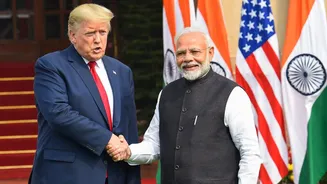
The Trump administration is hosting a Critical Minerals Ministerial starting Wednesday that involves the G-7 and partners like India, South Korea, Mexico, Australia, and New Zealand. It is part of efforts to ramp up rare earth and critical mineral supply lines free from China’s control.
The Guardian reported sources in the European Union (EU) as saying that if the talks are successful, a joint statement would follow, which could be seen as a milestone shift in relations, with allies working with the United States to de-risk from China instead of constantly fending off Trump’s tariff threats.
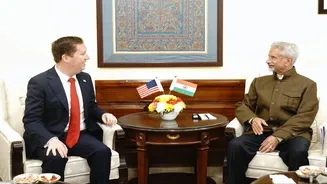
India will be represented at the meeting by External Affairs Minister S Jaishankar.
The minerals reserve is the latest action by Trump to shore up access to rare earths and natural minerals. Last year, he reached a deal worth $8.5 billion with Australia on rare earths. His administration has also acquired stakes in several mining and processing companies.
Last week, the Trump administration announced a $1.6 billion investment in Rare Earths USA. Last year, the administration purchased $400 million in preferred stock from MP Materials to become the rare earth mining company’s largest shareholder.
The announcement of the minerals reserve boosted the shares of mining and processing companies. MP Materials, the operator of the Mountain Pass mine in California, rose more than 2 per cent, USA Rare Earth rose over 2 per cent, and Critical Metals Corp. rose over 1 per cent.
Trump said the stockpile will ensure that American businesses and workers “are never harmed by any shortage”. He said it will be financed by $12 billion in a public–private partnership through a $10 billion loan from the state-run US Export–Import Bank, and $2 billion in private capital.
In an apparent reference to China, Trump said “we don’t want to ever go through what we went through a year ago”.
Last year, in response to Trump’s tariff war, China stopped the supply of rare earths that are used in nearly everything in modern life from everyday essentials like smartphones, computers, refrigerators, and cars to fighter planes, missiles, radars, and heavy machinery.
China controls around 70 per cent of the world’s rare earths' mining, and around 90 per cent of rare earths' processing. Moreover, China controls around 40–60 per cent of the world’s mining of critical minerals and 60–90 per cent of processing.
“Just as we have long had a Strategic Petroleum Reserve, and a stockpile of critical minerals for national defense, we’re now creating this reserve for American industry, so we don’t have any problems. This historic initiative will combine $10 billion in Export–Import Bank financing with $2 billion in private sector financing. And we even expect the American taxpayer to make a profit from the interest on the loan,” Trump said.
China's control of world's rare earths' mining:
| Country | Share (%) |
|---|---|
| China | 69-70 |
| United States | 12 |
| Myanmar | 8 |
| Australia | 3 |
| Thailand | 3 |
| Others | 5 |
Even though Trump said China’s squeeze on rare earth supply did not affect the United States, analysts have said the move had almost crippled American industry. They have said it was the driver of Trump seeking a compromise with Chinese leader Xi Jinping and settling on a trade deal under the G-2 arrangement instead of continuing with the containment strategy that had been the bipartisan US position on China for several years.
For future challenges, Trump brings solutions from the past
In 1973, Arab oil producers stopped selling oil to the United States and its allies in response to their support for Israel in the Arab–Israel War of 1973.
The oil embargo led to an oil and gas shortage in the United States. Fuel prices spiked, and the economy came under strain.
As a result, in 1975, President Gerald Ford signed the Energy Policy and Conservation Act (EPCA) to authorise the establishment of the Strategic Petroleum Reserve (SPR), with a capacity of up to 1 billion barrels of oil. It was designed to serve both as a deterrent to embargoes like that of 1973 and as an emergency stockpile. Over the years, the US government entered into partnerships with European and Asian countries to develop a global network of such oil reserves.
While the first delivery to the SPR was made in 1977—412,000 barrels—it reached its peak of 727 million barrels by January 2010.
Over the years, the US government has drawn oil from the SPR to address domestic requirements and calm international markets in times of geopolitical upheaval, such as the Iraqi invasion of Kuwait (1991), Hurricane Katrina (2005), the Libya crisis (2011), and the Russian invasion of Ukraine (2022–).
Now, Trump has attempted something similar with rare earths and critical minerals by building a stockpile for America and its partners. China controls around 90 per cent of world's rare earths' processing and the United States is largely dependent on Chinese imports for its industries.
| Rank | Country | Share of rare earths' supply (%) | Key Notes |
|---|---|---|---|
| 1 | China | 90 | Near-monopoly on refining, magnets; |
| 2 | Australia | 4-5 | Lynas (Mt Weld mine, Malaysia sep.); Iluka refinery; |
| 3 | United States | 1-2 | MP Materials (1,300 tons NdPr 2024); Energy Fuels; limited heavy rare earth elements |
| 4 | Malaysia | ~1 | Lynas separation plant; processes Australian ore |
| 5 | Estonia | <1 | Neo Performance Silmet; EU's main separator, new magnet plant |
| 6 | South Korea | <1 |
A step towards de-risking from China
The Trump administration is hosting a Critical Minerals Ministerial starting Wednesday that involves the G-7 and partners like India, South Korea, Mexico, Australia, and New Zealand. It is part of efforts to ramp up rare earth and critical mineral supply lines free from China’s control.
The Guardian reported sources in the European Union (EU) as saying that if the talks are successful, a joint statement would follow, which could be seen as a milestone shift in relations, with allies working with the United States to de-risk from China instead of constantly fending off Trump’s tariff threats.
India will be represented at the meeting by External Affairs Minister S Jaishankar.
The minerals reserve is the latest action by Trump to shore up access to rare earths and natural minerals. Last year, he reached a deal worth $8.5 billion with Australia on rare earths. His administration has also acquired stakes in several mining and processing companies.
Last week, the Trump administration announced a $1.6 billion investment in Rare Earths USA. Last year, the administration purchased $400 million in preferred stock from MP Materials to become the rare earth mining company’s largest shareholder.
The announcement of the minerals reserve boosted the shares of mining and processing companies. MP Materials, the operator of the Mountain Pass mine in California, rose more than 2 per cent, USA Rare Earth rose over 2 per cent, and Critical Metals Corp. rose over 1 per cent.