








What is the story about?
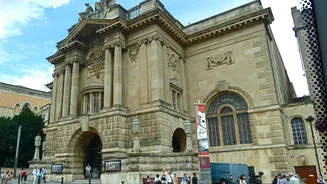
A collection of Indian artefacts from the British colonial period is among more than 600 “high-value” pieces stolen in a major burglary at UK's Bristol museum.
Police say the thieves struck in the early hours of September 25, breaking into the storage facility that houses the museum’s British Empire and Commonwealth collection. More than two months later, officers have now shared blurry CCTV images of four white men they believe were at the scene during the break-in.
In their public appeal, investigators said, “Detectives investigating a high-value burglary of museum artefacts are appealing for the public's help to identify these people.”
Here’s a breakdown of what has emerged so far.
The list of missing objects includes several India-related pieces with deep historical significance. One of the standout items is an East India Company officer's belt plate mount, marked with the organisation’s motto, “Auspicio Regis et Senatus Angliae.”
According to an Times of India report, a carved ivory elephant, an ivory Buddha figure placed on a stone base featuring seven snake heads, and an 1838 US emancipation token, originally produced to support the anti-slavery movement, were also taken.
The burglars made off with a wide range of other valuables too, from military memorabilia and old jewellery to silver artefacts, bronze sculptures and geological samples.
The wider collection holds many notable pieces linked to India: a painting of the grand 1903 Delhi Durbar where Edward VII was declared Emperor of India; more than 250 letters written by British soldier Joseph Stephens while stationed on the then North West Frontier; and vintage photographs by Victor Veevers, a Mumbai-born poster artist who worked with Indian Railways in the 1930s.
Philip Walker, who oversees cultural affairs at the Bristol City Council, emphasised that the missing items are more than museum pieces, they represent personal, social and political histories from across the former British Empire. Their disappearance, he noted, strips away valuable insight into how people lived during that era.
Detective Constable Dan Burgan explained the impact plainly in his interview with PTI, saying, “The theft of many items which carry a significant cultural value is a significant loss for the city.”
He added, “These items, many of which were donations, form part of a collection that provides insight into a multi-layered part of British history, and we are hoping that members of the public can help us to bring those responsible to justice.”
This incident also comes at a time when museums across Europe seem increasingly vulnerable. In October,
crown jewels were stolen from the Louvre museum
in Paris. Weeks later, thieves in Switzerland overpowered a guard and fled with dozens of ancient gold coins.
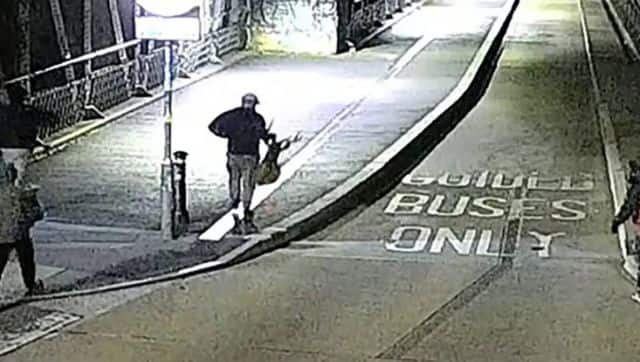
Police are trying to track down four men who were spotted on CCTV near the site around the time of the burglary. Although the footage is of low quality, it captures the suspects carrying bags and shows distinct clothing details.
One man is seen in a white cap, black jacket, light trousers and black trainers. Another is wearing a grey hooded jacket, black trousers and black trainers.
A third appears in a green cap, black jacket, light shorts and white trainers. The fourth, described as heavier-built, is wearing a two-tone orange and navy/black padded jacket, black trousers and black-and-white trainers.
Why these images were released more than two months after the crime is still unclear, but investigators say they are continuing to piece together the timeline and believe public identification could be key.
For now, the hope is that the artefacts, many of them unique and culturally significant, can be located before they vanish into private collections or the black market for good.
With input from agencies
Police say the thieves struck in the early hours of September 25, breaking into the storage facility that houses the museum’s British Empire and Commonwealth collection. More than two months later, officers have now shared blurry CCTV images of four white men they believe were at the scene during the break-in.
In their public appeal, investigators said, “Detectives investigating a high-value burglary of museum artefacts are appealing for the public's help to identify these people.”
Here’s a breakdown of what has emerged so far.
What Indian artefacts were stolen?
The list of missing objects includes several India-related pieces with deep historical significance. One of the standout items is an East India Company officer's belt plate mount, marked with the organisation’s motto, “Auspicio Regis et Senatus Angliae.”
According to an Times of India report, a carved ivory elephant, an ivory Buddha figure placed on a stone base featuring seven snake heads, and an 1838 US emancipation token, originally produced to support the anti-slavery movement, were also taken.
The burglars made off with a wide range of other valuables too, from military memorabilia and old jewellery to silver artefacts, bronze sculptures and geological samples.
The wider collection holds many notable pieces linked to India: a painting of the grand 1903 Delhi Durbar where Edward VII was declared Emperor of India; more than 250 letters written by British soldier Joseph Stephens while stationed on the then North West Frontier; and vintage photographs by Victor Veevers, a Mumbai-born poster artist who worked with Indian Railways in the 1930s.
'Burglary significant loss to city'
Philip Walker, who oversees cultural affairs at the Bristol City Council, emphasised that the missing items are more than museum pieces, they represent personal, social and political histories from across the former British Empire. Their disappearance, he noted, strips away valuable insight into how people lived during that era.
Detective Constable Dan Burgan explained the impact plainly in his interview with PTI, saying, “The theft of many items which carry a significant cultural value is a significant loss for the city.”
Men carrying bags in the early hours of September 25 in Bristol. AFP
He added, “These items, many of which were donations, form part of a collection that provides insight into a multi-layered part of British history, and we are hoping that members of the public can help us to bring those responsible to justice.”
This incident also comes at a time when museums across Europe seem increasingly vulnerable. In October,
What we know about the suspects
Police are trying to track down four men who were spotted on CCTV near the site around the time of the burglary. Although the footage is of low quality, it captures the suspects carrying bags and shows distinct clothing details.
We want to speak to the people, pictured, after museum artefacts were stolen in Bristol.
The burglary happened in the Cumberland Road area between 1-2am on Thursday 25 September.
If you can help, call 101 ref 5225269603 or contact Crimestoppers.https://t.co/g1cWBLtfab
— Avon and Somerset Police (@ASPolice) December 11, 2025
One man is seen in a white cap, black jacket, light trousers and black trainers. Another is wearing a grey hooded jacket, black trousers and black trainers.
A third appears in a green cap, black jacket, light shorts and white trainers. The fourth, described as heavier-built, is wearing a two-tone orange and navy/black padded jacket, black trousers and black-and-white trainers.
Why these images were released more than two months after the crime is still unclear, but investigators say they are continuing to piece together the timeline and believe public identification could be key.
For now, the hope is that the artefacts, many of them unique and culturally significant, can be located before they vanish into private collections or the black market for good.
With input from agencies