






What is the story about?
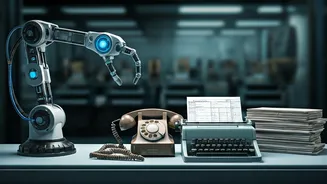
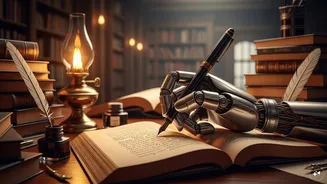
Sometime in 1953-54, Roald Dahl wrote a short story called ‘The Great Automatic Grammatizator’. Its protagonist, Adolph Knipe, builds a machine that can “produce a five-thousand-word story, all typed and ready for dispatch, in thirty seconds”. The machine was fed “with plots”, and it would “write the sentences”.
Knipe then approaches the country’s most successful writers with a devil’s bargain: accept lifetime payment, never write another word, and allow the machine to publish under their name.
Most authors sign, especially the mediocre, the exhausted, and the once-famous but now starved of ideas. The younger and better writers resist, but eventually they too are cornered. Human authors are driven out of the profession. Literature survives, but writers do not.
Seventy years later, we are living inside Dahl’s nightmarish prophecy. Only now, the machine is called ‘artificial intelligence’ (AI).
AI may seem to have democratised writing, but the truth is it has industrialised mediocrity. Yes, today, everyone can produce a decent article. The grammar is flawless. The punctuation is neat. The spelling errors are gone. But so is the writing that could be termed fresh, original and provocative.
This is the strange paradox of the AI age: the disappearance of terrible writing has also led to the decline of good writing. We are entering an era governed by the law of averages, where everyone writes well enough, but the space for good writing is shrinking by the day.
Writing begins to feel eerily similar. The mistakes are gone, but so are the surprises. The sentences are correct, but they are also predictable. The language is polished, but it is more often than not drab and lifeless.
Great writing is born out of experiments. It often emerges from risks, from failed attempts, from strange sentence structures that eventually become beautiful. If writers stop struggling with language because a machine offers perfectly baked phrases instantly, how will they discover their own voice? If one never writes badly, how will one know what actually is good writing? That is the real danger.
AI thrives on patterns. It foresees what comes next based on what has come before. This makes it efficient but also inherently conservative and predictable. As Dahl’s Knipe observes, a machine’s writing “is governed by rules that are almost mathematical in their strictness! Given the words, and given the sense of what is to be said, then there is only one correct order in which those words can be arranged”.
This defies the natural order of writing, which is not merely the arrangement of grammatically correct words, but a rhythm, a rebellion and an obsession. It belongs to the writer who breaks grammar for beauty, who invents words when existing ones fail, and who bends language until it reveals something new. It belongs to experimentation. And it is ruled by those who live and thrive on twilight zones
AI, however, prefers safety. It flattens language, smoothens edges and removes discomfort. Combined with obsessive political correctness and a growing fear of offending anyone, writing becomes safe and polished, but increasingly sterile.
It reminds me of one of our contributors at Firstpost. Every time she sends an article, she tells me that she has written it herself, and that she has not even streamlined the article with the help of AI. She is not a great writer, but she occasionally surprises me with a few lines, with some ideas. She experiments — sometimes they work, many a time they don’t. But I will choose an imperfect article filled with literary risks and grammatical errors, over a perfectly polished but emotionally vacuous piece any day.
Another challenge posed by AI is authenticity. While reading an article today, one often wonders whose voice is this: the author’s or the machine’s? As Rami N Desai, Distinguished Fellow with India Foundation, confided in me recently: “You don’t know whether what you are reading is the viewpoint of the author or the computer. It’s a real challenge for us in the arena of research and writing.”
The threat is not merely artistic; it is economic and psychological as well.
As Naomi S Baron warns in her book,
Who Wrote This?: How AI and the Lure of Efficiency Threaten Human Writing
, writing is a process of discovery, through a writer’s creative struggle and multiple failed drafts. “If machinery does our job for us, it’s unclear how we make a living. Even if universal income distribution becomes a reality — don’t hold your breath — what happens to the psyches of millions of people deriving self-worth from jobs they enjoy? Many of these jobs entail producing, editing, or translating written prose. I, for one, write because there are things I want to think about and share with others. Multiple drafts are part of the discovery process. I’d hate to see these opportunities usurped,” she writes.
An even more dangerous aspect of what Baron calls “AI’s domestication” lies in the fact that we may, in the long term, become incapable of writing, especially good stuff. Just as self-parking cars can make drivers forget how to do parallel parking, AI may slowly make humans forget how to write. Many young people already struggle with long-form handwriting because they rarely use pen and paper. Their hands are untrained. AI threatens to take this decline further — not just weakening physical writing, but mental writing as well.
A civilisation that cannot write will eventually lose the ability to think independently. This is a terrifying scenario by any stretch of imagination.
One hopes the situation is not entirely out of control. Human beings have repeatedly surprised themselves with their survival instincts. The challenge today, however, feels different because the adversary is not openly hostile. It has arrived as a friend. AI promises comfort, speed, efficiency and ease. It offers help, not destruction.
That is precisely what makes it dangerous. The threat is subtle. It does not ask us to stop writing; it encourages us to stop trying. And perhaps the bigger crisis is not just the death of writing, but the death of reading. In an era where tweets are mistaken for literature and publishers chase viral social media followings rather than intellectual depth, the appetite for serious reading itself is shrinking. When popularity replaces substance and visibility replaces thought, literature becomes performance rather than pursuit.
If there are not good readers, how will good writers come up?
This, however, is not an argument against technology. It is an argument against surrender. Use AI as a tool if you must, but never let it become your voice. Write badly, write slowly, write painfully, and rewrite, if needed. Literature, after all, was never supposed to be smooth and easy. It was supposed to be bumpy, argumentative, deliberative, and more importantly human.
Roald Dahl saw this coming long ago: the danger of machine writing for humans. If we lose writing, we do not merely lose good books. We lose the very faculty of thinking itself.
(Views expressed in the above piece are personal and solely those of the author. They do not necessarily reflect Firstpost’s views.)
Knipe then approaches the country’s most successful writers with a devil’s bargain: accept lifetime payment, never write another word, and allow the machine to publish under their name.
Most authors sign, especially the mediocre, the exhausted, and the once-famous but now starved of ideas. The younger and better writers resist, but eventually they too are cornered. Human authors are driven out of the profession. Literature survives, but writers do not.
Seventy years later, we are living inside Dahl’s nightmarish prophecy. Only now, the machine is called ‘artificial intelligence’ (AI).
The Strange Paradox
AI may seem to have democratised writing, but the truth is it has industrialised mediocrity. Yes, today, everyone can produce a decent article. The grammar is flawless. The punctuation is neat. The spelling errors are gone. But so is the writing that could be termed fresh, original and provocative.
This is the strange paradox of the AI age: the disappearance of terrible writing has also led to the decline of good writing. We are entering an era governed by the law of averages, where everyone writes well enough, but the space for good writing is shrinking by the day.
Writing begins to feel eerily similar. The mistakes are gone, but so are the surprises. The sentences are correct, but they are also predictable. The language is polished, but it is more often than not drab and lifeless.
Great writing is born out of experiments. It often emerges from risks, from failed attempts, from strange sentence structures that eventually become beautiful. If writers stop struggling with language because a machine offers perfectly baked phrases instantly, how will they discover their own voice? If one never writes badly, how will one know what actually is good writing? That is the real danger.
The Death of Originality
AI thrives on patterns. It foresees what comes next based on what has come before. This makes it efficient but also inherently conservative and predictable. As Dahl’s Knipe observes, a machine’s writing “is governed by rules that are almost mathematical in their strictness! Given the words, and given the sense of what is to be said, then there is only one correct order in which those words can be arranged”.
This defies the natural order of writing, which is not merely the arrangement of grammatically correct words, but a rhythm, a rebellion and an obsession. It belongs to the writer who breaks grammar for beauty, who invents words when existing ones fail, and who bends language until it reveals something new. It belongs to experimentation. And it is ruled by those who live and thrive on twilight zones
AI, however, prefers safety. It flattens language, smoothens edges and removes discomfort. Combined with obsessive political correctness and a growing fear of offending anyone, writing becomes safe and polished, but increasingly sterile.
It reminds me of one of our contributors at Firstpost. Every time she sends an article, she tells me that she has written it herself, and that she has not even streamlined the article with the help of AI. She is not a great writer, but she occasionally surprises me with a few lines, with some ideas. She experiments — sometimes they work, many a time they don’t. But I will choose an imperfect article filled with literary risks and grammatical errors, over a perfectly polished but emotionally vacuous piece any day.
Another challenge posed by AI is authenticity. While reading an article today, one often wonders whose voice is this: the author’s or the machine’s? As Rami N Desai, Distinguished Fellow with India Foundation, confided in me recently: “You don’t know whether what you are reading is the viewpoint of the author or the computer. It’s a real challenge for us in the arena of research and writing.”
The Psychological Cost of ‘Convenience’
The threat is not merely artistic; it is economic and psychological as well.
As Naomi S Baron warns in her book,
An even more dangerous aspect of what Baron calls “AI’s domestication” lies in the fact that we may, in the long term, become incapable of writing, especially good stuff. Just as self-parking cars can make drivers forget how to do parallel parking, AI may slowly make humans forget how to write. Many young people already struggle with long-form handwriting because they rarely use pen and paper. Their hands are untrained. AI threatens to take this decline further — not just weakening physical writing, but mental writing as well.
A civilisation that cannot write will eventually lose the ability to think independently. This is a terrifying scenario by any stretch of imagination.
Is It All Over?
One hopes the situation is not entirely out of control. Human beings have repeatedly surprised themselves with their survival instincts. The challenge today, however, feels different because the adversary is not openly hostile. It has arrived as a friend. AI promises comfort, speed, efficiency and ease. It offers help, not destruction.
That is precisely what makes it dangerous. The threat is subtle. It does not ask us to stop writing; it encourages us to stop trying. And perhaps the bigger crisis is not just the death of writing, but the death of reading. In an era where tweets are mistaken for literature and publishers chase viral social media followings rather than intellectual depth, the appetite for serious reading itself is shrinking. When popularity replaces substance and visibility replaces thought, literature becomes performance rather than pursuit.
If there are not good readers, how will good writers come up?
This, however, is not an argument against technology. It is an argument against surrender. Use AI as a tool if you must, but never let it become your voice. Write badly, write slowly, write painfully, and rewrite, if needed. Literature, after all, was never supposed to be smooth and easy. It was supposed to be bumpy, argumentative, deliberative, and more importantly human.
Roald Dahl saw this coming long ago: the danger of machine writing for humans. If we lose writing, we do not merely lose good books. We lose the very faculty of thinking itself.
(Views expressed in the above piece are personal and solely those of the author. They do not necessarily reflect Firstpost’s views.)