





What is the story about?
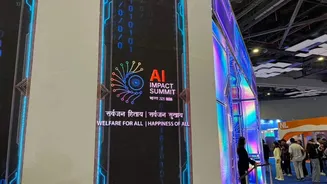
India has the opportunity to help define what responsible, open artificial intelligence (AI) leadership looks like for the world, according to OpenUK CEO Amanda Brock, who is attending India’s Global AI Summit.
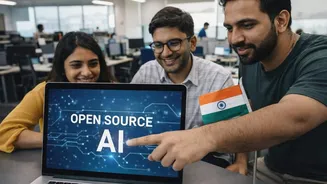
Brock said that open-source AI is critical for enabling countries and their citizens to access AI. She said open-source is essential for countries like India to develop sovereign AI capabilities.
Open-source refers to software and AI models whose source code is publicly available, allowing users to largely or entirely use such software freely and study or modify it. AI models like Meta’s Llama are largely open-source, whereas OpenAI’s ChatGPT is not.
Brock said that open-source architecture is critical for democratising AI globally.
“It enables countries and their citizens to access AI, innovate iteratively, and collaborate across borders. For nations like India, sovereignty is not about isolation — it is about sovereign capability: the ability to adapt, deploy and govern AI on your own terms without being locked into a handful of providers. Delhi has the opportunity to help define what responsible, open AI leadership looks like for the world,” said Brock.
Over the past year, OpenUK has actively engaged India’s open-source and AI communities, encouraging dialogue around AI openness and supporting stronger representation of open ecosystems within the AI Summit’s agenda, the organisation said in a statement.
These discussions are now shaping substantive conversations around transparency, model accountability, interoperability, and practical pathways toward sovereign AI capability for governments and enterprises alike, the statement added.
At the AI Summit, Brock will join Jimmy Wales, Founder of Wikimedia; Laura Gilbert, Senior Director of AI at the Tony Blair Institute; Shankar Maruwada of EkStep Foundation; and Anastasia Stasenko, Co-Founder and CEO of Pleias, for discussions exploring how open-source can build resilience and reduce dependency in enterprise and public-sector AI systems.
They will examine how governments and institutions can retain control, accountability, and adaptability in rapidly evolving AI environments, according to OpenUK.
Openness is not just a technical preference but a strategic imperative, according to Gilbert, the Senior Director of AI at the Tony Blair Institute.
“Sovereign capability means having the practical ability to adapt and govern AI without being locked into single vendors. Governments that build open ecosystems will capture lasting value from AI,” said Gilbert.
Wikimedia Founder Wales added that as generative AI represents a pivotal shift in how the world approaches global challenges, open collaboration will determine whether this technology drives inclusive progress.
Stasenko noted that open-source AI is not a second-best alternative but the infrastructure that enables decentralised training capacity and turns communities from consumers into contributors.
Brock said that open-source AI is critical for enabling countries and their citizens to access AI. She said open-source is essential for countries like India to develop sovereign AI capabilities.
Open-source refers to software and AI models whose source code is publicly available, allowing users to largely or entirely use such software freely and study or modify it. AI models like Meta’s Llama are largely open-source, whereas OpenAI’s ChatGPT is not.
Brock said that open-source architecture is critical for democratising AI globally.
“It enables countries and their citizens to access AI, innovate iteratively, and collaborate across borders. For nations like India, sovereignty is not about isolation — it is about sovereign capability: the ability to adapt, deploy and govern AI on your own terms without being locked into a handful of providers. Delhi has the opportunity to help define what responsible, open AI leadership looks like for the world,” said Brock.
Over the past year, OpenUK has actively engaged India’s open-source and AI communities, encouraging dialogue around AI openness and supporting stronger representation of open ecosystems within the AI Summit’s agenda, the organisation said in a statement.
These discussions are now shaping substantive conversations around transparency, model accountability, interoperability, and practical pathways toward sovereign AI capability for governments and enterprises alike, the statement added.
At the AI Summit, Brock will join Jimmy Wales, Founder of Wikimedia; Laura Gilbert, Senior Director of AI at the Tony Blair Institute; Shankar Maruwada of EkStep Foundation; and Anastasia Stasenko, Co-Founder and CEO of Pleias, for discussions exploring how open-source can build resilience and reduce dependency in enterprise and public-sector AI systems.
They will examine how governments and institutions can retain control, accountability, and adaptability in rapidly evolving AI environments, according to OpenUK.
‘Open-source is strategic imperative’
Openness is not just a technical preference but a strategic imperative, according to Gilbert, the Senior Director of AI at the Tony Blair Institute.
“Sovereign capability means having the practical ability to adapt and govern AI without being locked into single vendors. Governments that build open ecosystems will capture lasting value from AI,” said Gilbert.
Wikimedia Founder Wales added that as generative AI represents a pivotal shift in how the world approaches global challenges, open collaboration will determine whether this technology drives inclusive progress.
Stasenko noted that open-source AI is not a second-best alternative but the infrastructure that enables decentralised training capacity and turns communities from consumers into contributors.