






What is the story about?
It has been a year since Pakistan-backed terrorists rained terror in the scenic Baisaran meadow in south Kashmir’s Pahalgam, killing 26 people, mostly tourists. The terror attack rocked India, pushing the government to revise its counter-terror playbook.
Just days after the April 22, 2025, Pahalgam terror attack, India launched precision airstrikes on nine terror bases in Pakistan and Pakistan-occupied Kashmir (PoK) as part of Operation Sindoor. The four-day conflict between the two neighbours that started on May 7 sent a signal to Islamabad that New Delhi is no longer following strategic restraint in the face of attacks but a more assertive national security doctrine.
We take a deep dive into how India’s security policy has changed post the Pahalgam terror attack.
India launched Operation Sindoor on May 7, 2025, targeting terror bases in Pakistan and PoK. The retaliation was swift after The Resistance Front (TRF), an offshoot of Pakistan-based terror group Lashkar-e-Taiba (LeT), claimed responsibility for the Pahalgam massacre.
According to an analysis by authors John Spencer and Lauren Dagan Amoss, India moved away from its traditional approach of strategic restraint to adopt a security doctrine influenced by terror crises and public expectations, ANI reported.
They noted that India began shifting from the policy of restraint over the past decade as it witnessed a series of Pakistan-sponsored terrorist attacks, including
Uri in 2016, Balakot in 2019 and Pahalgam in 2025.
New Delhi no longer believes that restraint prevents escalation or waits for "lengthy attribution processes or international validation" before taking action in the event of being attacked by terrorists, as per the authors.
Under its new uncompromising counter‑terror doctrine, India deploys a multi-pronged approach, which includes military strikes, diplomatic isolation, internal security crackdowns and even water agreements like the Indus Water Treaty to put pressure on Pakistan, according to
News18.
Pre-emption has become India's sovereign right, which the authors describe as "institutional" rather than "episodic".
They observed that India's deterrence strategy is not linked to specific events but has become pattern-based. As the public expects a tough response from the government in the wake of terror attacks, it has narrowed the political space for restraint. The authors believe that this domestic sentiment is shaping New Delhi's national security strategy.
Following the Pahalgam terror attack, India drew a red line that diplomacy and terror cannot go hand in hand.
Before the April 22 massacre in Kashmir last year, India responded to terror attacks by conducting “surgical" strikes and then returned to diplomacy with Pakistan. However, a "new normal" has been adopted since then.
During Operation Sindoor, India’s retaliation was not limited to surgical strikes but focused on dismantling the “core” of the operations of terrorists, as Prime Minister Narendra Modi had put it.
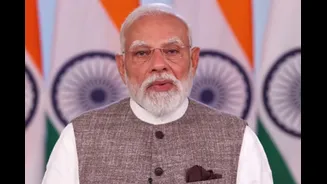
He described Operation Sindoor as a “new form of justice", saying that India did not strike random locations but targeted the nerve centre of terror infrastructure. At a parliamentary session, Modi said, “We precisely attacked the nerve centre of these terrorists and dismantled the core of their operations."
India had struck 21 terror camps and training facilities across nine locations, killing at least 100 terrorists in Pakistan and PoK. The terror targets included four facilities of Maulana Masood Azhar’s Jaish-e-Mohammad (JeM), including the headquarters in Bahawalpur; three LeT terror hubs, including in Muridke and Muzaffarabad; and two Hizbul Mujahideen locations.
In a Lok Sabha address last year, Modi outlined India’s new counter‑terror doctrine. “India will respond decisively to any terror attack on its soil," he said, adding, “Nuclear blackmail will not deter India."
“Terrorists, their masters, and the governments that support them will be judged by the same yardstick," the prime minister declared.
In the aftermath of Operation Sindoor, India declared a new security doctrine: “Any act of terror will be treated as an act of war.”
As News18 noted, under this new policy, India sees any major terror attack as a strategic trigger that warrants a multi‑layered, sustained response, not just a single strike.
India will also treat proxy groups as "instruments of state policy",
ANI reported, citing the authors. India's zero-tolerance norm extends not only to preventing attacks but also to dismantling the ecosystem that enables them. The networks that support the terrorist groups targeting India are viewed as legitimate targets.
India launched Operation Mahadev last year, under which it hunted and killed the three terrorists behind the April 22 massacre in Kashmir.
Last April, when India mourned the loss of civilian lives in the Pahalgam attack, PM Modi had vowed to “identify, track and punish every terrorist and their backers.”
“We will pursue them to the ends of the Earth,” he said, and this is what the armed forces did.
India’s first “strike” against Pakistan came just a day after the heinous Pahalgam attack. On the evening of April 23, 2025, New Delhi put the Indus Waters Treaty (IWT) of 1960 in abeyance with immediate effect.
Brokered by the World Bank between India and Pakistan on September 19, 1960, the treaty allowed India “unrestricted access” to three Eastern rivers — the Ravi, Beas and Sutlej, whereas Pakistan got access to Western rivers of Indus, Chenab and Jhelum.
By suspending the treaty with Pakistan, India put on hold regular meetings of the permanent Indus Commissioners and data‑exchange mechanisms.
With this, New Delhi sent a message that water will now be treated as a strategic asset that can be leveraged as a response to terror and security crises, as per News18.
India's new counter-terror policy can be summed up in one line, as defined by Modi, “Terror and talks cannot coexist. Water and blood can never flow together."
With inputs from agencies
Just days after the April 22, 2025, Pahalgam terror attack, India launched precision airstrikes on nine terror bases in Pakistan and Pakistan-occupied Kashmir (PoK) as part of Operation Sindoor. The four-day conflict between the two neighbours that started on May 7 sent a signal to Islamabad that New Delhi is no longer following strategic restraint in the face of attacks but a more assertive national security doctrine.
We take a deep dive into how India’s security policy has changed post the Pahalgam terror attack.
Speedy retaliation
India launched Operation Sindoor on May 7, 2025, targeting terror bases in Pakistan and PoK. The retaliation was swift after The Resistance Front (TRF), an offshoot of Pakistan-based terror group Lashkar-e-Taiba (LeT), claimed responsibility for the Pahalgam massacre.
According to an analysis by authors John Spencer and Lauren Dagan Amoss, India moved away from its traditional approach of strategic restraint to adopt a security doctrine influenced by terror crises and public expectations, ANI reported.
They noted that India began shifting from the policy of restraint over the past decade as it witnessed a series of Pakistan-sponsored terrorist attacks, including
New Delhi no longer believes that restraint prevents escalation or waits for "lengthy attribution processes or international validation" before taking action in the event of being attacked by terrorists, as per the authors.
Under its new uncompromising counter‑terror doctrine, India deploys a multi-pronged approach, which includes military strikes, diplomatic isolation, internal security crackdowns and even water agreements like the Indus Water Treaty to put pressure on Pakistan, according to
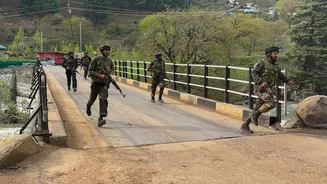
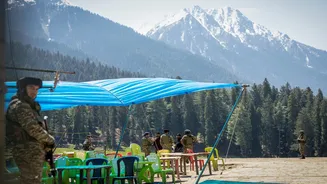
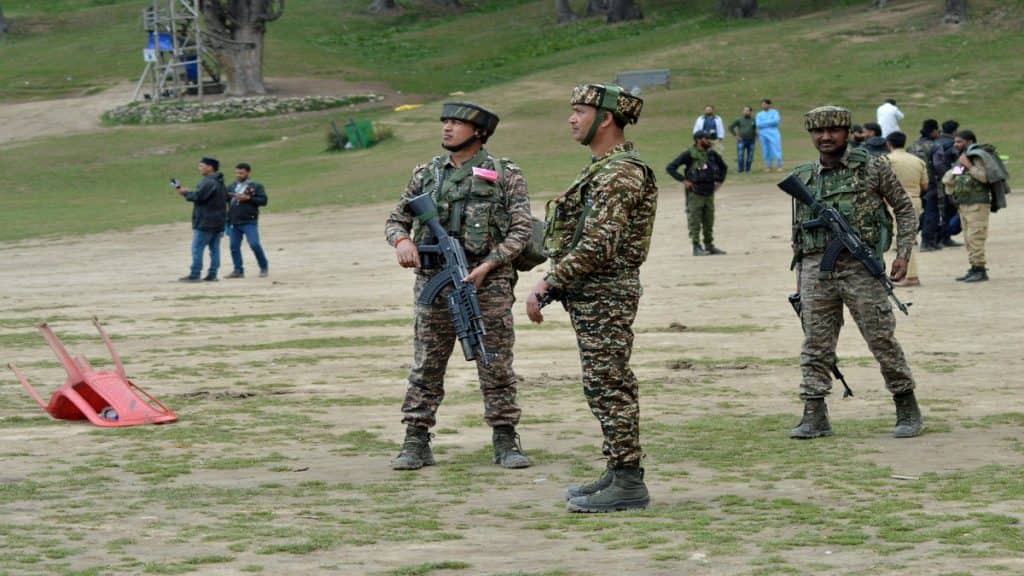
Security force personnel stand guard at the site of a terror attack on tourists in Baisaran near Pahalgam in south Kashmir's Anantnag district, April 23, 2025. File Photo/Reuters
Pre-emption has become India's sovereign right, which the authors describe as "institutional" rather than "episodic".
They observed that India's deterrence strategy is not linked to specific events but has become pattern-based. As the public expects a tough response from the government in the wake of terror attacks, it has narrowed the political space for restraint. The authors believe that this domestic sentiment is shaping New Delhi's national security strategy.
No talks until terror attacks continue
Following the Pahalgam terror attack, India drew a red line that diplomacy and terror cannot go hand in hand.
Before the April 22 massacre in Kashmir last year, India responded to terror attacks by conducting “surgical" strikes and then returned to diplomacy with Pakistan. However, a "new normal" has been adopted since then.
During Operation Sindoor, India’s retaliation was not limited to surgical strikes but focused on dismantling the “core” of the operations of terrorists, as Prime Minister Narendra Modi had put it.
He described Operation Sindoor as a “new form of justice", saying that India did not strike random locations but targeted the nerve centre of terror infrastructure. At a parliamentary session, Modi said, “We precisely attacked the nerve centre of these terrorists and dismantled the core of their operations."
India had struck 21 terror camps and training facilities across nine locations, killing at least 100 terrorists in Pakistan and PoK. The terror targets included four facilities of Maulana Masood Azhar’s Jaish-e-Mohammad (JeM), including the headquarters in Bahawalpur; three LeT terror hubs, including in Muridke and Muzaffarabad; and two Hizbul Mujahideen locations.
In a Lok Sabha address last year, Modi outlined India’s new counter‑terror doctrine. “India will respond decisively to any terror attack on its soil," he said, adding, “Nuclear blackmail will not deter India."
“Terrorists, their masters, and the governments that support them will be judged by the same yardstick," the prime minister declared.
In the aftermath of Operation Sindoor, India declared a new security doctrine: “Any act of terror will be treated as an act of war.”
As News18 noted, under this new policy, India sees any major terror attack as a strategic trigger that warrants a multi‑layered, sustained response, not just a single strike.
India will also treat proxy groups as "instruments of state policy",
India launched Operation Mahadev last year, under which it hunted and killed the three terrorists behind the April 22 massacre in Kashmir.
Last April, when India mourned the loss of civilian lives in the Pahalgam attack, PM Modi had vowed to “identify, track and punish every terrorist and their backers.”
“We will pursue them to the ends of the Earth,” he said, and this is what the armed forces did.
Leveraging treaty on water
India’s first “strike” against Pakistan came just a day after the heinous Pahalgam attack. On the evening of April 23, 2025, New Delhi put the Indus Waters Treaty (IWT) of 1960 in abeyance with immediate effect.
Brokered by the World Bank between India and Pakistan on September 19, 1960, the treaty allowed India “unrestricted access” to three Eastern rivers — the Ravi, Beas and Sutlej, whereas Pakistan got access to Western rivers of Indus, Chenab and Jhelum.
By suspending the treaty with Pakistan, India put on hold regular meetings of the permanent Indus Commissioners and data‑exchange mechanisms.
With this, New Delhi sent a message that water will now be treated as a strategic asset that can be leveraged as a response to terror and security crises, as per News18.
India's new counter-terror policy can be summed up in one line, as defined by Modi, “Terror and talks cannot coexist. Water and blood can never flow together."
With inputs from agencies