
White House noted that the sanctions on the seized vessel were imposed back in 2019. Hence, the Wednesday incident marked a sharp escalation in rising tensions between the Trump administration and the government of Nicolás Maduro.
Since the seizure, only tankers chartered by the US oil company Chevron have sailed into international waters carrying Venezuelan crude. The data, which was reviewed by Reuters, also showed the decline. It is important to note that Chevron has US government authorisation to operate through joint ventures in the country and export its oil to the US.
Sources told Reuters that other tankers have loaded about 11m barrels of oil and fuel are stuck in Venezuelan waters. The US Attorney General, Pam Bondi, said this week the Skipper was intercepted and retained under a seizure warrant. Meanwhile, Guyana’s maritime authority said it was falsely flying the country’s flag.
What lies ahead
The tanker is now reportedly heading to Houston, where it will offload its cargo onto smaller ships. Washington has already maintained that it is planning to intercept more such ships that are transporting Venezuelan oil, sources told Reuters.
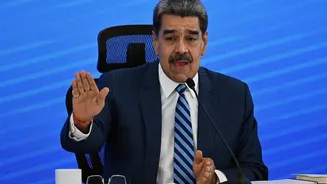
Meanwhile, Venezuela has condemned the tanker seizure, calling it "blatant theft" and “international piracy”. The Venezuelan government said that it would file complaints with international bodies. At the same time, Venezuelan lawmakers took a step to withdraw the country from the International Criminal Court, which is currently investigating alleged human rights abuses in the South American nation.
The seizure took place after more than 20 US military strikes occurred in the Caribbean and Pacific against alleged drug vessels this year. There has been a large-scale US military buildup in the southern Caribbean as the relations between the US and Venezuela reach their most volatile point in years.
Nearly 90 people have been killed in the course of these strikes on suspected drug boats, alarming human rights advocates and stirring debate among US lawmakers as to the legality of the actions. Meanwhile, Brazil’s president, Luiz Inácio Lula da Silva, spoke by phone with Maduro, emphasising the need to have "peace" in South America. Overall, the tensions in the region are extremely high.