







What is the story about?
United States President Donald Trump’s abrupt decision to abandon threatened tariffs against European allies and publicly rule out the use of military force to acquire Greenland has capped one of the most turbulent episodes of his second term.
What unfolded over several days — and culminated at the World Economic Forum in Davos on Wednesday — exposed deep fractures within Nato, and highlighted once again the volatility of Trump’s negotiating style.
The episode has put Trump’s pattern of issuing high-stakes ultimatums only to retreat under economic or political pressure, under the lens — a behaviour that critics and market analysts increasingly label as “Taco,” short for “Trump Always Chickens Out.”
The import taxes, which had been positioned as leverage to force negotiations over Greenland, were scheduled to begin at 10 per cent in February and rise to 25 per cent by June.
He had earlier made clear that the tariffs were directly linked to his demand that the United States secure control over Greenland, a territory he has repeatedly described as strategically essential to American national security.
Trump argued that US dominance in the Arctic was necessary to counter what he described as growing threats from Russia and China, despite the United States already maintaining a significant military presence on the island.
The reversal came only hours after Trump used
his high-profile speech at the World Economic Forum in Davos, Switzerland, to press his case before a global audience of political leaders, investors, and corporate executives.
The address, initially billed as a speech focused on lowering US housing costs as part of a broader cost-of-living agenda, was instead dominated by the Greenland issue.
During his speech, Trump characterised Greenland as territory that was “cold and poorly located” while arguing that US demands were modest given America’s historic role in European security.
“It’s a very small ask compared to what we have given them for many, many decades,” Trump said of Nato.
“We probably won’t get anything unless I decide to use excessive strength and force, where we would be frankly unstoppable. But I won’t do that, OK?” Trump said.
But in a social media post shortly after his appearance, Trump said he had reached agreement with Nato Secretary General Mark Rutte on what he called a “framework of a future deal” concerning Greenland and Arctic security more broadly.
Speaking alongside Trump after the address, Rutte sought to reassure both Washington and European capitals. “You can be assured, absolutely,” Rutte said, stating that Nato would stand with the United States if it were attacked.
The president offered few specifics, saying negotiations were ongoing and details were still being developed.
European officials familiar with alliance discussions said that one potential compromise being explored involved Denmark and Nato working with Washington to expand the American military footprint on Greenland, including the construction of additional US bases, reported AP.
However, those officials stressed that it was unclear whether this proposal formed part of the framework Trump referenced publicly.
Denmark welcomed the de-escalation but remained firm on its position regarding sovereignty. Danish Foreign Minister Lars Løkke Rasmussen said Trump’s decision to rule out military action and pause trade measures was a positive step.
"Now, let’s sit down and find out how we can address the American security concerns in the Arctic while respecting the red lines of the Kingdom of Denmark,” Rasmussen said in a statement.
Danish officials have consistently stressed that while Copenhagen is open to discussions about Arctic security and US military cooperation, Greenland is not for sale and cannot be transferred to another country.
That position has been echoed by other Nato members, many of whom reacted angrily to Trump’s tariff threats and rejected the idea that economic coercion could be used to force territorial concessions.
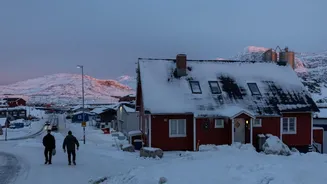
While diplomatic manoeuvring continued among world leaders, Greenland’s own government took steps reflecting the uncertainty created by the standoff.
Authorities issued a civil preparedness handbook in both English and Greenlandic, advising residents to ensure they had enough essential supplies to survive for five days in the event of a crisis.
The guidance urged households to stock food, drinking water, fuel, and other necessities, underscoring concerns about the potential consequences of heightened geopolitical tensions involving the island.
Trump’s earlier comments had unsettled Greenlandic officials and residents alike.
“We want a piece of ice for world protection, and they won’t give it,” Trump said. “You can say yes, and we will be very appreciative. Or you can say no, and we will remember.”
Behind the scenes, Trump’s Greenland push triggered weeks of internal strain within the US administration.
According to sources with direct knowledge of White House deliberations, senior aides were forced to balance accommodating the president’s demands with efforts to reassure allies and limit diplomatic fallout, reported
Reuters.
While there was broad agreement among Trump’s advisers on the importance of maintaining US influence in the Arctic, there was far less consensus on how aggressively that goal should be pursued.
Several key officials were unenthusiastic about the idea of using military force to take control of a Nato member’s territory.
In most internal meetings, more officials urged caution than those advocating extreme measures. Sources said they were unaware of any serious planning for a military operation in Greenland.
US Vice President JD Vance, Secretary of State Marco Rubio, and Tom Dans — Trump’s appointee to lead the US Arctic Research Commission — were described as pushing for a compromise approach, reported Reuters.
By contrast, White House Deputy Chief of Staff Stephen Miller was said to be more open to keeping annexation and the possibility of force as leverage.
White House spokesperson Anna Kelly confirmed that the administration would adhere to Trump’s public position. "The White House does not rule out options for President Trump unless he does so himself,” Kelly said.
“He announced today that he will not use force to take Greenland, and the entire administration will follow his lead.”
Kelly added that if a deal were reached, the United States would secure its objectives in Greenland “at minimal long-term cost.”
Experts have noted that the United States already enjoys extensive military access to Greenland under existing agreements. A 1951 treaty between Washington and Copenhagen grants the US military broad rights to operate on the island for the defence of Greenland and other Nato territories.
The United States maintains a significant base in Greenland and has the legal authority to deploy additional troops there if necessary.
As a Danish territory, Greenland is also already part of Nato, meaning any attack on the island would fall under the alliance’s collective defence framework.
The acronym “Taco,” meaning “Trump Always Chickens Out,” gained prominence during earlier trade disputes and has since been applied more broadly to his foreign policy record.
The term emerged on Wall Street during the trade wars sparked by Trump’s “Liberation Day” tariffs in 2025, when markets began to anticipate that aggressive trade threats would ultimately be delayed or softened.
The strategy known as the “Taco trade” involved buying stocks after tariff announcements drove prices down and selling them after reversals prompted rebounds.
The phrase was popularised by Financial Times journalist Robert Armstrong, who argued that markets had concluded the US administration had limited tolerance for economic disruption.
The Financial Times has also cited research by Jeremy Shapiro of the European Council on Foreign Relations showing that Trump had threatened the use of force against foreign adversaries on 22 occasions as of early 2025, but had followed through only twice.
Examples cited include Trump’s first-term warnings of “fire and fury” against North Korea and threats to wipe Afghanistan “off the face of the earth,” neither of which materialised.
More recently, following protests in Iran in 2026, Trump warned Iranian leaders of possible military intervention — a threat that also did not lead to action.
Commentators have increasingly applied the Taco label to such episodes, arguing that Trump often escalates rhetorically before stepping back when faced with actual consequences.
Despite the reversal on tariffs and force, Trump has not abandoned his long-standing interest in Greenland. He has instructed senior officials to pursue negotiations with Denmark and Nato allies, and discussions over Arctic security are expected to continue.
Last week, Vance and Rubio hosted Danish and Greenlandic foreign ministers at the White House for talks described by Rasmussen as “frank but constructive.”
Sources familiar with the meeting said military action was not seriously considered and that discussions focused on how to reconcile sharply differing positions.
For now, the immediate crisis has eased.
Also Watch:
With inputs from agencies
What unfolded over several days — and culminated at the World Economic Forum in Davos on Wednesday — exposed deep fractures within Nato, and highlighted once again the volatility of Trump’s negotiating style.
The episode has put Trump’s pattern of issuing high-stakes ultimatums only to retreat under economic or political pressure, under the lens — a behaviour that critics and market analysts increasingly label as “Taco,” short for “Trump Always Chickens Out.”
How Trump went from tariff ultimatum to sudden reversal
The import taxes, which had been positioned as leverage to force negotiations over Greenland, were scheduled to begin at 10 per cent in February and rise to 25 per cent by June.
He had earlier made clear that the tariffs were directly linked to his demand that the United States secure control over Greenland, a territory he has repeatedly described as strategically essential to American national security.
Trump argued that US dominance in the Arctic was necessary to counter what he described as growing threats from Russia and China, despite the United States already maintaining a significant military presence on the island.
The reversal came only hours after Trump used
The address, initially billed as a speech focused on lowering US housing costs as part of a broader cost-of-living agenda, was instead dominated by the Greenland issue.
During his speech, Trump characterised Greenland as territory that was “cold and poorly located” while arguing that US demands were modest given America’s historic role in European security.
“It’s a very small ask compared to what we have given them for many, many decades,” Trump said of Nato.
“We probably won’t get anything unless I decide to use excessive strength and force, where we would be frankly unstoppable. But I won’t do that, OK?” Trump said.
But in a social media post shortly after his appearance, Trump said he had reached agreement with Nato Secretary General Mark Rutte on what he called a “framework of a future deal” concerning Greenland and Arctic security more broadly.
Speaking alongside Trump after the address, Rutte sought to reassure both Washington and European capitals. “You can be assured, absolutely,” Rutte said, stating that Nato would stand with the United States if it were attacked.
The president offered few specifics, saying negotiations were ongoing and details were still being developed.
European officials familiar with alliance discussions said that one potential compromise being explored involved Denmark and Nato working with Washington to expand the American military footprint on Greenland, including the construction of additional US bases, reported AP.
However, those officials stressed that it was unclear whether this proposal formed part of the framework Trump referenced publicly.
How Denmark reacted
Denmark welcomed the de-escalation but remained firm on its position regarding sovereignty. Danish Foreign Minister Lars Løkke Rasmussen said Trump’s decision to rule out military action and pause trade measures was a positive step.
"Now, let’s sit down and find out how we can address the American security concerns in the Arctic while respecting the red lines of the Kingdom of Denmark,” Rasmussen said in a statement.
Danish officials have consistently stressed that while Copenhagen is open to discussions about Arctic security and US military cooperation, Greenland is not for sale and cannot be transferred to another country.
That position has been echoed by other Nato members, many of whom reacted angrily to Trump’s tariff threats and rejected the idea that economic coercion could be used to force territorial concessions.
How Greenland has reacted
While diplomatic manoeuvring continued among world leaders, Greenland’s own government took steps reflecting the uncertainty created by the standoff.
Authorities issued a civil preparedness handbook in both English and Greenlandic, advising residents to ensure they had enough essential supplies to survive for five days in the event of a crisis.
The guidance urged households to stock food, drinking water, fuel, and other necessities, underscoring concerns about the potential consequences of heightened geopolitical tensions involving the island.
Trump’s earlier comments had unsettled Greenlandic officials and residents alike.
“We want a piece of ice for world protection, and they won’t give it,” Trump said. “You can say yes, and we will be very appreciative. Or you can say no, and we will remember.”
What changed Trump's mind
Behind the scenes, Trump’s Greenland push triggered weeks of internal strain within the US administration.
According to sources with direct knowledge of White House deliberations, senior aides were forced to balance accommodating the president’s demands with efforts to reassure allies and limit diplomatic fallout, reported
While there was broad agreement among Trump’s advisers on the importance of maintaining US influence in the Arctic, there was far less consensus on how aggressively that goal should be pursued.
Several key officials were unenthusiastic about the idea of using military force to take control of a Nato member’s territory.
In most internal meetings, more officials urged caution than those advocating extreme measures. Sources said they were unaware of any serious planning for a military operation in Greenland.
US Vice President JD Vance, Secretary of State Marco Rubio, and Tom Dans — Trump’s appointee to lead the US Arctic Research Commission — were described as pushing for a compromise approach, reported Reuters.
By contrast, White House Deputy Chief of Staff Stephen Miller was said to be more open to keeping annexation and the possibility of force as leverage.
White House spokesperson Anna Kelly confirmed that the administration would adhere to Trump’s public position. "The White House does not rule out options for President Trump unless he does so himself,” Kelly said.
“He announced today that he will not use force to take Greenland, and the entire administration will follow his lead.”
Kelly added that if a deal were reached, the United States would secure its objectives in Greenland “at minimal long-term cost.”
Experts have noted that the United States already enjoys extensive military access to Greenland under existing agreements. A 1951 treaty between Washington and Copenhagen grants the US military broad rights to operate on the island for the defence of Greenland and other Nato territories.
The United States maintains a significant base in Greenland and has the legal authority to deploy additional troops there if necessary.
As a Danish territory, Greenland is also already part of Nato, meaning any attack on the island would fall under the alliance’s collective defence framework.
So is this a Taco moment for Trump?
The acronym “Taco,” meaning “Trump Always Chickens Out,” gained prominence during earlier trade disputes and has since been applied more broadly to his foreign policy record.
The term emerged on Wall Street during the trade wars sparked by Trump’s “Liberation Day” tariffs in 2025, when markets began to anticipate that aggressive trade threats would ultimately be delayed or softened.
The strategy known as the “Taco trade” involved buying stocks after tariff announcements drove prices down and selling them after reversals prompted rebounds.
The phrase was popularised by Financial Times journalist Robert Armstrong, who argued that markets had concluded the US administration had limited tolerance for economic disruption.
The Financial Times has also cited research by Jeremy Shapiro of the European Council on Foreign Relations showing that Trump had threatened the use of force against foreign adversaries on 22 occasions as of early 2025, but had followed through only twice.
Examples cited include Trump’s first-term warnings of “fire and fury” against North Korea and threats to wipe Afghanistan “off the face of the earth,” neither of which materialised.
More recently, following protests in Iran in 2026, Trump warned Iranian leaders of possible military intervention — a threat that also did not lead to action.
Commentators have increasingly applied the Taco label to such episodes, arguing that Trump often escalates rhetorically before stepping back when faced with actual consequences.
What comes next
Despite the reversal on tariffs and force, Trump has not abandoned his long-standing interest in Greenland. He has instructed senior officials to pursue negotiations with Denmark and Nato allies, and discussions over Arctic security are expected to continue.
Last week, Vance and Rubio hosted Danish and Greenlandic foreign ministers at the White House for talks described by Rasmussen as “frank but constructive.”
Sources familiar with the meeting said military action was not seriously considered and that discussions focused on how to reconcile sharply differing positions.
For now, the immediate crisis has eased.
Also Watch:
With inputs from agencies