





What is the story about?
More than three months after the United States and Israel began military operations against Iran, US President Donald Trump is preparing to close a chapter that rattled global energy markets and left several of the conflict's original objectives only partially resolved.
When the campaign commenced on February 28, the Trump administration presented an ambitious list of goals.
The White House argued that Iran's missile and drone programmes posed a growing threat to American partners, that Tehran's nuclear activities had to be curtailed permanently, and that the Islamic Republic's network of allied armed groups across the region needed to be weakened.
At various points during the conflict, Trump also suggested that political change inside Iran would be necessary before hostilities could truly end.
Today, with a preliminary agreement in place, the big question remains: what did the United States actually accomplish after months of warfare?
Among the clearest achievements claimed by the Trump administration is the degradation of Iran's missile and drone capabilities.
Before the outbreak of war, Iran maintained what was widely considered the largest ballistic missile inventory in West Asia. Estimates placed the total stockpile at somewhere between 2,500 and 6,000 missiles of various types and ranges.
Some systems were capable of reaching Israeli territory from Iranian launch sites, while others carried cluster-munition warheads that complicated interception efforts.
Iran had also emerged as one of the world's leading producers of long-range unmanned aerial systems. Particular attention had been focused on the Shahed family of drones, which had become known internationally after their use in the ongoing Russia-Ukraine war.
Early battlefield assessments suggested that American and Israeli strikes were having a significant impact.
Roughly a month after hostilities began, US sources indicated that approximately one-third of Iran's missile inventory had been destroyed outright. Another third was believed to have been damaged, buried beneath debris or otherwise rendered unavailable.
US Admiral Brad Cooper told lawmakers in May that Iran's capacity to manufacture and accumulate long-range missiles and drones had been pushed back by years. According to Cooper, American forces and their partners intercepted more than 1,500 missiles and 6,000 drones during the conflict.
Those figures represented one of the most tangible military outcomes that Washington could point to after months of fighting. Nevertheless, the campaign did not eliminate Iran's ability to launch long-range strikes.
The exact size of Tehran's remaining arsenal remains unknown. What is known is that Iran continued to demonstrate offensive capability even after sustaining months of military pressure.
On June 6, missile salvos were directed toward Kuwait and Bahrain. A day later, additional missiles were launched toward Israel. As a result, while the missile campaign appears to have reduced Iran's capabilities,
it did not remove them entirely.
The United States has also argued that the conflict severely damaged Iran's broader military apparatus. According to information presented by Cooper before Congress, American operations targeted multiple branches of Iran's armed forces.
He stated that 161 Iranian naval vessels were destroyed during the conflict. He further reported that roughly 82 per cent of Iran's air-defence infrastructure had been neutralised.
The impact on Iran's air force was particularly notable. Before the conflict, Iranian aircraft were reportedly conducting up to 100 operational sorties each day.
Cooper told lawmakers that those missions had effectively ceased by the time he testified, suggesting a dramatic reduction in Iran's ability to conduct conventional air operations.
From Washington's perspective, these outcomes represented a major strategic success. The administration has argued that Iran's ability to project military power across the region and threaten American forces was significantly diminished.
Yet the conflict also revealed limits to that success. Despite the losses suffered by its military, Iran managed to exert enormous influence over one of
the world's most strategically important waterways i.e. the Strait of Hormuz.
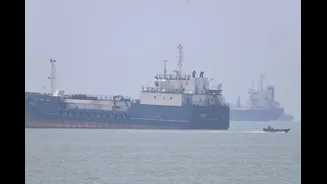
Throughout much of the conflict, Tehran effectively disrupted maritime traffic through the narrow passage connecting the Persian Gulf to international markets.
Using mines, drones, missile boats and fast attack craft, Iran succeeded in restricting movement through a route responsible for transporting approximately one-fifth of global oil and natural gas supplies.
The disruption sent shockwaves through energy markets and contributed to broader concerns over fuel and fertiliser supplies worldwide.
One analysis of the conflict argued that Tehran emerged from the war with a level of influence over the Strait that it had not previously possessed. The resulting pressure on global energy supplies provided Iran with significant leverage at a time when it was under military attack.
Consequently, while Iran's conventional military capabilities appear to have been substantially reduced, its ability to disrupt international commerce and create economic pressure remained evident throughout the conflict.
Throughout the war, Trump consistently presented the nuclear issue as the primary justification for military action. The administration maintained that Iran could not be allowed to obtain a nuclear weapon, while Tehran continued to insist that its nuclear activities were intended exclusively for peaceful purposes.
Despite months of fighting, however, available intelligence suggests that the conflict has not fundamentally altered the underlying nuclear equation.
According to US intelligence estimates released last month, Iran would still require less than a year to develop a nuclear weapon should it decide to pursue one. Significantly, that estimate mirrors assessments made after earlier attacks on Iranian nuclear facilities in June 2025.
In other words, while military strikes may have damaged specific facilities or disrupted operations, publicly available intelligence assessments have not indicated a major change in the timeline associated with Iran's nuclear capabilities.
As a result, negotiations over the nuclear programme remain at the centre of the emerging peace framework. The preliminary arrangement announced by Washington and Tehran leaves many critical questions unresolved.
Negotiators are expected to spend the next 60 days attempting to address several contentious issues. Among the most sensitive topics is the future of Iran's stockpile of highly enriched uranium.
Trump has argued that enriched uranium should be removed from Iranian territory. Iranian leaders, however, have reportedly opposed sending the material abroad.
Another unresolved question concerns whether Iran should retain the right to enrich uranium at limited levels for civilian and peaceful purposes. These disagreements were among the issues under discussion before the war began.
According to Omani mediators, a negotiated settlement on the nuclear file had been close before military action interrupted diplomacy.
Another major objective outlined by the Trump administration involved reducing Tehran's influence across West Asia. For decades, Iran has relied on a network of allied organisations in Lebanon, Iraq, Gaza and Yemen to extend its regional reach and challenge rivals without direct military confrontation.
The conflict appears to have accelerated the weakening of some of those networks, but the process was already underway before February 2026.
Israel's military campaigns following the October 7, 2023 attacks had already resulted in the deaths of numerous Hamas leaders and thousands of fighters in Gaza. Hezbollah had also lost significant portions of its senior leadership structure in Lebanon.
Meanwhile, the collapse of former Syrian President Bashar al-Assad's government in 2024 deprived Tehran of an important logistical corridor used to supply Hezbollah. Economic difficulties and sanctions further constrained Iran's ability to provide financial support.
Against that backdrop, many of Tehran's partners played a more limited role in the war than some analysts had expected.
Hamas did not launch major attacks from Gaza during the conflict. Likewise, the Houthis in Yemen did not significantly disrupt commercial shipping routes in the Red Sea.
The most direct involvement came from Hezbollah. The Lebanese group entered the conflict on March 2 by launching missiles and drones toward Israel. Israel responded with an extensive military campaign that included both air operations and a ground invasion.
The consequences in Lebanon were severe. Nearly 3,700 people have been killed, while approximately 1.2 million have been displaced from their homes. On the Israeli side, 28 soldiers and four civilians have died.
Cooper told Congress that Iran no longer possesses the ability to reliably transfer advanced weaponry to its regional partners, although he did not provide additional details regarding the extent of those limitations.
Even so, there has been no indication that Tehran intends to abandon its relationships with allied organisations. Iran has also shown no willingness to publicly commit to ending military and financial support for those groups.
As a result, the war appears to have weakened parts of Iran's regional network without eliminating it.
Perhaps the most politically ambitious goal associated with the war was the prospect of leadership change inside Iran.
Before hostilities began, Trump publicly encouraged opponents of the Iranian government to challenge the ruling system. Following the death of Supreme Leader Ayatollah Ali Khamenei on February 28, the US president intensified that rhetoric.
Trump described Khamenei's death as Iran's "single greatest chance" to seize the government. Several days later, on March 6, Trump stated that the conflict would end only with "UNCONDITIONAL SURRENDER" and the installation of a new and acceptable leadership.
Those expectations ultimately did not materialise. Although Iran suffered the loss of its supreme leader and faced months of military pressure, the country's political system endured.
Ayatollah Mojtaba Khamenei succeeded his father as supreme leader, ensuring continuity rather than revolutionary change. Trump later argued that this transition represented progress, describing the leadership under Mojtaba Khamenei as "a new, and more reasonable, regime" on March 29.
In recent weeks, however, the president has largely stopped publicly calling for the overthrow of Iran's government.
Following weeks of intermittent diplomacy, Washington and Tehran announced a memorandum of understanding designed to halt the conflict.
Both sides seem to support reopening maritime traffic through the Strait of Hormuz. Both also appear willing to continue discussions regarding Iran's nuclear programme over a 60-day period.
Beyond those points, however, differences emerge.
Iranian media reports suggest the agreement would halt fighting across all fronts, including Israeli operations in Lebanon. The same reports indicate that the Strait of Hormuz would reopen within 30 days under arrangements overseen by Iran.
Iranian accounts also suggest that approximately $24 billion in frozen Iranian assets would be released and that reconstruction initiatives worth at least $300 billion would be developed during the negotiating period.
According to reports, shipping through Hormuz would resume immediately and without tolls. A US official also indicated that Iran could receive temporary sanctions waivers allowing it to export oil.
Another point of uncertainty concerns Lebanon. Trump's public announcement on Truth Social did not mention Lebanon. However, Pakistani mediators stated that the issue formed part of the broader understanding.
The agreement has generated criticism not only from Democrats but also from members of Trump's own party. On June 18, copies of the memorandum circulated among lawmakers on Capitol Hill, triggering a wave of questions regarding its contents and implementation.
The criticism is notable because Republican lawmakers have generally maintained strong support for Trump throughout his presidency. Yet the economic consequences of the conflict have created growing unease ahead of November's congressional elections.
Members of both parties have demanded additional information from the administration.
According to congressional aides, lawmakers had not received detailed briefings regarding the agreement or the administration's next steps.
Particular concern has focused on reports that the United States may release frozen Iranian assets, ease sanctions and support mechanisms that could facilitate major investment inside Iran.
Questions have also emerged regarding congressional oversight. Under the 2015 Iran Nuclear Agreement Review Act, agreements involving Iran's nuclear programme and sanctions relief are subject to congressional review.
The Trump administration has sent mixed signals regarding whether it intends to submit the arrangement for that process. Several lawmakers have argued that review is mandatory. Among them is Republican Senator Lindsey Graham of South Carolina, one of Trump's closest allies on Capitol Hill.
With inputs from agencies
When the campaign commenced on February 28, the Trump administration presented an ambitious list of goals.
The White House argued that Iran's missile and drone programmes posed a growing threat to American partners, that Tehran's nuclear activities had to be curtailed permanently, and that the Islamic Republic's network of allied armed groups across the region needed to be weakened.
At various points during the conflict, Trump also suggested that political change inside Iran would be necessary before hostilities could truly end.
Today, with a preliminary agreement in place, the big question remains: what did the United States actually accomplish after months of warfare?
How much damage was inflicted on Iran's missile and drone arsenal?
Among the clearest achievements claimed by the Trump administration is the degradation of Iran's missile and drone capabilities.
Before the outbreak of war, Iran maintained what was widely considered the largest ballistic missile inventory in West Asia. Estimates placed the total stockpile at somewhere between 2,500 and 6,000 missiles of various types and ranges.
Some systems were capable of reaching Israeli territory from Iranian launch sites, while others carried cluster-munition warheads that complicated interception efforts.
Iran had also emerged as one of the world's leading producers of long-range unmanned aerial systems. Particular attention had been focused on the Shahed family of drones, which had become known internationally after their use in the ongoing Russia-Ukraine war.
Early battlefield assessments suggested that American and Israeli strikes were having a significant impact.
Roughly a month after hostilities began, US sources indicated that approximately one-third of Iran's missile inventory had been destroyed outright. Another third was believed to have been damaged, buried beneath debris or otherwise rendered unavailable.
US Admiral Brad Cooper told lawmakers in May that Iran's capacity to manufacture and accumulate long-range missiles and drones had been pushed back by years. According to Cooper, American forces and their partners intercepted more than 1,500 missiles and 6,000 drones during the conflict.
Those figures represented one of the most tangible military outcomes that Washington could point to after months of fighting. Nevertheless, the campaign did not eliminate Iran's ability to launch long-range strikes.
The exact size of Tehran's remaining arsenal remains unknown. What is known is that Iran continued to demonstrate offensive capability even after sustaining months of military pressure.
On June 6, missile salvos were directed toward Kuwait and Bahrain. A day later, additional missiles were launched toward Israel. As a result, while the missile campaign appears to have reduced Iran's capabilities,
Did the war weaken Iran's conventional military power?
The United States has also argued that the conflict severely damaged Iran's broader military apparatus. According to information presented by Cooper before Congress, American operations targeted multiple branches of Iran's armed forces.
He stated that 161 Iranian naval vessels were destroyed during the conflict. He further reported that roughly 82 per cent of Iran's air-defence infrastructure had been neutralised.
The impact on Iran's air force was particularly notable. Before the conflict, Iranian aircraft were reportedly conducting up to 100 operational sorties each day.
Cooper told lawmakers that those missions had effectively ceased by the time he testified, suggesting a dramatic reduction in Iran's ability to conduct conventional air operations.
From Washington's perspective, these outcomes represented a major strategic success. The administration has argued that Iran's ability to project military power across the region and threaten American forces was significantly diminished.
Yet the conflict also revealed limits to that success. Despite the losses suffered by its military, Iran managed to exert enormous influence over one of
Throughout much of the conflict, Tehran effectively disrupted maritime traffic through the narrow passage connecting the Persian Gulf to international markets.
Using mines, drones, missile boats and fast attack craft, Iran succeeded in restricting movement through a route responsible for transporting approximately one-fifth of global oil and natural gas supplies.
The disruption sent shockwaves through energy markets and contributed to broader concerns over fuel and fertiliser supplies worldwide.
One analysis of the conflict argued that Tehran emerged from the war with a level of influence over the Strait that it had not previously possessed. The resulting pressure on global energy supplies provided Iran with significant leverage at a time when it was under military attack.
Consequently, while Iran's conventional military capabilities appear to have been substantially reduced, its ability to disrupt international commerce and create economic pressure remained evident throughout the conflict.
Has Trump's goal of stopping Iran's nuclear programme been achieved?
Throughout the war, Trump consistently presented the nuclear issue as the primary justification for military action. The administration maintained that Iran could not be allowed to obtain a nuclear weapon, while Tehran continued to insist that its nuclear activities were intended exclusively for peaceful purposes.
Despite months of fighting, however, available intelligence suggests that the conflict has not fundamentally altered the underlying nuclear equation.
According to US intelligence estimates released last month, Iran would still require less than a year to develop a nuclear weapon should it decide to pursue one. Significantly, that estimate mirrors assessments made after earlier attacks on Iranian nuclear facilities in June 2025.
In other words, while military strikes may have damaged specific facilities or disrupted operations, publicly available intelligence assessments have not indicated a major change in the timeline associated with Iran's nuclear capabilities.
As a result, negotiations over the nuclear programme remain at the centre of the emerging peace framework. The preliminary arrangement announced by Washington and Tehran leaves many critical questions unresolved.
Negotiators are expected to spend the next 60 days attempting to address several contentious issues. Among the most sensitive topics is the future of Iran's stockpile of highly enriched uranium.
Trump has argued that enriched uranium should be removed from Iranian territory. Iranian leaders, however, have reportedly opposed sending the material abroad.
Another unresolved question concerns whether Iran should retain the right to enrich uranium at limited levels for civilian and peaceful purposes. These disagreements were among the issues under discussion before the war began.
According to Omani mediators, a negotiated settlement on the nuclear file had been close before military action interrupted diplomacy.
What happened to Iran's network of regional allies?
Another major objective outlined by the Trump administration involved reducing Tehran's influence across West Asia. For decades, Iran has relied on a network of allied organisations in Lebanon, Iraq, Gaza and Yemen to extend its regional reach and challenge rivals without direct military confrontation.
The conflict appears to have accelerated the weakening of some of those networks, but the process was already underway before February 2026.
Israel's military campaigns following the October 7, 2023 attacks had already resulted in the deaths of numerous Hamas leaders and thousands of fighters in Gaza. Hezbollah had also lost significant portions of its senior leadership structure in Lebanon.
Meanwhile, the collapse of former Syrian President Bashar al-Assad's government in 2024 deprived Tehran of an important logistical corridor used to supply Hezbollah. Economic difficulties and sanctions further constrained Iran's ability to provide financial support.
Against that backdrop, many of Tehran's partners played a more limited role in the war than some analysts had expected.
Hamas did not launch major attacks from Gaza during the conflict. Likewise, the Houthis in Yemen did not significantly disrupt commercial shipping routes in the Red Sea.
The most direct involvement came from Hezbollah. The Lebanese group entered the conflict on March 2 by launching missiles and drones toward Israel. Israel responded with an extensive military campaign that included both air operations and a ground invasion.
The consequences in Lebanon were severe. Nearly 3,700 people have been killed, while approximately 1.2 million have been displaced from their homes. On the Israeli side, 28 soldiers and four civilians have died.
Cooper told Congress that Iran no longer possesses the ability to reliably transfer advanced weaponry to its regional partners, although he did not provide additional details regarding the extent of those limitations.
Even so, there has been no indication that Tehran intends to abandon its relationships with allied organisations. Iran has also shown no willingness to publicly commit to ending military and financial support for those groups.
As a result, the war appears to have weakened parts of Iran's regional network without eliminating it.
Did the conflict bring about regime change in Iran?
Perhaps the most politically ambitious goal associated with the war was the prospect of leadership change inside Iran.
Before hostilities began, Trump publicly encouraged opponents of the Iranian government to challenge the ruling system. Following the death of Supreme Leader Ayatollah Ali Khamenei on February 28, the US president intensified that rhetoric.
Trump described Khamenei's death as Iran's "single greatest chance" to seize the government. Several days later, on March 6, Trump stated that the conflict would end only with "UNCONDITIONAL SURRENDER" and the installation of a new and acceptable leadership.
Those expectations ultimately did not materialise. Although Iran suffered the loss of its supreme leader and faced months of military pressure, the country's political system endured.
Ayatollah Mojtaba Khamenei succeeded his father as supreme leader, ensuring continuity rather than revolutionary change. Trump later argued that this transition represented progress, describing the leadership under Mojtaba Khamenei as "a new, and more reasonable, regime" on March 29.
In recent weeks, however, the president has largely stopped publicly calling for the overthrow of Iran's government.
What next?
Following weeks of intermittent diplomacy, Washington and Tehran announced a memorandum of understanding designed to halt the conflict.
Both sides seem to support reopening maritime traffic through the Strait of Hormuz. Both also appear willing to continue discussions regarding Iran's nuclear programme over a 60-day period.
Beyond those points, however, differences emerge.
Iranian media reports suggest the agreement would halt fighting across all fronts, including Israeli operations in Lebanon. The same reports indicate that the Strait of Hormuz would reopen within 30 days under arrangements overseen by Iran.
Iranian accounts also suggest that approximately $24 billion in frozen Iranian assets would be released and that reconstruction initiatives worth at least $300 billion would be developed during the negotiating period.
According to reports, shipping through Hormuz would resume immediately and without tolls. A US official also indicated that Iran could receive temporary sanctions waivers allowing it to export oil.
Another point of uncertainty concerns Lebanon. Trump's public announcement on Truth Social did not mention Lebanon. However, Pakistani mediators stated that the issue formed part of the broader understanding.
The agreement has generated criticism not only from Democrats but also from members of Trump's own party. On June 18, copies of the memorandum circulated among lawmakers on Capitol Hill, triggering a wave of questions regarding its contents and implementation.
The criticism is notable because Republican lawmakers have generally maintained strong support for Trump throughout his presidency. Yet the economic consequences of the conflict have created growing unease ahead of November's congressional elections.
Members of both parties have demanded additional information from the administration.
According to congressional aides, lawmakers had not received detailed briefings regarding the agreement or the administration's next steps.
Particular concern has focused on reports that the United States may release frozen Iranian assets, ease sanctions and support mechanisms that could facilitate major investment inside Iran.
Questions have also emerged regarding congressional oversight. Under the 2015 Iran Nuclear Agreement Review Act, agreements involving Iran's nuclear programme and sanctions relief are subject to congressional review.
The Trump administration has sent mixed signals regarding whether it intends to submit the arrangement for that process. Several lawmakers have argued that review is mandatory. Among them is Republican Senator Lindsey Graham of South Carolina, one of Trump's closest allies on Capitol Hill.
With inputs from agencies