






What is the story about?
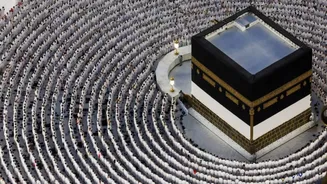
Every year, millions of Muslims converge on Makkah for Hajj, creating one of the largest and most complex crowd-management challenges on the planet. This year, Saudi Arabia is leaning heavily on artificial intelligence to help keep pilgrims safe.
A video circulating on X has drawn attention to the Kingdom's growing use of AI during the pilgrimage. The clip appears to show officials demonstrating a sophisticated monitoring platform capable of analysing crowd movement and activity in real time. Behind the scenes, however, the technology ecosystem supporting Hajj is far more extensive, combining satellite imagery, computer vision, geospatial analytics and AI-powered assistants to help authorities manage vast crowds across the holy sites.
At the centre of these efforts is a platform known as Roya, developed by the King Abdulaziz City for Science and Technology (KACST) in collaboration with the Ministry of Interior's General Directorate of Public Security.
The system combines artificial intelligence, remote sensing technologies and Geographic Information Systems (GIS) to provide authorities with a detailed operational picture of activity across Makkah and the surrounding holy sites.
Rather than relying solely on conventional surveillance methods, Roya processes satellite imagery, aerial photographs and geospatial information to track traffic patterns, analyse crowd density and identify areas that may require intervention. Security personnel can use the platform to monitor critical locations, improve response times and make faster operational decisions during periods of peak congestion.
According to KACST, the platform incorporates nearly 2,000 satellite images collected over multiple pilgrimage seasons and draws on more than a hundred aerial imaging missions covering Makkah, Madinah and key transportation corridors leading to the holy sites.
The system can also analyse thermal zones and land-surface temperatures, helping authorities identify unusual patterns and generate detailed spatial reports for field teams, reports Arab news agency, Alarabiya. Much of this process is automated, from data collection and processing to the live visualisation of statistics and operational insights.
The platform is integrated with the Public Security Command and Control Centre, allowing officials to view real-time information through an interactive interface designed for rapid decision-making in densely populated environments.
Roya forms part of a much broader digital strategy overseen by the Saudi Data and Artificial Intelligence Authority (SDAIA), which has increasingly positioned AI as a core component of Hajj operations.
One of the authority's primary objectives is managing crowd movement around some of Islam's holiest locations, including the Grand Mosque in Makkah, Mina, Arafat and Muzdalifah.
To achieve this, SDAIA has deployed AI-powered systems such as Baseer and Sawaher, developed in partnership with the Ministry of Interior. These platforms use computer vision, thermal imaging and advanced analytics to study crowd flows in real time. By analysing live video feeds and surveillance data, the systems can detect congestion hotspots, anticipate crowd surges and provide authorities with actionable insights before problems escalate.
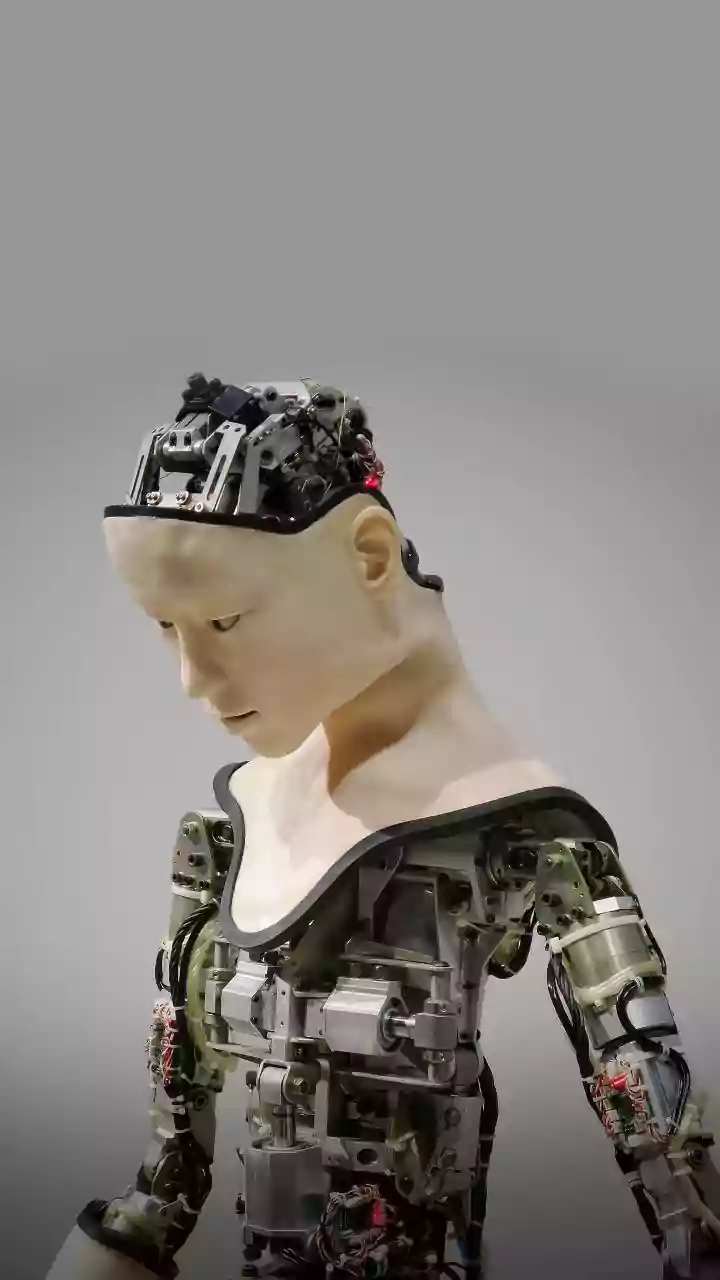
The Kingdom is also introducing AI in more visible ways. Multilingual service robots have been deployed across the holy sites to assist pilgrims from around the world. These machines provide religious guidance, answer questions, offer educational information and deliver instant translation services in multiple languages.
For many pilgrims, the technology may remain largely invisible. Yet from satellite monitoring and predictive analytics to intelligent robots and real-time crowd management systems, AI is increasingly working behind the scenes to make one of the world's largest annual gatherings safer, smoother and more organised than ever before.
A video circulating on X has drawn attention to the Kingdom's growing use of AI during the pilgrimage. The clip appears to show officials demonstrating a sophisticated monitoring platform capable of analysing crowd movement and activity in real time. Behind the scenes, however, the technology ecosystem supporting Hajj is far more extensive, combining satellite imagery, computer vision, geospatial analytics and AI-powered assistants to help authorities manage vast crowds across the holy sites.
🇸🇦 Saudis are using one of the most advanced AI surveillance systems in the world to monitor millions of pilgrims in Mecca
Tracking crowd movements in real time and analyzing density patterns
Managing crowds at this scale is a security challengepic.twitter.com/uwnlHt80V8
— Mario Nawfal (@MarioNawfal) May 31, 2026
How Saudi Arabia is using AI to monitor crowds during Hajj
At the centre of these efforts is a platform known as Roya, developed by the King Abdulaziz City for Science and Technology (KACST) in collaboration with the Ministry of Interior's General Directorate of Public Security.
The system combines artificial intelligence, remote sensing technologies and Geographic Information Systems (GIS) to provide authorities with a detailed operational picture of activity across Makkah and the surrounding holy sites.
Rather than relying solely on conventional surveillance methods, Roya processes satellite imagery, aerial photographs and geospatial information to track traffic patterns, analyse crowd density and identify areas that may require intervention. Security personnel can use the platform to monitor critical locations, improve response times and make faster operational decisions during periods of peak congestion.
According to KACST, the platform incorporates nearly 2,000 satellite images collected over multiple pilgrimage seasons and draws on more than a hundred aerial imaging missions covering Makkah, Madinah and key transportation corridors leading to the holy sites.
The system can also analyse thermal zones and land-surface temperatures, helping authorities identify unusual patterns and generate detailed spatial reports for field teams, reports Arab news agency, Alarabiya. Much of this process is automated, from data collection and processing to the live visualisation of statistics and operational insights.
🇸🇦 Saudi is taking security at the Hajj VERY seriously
Thousands of high-resolution cameras, real-time crowd tracking systems, and rapid-response security teams operating 24/7 aim to make it the safest pilgrimage ever.
It’s probably one of the most advanced mass-surveillance… https://t.co/cU74hORcWY pic.twitter.com/905fC7MuVa
— Mario Nawfal (@MarioNawfal) May 28, 2026
The platform is integrated with the Public Security Command and Control Centre, allowing officials to view real-time information through an interactive interface designed for rapid decision-making in densely populated environments.
Beyond surveillance: Robots, AI assistants and smart crowd control
Roya forms part of a much broader digital strategy overseen by the Saudi Data and Artificial Intelligence Authority (SDAIA), which has increasingly positioned AI as a core component of Hajj operations.
One of the authority's primary objectives is managing crowd movement around some of Islam's holiest locations, including the Grand Mosque in Makkah, Mina, Arafat and Muzdalifah.
To achieve this, SDAIA has deployed AI-powered systems such as Baseer and Sawaher, developed in partnership with the Ministry of Interior. These platforms use computer vision, thermal imaging and advanced analytics to study crowd flows in real time. By analysing live video feeds and surveillance data, the systems can detect congestion hotspots, anticipate crowd surges and provide authorities with actionable insights before problems escalate.
The Kingdom is also introducing AI in more visible ways. Multilingual service robots have been deployed across the holy sites to assist pilgrims from around the world. These machines provide religious guidance, answer questions, offer educational information and deliver instant translation services in multiple languages.
For many pilgrims, the technology may remain largely invisible. Yet from satellite monitoring and predictive analytics to intelligent robots and real-time crowd management systems, AI is increasingly working behind the scenes to make one of the world's largest annual gatherings safer, smoother and more organised than ever before.