





What is the story about?
A total solar eclipse is set to take place today (February 17), which will be visible across the United States for the first time in 99 years. This will also be the first solar eclipse of 2026.
The eclipse, which won't be visible in India, will take place between 3.26 pm to 7.57 pm IST, with the peak to occur between 5:13 pm and 6:11 pm.
The partial phase of the solar eclipse will be visible across Antarctica, southeastern Africa, the southern tip of South America, and over parts of the Pacific, Indian, Atlantic, and Southern oceans.
Here is all you need to know about the solar eclipse and the many superstitions that are linked to it.
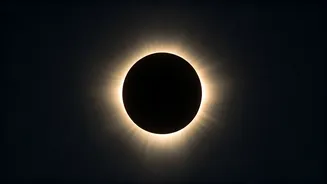
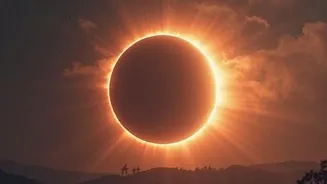
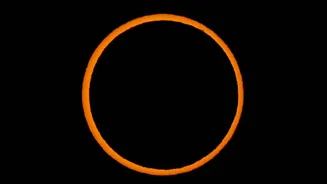
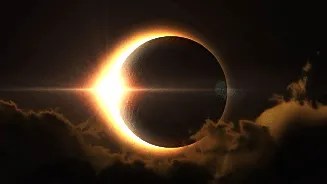
An annular solar eclipse will take place today across the United States. Also known as the Ring of Fire eclipse, it occurs when the Moon passes directly between the Earth and the Sun but sits farther away in its elliptical orbit. Since the Moon is slightly smaller than the Earth, it does not cover the Sun's disk fully, thus leading to a 'Ring of Fire'.
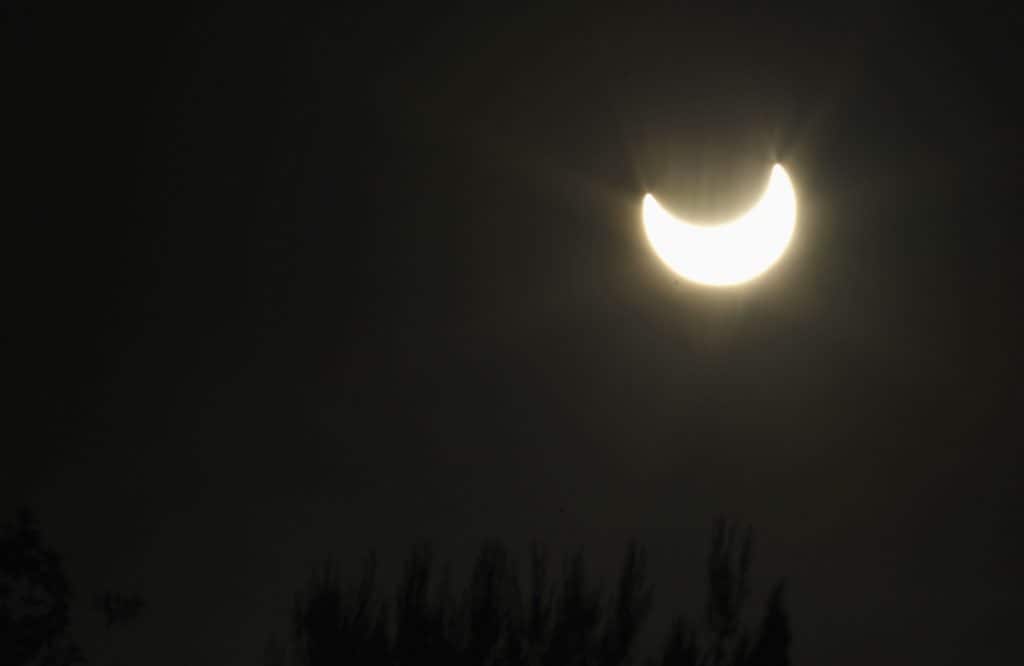
Rather than total darkness, a brilliant ring of sunlight forms around the Moon’s silhouette, producing the striking 'ring of fire' effect. Unlike a total solar eclipse, daylight remains, although the sky noticeably darkens for a short period. At prime viewing locations, the maximum annular phase on February 17 will last roughly two minutes and 20 seconds.
There are several superstitions revolving around eclipses. Firstly, it is advised that people avoid going outside during the eclipse. Eclipse blindness is a real thing that can cause permanent damage to the retina.
In Australian culture, viewing the eclipse is considered to be ominous as it is linked to disease or imbalance. Meanwhile, in Vietnam, legend has it that eclipses occur when a giant frog swallows the sun. Its master, Lord Hahn, then convinces the frog to spit it out.
The Chinese believe that a dragon eats the Sun for lunch, thus leading to the eclipse. Zhang Xian, the god of birth, fired arrows at the dragon, forcing it to throw up the Sun.
The Chippewa tribe of North America would shoot flaming arrows toward the sky to reignite the sun, believing this act brought an end to a solar eclipse.
Norse legends attribute eclipses to animals. According to them, a pair of wolves chased the Sun and the Moon; one of them managed to catch the Sun and ate it. Meanwhile, ancient Greeks believed that eclipses were a sign that gods were angry with humans, and that disasters would follow, bringing untold misery to people.
The Batammaliba, ancient tribe in northern Togo and Benin, believed that human anger and fighting spread to the Sun and the Moon, who began to fight with each other and caused an eclipse.
According to Hindu mythology, Rahu, a beheaded yet vengeful figure, is believed to swallow the Sun and the Moon, creating eclipses. But lacking a body and hands to hold them, he soon loses his grip, explaining why eclipses are only temporary.
And despite scientific proof, many people around the world still see eclipses as evil omens that bring death, destruction, and disasters.
In India, as eclipses are considered inauspicious periods of time, there are many dos and don'ts that are followed. It is believed that all actions should be taken cautiously during eclipses.
In India, there's a practice wherein worshipping or touching deities is strictly prohibited during eclipses. Even temple doors usually stay closed during eclipses. After the eclipse ends, the idols are supposed to be washed with Ganga water to purify them. Some believe that chanting hymns and devotional songs during eclipses can protect them from the evil effects of the natural phenomenon.
It is also advised that people should take a bath after the eclipse and change into fresh and clean clothes. Some Indians prohibit cooking or consuming food during a solar eclipse, while some people in India leave tulsi or Indian basil leaves on cooked food items and cover them to keep them safe.
The solar eclipse is also believed to be harmful for pregnant women. They are considered to be more susceptible to evil forces. In some parts of India, they are reportedly not allowed to sit with their legs crossed.
In some regions, sleeping, urination, defecation, sexual intercourse, and makeup are also prohibited during a solar eclipse. Those who sleep during a solar eclipse could contract illnesses, whereas urinating could cause poverty. Meanwhile, defecation can lead to birth of worms while people indulging in intercourse can be reborn as pigs.
With inputs from agencies
The eclipse, which won't be visible in India, will take place between 3.26 pm to 7.57 pm IST, with the peak to occur between 5:13 pm and 6:11 pm.
The partial phase of the solar eclipse will be visible across Antarctica, southeastern Africa, the southern tip of South America, and over parts of the Pacific, Indian, Atlantic, and Southern oceans.
Here is all you need to know about the solar eclipse and the many superstitions that are linked to it.
A solar eclipse, explained
An annular solar eclipse will take place today across the United States. Also known as the Ring of Fire eclipse, it occurs when the Moon passes directly between the Earth and the Sun but sits farther away in its elliptical orbit. Since the Moon is slightly smaller than the Earth, it does not cover the Sun's disk fully, thus leading to a 'Ring of Fire'.
Eclipse blindness is a real thing that can cause permanent damage to the retina. File image/Reuters
Rather than total darkness, a brilliant ring of sunlight forms around the Moon’s silhouette, producing the striking 'ring of fire' effect. Unlike a total solar eclipse, daylight remains, although the sky noticeably darkens for a short period. At prime viewing locations, the maximum annular phase on February 17 will last roughly two minutes and 20 seconds.
Different cultures explain eclipses
There are several superstitions revolving around eclipses. Firstly, it is advised that people avoid going outside during the eclipse. Eclipse blindness is a real thing that can cause permanent damage to the retina.
In Australian culture, viewing the eclipse is considered to be ominous as it is linked to disease or imbalance. Meanwhile, in Vietnam, legend has it that eclipses occur when a giant frog swallows the sun. Its master, Lord Hahn, then convinces the frog to spit it out.
The Chinese believe that a dragon eats the Sun for lunch, thus leading to the eclipse. Zhang Xian, the god of birth, fired arrows at the dragon, forcing it to throw up the Sun.
The Chippewa tribe of North America would shoot flaming arrows toward the sky to reignite the sun, believing this act brought an end to a solar eclipse.
Norse legends attribute eclipses to animals. According to them, a pair of wolves chased the Sun and the Moon; one of them managed to catch the Sun and ate it. Meanwhile, ancient Greeks believed that eclipses were a sign that gods were angry with humans, and that disasters would follow, bringing untold misery to people.
The Batammaliba, ancient tribe in northern Togo and Benin, believed that human anger and fighting spread to the Sun and the Moon, who began to fight with each other and caused an eclipse.
According to Hindu mythology, Rahu, a beheaded yet vengeful figure, is believed to swallow the Sun and the Moon, creating eclipses. But lacking a body and hands to hold them, he soon loses his grip, explaining why eclipses are only temporary.
And despite scientific proof, many people around the world still see eclipses as evil omens that bring death, destruction, and disasters.
Myths around solar eclipses in India
In India, as eclipses are considered inauspicious periods of time, there are many dos and don'ts that are followed. It is believed that all actions should be taken cautiously during eclipses.
In India, there's a practice wherein worshipping or touching deities is strictly prohibited during eclipses. Even temple doors usually stay closed during eclipses. After the eclipse ends, the idols are supposed to be washed with Ganga water to purify them. Some believe that chanting hymns and devotional songs during eclipses can protect them from the evil effects of the natural phenomenon.
It is also advised that people should take a bath after the eclipse and change into fresh and clean clothes. Some Indians prohibit cooking or consuming food during a solar eclipse, while some people in India leave tulsi or Indian basil leaves on cooked food items and cover them to keep them safe.
The solar eclipse is also believed to be harmful for pregnant women. They are considered to be more susceptible to evil forces. In some parts of India, they are reportedly not allowed to sit with their legs crossed.
In some regions, sleeping, urination, defecation, sexual intercourse, and makeup are also prohibited during a solar eclipse. Those who sleep during a solar eclipse could contract illnesses, whereas urinating could cause poverty. Meanwhile, defecation can lead to birth of worms while people indulging in intercourse can be reborn as pigs.
With inputs from agencies