





What is the story about?
The Artemis II astronauts are set to circle around the far side of the Moon at 1 pm EDT (10.30 pm IST) on Monday (April 6). With this, the four crew members, flying in their Orion spacecraft, will make history by becoming the farthest-flying humans.
The 10-day voyage around the moon began last week on April 1 when Nasa’s Space Launch System (SLS) rocket, with four astronauts on board the Orion capsule, blasted off from Florida’s coast. Spaceflight comes with several risks to the human body, which is attuned to staying on Earth.
As we celebrate World Health Day on April 7, let’s take a look at how space will impact astronauts on the Artemis II mission.
Space travel exposes astronauts to varied and higher levels of radiation. As the Artemis II crew is travelling beyond low-Earth orbit, they have left Earth’s protective magnetic field. This risks exposure to higher levels of space radiation.
They will face much higher levels of galactic cosmic rays and solar energetic particles than on the International Space Station (ISS).
Moderate levels of exposure to space radiation can enhance an astronaut’s long-term risk of cancer. Radiation could also damage DNA and potentially lead to cardiovascular or neurological issues over time.
As Artemis II is a short mission, the impact on the four crew members – NASA astronauts Reid Wiseman, Victor Glover and Christina Koch and Canadian astronaut Jeremy Hansen — will be limited.
Their radiation exposure will be modest, almost equivalent to that of a whole-body CT scan, according to the Science journal.
From DNA to vision, astronauts’ bodies change in a significant way during space travel.
Without Earth’s gravity, they start to lose bone density and their muscles begin to diminish. However, the impact on muscles and bones is seen in longer missions, while Artemis II is a short one.
Nonetheless, bone loss and muscle deconditioning are expected to begin within just a few days, as has been recorded during Nasa Space Shuttle missions, which were usually 7-14 days long, as per
BBC Sky At Night magazine.
After reaching outer space, where there is microgravity, some astronauts experience space motion sickness such as headaches, nausea, and vomiting. This happens as space affects spatial orientation, head-eye and hand-eye coordination, balance, and locomotion, according to Nasa.
The condition does not last long, ending in a couple of days as the body adjusts to microgravity.
Due to a lack of gravity, bodily fluids move upward, resulting in facial swelling. This also subsides after some days once fluids are evenly distributed in the body.
As the fluids shift towards the head, it puts pressure on the eyes and causes vision problems. Eyesight may be impacted, including changes in vision, which could occur just weeks in space.
While some vision changes reverse in a year of heading back to the Earth, others can be permanent.
Space travel could also have an impact on the astronauts' weight, immune and cardiovascular systems.
Studies show that astronauts may lose motor control, coordination and balance in space, which puts them at a higher risk of injury.
Most of these changes reverse shortly after the astronauts return to Earth.
Artmies II astronauts may also experience sleep disturbances due to a sudden shift in the light-darkness cycle, as per the magazine.
Space travellers could also go through mental stress and isolation, particularly owing to mission demands and staying in close, compact quarters.
The Artemis II mission crew will carry out a moon flyby, staying inside the Orion capsule. They will not land on the lunar surface, which is covered with fine, jagged soil.
They will thus not face the lunar dust hazard. Earlier, Apollo astronauts experienced “lunar hay fever”, which includes irritated eyes, noses and lungs, after a little dust entered the cabin.
According to studies, these sharp, reactive particles can inflame tissues.
As in future missions, when astronauts land on the moon, lunar dust will be a problem. To solve this, engineers are developing better filters, suit designs and habitat systems to limit exposure to these particles, noted Forbes.
Radiation remains the top health concern for Nasa when it comes to deep space travel. To protect the Artemis II crew, the Orion spacecraft features radiation shielding. The capsule is equipped with six radiation sensors, which are part of the US space agency's Hybrid Electronic Radiation Assessor system. It records radiation dose rates in different parts of the cabin.
Astronauts also have their own radiation trackers to alert them if radiation levels are too high.
Space travellers have to indulge in in-flight exercise to tackle the loss of bone and muscle.
Astronauts have their own regular exercise routines to counter early bone changes and muscle deconditioning.
Space motion sickness can also be limited through training and medication, if needed, as per BBC's magazine.
Acute fluid shift from the lower part of the body to the head is managed through exercises and hydration monitoring during the mission.
Astronauts undergo pre-mission training to deal with mental stress and isolation. A large team on the ground, including medical professionals, engineers and mission control staff, works along with the crew members in space.
With inputs from agencies
The 10-day voyage around the moon began last week on April 1 when Nasa’s Space Launch System (SLS) rocket, with four astronauts on board the Orion capsule, blasted off from Florida’s coast. Spaceflight comes with several risks to the human body, which is attuned to staying on Earth.
As we celebrate World Health Day on April 7, let’s take a look at how space will impact astronauts on the Artemis II mission.
Space radiation
Space travel exposes astronauts to varied and higher levels of radiation. As the Artemis II crew is travelling beyond low-Earth orbit, they have left Earth’s protective magnetic field. This risks exposure to higher levels of space radiation.
They will face much higher levels of galactic cosmic rays and solar energetic particles than on the International Space Station (ISS).
Moderate levels of exposure to space radiation can enhance an astronaut’s long-term risk of cancer. Radiation could also damage DNA and potentially lead to cardiovascular or neurological issues over time.
As Artemis II is a short mission, the impact on the four crew members – NASA astronauts Reid Wiseman, Victor Glover and Christina Koch and Canadian astronaut Jeremy Hansen — will be limited.
Their radiation exposure will be modest, almost equivalent to that of a whole-body CT scan, according to the Science journal.
Space sickness & more
From DNA to vision, astronauts’ bodies change in a significant way during space travel.
Without Earth’s gravity, they start to lose bone density and their muscles begin to diminish. However, the impact on muscles and bones is seen in longer missions, while Artemis II is a short one.
Nonetheless, bone loss and muscle deconditioning are expected to begin within just a few days, as has been recorded during Nasa Space Shuttle missions, which were usually 7-14 days long, as per
After reaching outer space, where there is microgravity, some astronauts experience space motion sickness such as headaches, nausea, and vomiting. This happens as space affects spatial orientation, head-eye and hand-eye coordination, balance, and locomotion, according to Nasa.
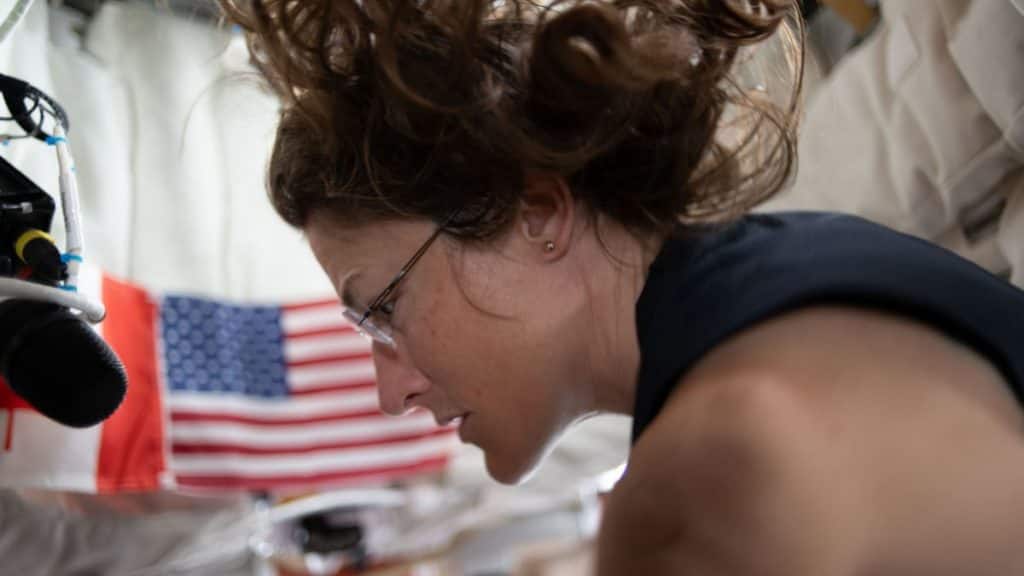
In this photo provided by Nasa, astronaut Christina Koch is pictured on the fourth day of the mission, prepping for lunar flyby activities after completing aerobic exercise on the flywheel device, during the Artemis II crew's journey to the Moon, April 4, 2026. Nasa via AP
The condition does not last long, ending in a couple of days as the body adjusts to microgravity.
Due to a lack of gravity, bodily fluids move upward, resulting in facial swelling. This also subsides after some days once fluids are evenly distributed in the body.
As the fluids shift towards the head, it puts pressure on the eyes and causes vision problems. Eyesight may be impacted, including changes in vision, which could occur just weeks in space.
While some vision changes reverse in a year of heading back to the Earth, others can be permanent.
Space travel could also have an impact on the astronauts' weight, immune and cardiovascular systems.
Studies show that astronauts may lose motor control, coordination and balance in space, which puts them at a higher risk of injury.
Most of these changes reverse shortly after the astronauts return to Earth.
Artmies II astronauts may also experience sleep disturbances due to a sudden shift in the light-darkness cycle, as per the magazine.
Space travellers could also go through mental stress and isolation, particularly owing to mission demands and staying in close, compact quarters.
Lunar dust threat
The Artemis II mission crew will carry out a moon flyby, staying inside the Orion capsule. They will not land on the lunar surface, which is covered with fine, jagged soil.
They will thus not face the lunar dust hazard. Earlier, Apollo astronauts experienced “lunar hay fever”, which includes irritated eyes, noses and lungs, after a little dust entered the cabin.
According to studies, these sharp, reactive particles can inflame tissues.
As in future missions, when astronauts land on the moon, lunar dust will be a problem. To solve this, engineers are developing better filters, suit designs and habitat systems to limit exposure to these particles, noted Forbes.
How astronauts will stay safe
Radiation remains the top health concern for Nasa when it comes to deep space travel. To protect the Artemis II crew, the Orion spacecraft features radiation shielding. The capsule is equipped with six radiation sensors, which are part of the US space agency's Hybrid Electronic Radiation Assessor system. It records radiation dose rates in different parts of the cabin.
Astronauts also have their own radiation trackers to alert them if radiation levels are too high.
Space travellers have to indulge in in-flight exercise to tackle the loss of bone and muscle.
Astronauts have their own regular exercise routines to counter early bone changes and muscle deconditioning.
Space motion sickness can also be limited through training and medication, if needed, as per BBC's magazine.
Acute fluid shift from the lower part of the body to the head is managed through exercises and hydration monitoring during the mission.
Astronauts undergo pre-mission training to deal with mental stress and isolation. A large team on the ground, including medical professionals, engineers and mission control staff, works along with the crew members in space.
With inputs from agencies