








What is the story about?
As India prepares to host the landmark AI Impact Summit 2026 in New Delhi next week, the Government has showcased how artificial intelligence is already reshaping the nation’s healthcare landscape.
From smarter disease screening to improved telemedicine and predictive surveillance tools, AI’s footprint across public health programmes is expanding rapidly, bringing both innovation and inclusion to the core of service delivery.
The transformation is anchored in a broader India AI mission, launched by the Union Cabinet in March 2024 to promote inclusive development and enhance governance using AI. Healthcare, with its deep societal impact, has been a key focus, reflecting the mission’s motto of Sarvajana Hitaya, Sarvajana Sukhaya, welfare and happiness for all.
Across India, AI-enabled solutions are increasingly embedded within both national and state health initiatives, helping bridge gaps in access and early detection. One of the country’s most striking achievements is the integration of AI into frontline screening programmes.
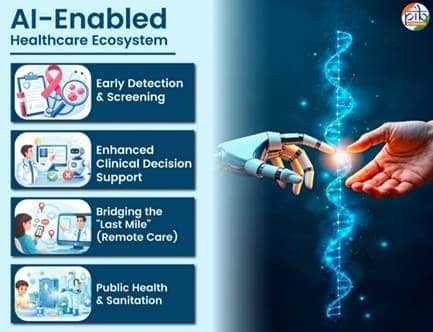
AI tools are now being used to screen for tuberculosis (TB) and diabetic retinopathy, enabling non-specialist health workers to perform high-level diagnostic tasks that previously required specialists. These efforts have contributed to a 27 per cent reduction in adverse TB outcomes and a rise in case detection nationwide.
Telemedicine, a vital lifeline for patients far from healthcare facilities, has also been bolstered by AI. The e-Sanjeevani platform has supported hundreds of millions of consultations, with AI assisting in differential diagnosis and triage, expanding the reach and quality of remote care.
In other areas, predictive analytics and disease surveillance tools scan data streams to flag potential outbreaks, alerting authorities for timely intervention.
AI-assisted programmes are also diversifying into traditional systems such as Ayurveda, using genomic and ancient knowledge to explore health patterns, as well as into cancer care through imaging biobanks that support early detection research.
India’s public policy think-tank, Niti Aayog, and the National Health Authority are working with academic partners and Centres of Excellence to standardise AI solutions, ensure ethical safeguards, and validate models using federated learning frameworks. Partnerships with leading institutes such as AIIMS and IIT Kanpur aim to foster robust, scalable AI innovation for health.
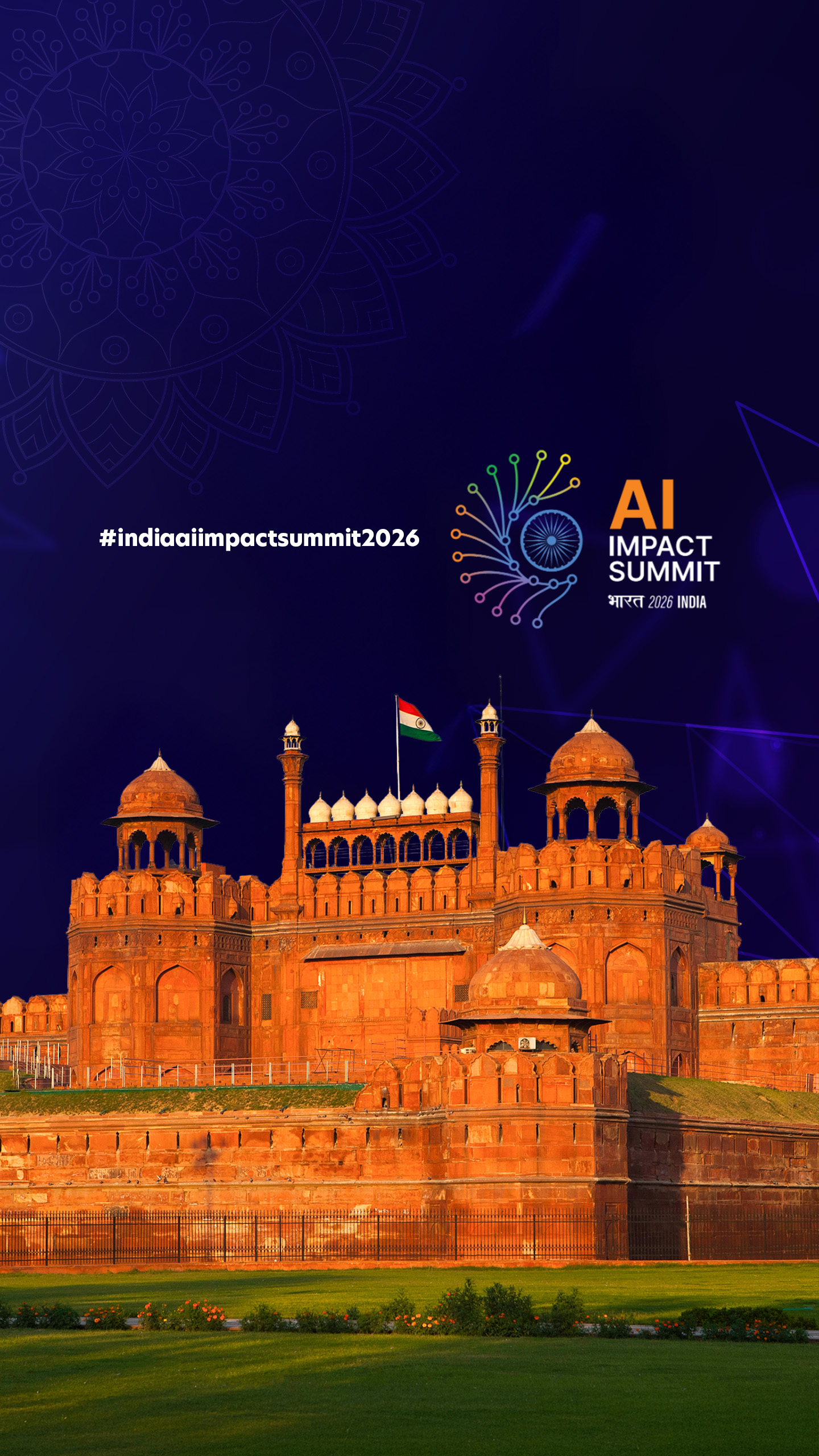
The AI Impact Summit 2026, scheduled from February 16–20 in New Delhi, will bring global policymakers, tech innovators and domain experts together to deepen collaborations and showcase practical AI applications, including healthcare breakthroughs.
As the first global AI summit hosted in the Global South, it will emphasise real-world impact and inclusive frameworks, shifting the discourse from speculative policy to tangible outcomes.
Among summit highlights will be discussions on safe and trusted AI, democratising access to technology, and using AI to advance public health goals.
India’s work with platforms such as Global HealthAI and its own digital health infrastructure under the Ayushman Bharat Digital Mission demonstrate how AI can be operationalised ethically and effectively in large-scale public systems.
As New Delhi gears up to host the world’s AI community, India’s healthcare story illustrates how artificial intelligence, when thoughtfully deployed, can be a powerful ally in delivering more accessible, efficient and personalised care to millions.
From smarter disease screening to improved telemedicine and predictive surveillance tools, AI’s footprint across public health programmes is expanding rapidly, bringing both innovation and inclusion to the core of service delivery.
The transformation is anchored in a broader India AI mission, launched by the Union Cabinet in March 2024 to promote inclusive development and enhance governance using AI. Healthcare, with its deep societal impact, has been a key focus, reflecting the mission’s motto of Sarvajana Hitaya, Sarvajana Sukhaya, welfare and happiness for all.
AI in India's healthcare
Across India, AI-enabled solutions are increasingly embedded within both national and state health initiatives, helping bridge gaps in access and early detection. One of the country’s most striking achievements is the integration of AI into frontline screening programmes.
Credit: PIB
AI tools are now being used to screen for tuberculosis (TB) and diabetic retinopathy, enabling non-specialist health workers to perform high-level diagnostic tasks that previously required specialists. These efforts have contributed to a 27 per cent reduction in adverse TB outcomes and a rise in case detection nationwide.
Telemedicine, a vital lifeline for patients far from healthcare facilities, has also been bolstered by AI. The e-Sanjeevani platform has supported hundreds of millions of consultations, with AI assisting in differential diagnosis and triage, expanding the reach and quality of remote care.
In other areas, predictive analytics and disease surveillance tools scan data streams to flag potential outbreaks, alerting authorities for timely intervention.
AI-assisted programmes are also diversifying into traditional systems such as Ayurveda, using genomic and ancient knowledge to explore health patterns, as well as into cancer care through imaging biobanks that support early detection research.
India’s public policy think-tank, Niti Aayog, and the National Health Authority are working with academic partners and Centres of Excellence to standardise AI solutions, ensure ethical safeguards, and validate models using federated learning frameworks. Partnerships with leading institutes such as AIIMS and IIT Kanpur aim to foster robust, scalable AI innovation for health.
AI Impact Summit 2026
The AI Impact Summit 2026, scheduled from February 16–20 in New Delhi, will bring global policymakers, tech innovators and domain experts together to deepen collaborations and showcase practical AI applications, including healthcare breakthroughs.
As the first global AI summit hosted in the Global South, it will emphasise real-world impact and inclusive frameworks, shifting the discourse from speculative policy to tangible outcomes.
Among summit highlights will be discussions on safe and trusted AI, democratising access to technology, and using AI to advance public health goals.
India’s work with platforms such as Global HealthAI and its own digital health infrastructure under the Ayushman Bharat Digital Mission demonstrate how AI can be operationalised ethically and effectively in large-scale public systems.
As New Delhi gears up to host the world’s AI community, India’s healthcare story illustrates how artificial intelligence, when thoughtfully deployed, can be a powerful ally in delivering more accessible, efficient and personalised care to millions.