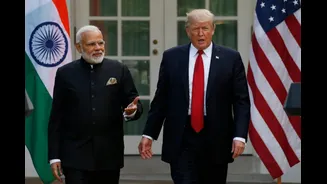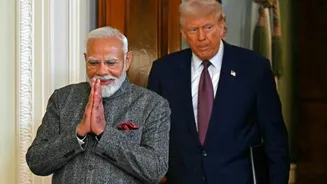

India and the United States on Monday finally sealed a long‑awaited trade agreement that cuts tariffs on Indian imports to 18 percent from the previous 50 percent. The announcement follows months of negotiations, diplomatic encounters, tariff clashes and strategic shifts by both sides.
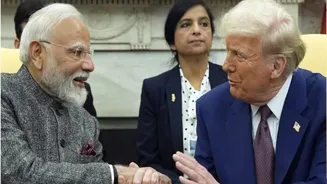
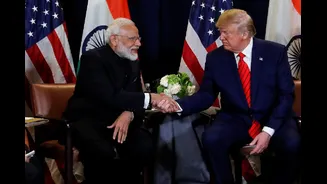
The groundwork for the trade deal was laid in February 2025, when Prime Minister Narendra Modi visited Washington and met with US President Donald Trump. The leaders agreed to work towards a limited trade agreement by autumn and set an ambitious goal of expanding bilateral trade to $500 billion by 2030. PM Modi also committed to increasing India’s purchases of US energy during that visit.
Commerce talks and rising tensions
In March and April 2025, key Indian ministers and US trade officials engaged in negotiations. Commerce and Industry Minister Piyush Goyal met the US Commerce Secretary and US Trade Representative, while US officials visited New Delhi. Despite progress, Washington raised concerns about India’s high tariffs, non‑tariff barriers, data rules and patent issues.
On April 2, the US rolled out its “Liberation Day” tariff plan, including a 26 per cent duty on Indian goods, which was temporarily paused for 90 days to give talks more time. During US Vice President JD Vance’s visit to India on April 16, both sides agreed on terms of reference for the formal negotiations.
By July 2025, negotiators had returned without a breakthrough. On July 31, Trump imposed a 25 per cent tariff on Indian imports and warned of further penalties if India continued its Russian oil purchases—a big sticking point in the talks.
Follow this LIVE blog for all the the latest updates on the INDIA-US trade deal
In August 2025, the US added a 25 percent penalty tariff linked to India’s Russian oil purchases, pushing total duties on Indian exports to 50 percent, the highest US tariffs on any partner at the time. Despite these tensions, both nations continued to assert that their broader relationship remained strong.
In December 2025, Modi described a “warm and engaging” phone call with Trump, keeping negotiation channels open. In January 2026, newly appointed US envoy Sergio Gor said both countries were actively engaged and moving closer to an agreement.
Deal sealed in February 2026
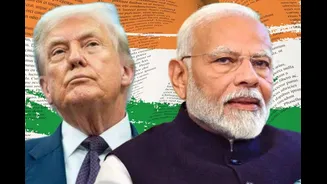
On February 2, Trump and Modi announced the trade deal, effectively ending the tariff standoff. Under the pact, the US reduced tariffs on Indian imports to 18 percent, while India agreed to cut tariffs and non‑tariff barriers on US products to zero. Trump also said Modi would stop purchasing Russian oil and increase purchases from the US and possibly Venezuela.
Prime Minister Modi welcomed the agreement on social media, saying, “Wonderful to speak with my dear friend President Donald Trump today. Delighted that Made in India products will now have a reduced tariff of 18 percent.”