






What is the story about?
The proposed trade agreement between India and the United States will be signed only after Washington finalises its new tariff framework, Commerce Secretary Rajesh Agrawal said on Monday.
Speaking during a trade data briefing, Agrawal said the two sides are currently working through the finer details of the pact and that discussions are ongoing.
“We are talking right now on details with the US,” he said, adding that the agreement would be signed once the new tariff architecture is put in place.
The interim trade pact, whose framework was finalised last month, was initially expected to be signed in March. However, changes in US trade policy have delayed the timeline. Sweeping tariffs imposed earlier by US President Donald Trump on several countries, including India, were recently struck down by the Supreme Court of the United States, effectively dismantling the earlier tariff structure.
Following the ruling, the US administration introduced a temporary tariff of around 10 per cent on imports from all countries under Article 122 of the US Constitution, citing balance-of-payments concerns. These duties are expected to remain in force for about five months.
The trade agreement aims to secure comparative and preferential access for both countries in each other’s markets. When the framework for the first phase of the deal was announced, tariffs on Indian goods entering the US market were proposed at around 18 per cent, significantly lower than the earlier 50 per cent level.
Agrawal said the pact would be concluded only after Washington restores global tariff rates following the court ruling that struck them down.
“Because at the end of it, each country is doing a deal as a part of a package where one is at comparative advantage… vis-à-vis competitors,” he said, according to PTI.
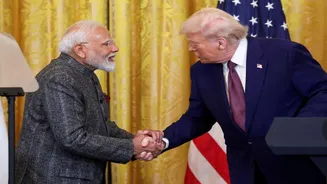
India and the US last month announced the finalisation of the framework for the first phase of their bilateral trade agreement, under which the US had agreed to reduce tariffs on Indian goods to 18 percent.
However, the tariff structure has since shifted after the Supreme Court ruling against Trump’s sweeping tariffs. In response, Trump imposed a temporary 10 percent tariff on all countries for 150 days starting February 24.
Amid these developments, the meeting between the chief negotiators of the two countries—earlier scheduled for last month to finalise the legal text—has been postponed.
Agrawal also said New Delhi is currently in talks with Washington on the details of the trade pact.
“The deal was to be signed in March. When we said this, the Supreme Court judgment on IEEPA tariffs had not come. Now, with the judgment, those tariffs no longer exist,” he said.
“Currently, tariffs are being imposed under Article 122 related to balance-of-payments concerns, which will remain for five months at around 10 per cent. The deal we sign must reflect the tariff structure or comparative advantage that India receives in the US market.”
Apart from the US, the government said India is negotiating six free trade agreements with different countries and regional groupings as part of efforts to expand trade partnerships.
Negotiations are underway with Australia, Sri Lanka, Peru, Chile, the Eurasian Economic Union, and Israel.
Meanwhile, the Trump administration has moved to revive tariff pressure after the Supreme Court setback. The Office of the United States Trade Representative has launched an investigation into alleged unfair manufacturing practices by India and 15 other major economies.
The move, known as a Section 301 investigation under the Trade Act of 1974, could allow the US government to impose fresh tariffs, restrict imports, or suspend trade concessions against countries found to be engaging in unfair trade practices.
Speaking during a trade data briefing, Agrawal said the two sides are currently working through the finer details of the pact and that discussions are ongoing.
“We are talking right now on details with the US,” he said, adding that the agreement would be signed once the new tariff architecture is put in place.
The interim trade pact, whose framework was finalised last month, was initially expected to be signed in March. However, changes in US trade policy have delayed the timeline. Sweeping tariffs imposed earlier by US President Donald Trump on several countries, including India, were recently struck down by the Supreme Court of the United States, effectively dismantling the earlier tariff structure.
Following the ruling, the US administration introduced a temporary tariff of around 10 per cent on imports from all countries under Article 122 of the US Constitution, citing balance-of-payments concerns. These duties are expected to remain in force for about five months.
India seeking competitive edge in US market
The trade agreement aims to secure comparative and preferential access for both countries in each other’s markets. When the framework for the first phase of the deal was announced, tariffs on Indian goods entering the US market were proposed at around 18 per cent, significantly lower than the earlier 50 per cent level.
Agrawal said the pact would be concluded only after Washington restores global tariff rates following the court ruling that struck them down.
“Because at the end of it, each country is doing a deal as a part of a package where one is at comparative advantage… vis-à-vis competitors,” he said, according to PTI.
India and the US last month announced the finalisation of the framework for the first phase of their bilateral trade agreement, under which the US had agreed to reduce tariffs on Indian goods to 18 percent.
However, the tariff structure has since shifted after the Supreme Court ruling against Trump’s sweeping tariffs. In response, Trump imposed a temporary 10 percent tariff on all countries for 150 days starting February 24.
Amid these developments, the meeting between the chief negotiators of the two countries—earlier scheduled for last month to finalise the legal text—has been postponed.
India negotiating trade deals with multiple partners
Agrawal also said New Delhi is currently in talks with Washington on the details of the trade pact.
“The deal was to be signed in March. When we said this, the Supreme Court judgment on IEEPA tariffs had not come. Now, with the judgment, those tariffs no longer exist,” he said.
“Currently, tariffs are being imposed under Article 122 related to balance-of-payments concerns, which will remain for five months at around 10 per cent. The deal we sign must reflect the tariff structure or comparative advantage that India receives in the US market.”
Apart from the US, the government said India is negotiating six free trade agreements with different countries and regional groupings as part of efforts to expand trade partnerships.
Negotiations are underway with Australia, Sri Lanka, Peru, Chile, the Eurasian Economic Union, and Israel.
US launches probe into ‘unfair trade practices’
Meanwhile, the Trump administration has moved to revive tariff pressure after the Supreme Court setback. The Office of the United States Trade Representative has launched an investigation into alleged unfair manufacturing practices by India and 15 other major economies.
The move, known as a Section 301 investigation under the Trade Act of 1974, could allow the US government to impose fresh tariffs, restrict imports, or suspend trade concessions against countries found to be engaging in unfair trade practices.