









What is the story about?
A tree, decorated with lights, standing in the corner of the room, has become synonymous with present-day Christmas celebrations. But did you know that using electric lights for decoration is a recent addition? For the longest time, candles were used to decorate Christmas trees during the holiday season, but these proved to be disastrous in some cases where trees caught fire from the candles' flames. So, the first Christmas tree decorated with electric lights appeared on December 22, 1882.
If you are a history geek who loves to learn about important events from the past, Firstpost Explainers’ ongoing series, History Today will be your one-stop destination to explore key events.
On this day in 2001, the world's first cloned cat was born, marking a breakthrough in genetic science and animal cloning. In 1849, Russian novelist Fyodor Dostoevsky was spared from execution in what many consider to be the most dramatic episodes in literary history.
Here is all that took place on this day across the world.
The first Christmas tree decorated with electric lights appeared on December 22, 1882, changing the way holiday traditions were marked. It was created by Edward H Johnson, a close associate of inventor Thomas Edison, at his home in New York City during a time when Christmas trees were usually lit with candles.
Johnson’s tree stood about six feet tall and featured 80 hand-wired red, white, and blue electric bulbs. The lights were powered by a generator and arranged to rotate around the tree, creating a dazzling effect that few people had ever seen before. The display was reported by a local newspaper, which described it as an impressive use of Edison’s new electric lighting technology.

In the late 19th century, electricity was still a luxury and largely unfamiliar to the public. Most homes relied on gas lamps, and candles on Christmas trees posed serious fire hazards. Johnson’s electrically lit tree offered a safer alternative, but the idea did not spread quickly. Early electric lights were expensive, required skilled installation, and were available only to the wealthy.
For several decades, candlelit trees remained common. It wasn’t until the early 20th century, as electricity became more widespread and affordable, that electric Christmas lights began appearing in ordinary homes. Mass production further lowered costs, making string lights accessible to families across the United States and beyond.
The world’s first cloned cat was born on this day in 2001. CC, short for “CopyCat,” was created by scientists at Texas A&M University in the United States. Her birth demonstrated that cloning technology, previously used on animals such as sheep and cows, could also be applied to household pets.
CC was cloned using a technique called somatic cell nuclear transfer. Scientists took genetic material from a cell of an adult calico cat and inserted it into an egg cell whose nucleus had been removed. The egg was then stimulated to develop into an embryo and implanted into a surrogate mother. After a normal pregnancy, CC was born healthy.

One of the most striking outcomes of the experiment was that CC did not look exactly like her genetic donor. While both were calico cats, CC’s fur pattern differed. This helped illustrate an important scientific point: cloned animals share the same DNA as the donor, but physical traits such as coat patterns can vary due to developmental factors in the womb.
Supporters saw it as a major step forward in understanding genetics, development, and disease, while critics questioned the morality of cloning animals and raised concerns about animal welfare and high failure rates in cloning experiments.
Despite the controversy, CC lived a healthy life and reached adulthood, unlike many cloned animals that suffered health problems. Her birth helped advance cloning research and paved the way for commercial pet cloning services that emerged years later.
Russian novelist Fyodor Dostoevsky was spared from execution on this day in 1849, in one of the most dramatic episodes in literary history. Dostoevsky had been arrested earlier that year for his involvement with the Petrashevsky Circle, a group of intellectuals who met to discuss banned books and progressive political ideas that challenged the authority of Tsar Nicholas I.
Dostoevsky and other members of the group were charged with subversion and sentenced to death by firing squad. On the freezing morning of December 22, they were taken to Semyonovsky Square in Saint Petersburg. The prisoners were dressed in burial clothing, their death sentences were read aloud, and execution posts were erected. Dostoevsky later recalled the terror and finality of those moments as he believed he was about to die.
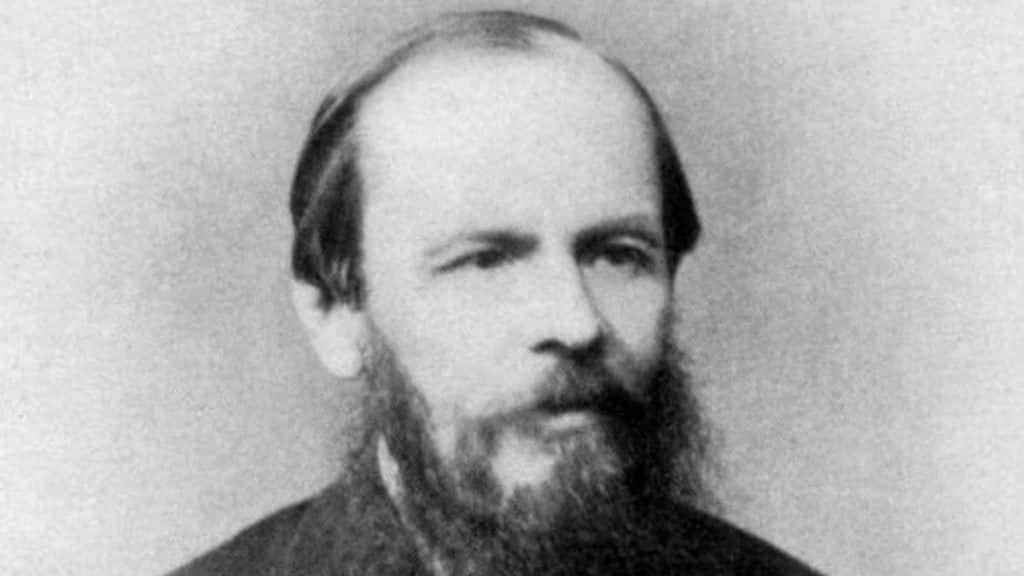
Just as the execution was about to proceed, a messenger arrived with an order from the tsar. The death sentences were commuted at the last possible moment. This dramatic reprieve was not an act of mercy alone but a calculated punishment intended to instill fear and obedience. Dostoevsky’s sentence was changed to four years of hard labour in a Siberian prison camp, followed by compulsory military service.
The experience profoundly shaped Dostoevsky’s worldview and writing. Confrontation with death intensified his focus on faith, suffering, redemption, and the human psyche. Themes of moral struggle and spiritual rebirth that appear in later works, such as Crime and Punishment, The Idiot, and The Brothers Karamazov, can be traced back to this near-execution.
With inputs from agencies
If you are a history geek who loves to learn about important events from the past, Firstpost Explainers’ ongoing series, History Today will be your one-stop destination to explore key events.
On this day in 2001, the world's first cloned cat was born, marking a breakthrough in genetic science and animal cloning. In 1849, Russian novelist Fyodor Dostoevsky was spared from execution in what many consider to be the most dramatic episodes in literary history.
Here is all that took place on this day across the world.
When the Christmas tree was first decorated with lights
The first Christmas tree decorated with electric lights appeared on December 22, 1882, changing the way holiday traditions were marked. It was created by Edward H Johnson, a close associate of inventor Thomas Edison, at his home in New York City during a time when Christmas trees were usually lit with candles.
Johnson’s tree stood about six feet tall and featured 80 hand-wired red, white, and blue electric bulbs. The lights were powered by a generator and arranged to rotate around the tree, creating a dazzling effect that few people had ever seen before. The display was reported by a local newspaper, which described it as an impressive use of Edison’s new electric lighting technology.
A staff member adjusts ornaments on a Christmas tree in the Crimson Drawing Room in Windsor Castle in Windsor, Britain. Reuters
In the late 19th century, electricity was still a luxury and largely unfamiliar to the public. Most homes relied on gas lamps, and candles on Christmas trees posed serious fire hazards. Johnson’s electrically lit tree offered a safer alternative, but the idea did not spread quickly. Early electric lights were expensive, required skilled installation, and were available only to the wealthy.
For several decades, candlelit trees remained common. It wasn’t until the early 20th century, as electricity became more widespread and affordable, that electric Christmas lights began appearing in ordinary homes. Mass production further lowered costs, making string lights accessible to families across the United States and beyond.
The world’s first cloned cat was born
The world’s first cloned cat was born on this day in 2001. CC, short for “CopyCat,” was created by scientists at Texas A&M University in the United States. Her birth demonstrated that cloning technology, previously used on animals such as sheep and cows, could also be applied to household pets.
CC was cloned using a technique called somatic cell nuclear transfer. Scientists took genetic material from a cell of an adult calico cat and inserted it into an egg cell whose nucleus had been removed. The egg was then stimulated to develop into an embryo and implanted into a surrogate mother. After a normal pregnancy, CC was born healthy.
CC was the first cat to be born through cloning. Image Courtesy: Texas A&M College of Veterinary Medicine & Biological Sciences
One of the most striking outcomes of the experiment was that CC did not look exactly like her genetic donor. While both were calico cats, CC’s fur pattern differed. This helped illustrate an important scientific point: cloned animals share the same DNA as the donor, but physical traits such as coat patterns can vary due to developmental factors in the womb.
Supporters saw it as a major step forward in understanding genetics, development, and disease, while critics questioned the morality of cloning animals and raised concerns about animal welfare and high failure rates in cloning experiments.
Despite the controversy, CC lived a healthy life and reached adulthood, unlike many cloned animals that suffered health problems. Her birth helped advance cloning research and paved the way for commercial pet cloning services that emerged years later.
Fyodor Dostoevsky was spared from execution
Russian novelist Fyodor Dostoevsky was spared from execution on this day in 1849, in one of the most dramatic episodes in literary history. Dostoevsky had been arrested earlier that year for his involvement with the Petrashevsky Circle, a group of intellectuals who met to discuss banned books and progressive political ideas that challenged the authority of Tsar Nicholas I.
Dostoevsky and other members of the group were charged with subversion and sentenced to death by firing squad. On the freezing morning of December 22, they were taken to Semyonovsky Square in Saint Petersburg. The prisoners were dressed in burial clothing, their death sentences were read aloud, and execution posts were erected. Dostoevsky later recalled the terror and finality of those moments as he believed he was about to die.
Russian novelist Fyodor Dostoevsky was spared from public execution. Wikimedia Commons
Just as the execution was about to proceed, a messenger arrived with an order from the tsar. The death sentences were commuted at the last possible moment. This dramatic reprieve was not an act of mercy alone but a calculated punishment intended to instill fear and obedience. Dostoevsky’s sentence was changed to four years of hard labour in a Siberian prison camp, followed by compulsory military service.
The experience profoundly shaped Dostoevsky’s worldview and writing. Confrontation with death intensified his focus on faith, suffering, redemption, and the human psyche. Themes of moral struggle and spiritual rebirth that appear in later works, such as Crime and Punishment, The Idiot, and The Brothers Karamazov, can be traced back to this near-execution.
This Day, That Year
- US President Franklin D Roosevelt and British Prime Minister Winston Churchill met in Washington, DC, to discuss World War II on this day in 1941.
- Guru Gobind Singh was born on this day in 1666.
- The Dominican order was sanctioned by Pope Honorius III on this day in 1216.
With inputs from agencies