








What is the story about?
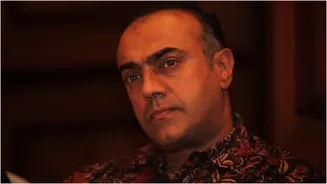
For actor and storyteller Rajit Kapur, storytelling has never merely been about performance- it is about presence, listening, and the quiet exchange between a narrator and their audience. In an exclusive conversation with Firstpost’s Zinia Bandyopadhyay, ahead of his appearance at the Udaipur Tales Storytelling Festival, Kapur spoke candidly about why he feels storytelling is in decline, how technology has disrupted its most essential elements, and why he is consciously stepping away from repetitive roles in 2025.
Kapur believes that the erosion of storytelling begins with the disappearance of face-to-face interaction. “Technology has become the villain,” he said, pointing out that people no longer engage in direct conversations, the very foundation of oral storytelling. “People don’t have face-to-face conversations anymore, and that interaction is missing. That’s where storytelling really begins.”
While technology has amplified access to content, Kapur feels it has also altered how stories are experienced. According to him, technology often takes centre stage over the story itself, diluting nuance and emotional resonance. “The problem now is not just the story, but how it’s being told,” he explained, adding that excessive lighting, background music, and technical interference often drown out subtle expressions and dialogue. “You can’t catch the nuance of the expression or the dialogue anymore.”
The veteran actor also reflected on the creative stagnation that comes with being typecast. Kapur revealed that he has decided to say no to work throughout 2025 if it offers no narrative arc. “PM play karo, CM play karo, RAW chief play karo — there’s no arc,” he said bluntly, explaining that characters without growth or evolution no longer interest him.
Citing his role in Nail Polish as an exception, Kapur explained why that performance mattered to him. “I played a judge, but there was an arc to it. It wasn’t just ‘order, order’,” he said. Ironically, after the film’s release, he found himself being offered only similar judge roles, a pattern he has consciously chosen to break.
Rather than recommending specific films, plays, or books, Kapur believes the audience needs something far more fundamental. “People need silence,” he said. “They need to hear what’s around them to become receptive. They need to be outdoors.” For Kapur, storytelling cannot thrive in a constant state of noise; it requires stillness, attention, and a willingness to listen.
As he prepares to engage audiences at the Udaipur Tales Storytelling Festival, Kapur’s reflections serve as both a critique and a reminder: storytelling is not dying because of a lack of stories, but because we are slowly forgetting how to listen.