









What is the story about?
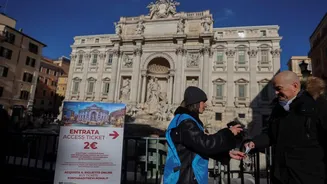
There is always a price tag attached to experiences, but should witnessing history come at a cost? That question is now stirring debate in Rome, as one of the city’s most loved landmarks, the Trevi Fountain, has introduced a visitor fee for closer access.
From now on, tourists who wish to walk down the steps and reach the basin of the Trevi Fountain will be required to pay a small charge of 2 euros. ($ 2.36/₹ 213.58)
The fee applies on weekdays between 11.30am and 10pm, and on weekends from 9am to 10pm. After nightfall, access remains completely free.
Why this fee?
The move comes as Rome struggles to manage overwhelming tourist crowds. More than 10 million people visited the Trevi Fountain between December 2024 and December 2025 alone.
This period also coincided with a Catholic Jubilee year, which brought an estimated 33.5 million pilgrims to the Eternal City.
Importantly, the surrounding square, which offers the classic postcard view of the fountain, will remain freely accessible.
The charge applies only to visitors who choose to step closer, down to the water’s edge, where the centuries old tradition of tossing a coin over one’s shoulder takes place. Legend says the ritual guarantees a return to Rome.
Visitors who pay the fee can spend as much time as they like near the basin, take photographs, and soak in the details of the monument. However, eating, drinking, or smoking in the basin area will not be allowed.
Rome residents are exempt from the charge, as are people with disabilities and children under six.
City officials say the aim is not to monetise culture, but to preserve it.
Alessandro Onorato, Rome’s city councillor responsible for tourism, has previously said that limited and timed access could help protect the fountain’s dignity and prevent disrespectful behaviour. He stressed that iconic monuments should not double as picnic spots.
History and Significance
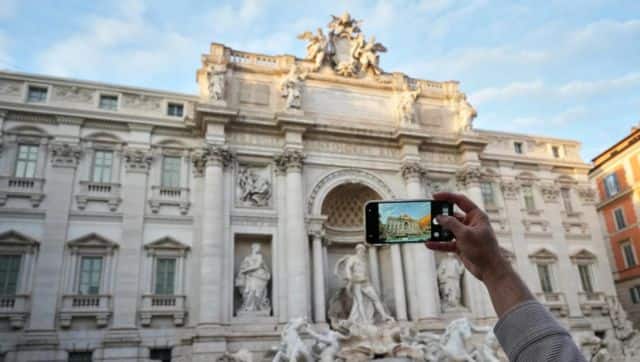
Starting Feb. 1, the city of Rome is charging a 2-euro ($2.35) fee for tourists to get close to the Trevi fountain. AP
Fed by an ancient Roman aqueduct and completed in 1762, the Trevi Fountain is a late Baroque masterpiece. It depicts Oceanus, the god of all water, standing amid dramatic cascades that symbolise the ever changing moods of seas and rivers.
The monument also holds a special place in pop culture, immortalised by Federico Fellini’s film La Dolce Vita, where actress Anita Ekberg famously wades into the fountain calling out, “Marcello! Come here!”
Rome’s mayor Roberto Gualtieri has defended the decision, calling culture a fundamental right of citizenship. While Romans continue to enjoy free access to museums and heritage sites, he says a minimal tourist fee can help ensure more organised visits and better conservation.
A priced tradition
Officials estimate the Trevi fee could generate an additional 6.5 million euros annually, funds that will go toward upkeep and crowd management.
The Trevi Fountain is not alone. As tourism booms across Italy, visitor fees are becoming more common. Rome’s Pantheon, Venice during peak season, and even Verona’s Juliet balcony have all introduced similar measures in recent years as part of a push toward sustainable tourism.
Whether the fee enhances respect for history or limits access remains a matter of opinion.
For now, travellers can still admire the Trevi Fountain for free, and for those willing to pay a small price, step a little closer to one of the world’s most iconic sights and make a wish of their own.
With inputs from agencies