







What is the story about?
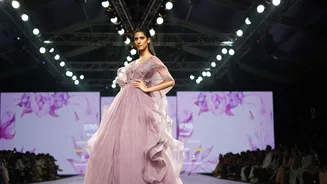
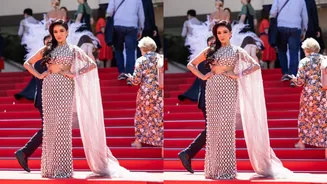
When Manish Malhotra’s creation met Kalpana Shukla’s poise on the Cannes red carpet, it felt like a carefully choreographed collaboration rather than a simple designer-celebrity pairing. The designer — long synonymous with glamour and Bollywood grandeur — translated his signature vocabulary of intricate embroidery and voluptuous silhouettes into a piece that balanced theatricality with wearable modernity. Shukla, in turn, carried the gown with a restraint and confidence that turned showmanship into sophistication.
A designer's language
Manish Malhotra's aesthetic is recognisable: lavish textiles, meticulous handwork, and a silhouette that flatters the camera as much as it does the wearer. For Cannes, Malhotra distilled that language into details that read well at a distance yet rewarded a closer look — threaded zardozi, delicate mirror accents and a sculpted bodice that nodded to classic couture while remaining contemporary. The gown felt like an evolution of Malhotra’s oeuvre: opulent but considered, cinematic yet calibrated for an international red carpet.
Grace in motion
What made the moment memorable was how Shukla inhabited the garment. Her background in wellness and performance informed more than posture; it informed pace. She moved through the photographers’ flash and the crowd with purposeful calm, letting the gown’s train and embellishments unfurl without fuss. Her walk was neither overly staged nor passive; it struck a middle path that showcased the dress while keeping attention on the person within it. That equipoise — of presence over pose — is what transformed the outfit from costume into statement.
Styling as partnership
The success of the look came from thoughtful styling choices that complemented both designer and wearer. Hair, makeup and minimal jewellery allowed the gown’s craftsmanship to remain focal, while tailoring tweaks ensured the proportions translated on camera. It was clear the collaboration respected artisan techniques and the wearer’s comfort equally, creating a visual that felt earned rather than engineered.
Cultural resonance
Beyond aesthetics, the pairing underscored a larger conversation about Indian fashion’s global reach.
Malhotra’s craftsmanship, showcased at Cannes, reaffirmed Indian couture’s capacity to engage international audiences; Shukla’s composed presence demonstrated how modern women can use fashion as a form of cultural authorship. Together, they presented a narrative where design elevates the wearer and the wearer, in turn, elevates the design — a reciprocal performance that read as both glamorous and grounded.
A designer's language
Manish Malhotra's aesthetic is recognisable: lavish textiles, meticulous handwork, and a silhouette that flatters the camera as much as it does the wearer. For Cannes, Malhotra distilled that language into details that read well at a distance yet rewarded a closer look — threaded zardozi, delicate mirror accents and a sculpted bodice that nodded to classic couture while remaining contemporary. The gown felt like an evolution of Malhotra’s oeuvre: opulent but considered, cinematic yet calibrated for an international red carpet.
Grace in motion
What made the moment memorable was how Shukla inhabited the garment. Her background in wellness and performance informed more than posture; it informed pace. She moved through the photographers’ flash and the crowd with purposeful calm, letting the gown’s train and embellishments unfurl without fuss. Her walk was neither overly staged nor passive; it struck a middle path that showcased the dress while keeping attention on the person within it. That equipoise — of presence over pose — is what transformed the outfit from costume into statement.
Styling as partnership
The success of the look came from thoughtful styling choices that complemented both designer and wearer. Hair, makeup and minimal jewellery allowed the gown’s craftsmanship to remain focal, while tailoring tweaks ensured the proportions translated on camera. It was clear the collaboration respected artisan techniques and the wearer’s comfort equally, creating a visual that felt earned rather than engineered.
Cultural resonance
Beyond aesthetics, the pairing underscored a larger conversation about Indian fashion’s global reach.