
Silver, often described as gold’s more volatile cousin, has followed suit. Prices rose 4.5 per cent to around $107.8 an ounce, after soaring 141 per cent last year, also its best showing in nearly five decades.
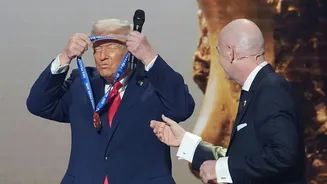
The scale and speed of the rally have reignited a familiar but urgent question for markets. Is gold’s record surge a warning signal for the global economy or a once-in-a-generation gift for investors who bet early on instability? At the centre of the debate sits an increasingly polarising figure: US President Donald Trump.
A rally rooted in anxiety, not euphoria
Unlike equity booms driven by optimism or growth expectations, gold’s rise is anchored firmly in fear.
Analysts point to a combustible mix of policy unpredictability, geopolitical tension, currency weakness and central bank buying — all of which have intensified since Trump returned to the White House.
Markets have been rattled by a string of erratic signals from Washington: renewed tariff threats, open pressure on the US Federal Reserve, confrontational diplomacy with allies, and a revival of ‘America First’ economic nationalism. For investors, the concern is not ideology but volatility, the inability to price future risk with confidence.
Gold, historically, thrives in precisely such environments.
The dollar problem
A key accelerant of gold’s rise has been the weakening US dollar.
Trump’s repeated criticism of tight monetary policy, combined with expectations that the Federal Reserve will be forced to cut interest rates to support slowing growth, has weighed on the greenback. Since gold is priced in dollars, a softer currency makes the metal cheaper for overseas buyers and more attractive as a hedge against dollar erosion.
At the same time, falling real yields have reduced the opportunity cost of holding gold, which does not generate interest or dividends. When bonds offer little inflation-adjusted return, gold’s traditional disadvantage all but disappears.
This dynamic has been crucial in pushing prices into uncharted territory.
Central banks are voting with their vaults
Perhaps the most underappreciated force behind the rally is central bank demand.
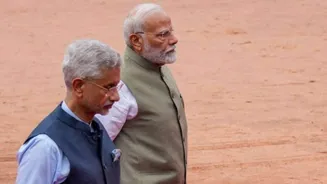
For the third consecutive year, central banks, particularly in emerging markets, have been among the largest buyers of gold. Countries such as China, India, Turkiye and Poland have steadily increased their bullion reserves, aiming to diversify away from the US dollar and insulate themselves from geopolitical shocks.
This trend reflects a deeper shift in the global financial order.
Gold is increasingly seen not just as an inflation hedge but as a geopolitical hedge, an asset beyond sanctions, payment systems and political leverage.
That long-term structural demand has provided a strong floor under prices, even during short-term corrections.
Silver’s surge signals broader stress
Silver’s extraordinary gains add another layer to the story.
Unlike gold, silver straddles two worlds. It is both a safe-haven asset and a key industrial input used in electronics, solar panels and electric vehicles. Its 141 per cent surge in 2025 suggests that investors are hedging not only against financial instability but also against supply constraints and structural shifts in the global economy.
When both metals rise sharply together, history suggests markets are bracing for turbulence rather than growth.
Is this the ‘Trump effect’?
Supporters of the Trump administration argue that gold’s rise says more about global fragility than US policy. They point to wars in Europe and West Asia, slowing Chinese growth, and unsustainable global debt levels.
Critics counter that Trump’s confrontational and unpredictable approach has amplified these risks, accelerating capital flight into safe-haven assets.
The truth likely lies somewhere in between.
Trump did not create the conditions for gold’s rally, but his policies have acted as a catalyst, turning simmering uncertainty into outright risk aversion.
What it means for investors
For investors already holding gold, the rally has been spectacular, outperforming equities, bonds and most commodities over the past two years.
But record prices also bring risk.
Gold rallies driven by fear can reverse sharply if confidence returns, interest rates rise, or geopolitical tensions ease. Late entrants face the danger of buying insurance after the fire has already spread.
For policymakers, however, the message is clearer, and more uncomfortable.
Historically, soaring gold prices are less a sign of prosperity than a verdict on trust. trust in currencies, institutions and long-term economic stability.
A barometer of a nervous world
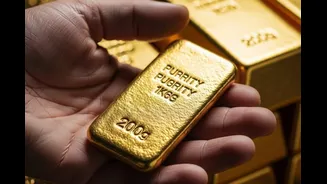
Gold crossing $5,000 is not just a market headline. It is a signal that a growing number of investors no longer see traditional assets, or even sovereign currencies, as safe anchors.
Whether this moment proves to be a peak born of panic or the start of a new era where gold reclaims a central role in global finance will depend on what comes next from Washington and how the world responds.
For now, gold is doing what it has done for centuries: reflecting fear, rewarding foresight, and reminding markets that stability is never guaranteed.