







What is the story about?
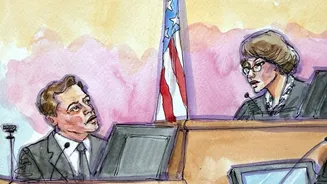
For someone who thrives on spectacle, Elon Musk delivered a moment that felt unusually grounded, and quietly contradictory. Inside a California federal courtroom, away from the amplification of social media, Musk acknowledged under oath that Tesla is not actively pursuing artificial general intelligence (AGI).
It was a striking admission, not because of what it revealed in isolation, but because of what it undermined.
Only weeks earlier, Musk had suggested publicly that Tesla could be among the companies to achieve AGI, a vision that aligns neatly with his long-standing positioning as both a builder and a warning voice in AI.
That tension, between public ambition and legal precision, now sits at the heart of a broader legal clash between Musk and OpenAI, the company he helped found and now accuses of straying from its original mission.
Under questioning, Musk clarified that Tesla’s artificial intelligence work remains focused on
self-driving systems rather than AGI, the hypothetical technology capable of performing any intellectual task a human can. The distinction may sound technical, but in the current AI race, it is everything.
Pressed about his earlier social media claims, Musk did not attempt to reconcile the contradiction directly. Instead, he maintained that Tesla is not pursuing AGI “right now”.
For observers, the moment raises an obvious question: Was this a genuine clarification, or a strategic repositioning?
Musk has, in the past, demonstrated a tendency to obscure timelines or downplay capabilities when it suits competitive advantage. His remarks about limiting the visibility of
Tesla’s humanoid robot developments, ostensibly to prevent rivals from copying, offer a precedent. In that context, his courtroom statement could be read less as a retreat and more as calculated ambiguity.
There is also a legal dimension. Statements made under oath carry consequences that social media posts do not. Drawing a narrower boundary around Tesla’s AI ambitions may simply reflect the discipline required in a courtroom rather than a shift in underlying intent.
The AGI admission emerged during Musk’s ongoing lawsuit against Sam Altman and other OpenAI leaders. Musk argues that the organisation
he co-founded was originally conceived as a non-profit dedicated to benefiting humanity, only to evolve into a structure where commercial interests dominate.
In his telling, the shift represents a betrayal. He described a growing unease with the company’s direction, eventually concluding that its leadership was effectively “looting the nonprofit”.
Yet cross-examination painted a more complicated picture. OpenAI’s legal team highlighted Musk’s own past openness to for-profit structures, including discussions as early as 2016 about restructuring the organisation to raise capital. At one point, Musk even explored a model where he would hold majority control of a for-profit arm.
When those plans did not materialise, his financial involvement waned. While he continued to support the organisation in limited ways, including covering office costs, his relationship with OpenAI became increasingly distant.
The courtroom exchanges also touched on Musk’s broader AI ecosystem, including talent movements between OpenAI, Tesla, and his other ventures. Questions were raised about recruitment efforts and internal discussions that blurred the lines between collaboration and competition.
Perhaps most tellingly, Musk conceded that safety risks are not unique to OpenAI. All advanced AI systems, including those developed by his own companies, carry inherent dangers.
As the case continues, the contrast between Musk’s courtroom precision and his public persona remains difficult to ignore. Whether his AGI remarks signal a strategic pivot, legal caution, or something in between, they have added a new layer of intrigue to an already complex battle over the future of artificial intelligence.
It was a striking admission, not because of what it revealed in isolation, but because of what it undermined.
Only weeks earlier, Musk had suggested publicly that Tesla could be among the companies to achieve AGI, a vision that aligns neatly with his long-standing positioning as both a builder and a warning voice in AI.
That tension, between public ambition and legal precision, now sits at the heart of a broader legal clash between Musk and OpenAI, the company he helped found and now accuses of straying from its original mission.
Tesla, AGI and a carefully drawn line
Under questioning, Musk clarified that Tesla’s artificial intelligence work remains focused on
Pressed about his earlier social media claims, Musk did not attempt to reconcile the contradiction directly. Instead, he maintained that Tesla is not pursuing AGI “right now”.
For observers, the moment raises an obvious question: Was this a genuine clarification, or a strategic repositioning?
Musk has, in the past, demonstrated a tendency to obscure timelines or downplay capabilities when it suits competitive advantage. His remarks about limiting the visibility of
There is also a legal dimension. Statements made under oath carry consequences that social media posts do not. Drawing a narrower boundary around Tesla’s AI ambitions may simply reflect the discipline required in a courtroom rather than a shift in underlying intent.
A lawsuit rooted in OpenAI’s transformation
The AGI admission emerged during Musk’s ongoing lawsuit against Sam Altman and other OpenAI leaders. Musk argues that the organisation
In his telling, the shift represents a betrayal. He described a growing unease with the company’s direction, eventually concluding that its leadership was effectively “looting the nonprofit”.
Yet cross-examination painted a more complicated picture. OpenAI’s legal team highlighted Musk’s own past openness to for-profit structures, including discussions as early as 2016 about restructuring the organisation to raise capital. At one point, Musk even explored a model where he would hold majority control of a for-profit arm.
When those plans did not materialise, his financial involvement waned. While he continued to support the organisation in limited ways, including covering office costs, his relationship with OpenAI became increasingly distant.
The courtroom exchanges also touched on Musk’s broader AI ecosystem, including talent movements between OpenAI, Tesla, and his other ventures. Questions were raised about recruitment efforts and internal discussions that blurred the lines between collaboration and competition.
Perhaps most tellingly, Musk conceded that safety risks are not unique to OpenAI. All advanced AI systems, including those developed by his own companies, carry inherent dangers.
As the case continues, the contrast between Musk’s courtroom precision and his public persona remains difficult to ignore. Whether his AGI remarks signal a strategic pivot, legal caution, or something in between, they have added a new layer of intrigue to an already complex battle over the future of artificial intelligence.