





What is the story about?
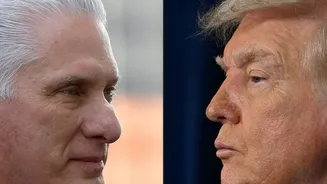
Cuban President Miguel Díaz-Canel has said that his country is ready to defend itself against America's military intervention, saying that Cuba will fight "to the very last drop of blood."
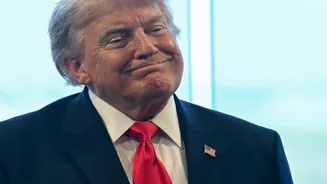
Talking to Sky News about US President Donald Trump's renewed threats to take over Cuba, Díaz-Canel said, "If there is an attack, the Cuban people will respond in unity and firmness and in defense of our sovereignty. We don't want the war, but we're not afraid of it."
Responding to Trump's recent claim that Cuba is "coming our way," Diaz-Canel said Washington was pursuing "a strategy of media-driven intoxication and psychological warfare" against the island. He described the comments as "an outrage and an affront to the dignity of our people" and "a flagrant violation of international law."
He added that while his government cannot rule out a possible US attack, Cuba is ready to retaliate. Invoking Cuba's struggle for independence, Diaz-Canel cited 19th-century military commander Antonio Maceo, who famously said that anyone seeking to seize Cuba "will only be able to take the dust of his soil drenched in blood."
Talking about a range of topics during the interview, Diaz-Canel rejected US accusations of hosting Chinese and Russian military installations in the country, a flashpoint that prompted Washington to tighten the fuel embargo on Havana.
He called the decades-long embargo "the longest-running blockade in the history of mankind," saying that the move has led to chronic blackouts, medicine shortages and economic hardship in the country.
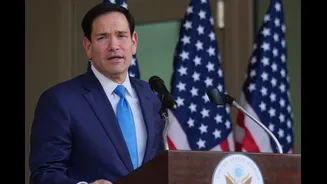
Addressing criticism from US Secretary of State Marco Rubio and human rights organisations over alleged political repression and the treatment of detainees, Diaz-Canel rejected claims that Cuba holds political prisoners. He argued that those in custody had been sentenced for "offences in our criminal code," not because of their political views or opposition to the government.
Meanwhile, Cuba's government said earlier this week that months of negotiations with the United States, which is applying maximum pressure to the island to try to bring about a change in governance, had shown "no progress."
"The discussions between the Cuban and US governments are showing no progress," Foreign Minister Bruno Rodriguez told a press conference, adding that "despite all that" Havana "will remain open to dialogue."
Washington has cranked up pressure on the communist island in recent months, imposing an energy blockade and several rounds of sanctions that have deepened an already dire economic crisis.
Talking to Sky News about US President Donald Trump's renewed threats to take over Cuba, Díaz-Canel said, "If there is an attack, the Cuban people will respond in unity and firmness and in defense of our sovereignty. We don't want the war, but we're not afraid of it."
Responding to Trump's recent claim that Cuba is "coming our way," Diaz-Canel said Washington was pursuing "a strategy of media-driven intoxication and psychological warfare" against the island. He described the comments as "an outrage and an affront to the dignity of our people" and "a flagrant violation of international law."
He added that while his government cannot rule out a possible US attack, Cuba is ready to retaliate. Invoking Cuba's struggle for independence, Diaz-Canel cited 19th-century military commander Antonio Maceo, who famously said that anyone seeking to seize Cuba "will only be able to take the dust of his soil drenched in blood."
On sanctions and US criticism
Talking about a range of topics during the interview, Diaz-Canel rejected US accusations of hosting Chinese and Russian military installations in the country, a flashpoint that prompted Washington to tighten the fuel embargo on Havana.
He called the decades-long embargo "the longest-running blockade in the history of mankind," saying that the move has led to chronic blackouts, medicine shortages and economic hardship in the country.
Addressing criticism from US Secretary of State Marco Rubio and human rights organisations over alleged political repression and the treatment of detainees, Diaz-Canel rejected claims that Cuba holds political prisoners. He argued that those in custody had been sentenced for "offences in our criminal code," not because of their political views or opposition to the government.
'No progress' in talks
Meanwhile, Cuba's government said earlier this week that months of negotiations with the United States, which is applying maximum pressure to the island to try to bring about a change in governance, had shown "no progress."
"The discussions between the Cuban and US governments are showing no progress," Foreign Minister Bruno Rodriguez told a press conference, adding that "despite all that" Havana "will remain open to dialogue."
Washington has cranked up pressure on the communist island in recent months, imposing an energy blockade and several rounds of sanctions that have deepened an already dire economic crisis.