






What is the story about?
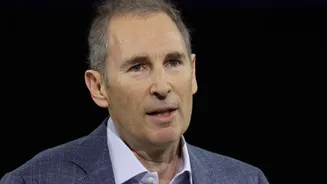
Amazon is starting to see higher product prices due to the tariffs imposed by US President Donald Trump mounting cost pressure on consumers, the tech giant CEO Andy Jassy told CNBC on Tuesday.
Jassy emphasised that consumers are beginning to see higher prices and many of Amazon’s third-party sellers stocked up on inventory ahead of the tariffs to keep prices low, but most of that supply ran out last fall.
(We're starting) to see some of the tariffs creep into some prices. Some sellers are deciding that they're passing on those higher costs to consumers, some are deciding that they'll absorb it to drive demand, and some are doing something in between. So you're starting to see more of that impact," Jassy said in an interview.
“So you start to see some of the tariffs creep into some of the prices, some of the items, and you see some sellers are deciding that they’re passing on those higher costs to consumers in the form of higher prices, some are deciding that they’ll absorb it to drive demand and some are doing something in between,” Jassy added.
Consumers are shifting to cheaper items and bargain hunting, Jassy said, adding that shoppers are a "little bit more hesitant" on higher-priced discretionary purchases.
Jassy said on Tuesday that while Amazon is trying to keep prices low, price hikes may be unavoidable in some instances.
“At a certain point, because retail is, as you know, a mid-single digit operating margin business, if people’s costs go up by 10 per cent, there aren’t a lot of places to absorb it,” Jassy said. “You don’t have endless options.”
The company has said over the past year that it was seeing very little impact on consumer behavior and product prices from tariffs. It has doubled down on expanding product categories and speeding up delivery timelines to shield demand.
"Amazon's consumers overall have fared well. But we'll have to see what happens in 2026," Jassy added.
US tariffs are also a crucial talking point for global leaders in the World Economic Forum in Davos this week.
Amazon's shares were 2.7 per cent low in early trading amid weakness in the broader market.
Jassy emphasised that consumers are beginning to see higher prices and many of Amazon’s third-party sellers stocked up on inventory ahead of the tariffs to keep prices low, but most of that supply ran out last fall.
(We're starting) to see some of the tariffs creep into some prices. Some sellers are deciding that they're passing on those higher costs to consumers, some are deciding that they'll absorb it to drive demand, and some are doing something in between. So you're starting to see more of that impact," Jassy said in an interview.
“So you start to see some of the tariffs creep into some of the prices, some of the items, and you see some sellers are deciding that they’re passing on those higher costs to consumers in the form of higher prices, some are deciding that they’ll absorb it to drive demand and some are doing something in between,” Jassy added.
Consumers are shifting to cheaper items and bargain hunting, Jassy said, adding that shoppers are a "little bit more hesitant" on higher-priced discretionary purchases.
Jassy said on Tuesday that while Amazon is trying to keep prices low, price hikes may be unavoidable in some instances.
“At a certain point, because retail is, as you know, a mid-single digit operating margin business, if people’s costs go up by 10 per cent, there aren’t a lot of places to absorb it,” Jassy said. “You don’t have endless options.”
The company has said over the past year that it was seeing very little impact on consumer behavior and product prices from tariffs. It has doubled down on expanding product categories and speeding up delivery timelines to shield demand.
"Amazon's consumers overall have fared well. But we'll have to see what happens in 2026," Jassy added.
US tariffs are also a crucial talking point for global leaders in the World Economic Forum in Davos this week.
Amazon's shares were 2.7 per cent low in early trading amid weakness in the broader market.